How To Clean Kitchen Knives
Learning how to clean kitchen knives is one of the simplest ways to keep them safe and useful. A clean knife cuts more cleanly, lasts longer, and is more pleasant to handle. Many beginners wonder what to do after each use and what to avoid.
This guide explains the basics in plain words. It covers washing, drying, dealing with stains and caring for different blade types. By the end, you will have a simple routine you can follow every day.
Key Takeaways
- Wash knives soon after use, using warm water and mild soap.
- Dry every knife completely before you put it away.
- Hand washing is usually the gentlest choice for most knives.
- Carbon steel and stainless steel need slightly different care.
- Avoid harsh cleaners, abrasive pads and long soaking.
Why Cleaning Kitchen Knives Matters
Food left on a blade can dry, harden and attract bacteria. A knife that sits dirty for hours is harder to clean later. Regular cleaning keeps the surface fresh and ready for the next task.
Cleaning also protects the blade itself. Moisture and food acids can slowly change the metal over time. Good habits help the knife stay sharp, smooth and good-looking for years.
How Dirt, Food Acids and Moisture Affect Blades
Some foods contain acids, such as lemon juice, tomato, vinegar and onion. These acids can react with the metal and leave dull spots. The longer they stay on the blade, the greater the effect.
Water is another factor. When it sits on a blade, it can cause spots or rust, especially on carbon steel. Drying the knife soon after washing prevents most of these problems.
Common Mistakes That Damage Knives
One common mistake is leaving a knife in the sink. Soaking exposes the blade and handle to water for a long time, which can loosen handles and encourage rust.
Another mistake is using abrasive scouring pads or harsh chemical cleaners. These can scratch the blade and dull the finish. Tossing knives loosely into a drawer can also chip the edge.
Knife Cleaning Basics for Beginners
Good knife cleaning does not require special products. A few simple tools and a steady routine are enough.
Tools and Supplies You Need
You will need warm water, a mild dish soap, and a soft sponge or cloth. A clean towel is useful for drying. Keep a separate cutting board for food preparation so the knife does not sit on a dirty surface.
Keep these items together near the sink. A small towel set aside for knives makes drying quick and easy.
Hand Washing vs. Dishwasher Safety
Hand washing is the safest choice for most kitchen knives. It lets you control water exposure, pressure and contact with other items. It also protects the edge from knocking against plates or pans.
Dishwashers are harder on knives. Strong detergents, high heat and jostling can dull edges, damage handles and cause discoloration. For this reason, most knife makers suggest hand washing. Always check the care instructions that come with your knife.
Step-by-Step: How to Hand Wash a Kitchen Knife
Hand washing takes only a minute or two. Follow these steps each time you finish using a knife.
Rinsing and Removing Food Residue
Rinse the knife under warm running water right after use. This loosens food before it dries. Keep your fingers away from the edge and rinse from the spine toward the tip.
If food is stuck, let warm water sit on it for a few seconds rather than scraping hard with the blade or a sharp tool. Soft pressure from your fingers or a cloth is usually enough.
Washing with Mild Soap and a Soft Sponge
Add a small drop of mild dish soap to a soft sponge or cloth. Wipe the blade from the spine toward the edge, moving slowly. Wash both sides of the blade and the handle too.
Use a soft sponge only. Avoid steel wool and abrasive pads, because they can scratch the surface. Gentle motion protects the finish while still removing grease and food.
Drying Thoroughly to Prevent Rust
Dry the knife right away with a clean towel. Pay extra attention to the joint where the blade meets the handle, since water often hides there. Dry the handle as well, especially if it is wood.
Air drying on a rack leaves water sitting on the blade for longer, so hand drying is the better habit. This matters most for carbon steel, which can rust quickly when it stays damp.
How to Clean Different Knife Types
Not all kitchen knives are made the same way. The metal and handle material affect how you should clean them.
Stainless Steel Knives
Stainless steel resists rust better than many other metals, which makes it a common choice for everyday knives. It is not completely rust-proof, however, especially if it is left wet or exposed to salty or acidic food for long periods.
Washing and drying as usual is enough for most stainless steel knives. Rinse after use, wash gently and dry thoroughly.
Carbon Steel Knives and Rust Prevention
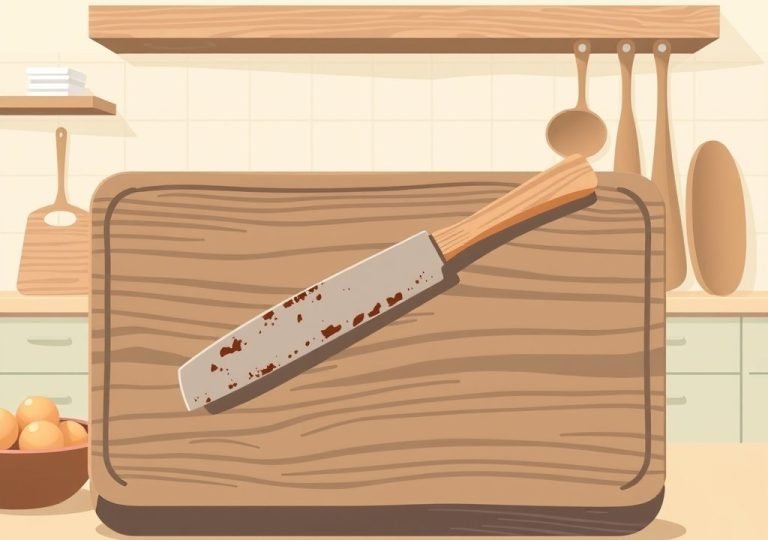
Carbon steel holds a sharp edge well, but it rusts more easily than stainless steel. Some people notice a grayish patina forming on the blade over time. This is a normal change, not always a sign of damage.
Clean carbon steel knives promptly and dry them completely. A light coat of food-safe mineral oil can help protect the blade during storage. Keep the knife in a dry place to reduce the chance of rust.
Knives with Wooden or Composite Handles
Wooden handles can absorb water, swell, crack or lose their finish. Avoid soaking them. Wash the handle quickly and dry it well.
Composite and synthetic handles usually handle water better than wood, but they still benefit from quick drying. Check the care guide for any handle-specific advice.
Cleaning Stains, Spots and Discoloration
Sometimes a regular wash is not enough. Spots, stains or light rust may appear over time. Gentle methods usually solve these problems without harming the blade.
Removing Light Rust with Gentle Methods
For light rust, start with a soft cloth and mild soap. If spots remain, use a fine, non-abrasive method suited to the blade material. Always rinse and dry the knife afterward.
Avoid deep scrubbing with coarse materials, which can scratch the blade and thin the metal. Patience and gentle pressure work best.
Handling Food Stains and Sticky Residue
Sticky residue from sauces, sugars or fruit often comes off with warm water and a little soap. Let the knife soak only briefly, and never leave it submerged for long. Wipe the area gently.
Stains from acidic foods such as tomato can be prevented by washing promptly after use. The sooner you clean, the less chance a stain has to set.
Cleaning the Blade Edge and Joints Safely
The edge and the joints need extra care. The edge is very sharp, and joints can trap food and water.
Avoiding Cuts While Cleaning
Always wash the blade with the edge facing away from your hand. Move the cloth or sponge from the spine toward the tip. Never run your fingers along the edge.
Set the knife on a flat surface when you need to free your hands, and keep it away from the sink edge so it does not slip. A calm, focused pace prevents most accidents.
Cleaning Around the Bolster and Handle Joint
The bolster is the thick area where the blade meets the handle. Food and water often collect in the gap here. Use the corner of a soft cloth or a soft brush to reach this area.
Dry the joint carefully after washing, since trapped moisture can weaken the connection over time. If the handle feels loose, stop using the knife and check the care guide or ask a professional sharpening service for advice.
Cleaning and Care Routine Compared
Knife care works best as a simple routine. Some tasks happen every day, while others need more time.
Daily Cleaning vs. Weekly Deep Cleaning
Daily cleaning means rinsing, washing and drying after each use. It takes only a minute and prevents most problems, so this habit matters more than anything else.
A weekly check is a good time to look more closely. Inspect the blade for spots, examine the handle for loose parts and wipe down the joints. If you keep up with daily care, deep cleaning is rarely needed.
Storing Knives After Cleaning
Store knives in a block, on a magnetic strip or in a protective sheath. Each option keeps the edge from knocking against other items. Avoid tossing knives loosely into a drawer.
Make sure the knife is completely dry before storing it. A damp knife in a closed space can encourage rust. Good storage is the final step of good cleaning.
Frequently Asked Questions
Can I put kitchen knives in the dishwasher?
Some knives are labeled dishwasher safe, but many are not. Dishwashers can dull edges, damage handles and cause discoloration. Hand washing is usually the safer choice.
Why does my knife rust even though it is stainless steel?
Stainless steel resists rust well but is not completely rust-proof. Long exposure to water, salt or acidic food can cause spots or rust. Washing promptly and drying thoroughly helps prevent this.
What is the safest way to clean a sharp knife?
Wash the blade with the edge facing away from your hand, moving from spine to tip. Use a soft sponge and mild soap. Dry it right away and set it down on a flat surface.
Can I use vinegar or baking soda to clean knives?
Mild solutions may help with some stains, but harsh or acidic cleaners can damage certain blades. Baking soda is mildly abrasive, so use it gently. Check the knife’s care guide before trying any home remedy.
How often should I clean my kitchen knives?
Clean your knives right after each use with a quick, thorough wash and dry. A weekly check for spots and loose parts is a helpful extra habit.
Conclusion
Cleaning kitchen knives is a simple habit with lasting benefits. Rinse, wash gently with mild soap, and dry completely after every use.
Hand washing, careful storage and a quick weekly check will keep your knives safe, sharp and ready to use.

Mary is a home cooking enthusiast and kitchen gear reviewer with a passion for practical cookware and food preparation tools. She enjoys testing cutting boards, knives, kitchen gadgets, and other cooking essentials to help home chefs make smarter buying decisions. Through KitchenCutting.com, Mary shares honest product reviews, buying guides, and helpful kitchen tips to make cooking easier, safer, and more enjoyable.