
Kitchen Knife Safety Tips
Kitchen knife safety tips can prevent many of the cuts that happen in home kitchens. Most knife accidents come from rushing, poor grip, unstable cutting surfaces or careless storage, not from the knife itself.
This guide covers the habits beginners need: how to hold a knife, how to cut safely, how to store and clean knives, and what to do if a cut happens.
Key Takeaways
- Keep your fingers curled away from the blade and use a claw grip while cutting.
- A sharp knife is safer than a dull one because it needs less force and gives you more control.
- Cut on a stable, non-slip surface and store knives where they cannot fall or be reached by children.
- Wash knives carefully by hand, dry them right away and never leave them soaking in the sink.
Why Kitchen Knife Safety Matters
A kitchen knife is a sharp tool, and any sharp tool can cause harm. Cuts are among the most common kitchen injuries, often during ordinary tasks like slicing vegetables or opening packaging.
Safety is mostly about habits. Handling a knife with care every time lowers the risk of an accident and makes cooking more pleasant.
Common Kitchen Knife Injuries
The most common injuries are small cuts to the fingers and hand, often when the non-cutting hand is too close to the blade. Slipping knives and food that shifts under the blade also cause many cuts.
Deeper cuts can happen when a knife slides off a slippery item or when someone tries to catch a falling knife. Knowing these patterns helps beginners avoid them.
Why Dull Knives Can Be More Dangerous
A dull knife may seem safer, but it often is not. It needs more pressure to cut, and when it finally slips, it can move suddenly and hit a finger or hand.
A sharp knife glides through food with less force, giving you more control over where the blade goes. Keeping your knife sharp is one of the simplest safety steps you can take.
Kitchen Knife Basics for Beginners
Learning the parts of a knife and the common types used at home makes it easier to choose the right tool for each task.
Parts of a Knife
The blade is the long, sharp cutting part. The edge is the sharpened line along the bottom, and the spine is the thick top edge opposite it.
The heel is the rear part of the blade, closest to the handle. The tang extends into the handle, and the bolster is the thick junction between blade and handle on some knives. It adds balance and protects your fingers.
Common Types of Kitchen Knives and Their Uses
A chef’s knife is the most versatile and handles chopping, slicing and dicing. A paring knife has a short blade for small, detailed work such as peeling and trimming.
A serrated bread knife grips crusty bread and soft foods. A utility knife is a medium-sized blade for everyday tasks. Using the right knife for each job reduces slipping and strain.
Safe Handling and Grip Techniques
How you hold a knife affects how well you control it. A loose or awkward grip can cause the knife to twist or slip.
How to Hold a Knife Correctly
Hold the handle firmly with your dominant hand, wrapping your fingers around the grip with your thumb on one side. If your knife has a bolster, pinch the blade near it. This pinch grip gives steady control and keeps your hand away from the cutting edge.
The Claw Grip for Safe Cutting
The claw grip protects your fingertips while you cut. Curl the fingers of your guiding hand under so the knuckles face the blade, with your thumb tucked behind your fingertips.
Let the flat of the blade rest against your knuckles, and move your hand back slowly as you cut. This keeps the blade a safe distance from your fingers.
Safe Ways to Pass and Carry a Knife
Never toss a knife to another person. Set it on the counter and let the other person pick it up, or offer it handle first.
When you carry a knife, keep the blade pointed down and close to your leg. Walk calmly, and avoid carrying a knife across a crowded room or while rushing.
Safe Cutting Techniques
Good technique matters as much as a good grip. A steady surface, a controlled motion and care with tricky foods all help prevent accidents.
Preparing a Stable Cutting Board
Use a board that does not slide on the counter. A damp towel or non-slip mat underneath can help. Choose a board large enough to hold the food without crowding.
Avoid glass, marble or other hard surfaces, which can dull the blade and make the knife bounce. A stable wooden or plastic board is the usual choice for home cooks.
Cutting Round Foods and Slippery Produce
Round foods such as onions, potatoes and oranges can roll off the board. Cut a thin flat slice from one side, then set that flat side down so the food stops rolling.
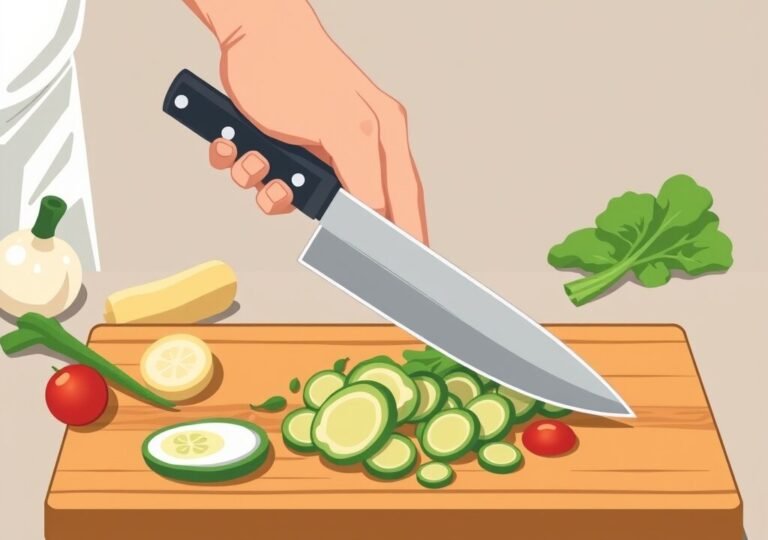
Slippery produce like cucumbers and squash can also shift. Hold the food firmly with your claw grip and cut slowly. Do not force the blade through.
Slicing Meat and Bread Safely
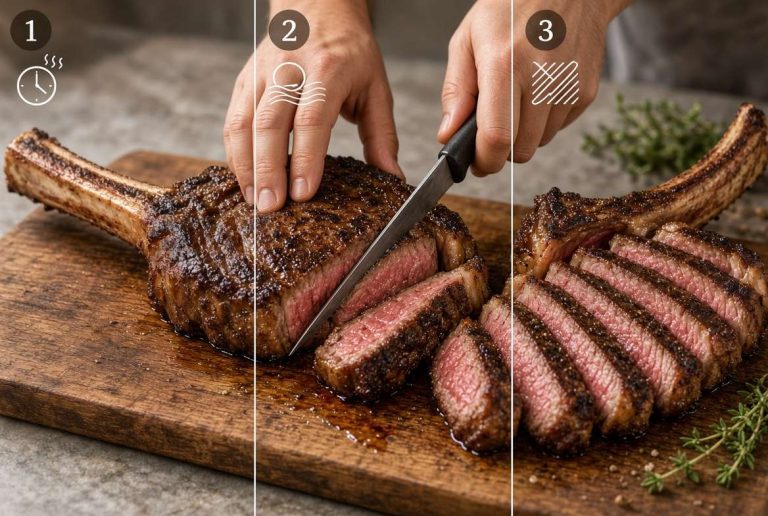
Raw meat is easier to slice when it is partly frozen, because it holds its shape. Use a sharp knife and long, smooth strokes rather than sawing back and forth. Keep your guiding hand clear of the blade’s path.
Bread is best cut with a serrated knife, using gentle sawing motions. Press down lightly and do not push hard, since this can cause the knife to slip.
Knife Storage and Organization
Where you keep knives matters as much as how you use them. A loose knife in a drawer can cut the person reaching for it. Good storage protects blades and keeps people safe.
Knife Blocks, Magnetic Strips and Sheaths
A knife block keeps each blade in its own slot, with the edges hidden. A wall-mounted magnetic strip holds knives blade-outward, so mount it high and out of reach. Blade sheaths, also called covers, protect the edge when a knife is stored in a drawer.
Whatever you choose, make sure each knife is secure. A loose knife can fall or slide when the surface is bumped.
Keeping Knives Out of Reach of Children
Store knives high on a wall, in a locked drawer or behind a child safety latch. Children are curious and may grab a knife from a low counter or open drawer. Teach older children to ask an adult before handling a knife.
Never leave a knife on the edge of a counter. A small push can send it to the floor and cause a serious injury.
Cleaning and Maintenance Tips
Clean, well-kept blades are safer to handle and cut more cleanly. Regular care also helps a knife last longer. Simple habits make a big difference over time.
Hand Washing Versus the Dishwasher
Hand washing is the gentler choice for most kitchen knives. Use warm water, mild dish soap and a soft sponge, and wash the blade away from your body. Never leave knives soaking in the sink where they can be hidden from view.
Dishwashers can dull blades, loosen handles and crack wooden or resin handles. Many manufacturers recommend hand washing, so check the care guidance for your knife.
Honing, Sharpening and Keeping an Edge
Honing realigns the edge of a blade, while sharpening removes metal to create a new edge. Honing is done often, and sharpening is needed less frequently. A honing rod handles regular upkeep, and a whetstone or electric sharpener can restore a dull edge.
Sharpening takes practice. Many beginners find it easier to have a professional sharpen their knives at first. A well-maintained edge keeps your cutting controlled and predictable.
Checking for Damaged Handles and Loose Rivets
Look over your knives regularly for cracks, splits or loose sections in the handle. Rivets are the small metal pins that hold the handle to the tang, and a loose rivet can let the handle wobble.
If a handle feels loose or damaged, stop using the knife until it is repaired or replaced. A handle that moves in your grip can cause the blade to slip.
What to Do If a Knife Injury Happens
Even careful cooks can get cut. Knowing what to do right away helps limit harm. Stay calm, and act step by step.
First Aid for Minor Cuts
Rinse the cut gently under clean running water. Apply gentle pressure with a clean cloth or sterile bandage until the bleeding slows, then cover the wound with a clean dressing.
Watch the cut for signs of infection, such as increasing redness, swelling, warmth or pus. Minor cuts usually heal on their own over several days.
When to Seek Medical Help
Get medical help if the bleeding does not stop after steady pressure for several minutes. Seek care for deep cuts, cuts that gape open, cuts on the face, or cuts involving the joints, tendons or nerves. Numbness, weakness or difficulty moving a finger is also a reason to get checked.
If you are unsure if a cut needs treatment, contact a doctor or local health service. It is better to ask early than to wait and see.
Common Mistakes Beginners Make
Most knife accidents come from a few common habits. Recognizing them is the first step toward avoiding them.
Cutting Toward Your Body
Cutting toward your body puts your fingers in the path of the blade. If the knife slips, the cut can be serious. Push the blade forward and away from you, keeping your guiding hand curled safely.
Using the Wrong Knife for the Job
A paring knife is too small for a large squash, and a thin blade can bend or snap under force. Use a knife designed for the task. The right tool reduces strain and makes slipping less likely.
Working While Tired or Distracted
Fatigue and distraction slow reaction time and weaken control. Avoid using knives when you are tired, hurried or interrupted. Set the knife down before answering a phone or speaking to someone.
Frequently Asked Questions
Is a dull knife really more dangerous than a sharp one?
Yes, a dull knife is often more dangerous. It needs more force to cut, so it can slip and move suddenly. A sharp knife requires less pressure and gives you better control.
What is the safest way to hold a kitchen knife?
Hold the handle firmly with your dominant hand, with your thumb and fingers wrapped around the grip. Use a claw grip with your guiding hand, keeping fingertips tucked and knuckles facing the blade. This keeps the knife steady and your fingers out of its path.
How should I store knives if I have young children at home?
Store knives high on a wall, in a locked drawer or behind a child safety latch. Keep them away from counter edges. Teach older children to ask an adult before touching a knife.
Can I put kitchen knives in the dishwasher?
Hand washing is usually the better choice. Dishwashers can dull blades, loosen handles and damage wooden or resin grips. Check the care guidance for your specific knife first.
What should I do first if I cut myself while cooking?
Rinse the cut gently under clean running water and apply firm pressure with a clean cloth. Cover it with a clean dressing once the bleeding slows. Seek medical help if the bleeding does not stop or the cut is deep.
Conclusion
Kitchen knife safety comes down to steady habits. Keep your fingers curled, use a secure grip and cut on a stable surface. Keep blades sharp, store them out of reach and clean them with care.
When an accident does happen, respond calmly and get help if needed. With practice, these habits become a natural part of cooking.

Mary is a home cooking enthusiast and kitchen gear reviewer with a passion for practical cookware and food preparation tools. She enjoys testing cutting boards, knives, kitchen gadgets, and other cooking essentials to help home chefs make smarter buying decisions. Through KitchenCutting.com, Mary shares honest product reviews, buying guides, and helpful kitchen tips to make cooking easier, safer, and more enjoyable.


3 Comments