How Can I Cut Frozen Meat?
You open the freezer, grab a big block of beef or a pack of chicken, and then it hits you. The meat is rock solid. Dinner is in an hour, and you have no idea how to cut it.
In this article
I have been there more times than I can count. Frozen meat feels like a brick, and one wrong move with a knife can turn a normal evening into a trip to the clinic. The good news is that you can cut frozen meat safely and neatly. You just need the right tools, a little patience, and a few smart tricks.
In this guide, I will walk you through everything step by step. We will cover safety, the best tools, simple methods, and tips for each type of meat. Let’s get into it.
Can You Really Cut Frozen Meat?
Yes, you can. Lots of home cooks and professional butchers do it every day. Some even cut meat while it is frozen on purpose, because it gives cleaner slices.
Still, there is a catch. Fully frozen meat is hard, slippery, and tough on knives. A thin kitchen knife can slip off the surface or even snap. So the real question is not “can I do it?” but “how do I do it safely?”
The short answer: let the meat soften a little, use a sharp and sturdy blade, and cut slowly. That is the whole idea. The rest of this article shows you how to pull it off.
Safety First: Read This Before You Touch a Knife
I know, I know. Safety talk feels boring. But frozen meat is one of the most common causes of kitchen knife accidents. The surface is icy and slick, so the blade can bounce right off and land in your hand.
Follow these simple rules every time:
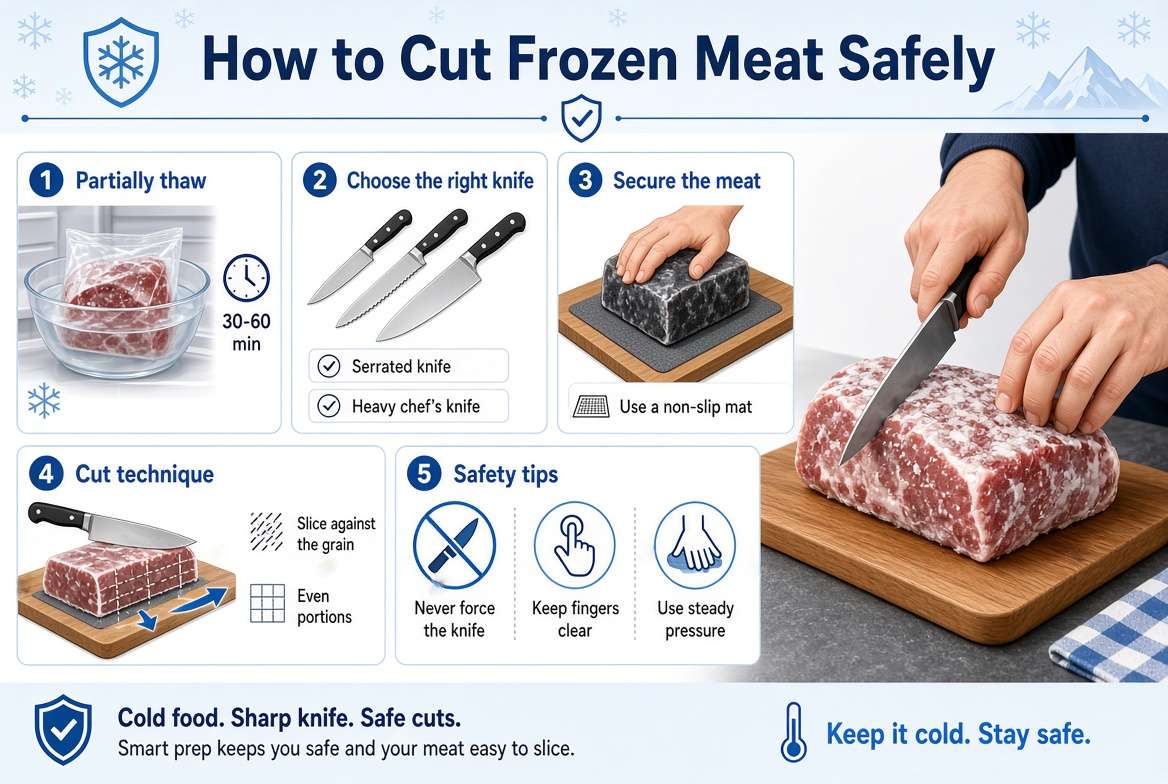
- Use a stable cutting board. Place a damp paper towel or a thin kitchen cloth under it so it won’t slide.
- Keep your fingers away from the blade. Curl your fingertips inward like a claw if you need to hold the meat.
- Never force the knife. If the blade won’t go in, stop. Pushing harder is how accidents happen.
- Cut away from your body. Always point the blade away from you and your free hand.
- Wear a cut-resistant glove. It costs very little and gives you extra peace of mind.
- Stay focused. Put your phone down and keep kids and pets out of the kitchen.
One more thing: never try to hack at a frozen block with a regular chef’s knife by pounding on it. That can chip the blade and damage your cutting board.
Why Is Frozen Meat So Hard to Cut?
When meat freezes, the water inside it turns into ice crystals. These crystals lock the muscle fibers and fat into a solid mass. A sharp knife has to push through all that ice, so it takes much more force than fresh meat.
The outside is also covered in frost, which makes it slippery. That mix of hardness and slickness is why frozen meat feels so awkward to handle.
The trick is to soften the meat just enough so the ice loosens its grip. You don’t need to thaw it fully. You just need to take the edge off.
The Tools That Make Cutting Frozen Meat Easier
You don’t need a fancy kitchen to do this well. Still, a few tools help a lot.
A Sharp, Sturdy Knife
A dull knife is dangerous. It needs more pressure, and that makes it more likely to slip. Pick a heavy, sharp knife with a thick spine. A good chef’s knife works for small jobs. For bigger, harder pieces, a boning knife or a butcher knife is better.
A Meat Cleaver
A cleaver is a heavy, wide blade built for tough jobs. It handles bones and frozen chunks well. The weight does most of the work for you. Just keep your hands clear and use a firm, controlled chop.
A Serrated Knife or Bread Knife
This one surprises people. A long serrated knife grips the icy surface and saws through it without slipping. It works great for frozen roasts, bacon blocks, and thick steaks.
A Meat Saw
If you cut frozen meat often, a hand-held meat saw is worth the money. It cuts through frozen blocks and bones with very little fuss. Butchers use these all the time.
A Sturdy Cutting Board
Use a large, heavy board. Wood and thick plastic both work well. A small, thin board will wobble and slide, so skip it.
A Rubber Mallet
You can tap the back of a knife or cleaver with a rubber mallet to push it through a stubborn spot. Use this only with a cleaver or thick blade, and only when you have a stable setup.
Method 1: Let It Soften for a Short Time
This is the easiest and safest way to cut frozen meat. You don’t thaw the whole piece. You just let it sit until the outside gives a little.
- Take the meat out of the freezer.
- Leave it on the counter for about 15 to 30 minutes. Thin cuts need less time, and thick roasts need more.
- Press the surface with your finger. If it feels firm but not rock hard, it is ready.
- Cut with a sharp knife and steady pressure.
Don’t leave meat on the counter for hours. Warm air lets bacteria grow on the surface fast. If you need more than 30 minutes, use the fridge or cold water instead (more on that below).
Method 2: Use the Fridge for a Slow, Safe Softening
If you plan ahead, the fridge is the best friend of any home cook. Put the meat on a plate or tray and let it sit for a few hours. The cold, slow thaw keeps the meat safe and gives you an even texture.
For small cuts like chicken breasts or pork chops, two to three hours may be enough to get them cuttable. For large roasts, you may need much longer. Place the meat on the lowest shelf so no juices drip onto other food.
This method takes patience, but it gives the best results. The meat stays cold, safe, and easy to slice.
Method 3: Use Cold Water for a Faster Soften
Need it faster? Cold water can help.
- Seal the meat in a leak-proof bag. Water getting into the meat ruins the texture and flavor.
- Put the bag in a bowl or sink full of cold tap water.
- Change the water every 20 to 30 minutes so it stays cold.
- Check the meat after about 20 to 30 minutes. Thin cuts soften quickly.
Never use hot or warm water. It heats the outside while the inside stays frozen, and that raises the risk of bacteria growth. Cold water is the safe choice.
Method 4: Use the Microwave Defrost Setting
A microwave can soften meat in a few minutes. It is handy when you are in a rush, but you need to be careful.
Use the defrost setting, and run it in short bursts of 30 to 60 seconds. Check the meat each time. Microwaves can cook the edges while the center stays frozen, so don’t walk away.
Cook the meat right after microwave thawing. Don’t put it back in the fridge or freezer, because parts of it may have started to warm up.
Method 5: Cut It While Partly Frozen on Purpose
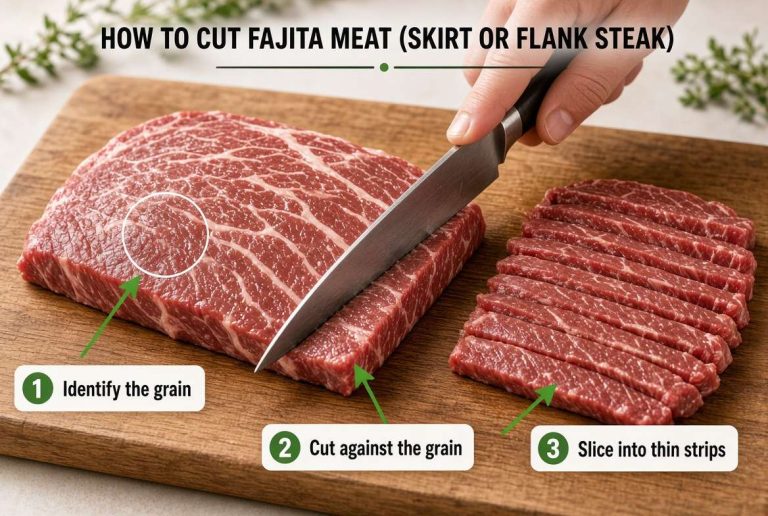
Here is a little secret from the pros. Slightly frozen meat is actually easier to slice thin. Many cooks freeze steak or chicken for about 30 to 45 minutes before slicing it for stir-fry, fajitas, or hot pot.
The firm texture keeps the meat from squishing under the knife. You get clean, even slices with almost no effort. So if you want paper-thin beef for a Korean-style dish or a quick noodle bowl, a short chill in the freezer helps.
How to Cut Different Types of Frozen Meat
Not all meat behaves the same way. Here is how to handle the most common types.
Frozen Beef Steak
Let the steak soften on the counter for about 15 minutes. Then use a sharp chef’s knife or a serrated knife. Cut across the grain for tender slices. If you want thin strips, wait until the meat is only partly frozen.
Frozen Chicken Breast
Chicken is easier than beef once it has softened a bit. Let it sit for 20 minutes, then slice it with a sharp knife. For cubes, cut it into strips first, then turn the strips and cut again. Keep the cutting board clean, because raw chicken carries germs.
Frozen Chicken Thighs and Drumsticks
These have bones, so a regular knife will struggle. Use a cleaver or a meat saw. Let the meat soften first. Cut through the joint instead of the bone when you can, since joints give way more easily.
Frozen Ground Beef
A frozen block of ground meat is a classic kitchen headache. Don’t try to saw it with a thin knife. Instead, let it soften in the fridge or cold water for a bit. Then use a heavy knife to cut it into slabs. You can also score the block with a knife while it is frozen, then snap off pieces.
Another easy trick: put the block in the microwave on defrost for a minute, then slice it into chunks and cook it in a pan. The chunks break apart as they brown.
Frozen Pork Chops
Pork chops are usually thick, so give them a bit more time to soften. A sharp knife works for boneless chops. For bone-in chops, use a cleaver or a saw, and cut slowly.
Frozen Bacon
A frozen bacon block can feel like a log of ice. A serrated knife is perfect here. Let the pack sit for about 10 minutes, then saw off the slices. You can also peel strips apart after a short soften.
Frozen Roasts
Big roasts are the hardest to cut. If you can, let them soften in the fridge for several hours first. Then use a long, sharp knife or a saw. Don’t try to cut a fully frozen roast with a kitchen knife.
Frozen Fish and Seafood
Fish cuts nicely when it is slightly frozen. Let it sit for about 10 to 15 minutes. Use a sharp, thin blade and slice with smooth strokes. Shrimp and small fillets usually need no cutting at all.
Frozen Ribs
Ribs have lots of bone, so a cleaver or saw is your best bet. Let the rack soften a little, then cut between the bones. Take your time, and keep your free hand well back.
Step-by-Step: A Simple Routine for Safe Cutting
If you just want one clear routine, here it is.
- Set up your station. Place a damp towel under a big, stable cutting board.
- Soften the meat. Use the counter, fridge, or cold water, based on how much time you have.
- Grab the right tool. Use a sharp chef’s knife, serrated knife, or cleaver.
- Hold the meat steady. Keep your fingers curled and far from the blade.
- Start with shallow cuts. Score the surface first so the blade stays on track.
- Cut in slow, smooth strokes. Use a sawing motion for hard spots.
- Rest if needed. If a piece is still too hard, let it soften longer.
- Clean up well. Wash your board, knife, and hands with hot, soapy water.
Handy Tips to Make Cutting Frozen Meat Easier Next Time
The best way to deal with frozen meat is to prepare it well before it ever goes into the freezer. Here are some simple habits that save lots of trouble later.
Freeze Meat in Small Portions
Split big packs into meal-size portions before freezing. One or two chicken breasts per bag is plenty. This way, you never have to cut a giant block.
Freeze Meat Flat
Press meat into flat, thin shapes inside freezer bags. Flat packs freeze faster, thaw faster, and break apart easily. This works great for ground beef and sliced meat.
Use Parchment Paper Between Pieces
Place a sheet of parchment paper or wax paper between steaks, chops, or patties. They won’t stick together, and you can pull out one piece at a time.
Pre-Slice Before Freezing
If you often cook stir-fry or fajitas, slice the meat first and then freeze it. You can grab a handful of slices and toss them into the pan.
Press Out the Air
Air inside the bag causes freezer burn. Squeeze out as much as you can before you seal the bag. Better wrapping keeps meat fresher and easier to handle.
Label Everything
Write the type of meat and the date on each bag with a marker. You will thank yourself later when you open the freezer and everything looks the same.
Common Mistakes to Avoid
Even careful cooks slip up now and then. Watch out for these.
- Using a dull knife. It slips more and makes cutting harder, not easier.
- Hacking at the meat. Wild chopping with a kitchen knife can chip the blade and hurt you.
- Thawing on the counter for hours. Meat left out too long can grow harmful bacteria.
- Using hot water. It cooks the outside and leaves the inside frozen.
- Skipping the damp towel. A sliding board is a big safety risk.
- Cutting on a tiny board. Small boards tip and wobble.
- Forgetting to clean up. Raw meat juice spreads germs fast, so wash everything well.
Food Safety Tips You Should Know
Cutting frozen meat is only half the job. Keeping it safe to eat matters just as much.
Always keep raw meat away from ready-to-eat foods like salad, bread, and fruit. Use a separate cutting board for raw meat if you can. After you finish, wash the board, knife, and counter with hot, soapy water. Wash your hands for at least 20 seconds.
Cook meat to a safe internal temperature. A simple kitchen thermometer takes out the guesswork. Chicken should reach 165°F (74°C). Ground beef should reach 160°F (71°C). Steaks, chops, and roasts need about 145°F (63°C), followed by a short rest.
Can You Refreeze Meat After Cutting It?
It depends on how you softened it.
If you thawed the meat in the fridge and it stayed cold the whole time, you can refreeze it safely. The texture may get a little drier, but it is still fine to eat.
If you used the microwave, warm water, or the counter, don’t refreeze it. Cook it first. After that, you can freeze the cooked leftovers.
When in doubt, cook it. Never gamble with raw meat that sat out too long.
Quick FAQ About Cutting Frozen Meat
Can I cut frozen meat with a regular kitchen knife?
You can, but only after it softens a little. A thin or dull knife is risky on a solid block. A thick, sharp knife works much better.
What is the best knife for frozen meat?
A serrated knife is great for slicing roasts and bacon. A cleaver is best for bones. A sharp chef’s knife handles softened steaks and chicken well.
Is it safe to cut frozen meat?
Yes, if you take the right steps. Use a stable board, a sharp blade, and slow, careful moves. Let the meat soften before you start.
How long should I let frozen meat sit before cutting?
For thin cuts, 15 to 30 minutes on the counter is often enough. Thick cuts need a few hours in the fridge. The meat should feel firm, but not rock hard.
Can I cut frozen meat in a food processor?
Small, partly frozen chunks can work in a strong food processor. Don’t put in large, solid pieces. They can damage the blade and the motor.
Why does my knife keep slipping on frozen meat?
Frost makes the surface slick. Wipe the meat with a paper towel, use a serrated blade, and score the top lightly before you cut deeper.
Does cutting frozen meat change the taste?
Not really. The flavor stays the same. The texture can change a little if the meat is thawed too fast or refrozen, but careful handling keeps it great.
Final Thoughts
Learning how to cut frozen meat is one of those small kitchen skills that makes life easier. Once you know the basics, it stops feeling scary. Let the meat soften a bit, grab a sharp and sturdy blade, set up a safe workspace, and take your time.
Remember the big ideas. Safety comes first. A short soften beats fighting a solid block. The right tool for the right job saves you effort. And a little prep before freezing makes every future meal smoother.
Next time you pull a frozen brick out of the freezer, you will know just what to do. Dinner will be on the table, and your fingers will stay safe. Happy cooking!

Mary is a home cooking enthusiast and kitchen gear reviewer with a passion for practical cookware and food preparation tools. She enjoys testing cutting boards, knives, kitchen gadgets, and other cooking essentials to help home chefs make smarter buying decisions. Through KitchenCutting.com, Mary shares honest product reviews, buying guides, and helpful kitchen tips to make cooking easier, safer, and more enjoyable.