Best Boning Knife For Brisket In 2026
As an Amazon Associate we earn from qualifying purchases.
In this article
If you smoke brisket at home, you already know that the right knife makes a real difference. A good boning knife for brisket helps you trim fat, separate meat from bone and slice the finished meat without tearing it. This guide is for beginners who want to understand what these knives do and which kind might suit them.
All five products in this round-up are knife sets built around a long slicing knife and a shorter boning knife, with some adding a third blade. They share similar features, such as German or Japanese high-carbon steel, full tang construction and handles made of wood or Pakkawood. The comparison here rests on the listed features and typical use of each set, not on personal testing.
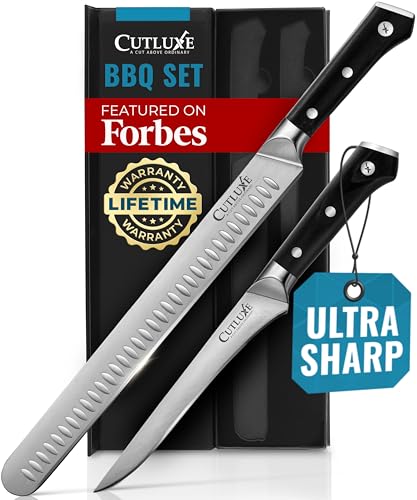


1. Cutluxe Carving Knife Set: best for simple BBQ and gift giving
What this set is and who it suits
This set includes a 12-inch brisket slicing knife and a 6-inch boning knife. It is a two-knife kit aimed at backyard cooks and gift buyers who want a focused set without extras. It works well for someone who mainly cooks brisket and a few other roasts.
Key features in plain words
The slicing knife and boning knife both use a granton edge. A granton edge has small hollow dimples along the blade, which help meat slide off instead of sticking. The blades are made from German steel that the listing describes as highly rust resistant.
Daily use and performance
For everyday cooking, the 12-inch blade gives you enough length to cut across a whole brisket flat in long strokes. The shorter 6-inch boning knife suits smaller jobs like trimming fat caps and working around joints. The full tang design, where the steel runs through the handle, adds balance and strength.
Ease of use and value
Two knives keep things simple, so beginners rarely feel overwhelmed. The ergonomic handle is designed for comfort during longer prep sessions. At its listed price, it sits in the lower-middle range of this round-up, which makes it an easy choice for a first set.
Pros
- Simple two-knife set that covers slicing and trimming
- Granton edges help reduce meat sticking to the blade
- Full tang design supports balance and strength
- Lower price point than several sets in this round-up
Cons
- Only two knives, so there is no dedicated breaking knife
- Rust resistance is good but still needs careful drying
- Limited detail on steel hardness compared with some rivals
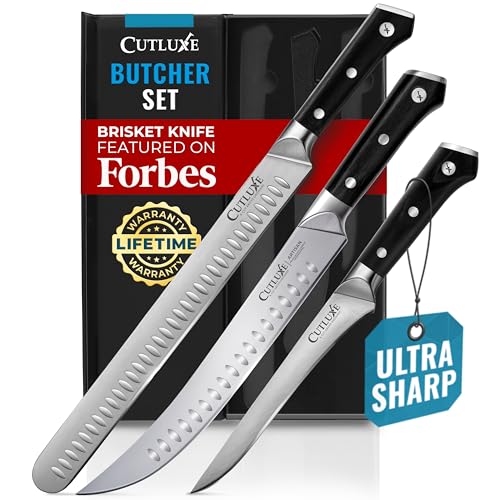
2. Cutluxe Butcher Knife Set: best for hands-on butchery
A three-knife set for more tasks
This set adds a 10-inch cimeter-style breaking knife to a 12-inch brisket knife and a 6-inch boning knife. The extra blade is useful when you want to break down larger cuts before cooking. It suits cooks who like to buy whole primals and butcher them at home.
How the three knives divide the work
The breaking knife handles larger cuts and rough separation. The boning knife takes care of fat trimming and filleting. The slicing knife is used at the end, when the meat is cooked and ready for portioning. Each blade has a clear purpose.
Materials and comfort
The blades are made from high-carbon German steel, which the listing describes as rust resistant. The handles use Pakkawood, a wood product that is compressed with resin to resist moisture. The full tang design runs through the handle for a secure feel.
Value and who it is for
The extra knife adds versatility, though the price is higher than the two-knife version. Beginners who only slice brisket may not need the breaking knife. Home butchers and serious grillers will likely find the breaking knife useful enough to justify the added cost.
Pros
- Three knives cover breaking, trimming and slicing
- High-carbon German steel with rust resistance listed
- Pakkawood handles offer a secure grip
- Good choice for cooks who buy whole cuts
Cons
- Higher price than the simpler two-knife set
- The breaking knife is not needed for basic slicing
- A larger set takes up more drawer or block space
3.
HOSHANHO Carving Knife Set 3PCS: best for Japanese-style sharpness
What sets this set apart
This three-piece set includes a 12-inch carving knife, a 10-inch brisket knife and a 7-inch fillet knife. The listing describes the blades as hand-ground with a 15-degree edge. A thinner edge angle usually means the blade cuts with less resistance.
Steel and edge quality
The blades are made from 10Cr15CoMoV Japanese high-carbon steel. This type of steel is known for holding a sharp edge for a long time, though it needs more care than softer stainless steels. The listing says the ultra-thin blade is designed to reduce tearing and sticking.
Handle and everyday feel
The Pakkawood handle has a curved shape that follows the fingers. Many cooks find that a curved grip reduces hand fatigue during longer work. The set comes in a gift box, which suits buyers who want a ready-to-give package.
Price and overall value
This set has the highest listed price in the round-up. The three-knife layout and Japanese steel explain part of that cost. Buyers who value edge sharpness and a refined feel may see the extra money as worthwhile.
Pros
- Thin edge angle designed for smooth, low-resistance cuts
- Japanese high-carbon steel known for strong edge retention
- Curved Pakkawood handle designed for comfort
- Comes in a gift box
Cons
- Highest price in this round-up
- Thin, sharp blades need careful handling and storage
- High-carbon steel needs drying to avoid rust
4. imarku Carving Knife Set: best for pitmasters who want a granton edge
A focused two-knife set for smoking
This set pairs a 12-inch brisket slicing knife with an 8-inch curved boning knife. The listing is written with pitmasters and weekend smokers in mind. It is a focused choice for people who cook packer briskets, pork butts and full racks.
Granton edge and clean slices
The brisket knife has a granton edge, which helps moist meat release from the blade. The listing says this helps keep slices intact on the board. The 8-inch boning knife is described as hand-sharpened to a 12-degree edge for fine trimming.
Steel, handle and build
The set is forged from 10Cr15CoMoV high-carbon Japanese steel with a listed hardness of 60 HRC. HRC is a common scale for measuring blade hardness, and higher numbers usually mean the edge holds its shape longer. The full tang Pakkawood handle is described as resistant to moisture and cracking.
Versatility beyond brisket
The listing says the slicing knife also works on turkey, ham and rib roasts. The boning knife can handle chicken and fish. This makes the set useful for holiday cooking as well as smoking days. Cooks who want one set for many jobs may appreciate that range.
Pros
- Granton edge designed to help slices stay intact
- Listed 60 HRC hardness supports good edge retention
- Full tang
- Full tang build adds rigidity and balance
- Moisture-resistant handle suited to messy prep
- Works across several meats, not only brisket
Cons
- Two-knife layout may feel limited for full butchery
- Hand washing and drying are needed to protect the steel
- The curved boning knife may take some getting used to
5. SYOKAMI Brisket Slicing Knife Set: best for a balanced mid-range pick
Two knives that cover the full job
This set includes a 12-inch slicing knife and a 6.7-inch flexible boning knife. Together, they cover separating meat from bone and carving it into slices. The listing presents it as an all-in-one option for barbecues, holidays and daily cooking.
Edge design and sharpness
The blades are described as high-carbon steel with edge angles of 13 to 15 degrees. The slicing knife has hollow dimples, which the listing says reduce drag and sticking. The steel is listed at a Rockwell hardness of 56 or higher, which supports edge retention.
Handle grip and comfort
Each knife has a full tang and an ergonomic wooden handle. The handles have a gear-tooth texture that the listing says keeps a secure grip, even when wet. The wood is FSC-certified, which means it comes from responsibly managed forests.
Value for money
This set has the lowest listed price in the round-up. It offers a full tang build, a flexible boning knife and a textured grip at a modest cost. That makes it a sensible choice for buyers who want good basics without a premium price tag.
Pros
- Lowest listed price among the five sets
- Flexible boning knife suits working around bone and joints
- Textured handle designed to stay grippy when wet
- FSC-certified wood handles
Cons
- Only two knives, with no dedicated breaking knife
- Wood handles need regular drying and care
- Listed steel hardness is lower than some rivals
Comparison insights: how these five sets differ
The five sets split into three clear groups. Two-knife sets suit simple brisket work, three-knife sets add breaking and fillet tasks, and the highest-priced set focuses on edge quality. Price does not always match capability, so it helps to read the feature list closely.
In terms of performance, the granton-edged slicing knives from Cutluxe and imarku are designed to help meat release cleanly. The Japanese-style blades from HOSHANHO and imarku focus on sharp, thin edges. The SYOKAMI set mixes hollow dimples with a flexible boning knife for a different balance.
Ease of use depends on your experience. Two-knife sets are simpler to store and learn, while three-knife sets reward cooks who want to butcher at home. Curved and flexible boning knives can feel more natural for trimming, though they need a little practice.
Value for money comes down to how many jobs you plan to do. A buyer who only smokes brisket may not need three knives. A cook who breaks down whole cuts may find the extra blade worth the cost. In short, match the set to your real tasks.
Buying guide: key factors explained in plain words
Start with the blade length. A long slicing knife, often between 10 and 12 inches, helps you cut across a large brisket in smooth strokes. A shorter boning knife handles fat trimming and tight spots around bone.
Next, look at the steel. High-carbon steel can hold a sharp edge for a long time, but it usually needs drying after washing to prevent rust. Stainless steel resists rust more easily but may not stay as sharp.
The edge shape also matters. A granton edge has small dimples that reduce sticking, which is helpful when slicing moist meat. A thinner edge angle, such as 12 to 15 degrees, usually cuts with less resistance, though it can also dull faster with rough use.
Handle comfort and grip
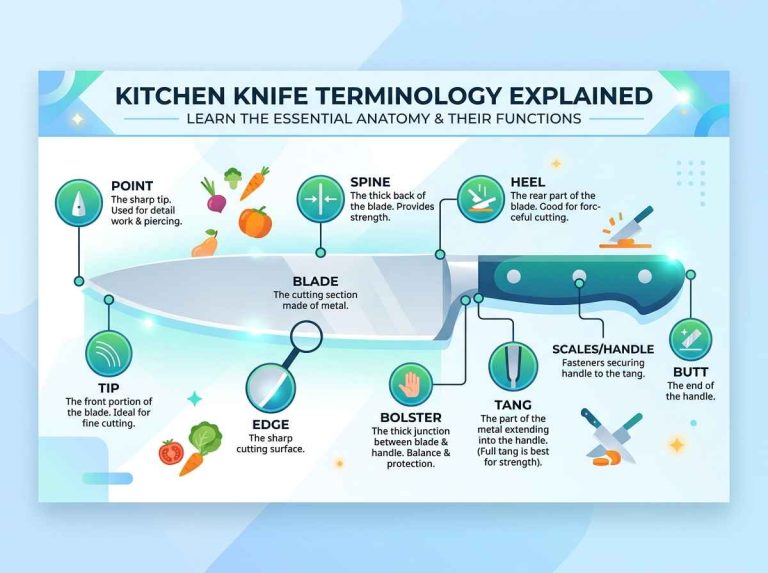
A handle should feel secure in your hand, even when it is wet or greasy. Full tang knives, where the steel runs through the handle, usually feel more balanced and stable. Wood and Pakkawood handles look attractive, but they need gentle washing and thorough drying.
Curved handles can reduce strain during long sessions. Try to picture how the knife will feel after an hour of trimming. Comfort matters more than most beginners expect.
Set size and what you really need
Two-knife sets cover slicing and trimming, which is enough for most home brisket cooks. Three-knife sets add a breaking knife or fillet knife for cutting larger primals and handling fish. Choose the number of knives based on the tasks you plan to do.
Storage space also counts. A larger set needs more room in a drawer or on a magnetic strip. Think about where the knives will live before you buy.
Price and long-term value
A higher price does not always mean better daily performance for a beginner. Higher-priced sets may offer more steel, more knives or more refined edges. Lower-priced sets can still cover the basics well.
Consider how often you will use the knives. Frequent smokers may get more value from a higher-quality set that lasts. Occasional cooks may be happy with a simpler, lower-cost option.
Who should buy these products: matching buyers to each set
Beginners who want a simple, low-cost starting point may suit the SYOKAMI Brisket Slicing Knife Set. Its two knives cover the main jobs, and the listed price is the lowest in this round-up. It is a sensible first purchase for a home cook.
Gift buyers who want a clear, two-knife option may consider the Cutluxe Carving Knife Set. Its granton edges and full tang build are easy to explain, and the set suits many grilling enthusiasts. It works well as a practical present.
Home butchers who buy whole cuts may prefer the Cutluxe Butcher Knife Set. The breaking knife adds a useful step to the process. It suits cooks who want more control over the entire cut.
Pitmasters who focus on smoking and want a granton edge may look at the imarku Carving Knife Set. Its brisket knife and curved boning knife are built for weekend smoking sessions. The set also covers holiday roasts and poultry.
Cooks who prioritize sharpness and a refined feel may consider the HOSHANHO Carving Knife Set 3PCS. Its thin edges and Japanese steel suit buyers who care about precise cutting. The higher price reflects that focus.
Common mistakes to avoid when picking and using a brisket knife
One common mistake is buying more knives than you need. A three-knife set can be useful, but it is not required for slicing brisket. Start with the tasks you actually do.
Another mistake is leaving high-carbon steel wet. Water left on the blade can cause rust spots over time. Dry the knife right after washing.
Many beginners also skip sharpening. A dull blade tears meat and makes slices look ragged. Regular honing and occasional sharpening keep the edge working well.
Finally, avoid putting knives in the dishwasher. Heat and harsh detergent can damage wooden handles and dull edges. Hand washing is the gentler choice.
Final verdict: which brisket knife set makes sense for you
All five sets share a clear purpose: helping you trim and slice meat with less effort. Each one has a different balance of price, knife count and edge design. None is the right choice for everyone.
For a budget-friendly start, the SYOKAMI set offers good basics. For a gift or simple granton-edged option, the Cutluxe Carving Knife Set stands out. For home butchery, the Cutluxe Butcher Knife Set adds useful versatility. For sharpness and a refined feel, the HOSHANHO set is a strong pick. For focused smoking and holiday carving, the imarku set deserves a look.
In short, choose the set that matches your tasks, your storage space and your budget. A well-chosen knife makes bris ket trimming and slicing feel more relaxed, and it will serve you well for many cooks to come.
Frequently Asked Questions about the best boning knife for brisket
Do I need a separate boning knife for brisket?
A boning knife is helpful for trimming fat and working around bone, but it is not strictly required. Many cooks use a long slicing knife for most of the work. A shorter boning knife simply gives you more control in tight spots.
What length of knife works best for slicing brisket?
Most sets in this round-up use a slicing knife between 10 and 12 inches long. A longer blade lets you cut across a large brisket in smooth strokes. Shorter blades can work, but they may need more passes.
Is high-carbon steel better than stainless steel for brisket knives?
High-carbon steel can hold a sharp edge for a long time, which many cooks value. It does need drying after washing to prevent rust. Stainless steel is easier to maintain but may not stay as sharp.
What does a granton edge do?
A granton edge has small hollow dimples along the blade. These help reduce sticking, so moist meat slides off more easily. This feature is common on slicing knives used for brisket and roasts.
How should I care for a wood or Pakkawood knife handle?
Wash the handle by hand with mild soap and warm water. Dry it thoroughly right after washing, and avoid soaking it. Never put these knives in the dishwasher, since heat and harsh detergent can damage the handle.

Mary is a home cooking enthusiast and kitchen gear reviewer with a passion for practical cookware and food preparation tools. She enjoys testing cutting boards, knives, kitchen gadgets, and other cooking essentials to help home chefs make smarter buying decisions. Through KitchenCutting.com, Mary shares honest product reviews, buying guides, and helpful kitchen tips to make cooking easier, safer, and more enjoyable.