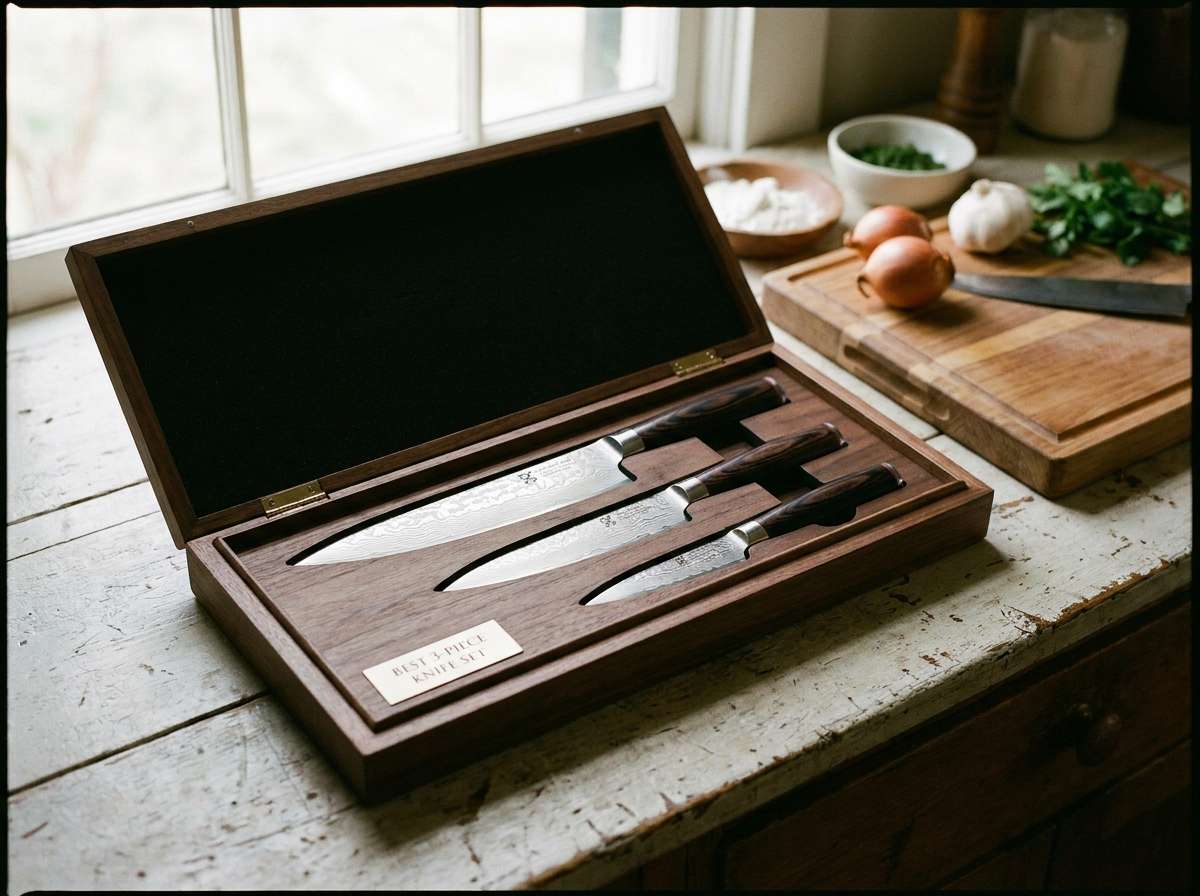
5 Best 3 Piece Knife Set In 2026
If you only own three knives in your kitchen, they need to earn their spot. A good 3 piece knife set covers almost every cutting job you’ll run into on a normal day, without filling up a drawer with blades you never touch. That’s the whole point of this style of set. You get a chef knife for the heavy lifting, a smaller knife for detail work, and one more piece that fills the gap in between.
In this article
The tricky part is that the market is stuffed with sets that look almost the same in photos but perform very differently in your hand. Some are stamped from thin steel and feel flimsy after a month. Some are forged from thick German steel and last for years. Some throw in fancy Damascus patterns that look great on a shelf but don’t always translate into better cutting.
In this roundup, I’m walking through five 3 piece knife sets that keep showing up in searches and on kitchen counters: imarku, Brewin, Henckels Solution, Emojoy, and ZWILLING Twin Signature. I’ll break down what each set actually gives you, where it shines, where it falls short, and who it fits best. By the end, you should have a clear idea of which set matches your cooking style and your budget.
Let’s get into it.
Why a 3 Piece Knife Set Makes Sense
Before jumping into the reviews, it helps to know why so many home cooks land on a 3 piece set instead of a big 15-piece block.
A full knife block sounds like a good deal on paper. More knives, more value, right? Not really. Most people use the same two or three knives for 90% of their cooking. The rest sit in the block collecting dust, going dull from neglect, and taking up counter space. A tight 3 piece set skips all that filler and gives you only the tools you’ll actually reach for.
Here’s the usual lineup in a 3 piece set:
- A chef knife (usually 8 inches) for chopping, slicing, and dicing
- A smaller utility or santoku knife for mid-size jobs
- A paring knife for peeling, trimming, and detail cuts
That combo handles vegetables, meat, fruit, herbs, and most everyday prep. It’s also a lot easier to keep three good knives sharp than ten average ones. Less clutter, less confusion, better cuts. Now let’s look at the actual products.
Quick Comparison at a Glance
Before the deep dives, here’s a fast snapshot so you can compare the basics side by side.
| Set | Steel Type | Origin | Pieces Included | Best For |
|---|---|---|---|---|
| imarku 3 Piece Knife Set | Japanese high carbon stainless steel | Designed with Japanese steel | Chef, Nakiri/Santoku or Boning, Paring/Bread (varies by version) | Beginners wanting sharp knives on a budget |
| Brewin Professional 3PC Set | High carbon stainless steel | Designed with German-grade steel core | Chef, Santoku, Utility | Gift buyers and casual home cooks |
| Henckels Solution 3-Pc Starter Set | Stainless steel, stamped | Germany (Henckels brand) | Chef, Serrated Utility, Paring | New cooks setting up a first kitchen |
| Emojoy Damascus 3-Piece Set | 67-layer Damascus with VG10-style core | Designed with Japanese steel | Chef, Santoku, Paring | Cooks who want a sharp, good-looking set |
| ZWILLING Twin Signature 3-Pc Set | Special formula stainless, ice-hardened | Made in Germany | Chef, Utility, Paring | Cooks who want a long-term, well-made set |
Now let’s go through each one in detail.
1. imarku 3 Pieces Knife Set (Japanese High Carbon Stainless Steel)
What It Is
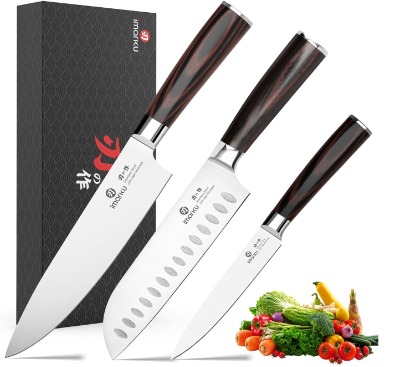
imarku has built a strong name in the budget-to-mid-range knife space, and this 3 piece set is one of its most popular lineups. It’s made from Japanese high carbon stainless steel, generally landing in the 56 to 57 HRC hardness range depending on the exact version you pick, since imarku sells a few slightly different bundles under this same family name. The handles are made from Pakkawood, a resin-treated wood that looks nice and holds up well to water and heat better than plain wood.
Depending on which listing you land on, the set usually pairs an 8-inch chef knife with two support pieces such as a nakiri or boning knife, a paring knife, or a bread knife. The core idea stays the same across versions: one big workhorse knife plus two knives that round out your daily prep.
Best Use Cases
This set is built for everyday home cooking. It handles:
- Slicing vegetables like onions, carrots, and peppers
- Breaking down chicken breasts or trimming small cuts of meat
- Mincing garlic and herbs
- Peeling and detail work with the smaller piece
- Slicing bread or soft produce, depending on the version you get
It’s not designed for heavy-duty butchering or breaking down whole animals. Think weeknight dinners, not a butcher shop.
Key Features Explained Simply
High carbon stainless steel blade — This steel type strikes a nice middle ground. Regular stainless steel is easy to maintain but doesn’t always hold an edge for long. Pure carbon steel holds an edge beautifully but rusts if you look at it wrong. High carbon stainless steel blends the two, giving you a blade that stays sharp longer than basic stainless while still resisting rust in normal kitchen conditions.
15-degree edge angle — A sharper angle (compared to the older 20-degree standard) means the blade slices through food with less pressure. You get cleaner cuts and less mashing, especially on soft items like tomatoes.
Pakkawood handle — This is wood that’s been treated with resin so it doesn’t soak up moisture. That makes it more stable, less likely to crack, and easier to clean than raw wood.
Real-Life Usage Insight
For daily cooking tasks like slicing an onion, dicing chicken, or chopping a bell pepper, this set glides through with very little resistance right out of the box. New users often notice the blade feels sharper than knives they’ve used in the past, especially if they’re upgrading from an old cheap set. The smaller knife in the trio is great for quick jobs like deveining shrimp or trimming fat, so you’re not stuck using the big chef knife for everything.
Honest Pros and Cons
Pros:
- Sharp straight out of the box
- Comfortable, secure grip thanks to the ergonomic handle
- Good value for the price point
- Handles most daily kitchen tasks with ease
- Comes in a nice gift box in most listings
Cons:
- Being high carbon steel, it needs hand washing and drying rather than a trip through the dishwasher
- Blade thickness can feel a bit lighter compared to premium German brands
- Edge may need a light touch-up sooner than pricier forged knives if used daily
Performance and Ease of Use
Performance here is genuinely solid for the price bracket. The blade holds its edge for weeks of regular home use before it starts to feel like it needs a strop or a quick sharpen. It’s light in the hand, which is a plus for people with smaller hands or anyone who cooks for long stretches, since a heavier knife tends to tire out your wrist faster.
For beginners, the light weight and sharp factory edge make this an easy knife to pick up and use right away. There’s no steep learning curve here.
Value for Money
This is where imarku earns its spot on this list. You’re getting a genuinely sharp, good-looking set for a price that undercuts most of the German competition. It won’t outlast a forged German blade over ten years of hard use, but for the money, it delivers way more performance than you’d expect.
2. Brewin Professional Kitchen Knives, 3PC Chef Knife Set
What It Is
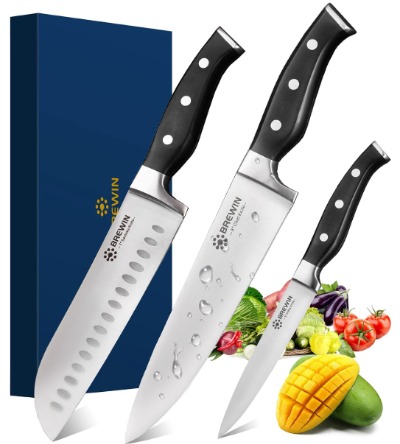
Brewin’s 3PC set includes a chef knife, a santoku knife, and a utility knife, all made from high carbon stainless steel with a rated hardness around 56+ on the Rockwell scale. The blades are hand polished at a 14 to 16 degree angle per side, and the set ships in a gift box, which makes it a common pick for people buying knives as a present rather than for their own kitchen.
The handles are triple-riveted ABS with a full tang design, meaning the metal of the blade runs all the way through the handle for better balance and strength.
Best Use Cases
Brewin’s trio is aimed squarely at general home cooking and casual gifting. It works well for:
- Slicing and dicing vegetables
- Cutting boneless meat and poultry
- Mincing herbs and garlic
- Light fruit prep with the utility knife
- Gifting to someone setting up a new kitchen
Key Features Explained Simply
High carbon 1.4116 style stainless steel — This is a steel grade commonly used across the budget-to-mid-tier knife market. It offers a reasonable balance of edge retention and rust resistance without needing the careful maintenance that full carbon steel demands.
Triple-rivet ABS handle — Three visible rivets hold the handle scales to the tang. This isn’t just decoration; it adds strength and keeps the handle from loosening over time, even with regular use.
Extra-wide grip zone — Brewin designed the space between the index and middle finger to be a bit wider than average, which reduces hand fatigue during long prep sessions and gives you a more secure pinch grip.
Real-Life Usage Insight
Home cooks who prep vegetables daily tend to like the balance of this set. The santoku knife in the middle slot is handy for cooks who prefer a flatter blade profile for chopping straight down rather than rocking the blade like a traditional chef knife. The gift box packaging also means it arrives looking presentable, which matters if you’re handing it to someone as a housewarming or wedding gift.
Honest Pros and Cons
Pros:
- Comfortable, wide grip zone reduces hand fatigue
- Good factory sharpness for the price
- Nice presentation box, great for gifting
- Full tang construction adds durability
- Handles a wide range of everyday cutting tasks
Cons:
- Not designed for tough jobs like cutting through bone
- ABS handle, while sturdy, doesn’t feel as premium as wood or Pakkawood
- Long-term edge retention is average compared to forged German or premium Japanese blades
Performance and Ease of Use
In daily use, Brewin’s set performs reliably for standard kitchen prep. The santoku shape makes straight-down chopping motions feel natural, which some cooks find easier to learn than the rocking motion used with a classic chef knife. The utility knife rounds things out nicely for smaller tasks that don’t need the full size of the chef knife.
Ease of use is a strong point here. The wide grip and lighter blade weight make this an approachable set for people who are newer to cooking or who have smaller hands.
Value for Money
Brewin sits in a similar price range as imarku, and it delivers comparable everyday performance. The gift box adds a nice touch if that’s part of why you’re buying, but if you’re purchasing purely for your own kitchen and don’t care about packaging, you’re mainly paying for the knives themselves, which do a solid job for standard home cooking.
3. Henckels Solution 3-Pc Starter Knife Set
What It Is
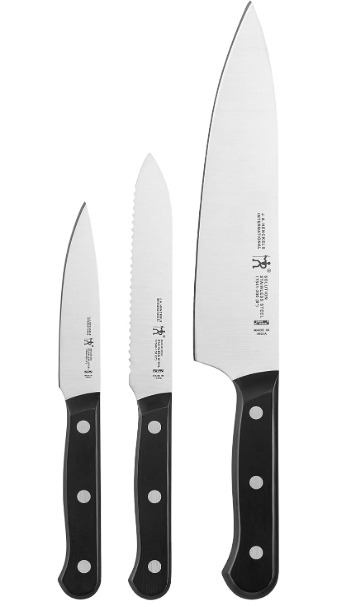
Henckels is a long-running German cutlery brand, and the Solution line is its entry point for people who want a recognizable name without paying for a fully forged German blade. This set includes a 4-inch paring knife, a 5-inch serrated utility knife, and an 8-inch chef knife, all stamped from a single piece of stainless steel rather than forged.
Stamped construction means the blade is cut from a flat sheet of steel rather than hammered and shaped from a heated block. This keeps the knife lighter and the price lower, though it does trade off some of the heft and rigidity you get from forged blades.
Best Use Cases
This set is built with beginners in mind, and it shows in the practical design choices:
- Everyday chopping, slicing, and dicing
- Peeling and detail work with the paring knife
- Slicing bread, tomatoes, and other items that benefit from a serrated edge
- Anyone setting up their very first “real” knife set
Key Features Explained Simply
Single-piece stamped blade — Instead of forging each knife from a thick chunk of steel, Henckels cuts the blade shape directly from a sheet. This keeps the knife lightweight and easier to maneuver, especially for people who find heavier forged knives tiring to use.
Full tang with triple-rivet handle — Even though the blade is stamped, the tang (the part of the blade that extends into the handle) runs the full length of the handle. Combined with the classic triple-rivet design, this gives the knife solid balance despite its lighter build.
Serrated utility knife — The 5-inch utility knife has a serrated edge, which is great for slicing through crusty bread or the skins of tomatoes and citrus without crushing the inside.
Real-Life Usage Insight
New cooks tend to gravitate toward this set because it doesn’t feel intimidating. The lighter weight makes it less tiring during long prep sessions, and the serrated utility knife covers a gap that a lot of other 3 piece sets miss, since slicing bread or ripe tomatoes with a plain edge often ends in a squished mess.
The trade-off shows up if you start doing heavier kitchen work, like breaking down a whole chicken or cutting through denser root vegetables. The lighter stamped blade doesn’t have the same heft as a forged knife, so it takes a bit more effort on tougher jobs.
Honest Pros and Cons
Pros:
- Trusted, well-known German brand name
- Lightweight and easy to maneuver
- Serrated utility knife adds real everyday value
- Dishwasher safe, which is rare for a quality knife set
- Great starter option for someone new to cooking
Cons:
- Stamped blades don’t have the same heft as forged German knives
- Not the best pick for heavier cutting tasks
- Edge retention is decent but not outstanding compared to higher-end lines from the same brand
Performance and Ease of Use
This is one of the easiest sets on this list to pick up and use immediately, largely because of the light blade weight and the recognizable, comfortable handle shape. It’s forgiving for people still building their knife skills, since the lighter blade is easier to control.
Performance-wise, it holds a decent edge for regular tasks, though it will need sharpening a bit sooner than the ZWILLING Twin Signature set further down this list, which uses a similar stamped construction but a slightly tougher steel formula.
Value for Money
You’re paying a bit of a brand premium here compared to imarku or Brewin, but you’re also getting a company with over a century of cutlery experience standing behind the product, along with the security of dishwasher-safe blades. For someone building their very first knife collection, that trade-off often feels worth it.
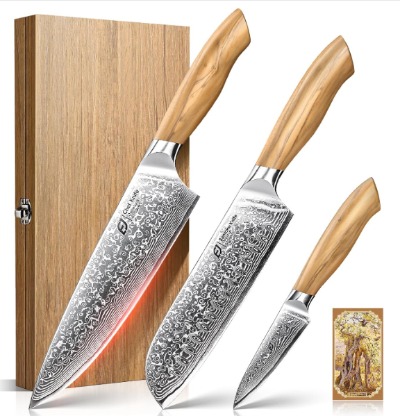
4. Emojoy 3-Piece Japanese Damascus Steel Knife Set
What It Is
Emojoy’s Damascus set steps things up visually and, in most cases, functionally too. The set includes an 8-inch chef knife, a 7-inch santoku knife, and a 3.5-inch paring knife, all made using a 67-layer Damascus construction with a harder steel core, generally rated around 58 HRC. The handles are made from olive wood, giving the set a warm, natural look that stands out from the usual black Pakkawood or ABS handles you see elsewhere on this list.
Damascus steel isn’t a single type of metal. It’s a construction method where multiple layers of steel are folded and forged together, creating the wavy pattern you see on the blade. The layers aren’t just for looks; they also add some flexibility and strength to the final blade.
Best Use Cases
This set fits cooks who want both performance and presentation:
- Precision slicing of vegetables, fruit, and fish
- Fine mincing work with the chef knife
- Detail tasks like deveining or trimming with the paring knife
- Cooks who enjoy having attractive tools on display in the kitchen
- Gift-giving for someone who appreciates craftsmanship
Key Features Explained Simply
67-layer Damascus construction — Layering steel this many times creates a blade with a harder cutting edge supported by more flexible layers underneath. In simple terms, you get a knife that’s both sharp and less likely to chip compared to a single-layer blade of similar hardness.
58 HRC hardness with 15-degree edge — This lands on the harder end of the spectrum for kitchen knives, which generally means better edge retention. The trade-off with harder steel is that it can be slightly more prone to chipping if you’re careless (say, cutting on a glass or stone surface), so a wooden or plastic cutting board is important here.
Olive wood handle — Olive wood isn’t just for looks. It’s a dense, tight-grained wood that resists moisture better than a lot of other wood types, and it develops a nice patina with use.
Real-Life Usage Insight
For everyday tasks like julienning vegetables or slicing fish fillets, the sharper, harder edge on this set noticeably reduces the effort needed compared to softer steel. Cooks who do a lot of precision work, like thin slices for garnishes or clean cuts on delicate fish, tend to appreciate the difference in edge quality here.
The olive wood handle also stands out in daily use. It feels warmer in the hand compared to synthetic handles and doesn’t get as slippery when your hands are a bit wet or oily during prep.
Honest Pros and Cons
Pros:
- Very sharp out of the box, with strong edge retention
- Attractive Damascus pattern and olive wood handle
- Harder steel means less frequent sharpening
- Comes in a nice wooden gift box in most listings
- Good balance between chef knife, santoku, and paring knife sizes
Cons:
- Harder steel can be more prone to chipping if used on the wrong cutting surface
- Requires hand washing to protect both the blade and the wood handle
- Slightly pricier than basic stainless steel sets like imarku or Brewin
Performance and Ease of Use
Performance is genuinely a step up here compared to the more budget-focused sets on this list. The harder steel holds its edge longer between sharpenings, and the thinner Damascus blade profile slices cleanly through most ingredients with very little drag.
Ease of use is good, though beginners should know that harder steel knives, in general, need a bit more care. Avoid glass cutting boards, avoid twisting the blade to pry things apart, and always hand wash and dry the blade promptly. Follow those basics and this set performs beautifully for years.
Value for Money
For the price, you’re getting genuine Damascus construction and a harder steel core than most sets in this bracket offer. If you care about both how your knives cut and how they look on your counter or in a display block, this set earns its price tag.
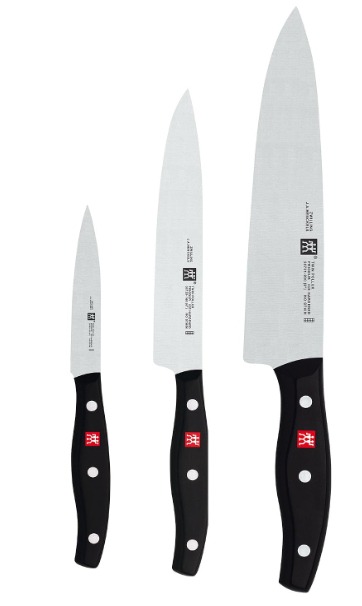
5. ZWILLING Twin Signature 3-Pc Knife Set
What It Is
ZWILLING (also known as Zwilling J.A. Henckels) sits a notch above the Henckels Solution line in terms of manufacturing process. This 3-piece set includes a 4-inch paring knife, a 6-inch utility knife, and an 8-inch chef knife, all made in Germany from special formula stainless steel and treated with ZWILLING’s FRIODUR ice-hardening process. Like the Henckels Solution set, these blades are precision-stamped rather than forged, which keeps the weight down while still using a tougher steel formula rated around 57 HRC.
Best Use Cases
This set works well for cooks who want a long-term, trustworthy set without stepping up to a fully forged premium line:
- Daily chopping, slicing, and dicing across most ingredients
- Precision peeling and trimming with the paring knife
- Mid-size tasks like cutting cheese, sandwiches, or smaller cuts of meat with the utility knife
- Cooks who want dishwasher-safe convenience without sacrificing too much performance
Key Features Explained Simply
FRIODUR ice-hardening process — This is ZWILLING’s proprietary hardening method, where the blade is cooled to below freezing temperatures during manufacturing. This process makes the steel harder at a molecular level, which translates to a blade that starts sharper and holds that sharpness longer than standard heat-treated steel.
Special formula German steel — ZWILLING has refined its steel formula over roughly 300 years of knife-making. It’s not a marketing gimmick; the steel really does perform more consistently across a wide range of kitchen tasks compared to generic stainless steel.
57 Rockwell hardness — This sits in a sweet spot for kitchen use: hard enough for solid edge retention, but not so hard that the blade becomes brittle or prone to chipping during normal home use.
Real-Life Usage Insight
Home cooks who’ve used both the Henckels Solution set and the ZWILLING Twin Signature set often notice the difference in edge retention pretty quickly. Both are stamped, lightweight blades, but the ice-hardening process on the Twin Signature line genuinely extends the time between sharpenings. For someone who cooks daily and doesn’t want to think about maintenance often, that difference adds up over months of use.
The 6-inch utility knife is also a nice in-between size. It’s bigger than a typical paring knife but smaller than a chef knife, making it a natural pick for things like slicing a sandwich, trimming small cuts of meat, or cutting through a block of cheese.
Honest Pros and Cons
Pros:
- Made in Germany with a well-established manufacturing process
- FRIODUR hardening gives real, noticeable edge retention benefits
- Dishwasher safe for easy cleanup
- Comfortable, ergonomic handle that suits most hand sizes
- Strong reputation and widespread availability for replacement pieces
Cons:
- Priced higher than the budget-focused sets on this list
- Stamped rather than forged, so it lacks the heft that some experienced cooks prefer
- Not the flashiest looking set if you want something with visual pattern work like Damascus
Performance and Ease of Use
This set performs consistently well across nearly every home cooking task you throw at it. The combination of a proven steel formula and the ice-hardening process means the edge lasts noticeably longer than the entry-level Henckels Solution line, even though both use a similar stamped blade style.
Ease of use is excellent. The handle shape is comfortable for extended prep sessions, and the lighter blade weight makes it approachable for cooks of all skill levels, from someone just learning knife skills to someone who’s been cooking for decades.
Value for Money
This is a “buy once, use for years” kind of set. It costs more upfront than imarku, Brewin, or the Henckels Solution line, but the combination of German manufacturing, a proven hardening process, and dishwasher-safe convenience makes it a smart long-term investment for anyone who cooks often.
Comparison Insights: How These Sets Stack Up
Now that you’ve seen each set on its own, here’s how they compare when placed side by side across the factors that matter most.
Steel Quality and Edge Retention
The Emojoy Damascus set and the ZWILLING Twin Signature set lead the pack here, thanks to harder steel (58 and 57 HRC respectively) and more advanced processing methods. imarku comes close behind with its 56 to 57 HRC Japanese steel. Brewin and Henckels Solution sit slightly lower, though they’re still perfectly capable for daily home cooking.
Build and Handle Comfort
Full tang construction shows up across imarku, Brewin, and Emojoy, giving those sets a slight edge in balance and durability. Henckels Solution and ZWILLING Twin Signature use full tang stamped blades too, but the overall build feels lighter across the board, which some cooks love and others find less substantial.
Maintenance Requirements
This is where the sets split clearly into two camps. Henckels Solution and ZWILLING Twin Signature are dishwasher safe, making cleanup simple. imarku, Brewin, and Emojoy all require hand washing to protect the high carbon or Damascus steel and, in Emojoy’s case, the olive wood handle as well.
Price and Value
imarku and Brewin sit at the most accessible end of the price range, making them a smart starting point for anyone on a budget. Henckels Solution sits in the middle thanks to brand recognition. Emojoy and ZWILLING Twin Signature land at the higher end, but both justify that price with better steel, better hardening, or a more premium look and feel.
Looks and Gifting Appeal
If presentation matters to you, Emojoy’s olive wood and Damascus pattern stands out the most, followed closely by imarku and Brewin, both of which usually ship in a branded gift box. Henckels Solution and ZWILLING Twin Signature go for a more classic, understated look that leans practical over decorative.
Buying Guide: What to Look for in a 3 Piece Knife Set
If none of the five sets above feel like the exact right fit, or you just want to shop with more confidence in general, here’s what actually matters when comparing knife sets.
Steel Type
Stainless steel is easy to maintain and resists rust well but can lose its edge faster. High carbon stainless steel blends rust resistance with better edge retention. Full carbon steel holds an edge the longest but rusts quickly if not dried right after use. For most home cooks, high carbon stainless steel hits the best balance.
Blade Hardness (HRC)
You’ll often see a Rockwell hardness rating listed, usually somewhere between 54 and 60 for kitchen knives. Lower numbers (54 to 56) mean a softer blade that’s easier to sharpen but dulls faster. Higher numbers (57 to 60) mean better edge retention but a bit more risk of chipping if mishandled. A rating around 56 to 58 is a solid middle ground for daily kitchen use.
Blade Construction: Stamped vs Forged
Stamped blades are cut from a flat sheet of steel, making them lighter and usually cheaper. Forged blades are shaped from a heated block of steel, giving them more heft, better balance, and generally longer-lasting sharpness, but at a higher price. Neither option is “wrong.” It comes down to your own taste: some people like a lighter knife, others prefer a heavier, more traditional feel.
Handle Material and Grip
Pakkawood and olive wood tend to feel more premium and offer a secure grip even when your hands are wet. ABS or polymer handles are more budget-friendly and still hold up well with a full tang design. Test the grip if you can, since hand size and grip style vary a lot from person to person.
Included Knife Sizes
Most 3 piece sets include a chef knife, a smaller support knife (santoku, nakiri, or utility), and a paring knife. Think about your actual cooking habits: if you bake often, a serrated utility knife is more useful than a plain-edged one. If you cook a lot of fish or thin-sliced vegetables, a santoku shape might suit you better than a straight utility blade.
Maintenance Needs
Dishwasher-safe sets save time but can dull faster over repeated dishwasher cycles due to heat and detergent exposure. Hand-wash-only sets take a bit more care but generally reward that care with a longer-lasting edge. Be honest with yourself about how much maintenance effort you’re actually willing to put in.
Warranty and Brand Support
Established brands like Henckels and ZWILLING typically offer stronger warranty support and easier access to replacement parts. Newer or smaller brands like imarku, Brewin, and Emojoy often include their own satisfaction guarantees, so it’s worth checking the specific return policy before you buy.
Who Should Buy These Products
Not every set fits every kitchen, so here’s a quick breakdown based on who you are as a cook.
New cooks setting up their first kitchen should look at Henckels Solution or imarku. Both are approachable, lightweight, and forgiving for people still building basic knife skills.
Budget-conscious shoppers will get the most bang for their buck with imarku or Brewin. Both offer sharp, reliable performance without a big price tag.
Cooks who want a long-term investment should lean toward ZWILLING Twin Signature. The combination of German manufacturing and proven hardening technology means this set holds up well over years of regular use.
Home cooks who care about looks as much as performance will likely be drawn to Emojoy’s Damascus set. It performs well and looks striking sitting on a counter or in a display block.
Gift shoppers should consider Brewin or imarku for their attractive packaging, or Emojoy if the recipient appreciates craftsmanship and a more premium presentation.
Anyone doing precision or fine cutting work, like thin fish slices or detailed vegetable prep, should look closely at Emojoy’s harder steel edge or imarku’s 15-degree Japanese-style grind.
Common Mistakes to Avoid When Buying and Using a Knife Set
A good knife set can lose most of its value fast if it’s misused or poorly maintained. Here are the mistakes that show up most often.
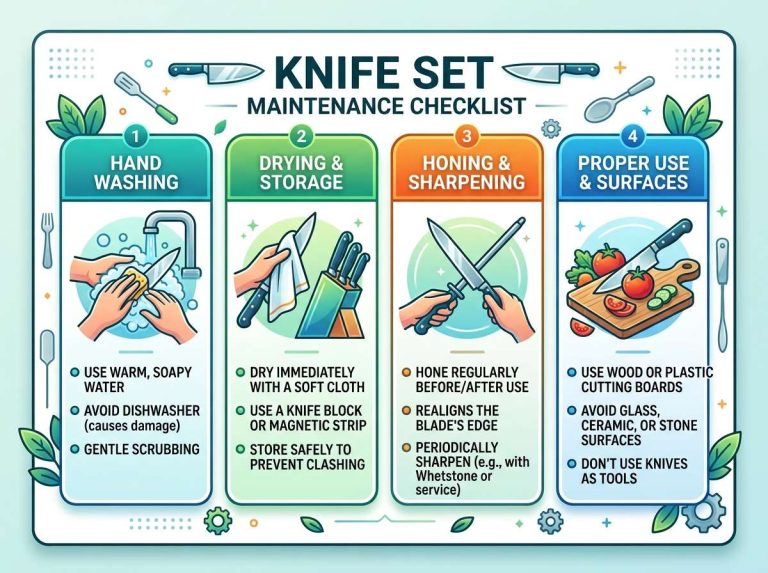
Putting high carbon or Damascus knives in the dishwasher. Heat, moisture, and harsh detergent can dull the edge and damage the handle finish over time. Stick to hand washing and drying immediately for any set that isn’t explicitly labeled dishwasher safe.
Cutting on glass, stone, or marble surfaces. These surfaces are far harder than the steel in your knife, and every cut on them chips away at the edge. Always use a wood or plastic cutting board.
Storing knives loose in a drawer. Blades knocking against other utensils dulls the edge quickly and creates a safety hazard when reaching in. Use a knife block, a magnetic strip, or blade guards instead.
Assuming a bigger set means better value. A 3 piece set that you actually use every day is worth more than a 15-piece block where most of the knives sit untouched and go dull from neglect.
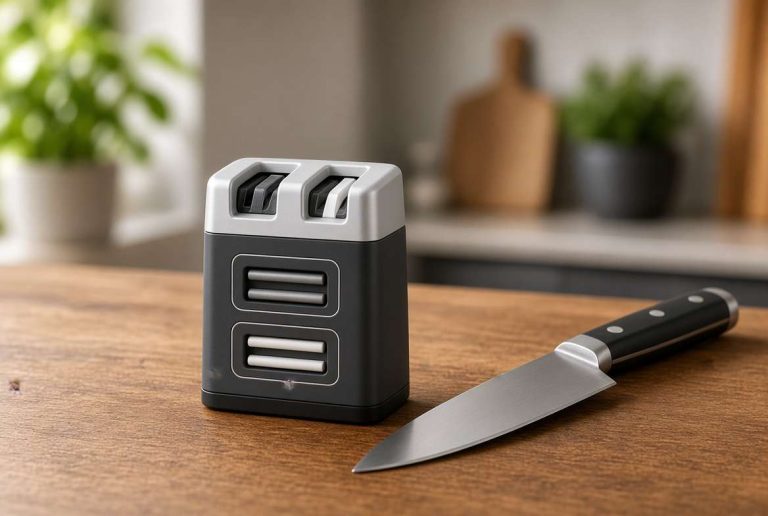
Ignoring the edge angle mismatch. Japanese-style knives are often sharpened at 15 degrees per side, while traditional German knives are closer to 20 degrees. Sharpening a Japanese blade at the wrong angle on a generic sharpener can actually damage the edge instead of restoring it. Check what angle your set is designed for before sharpening.
Buying based on looks alone. A beautiful Damascus pattern or a shiny gift box doesn’t guarantee good performance. Look past the packaging and check the steel type, hardness rating, and construction method before deciding.
Not drying the blade right away. Even stainless and high carbon stainless blades can develop water spots or minor corrosion if left wet for long periods. A quick towel dry after washing goes a long way toward keeping the blade looking and performing its best.
Final Verdict
All five sets on this list earn their spot for different reasons, so the “best” one really depends on what you value most in your kitchen.
If you want the sharpest, most well-rounded budget option, imarku is hard to beat. It gives you real Japanese-style steel performance without the premium price tag.
If you’re shopping with a gift in mind or want a comfortable, easy-to-use set for everyday cooking, Brewin delivers solid performance in an attractive package.
If you’re just starting out and want a trusted name with dishwasher-safe convenience, Henckels Solution is the safest, most beginner-friendly pick.
If you want a set that looks as good as it cuts, with harder steel and a striking olive wood handle, Emojoy’s Damascus set is the standout choice.
And if you’re after a long-term investment from a brand with a track record spanning centuries, backed by real hardening technology, ZWILLING Twin Signature is the set to grow old with in your kitchen.
There’s no single wrong answer here. Match the set to your cooking habits, your budget, and how much maintenance you’re willing to put in, and any of these five will serve you well for years of everyday cooking.

Mary is a home cooking enthusiast and kitchen gear reviewer with a passion for practical cookware and food preparation tools. She enjoys testing cutting boards, knives, kitchen gadgets, and other cooking essentials to help home chefs make smarter buying decisions. Through KitchenCutting.com, Mary shares honest product reviews, buying guides, and helpful kitchen tips to make cooking easier, safer, and more enjoyable.