Best Bread Bow Knife In 2026
As an Amazon Associate we earn from qualifying purchases.
In this article
A bread bow knife is a long serrated knife with a curved wooden frame, and it is one of the most popular tools for slicing homemade loaves. If you are new to baking or simply want a better way to cut bread, this guide is for you. It explains what the best bread bow knife options have in common and how they differ.
The five products reviewed here all share a similar design: a wooden bow frame, a thin serrated steel blade, and a handle meant for a comfortable grip. This comparison rests on the listed features and typical use of each product, not on personal testing. Where a detail is not provided, it is left out rather than guessed.


1. RAPSAKEMOH Sourdough bread knife: best for beginners who want a thicker, sharper blade
This is a wooden bow knife with a 15.7-inch serrated blade, designed for slicing crusty and soft loaves. It suits beginner bakers who want a simple tool that handles bread, cake, pastries and bagels. It also works well as a gift for someone starting to bake at home.
Best use cases
The knife is aimed at sourdough, baguettes and other crusty loaves. Its serrated edge is meant to cut through the crust while keeping the soft inside intact. Many buyers also use it for cakes and bagels.
Key features in simple words
The blade is made of 304 stainless steel, a common food-safe steel that resists rust. The product listing describes the blade as thicker and sharper than a standard version. A safety sheath, a screwdriver and two spare screws come in the box, so it can be taken apart and adjusted.
What daily use usually feels like
Because the handle is wooden and lightweight, the knife usually feels steady in the hand during longer slicing sessions. Flipping the blade for left-handed use takes a few minutes with the included screwdriver. Hand washing and drying are the usual care steps.
Performance and ease of use
The listing says the blade slices without crushing the crumb. For most people, a few gentle sawing strokes are enough to get through a loaf. Beginners tend to find it easy to control, though it still takes practice to get even slices.
Value for money
This is one of the lower-priced options in the group. Given the included sheath and tools, it offers a reasonable starting point. Buyers who want a premium finish may prefer a more expensive model.
Pros
- Thicker, sharper serrated blade listed for clean cuts
- Includes a sheath, screwdriver and spare screws
- Easy to switch between right- and left-hand use
- Works for bread, cake and bagels
Cons
- Requires hand washing and drying, not dishwasher-safe
- Beginners may need practice for perfectly even slices
- Wood finish is basic compared with higher-priced models
2. RAPSAKEMOH Bread Knife: best for shoppers who want a simple, versatile bow knife
This wooden bow knife is from the same brand as the first product, with a similar 15.7-inch length. It suits home bakers who want a straightforward knife for rustic loaves, fruit and cake. It is also a practical gift option for bread lovers.
Best use cases
The listing names homemade loaves, French baguettes, dark rye and other rustic breads. It also mentions fruit, cake and bagels. In short, it is built for everyday slicing across many foods.
Key features in simple words
The serrated blade is designed to slice soft bread without squishing it. A dedicated blade cover protects the edge when stored. The two screws on the blade can be loosened so the blade can be flip to be reattached for left-handed use.
The listing notes that the knife is not dishwasher-safe, so hand washing is the usual care step.
Real-life use and care
Because the wood can be damaged by long soaking, drying the knife right after each use is a good habit. Many buyers keep it in the cover between uses.
This simple routine helps the bow frame last longer.
Performance and ease of use
The serrated edge is meant to grip the crust and glide through without tearing the interior. Most people find that a light back-and-forth motion works better than pressing down. Beginners usually adjust to it within a few loaves.
Value for money
The price matches the first product in this group. What you get is a versatile knife with a blade cover and a left-hand option. For a basic bow knife, it offers solid value for the cost.
Pros
- Versatile for bread, fruit, cake and bagels
- Protective blade cover included
- Can be converted for left-handed use
- Simple, straightforward design
Cons
- Not dishwasher-safe, so care takes extra steps
- Few extras beyond the knife and cover
- Requires a screwdriver for left-hand conversion
3. Sourdough Knife: best for right-handed bakers who value a sturdy handle
This bow knife is made by Uprichya and is listed for right-handed users. It has a solid wooden handle and a thicker serrated blade. It suits bakers who want a comfortable grip and a knife that feels well balanced.
Built for right-handed use
The listing states that this knife is designed only for right-handed people. The handle has a curved shape meant to fit the hand. For left-handed users, another model in this group may be a better match.
Blade and handle in simple words
The blade is described as thicker, wider and sharper than many standard bread knives, with protruding serrations. The handle is solid sapele wood, a hardwood often used in furniture and tools. Screws are embedded at both ends of the handle, so the blade can be swapped without repeatedly twisting screws into the wood.
Real-life slicing experience
Because the handle is solid and balanced, the knife usually feels stable when cutting firm crusts. The embedded screws allow changing the blade without stripping the wood. A replacement blade is included, which many buyers find useful over time.
Performance and ease of use
The listing says the serrated blade glides through crusty bread with clean, even slices. The sturdy build helps keep the blade steady during cutting. Right-handed beginners often find this knife easy to control from the first use.
Value for money
This is a mid-range option in the group. The replacement blade and solid wood handle add to its appeal. Buyers who want a long-lasting, well-made handle may see it as good value.
Pros
- Solid hardwood handle that feels sturdy
- Embedded screws allow easy blade changes
- Thicker, sharper serrated blade listed
- Includes a replacement blade
Cons
- Designed only for right-handed users
- Sits at a higher price than the RAPSAKEMOH models
- Heavier handle may feel less light for some users
4. Sourdough Bread Knife: best for shoppers looking for an ergonomic, budget-friendly bow knife
This bread knife from ISAIDNO has an acacia wood bow and a 14.5-inch blade. It is aimed at home bakers who want a comfortable grip at a lower price. It also suits anyone looking for a gift for a baking enthusiast.
Shape and grip
The handle has grooves that the listing says help control the knife regardless of hand size. The design is described as light weight and balanced, which the listing says helps reduce hand fatigue. Grooves on the handle are meant to help the fingers settle into the right position.
Even so, grip comfort is personal, so holding the knife in a shop or with a friend’s help can be useful before buying.
Blade and protective cover
The stainless steel serrated blade is described as thicker, wider and sharper than a standard blade. It comes with a protective cover to reduce accidental cuts during storage.
The cover is a simple but practical safety feature for any kitchen with children or busy drawers.
Real-life slicing experience
Because the knife is light, it can feel easier to handle during longer baking sessions. The listing says it cuts through tough crusts without tearing the loaf. Many users slice with a steady sawing motion, letting the serrations do most of the work.
Performance and ease of use
The blade is meant to produce thin, uniform slices on sourdough, baguettes and bagels. The handle design supports control, which can help beginners keep their cuts straight. Sharpness is still important, so the knife may need occasional care to keep it cutting well.
Value for money
This is the lowest-priced knife in the group. It offers a comfortable grip, a protective cover and a wood bow at a modest cost. For buyers who want a capable starter knife without spending much, it is a sensible choice.
Pros
- Lowest price in this group
- Ergonomic grooves for control across hand sizes
- Protective cover included for safe storage
- Light, balanced feel listed for longer use
Cons
- Fewer extras, such as spare blades, than some options
- Grip comfort varies from person to person
- Serrated edge may need care to stay sharp over time
5. Woodever Bread Knife: best for bakers who want a longer blade and a spare knife
This Woodever set includes two bow knives with a 16-inch overall length and 10.6-inch stainless steel blades. It suits bakers who slice large loaves or want an extra knife on hand. It is also a good pick for anyone who enjoys a wooden kitchen piece that looks nice on display.
Longer blade and wide reach
The listing states that the blade can slice up to 9 inches long, which suits big round loaves. A longer edge can make it easier to cut straight across a loaf in one pass. For smaller breads, the extra length may simply be more blade than needed.
Wood and finish in simple words
The handle is made of American cherry wood, polished to a smooth surface. The listing also mentions beechwood in the product description. Because the wood is polished, the knife is meant to feel smooth in the hand and look attractive on a counter.
Assembly and tightening
The knife arrives pre-assembled. If the blade wobbles during use, the listing advises tightening the screws on both sides with a screwdriver. This simple adjustment can help the blade stay steady for cleaner cuts. Checking the screws now and then is a good habit for any bow knife.
Real-life use
Many buyers appreciate having two knives, so one can be used while the other is washed or dried. The listing also suggests using the knife for vegetables, cheese and cake, which broadens its use. Hand washing and drying are the usual care steps for wood.
Performance and ease of use
The serrated blade is described as gliding through bread without tearing its structure. A longer blade can take a few more strokes to cut through, so a relaxed, steady motion is best. Beginners may find the length helpful for large loaves but a little awkward on small ones.
Value for money
This is a mid-range price for a two-pack. The second knife adds real value if you bake often or share knives with a partner or friend. Buyers who only need one knife may find the extra one less useful.
Pros
- Two knives included in one pack
- Longer blade suits large round loaves
- Polished wood handle with a smooth feel
- Screws can be tightened if the blade wobbles
Cons
- Longer blade may feel awkward on small loaves
- Wood needs hand washing and thorough drying
- The second knife may not be needed by every buyer
Comparison insights: how these bow knives differ
The five knives look alike at first glance, but they differ in a few clear ways. Blade length, handle shape and the number of included extras vary. Price also spreads across a modest range, so the choice often comes down to what you need most.
On performance, all five list serrated stainless steel blades meant for crusty bread. The Woodever set offers the longest blade, which suits big loaves. The Uprichya knife stands out for its thick, sharp blade and solid handle.
Ease of use depends a lot on handedness and hand size. The Uprichya knife is for right-handed users only. The RAPSAKEMOH models can be switched for left-handed use with a screwdriver. The ISAIDNO knife uses grooves on the handle that many people find comfortable.
For value, the two RAPSAKEMOH knives and the ISAIDNO knife sit at the lower end. The Uprichya knife and the Woodever two-pack cost more, but they add a replacement blade or a second knife. Because of this, the best value depends on whether you need the extras.
Bow knife buying guide: the key factors in plain words
A bow knife is a long serrated blade held in a curved wooden frame. The bow keeps the blade tight and lets you use a sawing motion. Knowing what to look for makes shopping much easier.
Blade length is one of the first things to check. A longer blade can handle large round loaves, while a shorter one may feel easier on small breads. Look for a stated length in the listing before you buy.
Blade material matters too. Stainless steel is common in this type of knife because it resists rust and holds its edge reasonably well. Serrations, the small saw-like teeth on the blade, help the knife grip the crust.
Handle comfort is personal. Look for a shape that fits your hand, and consider whether the knife is light or heavy. Wood handles often feel warm and steady, but they need hand washing and drying.
Handedness is worth checking. Some knives are made only for right-handed users, while others can be flipped. If you are left-handed, choose a model that can be converted.
Extras can add value. Blade covers help with safe storage. Screwdrivers and spare screws make adjustments easier. A replacement blade can extend the life of the knife.
Who should buy these bow knives? Matching each buyer to a product
Choosing the right knife depends on how you bake and who you are. Matching your needs to a product can save money and frustration. Here is a simple guide.
If you are a complete beginner who wants a thick, sharp blade, the first RAPSAKEMOH Sourdough bread knife is a reasonable starting point. It also includes tools for left-handed conversion.
If you want a simple knife for many foods, the RAPSAKEMOH Bread Knife fits well. It suits people who slice fruit, cake and bagels as well as bread.
If you bake right-handed and value a sturdy handle with a replacement blade, the Sourdough Knife by Uprichya is a good match. It is a better fit for right-handed users only.
If you want a comfortable grip at the lowest price, the Sourdough Bread Knife by ISAIDNO is worth a look. It suits budget-minded bakers and gift buyers.
If you bake large loaves or want a spare knife, the Woodever Bread Knife two-pack may suit you best. It works well for households that bake often or share tools.
Common mistakes to avoid with a bow knife
Many beginners make a few easy mistakes with bow knives. Avoiding them can help your knife last longer and cut better. Small habits make a big difference.
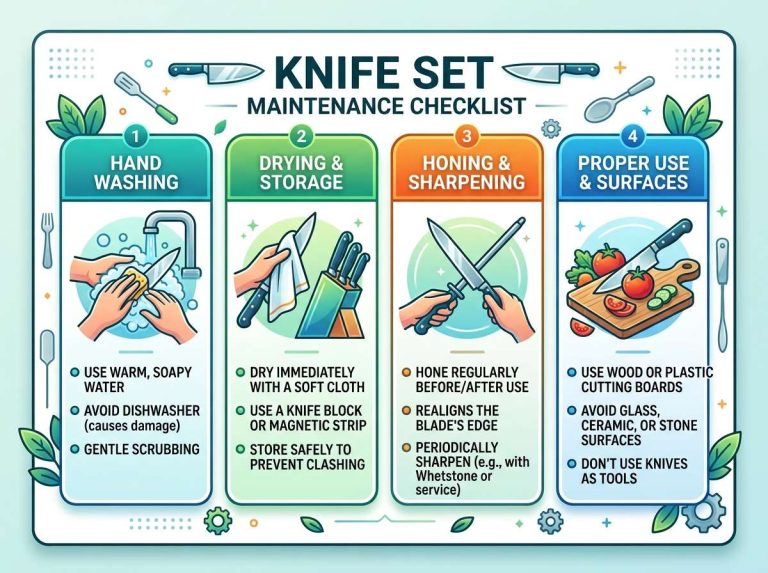
A common mistake is soaking the wooden handle. Water can warp or crack wood over time, so drying the knife right after washing is important. Never leave it submerged in the sink or dishwasher. Another mistake is pressing down hard.
A serrated blade works by sawing, so a light back-and-forth motion usually works better than pushing straight down. Pressing too hard can squash the loaf and leave ragged slices. Many people also skip checking the screws. Over time, the blade can start to wobble, which makes cuts less even.
A quick tightening with a screwdriver, as the Woodever listing suggests, can keep the knife steady. Storing the knife loose in a drawer is another common error. A blade cover, which several of these products include, protects the edge and helps prevent accidental cuts.
Keeping the knife covered between uses is a simple habit worth building. Finally, some buyers choose a knife without checking handedness. The Uprichya knife is listed only for right-handed users, so left-handed bakers should look for a convertible model. Checking this detail before buying saves a return.
Final verdict: which bow knife makes sense for most bakers?
There is no single winner for every baker, because each knife serves a slightly different need. The best choice depends on your hand, your budget and the foods you slice. The five products here cover a useful range of options.
For a beginner who wants a versatile, lower-priced knife with left-hand conversion, the first RAPSAKEMOH model is a sensible pick. It includes useful extras and works across many foods. The second RAPSAKEMOH knife is a close alternative for simple everyday slicing.
For right-handed bakers who value a solid handle and a replacement blade, the Uprichya Sourdough Knife stands out. The ISAIDNO knife suits anyone who wants the most comfortable grip for the least money. The Woodever two-pack is a good fit for large loaves and households that want a spare.
In short, match the knife to your hand and your baking habits. Check handedness, blade length and included extras before you buy. With a little care, any of these bow knives can produce clean, even slices for many years of home baking.
Frequently Asked Questions about bread bow knives
What is a bread bow knife used for?
A bread bow knife is mainly used to slice crusty and soft homemade bread. Its serrated blade grips the crust and cuts with a sawing motion. Many people also use it for cake, bagels and fruit.
Is a bow knife better than a regular bread knife?
A bow knife uses a curved wooden frame to hold a long, thin serrated blade under tension. This shape lets you cut with a steady sawing action and can help produce even slices. Whether it is better depends on your preference and how often you bake.
Can I put a bread bow knife in the dishwasher?
Most of the knives in this group are not listed as dishwasher-safe, and the wooden handles are best hand washed. Dry the knife thoroughly right after washing. Avoid soaking the wood for long periods.
How do I know if a bow knife is right for left-handed use?
Check the product listing for left-hand conversion. Some models, such as the RAPSAKEMOH knives, can be flipped by loosening two screws. The Uprichya Sourdough Knife is listed only for right-handed users.
How do I keep a bow knife blade from wobbling?
Tighten the screws on the blade with a screwdriver if you notice wobbling. Check the screws now and then, especially after frequent use. Store the knife with its cover on to protect both the blade and your drawers.

Mary is a home cooking enthusiast and kitchen gear reviewer with a passion for practical cookware and food preparation tools. She enjoys testing cutting boards, knives, kitchen gadgets, and other cooking essentials to help home chefs make smarter buying decisions. Through KitchenCutting.com, Mary shares honest product reviews, buying guides, and helpful kitchen tips to make cooking easier, safer, and more enjoyable.