
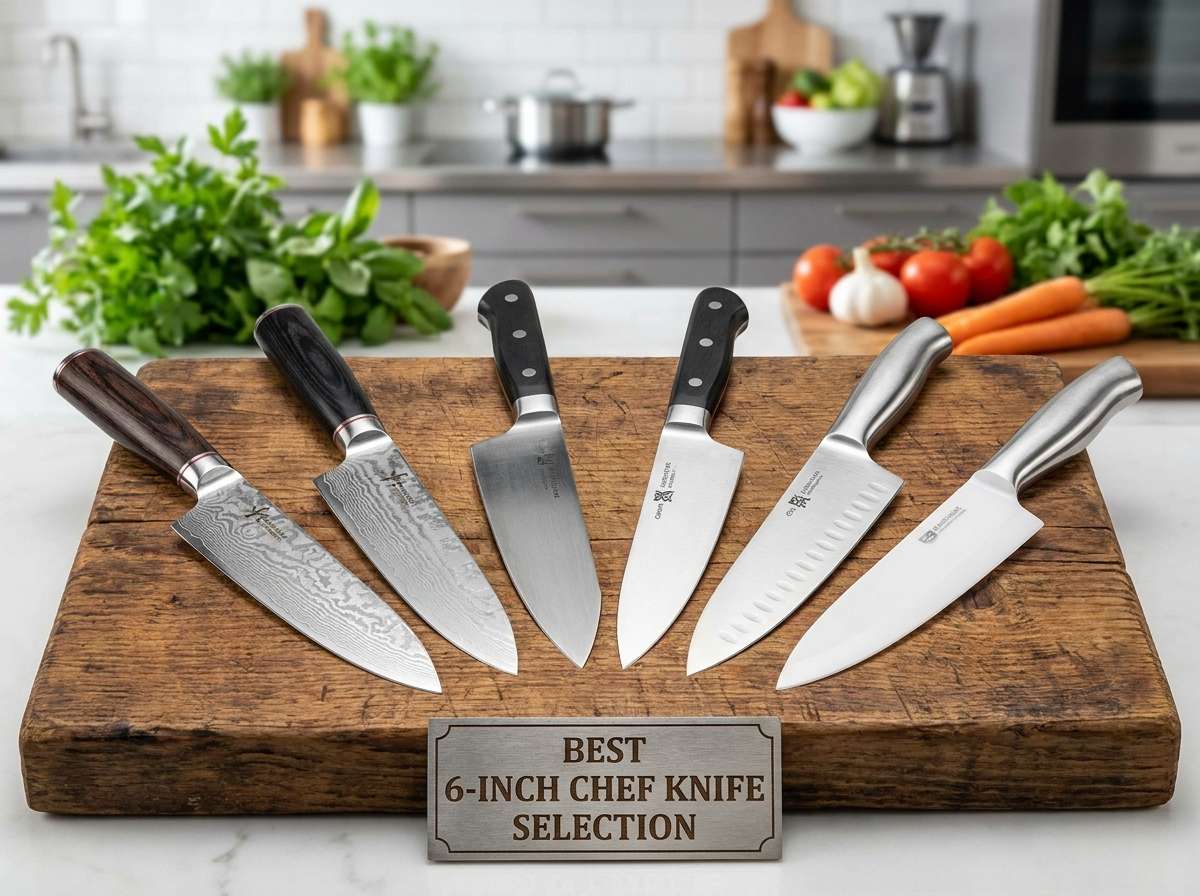
5 Best 6 Inch Chef Knife In 2026
If you have ever stood in a kitchen store staring at a wall of knives, you know how confusing it gets. Every brand claims to be the sharpest, the toughest, and the best value for your money. So how do you cut through all that noise (pun intended) and find a knife that actually works for your hands and your cooking style?
In this article
That is exactly why this guide exists. We are looking closely at the best 6 inch chef knife options on the market right now, breaking down what each one does well, where it falls short, and who should actually buy it. A 6 inch blade sits in a sweet spot. It is small enough to feel nimble and easy to control, yet still long enough to handle onions, herbs, chicken breasts, and most everyday prep work without feeling like a toy.
This is not a rushed listicle full of vague praise. We dug into the build materials, the balance, the edge retention, the handle comfort, and the price-to-performance ratio of five well-known 6 inch chef knives: Victorinox Fibrox, Mercer Culinary Genesis, Mercer Culinary Millennia, HOSHANHO, and HENCKELS Classic. By the end, you will know exactly which one fits your kitchen, your budget, and your skill level.
Let’s get into it.
Why a 6 Inch Chef Knife Deserves a Spot in Your Kitchen
Most people default to an 8 inch chef knife because that is what shows up in cooking shows and knife sets. But an 8 inch blade can feel bulky and tiring if you have smaller hands, less counter space, or you are still building up your knife skills. A 6 inch blade trims down the length without sacrificing much cutting power.
Here is what makes the shorter blade so useful:
- It is lighter, so your wrist and forearm do not tire out as fast during long prep sessions.
- It gives you tighter control for detail work like mincing garlic, trimming fat, or slicing herbs.
- It fits better in smaller kitchens, drawers, and knife blocks.
- New cooks often find it less intimidating than a longer blade.
- It still handles medium-sized vegetables, proteins, and fruit with ease.
Home cooks, students living in small apartments, people who cook mostly solo meals, and even some professional chefs who prefer a nimble blade all gravitate toward this size. That said, a 6 inch knife is not built for breaking down a whole watermelon or slicing a large loaf of bread. Know its limits and it will reward you with years of smooth, controlled cutting.
Quick Comparison Table
| Product | Blade Material | Handle | Best For | Approx. Price Range |
|---|---|---|---|---|
| Victorinox Fibrox 6 Inch | High-carbon stainless steel | Fibrox rubber-like handle | Everyday home cooking, beginners | Budget-friendly |
| Mercer Culinary Genesis 6 Inch | High-carbon German steel | Santoprene rubber | Balanced prep, semi-pro use | Mid-range |
| Mercer Culinary Millennia 6 Inch | Japanese steel | Textured Santoprene | Budget cooking school pick | Budget-friendly |
| HOSHANHO 6 Inch | High-carbon Japanese steel | Ergonomic wood-style handle | Precision cuts, sushi-style prep | Mid to premium |
| HENCKELS Classic 6 Inch | German stainless steel | Full-tang triple rivet | Traditional heavy-duty chopping | Mid-range |
Now let’s break each one down in detail.
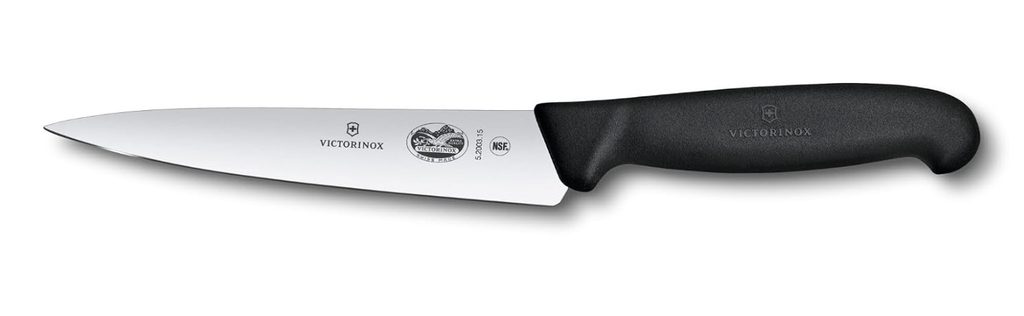
1. Victorinox Fibrox 6 Inch Straight Edge Chef’s Knife, Black
Product Description
The Victorinox Fibrox has built a loyal fan base among home cooks and working chefs alike, and it earns that reputation through simple, no-fuss performance. The blade is made from high-carbon stainless steel that gets ground and honed to a sharp straight edge right out of the box. The handle is made from Fibrox, a textured material that grips well even when your hands get wet or greasy from cooking.
This knife looks plain, almost boring compared to fancier options, but that plainness is part of the charm. It is built to work hard every single day without asking for special care.
Best Use Cases
This knife shines during daily meal prep. Think dicing onions, slicing tomatoes, mincing garlic, breaking down chicken breasts, and chopping fresh herbs. It also handles softer fruits and vegetables with a clean, controlled cut. If you cook several times a week and want one dependable blade that does not need babying, this fits the bill nicely.
Key Features Explained Simply
- High-carbon stainless steel blade: This means the blade stays sharp longer than plain stainless steel and resists rust better than plain carbon steel. It gives you a nice middle ground.
- Fibrox handle: A textured, non-slip grip that stays comfortable during long prep sessions. Even if your hands sweat or get wet, the handle does not turn slippery on you.
- Lightweight design: The knife feels light in hand, so it reduces fatigue if you are chopping a big batch of vegetables for meal prep.
- NSF certification: This knife meets sanitation standards used in professional kitchens, so you know the materials and design pass strict hygiene checks.
Real-Life Usage Insight
In a busy home kitchen, this knife tends to become the “grab it first” tool. It is not flashy, but that is exactly why people reach for it. The blade glides through onions without much resistance, and the handle never feels awkward even after chopping a large batch of vegetables in one sitting. Cooks who batch-prep meals for the week often praise how little arm fatigue they feel after using this knife compared to heavier options.
Pros
- Sharp straight edge right out of the box
- Comfortable, slip-resistant grip
- Lightweight, so it reduces hand fatigue
- Affordable price point
- Easy to sharpen and maintain
- Trusted by culinary schools and professional kitchens
Cons
- The plain look does not appeal to everyone
- The blade is thinner, so it is not ideal for heavy bone-in cuts
- Handle design is functional but not the most stylish
Performance Discussion
The blade holds an edge reasonably well for regular home use. It will not stay razor sharp forever without honing, but a quick pass on a honing rod before use keeps it performing at a high level. It handles slicing, dicing, and mincing tasks smoothly, and the thin blade profile helps it glide through food rather than push through it.
Ease of Use
New cooks tend to adjust to this knife fast. The light weight and grippy handle make it forgiving if your knife technique is still developing. It does not fight you, which builds confidence in the kitchen.
Value for Money
Given the price, this is one of the strongest value picks on this whole list. You get a knife trusted in commercial kitchens at a price that fits almost any budget. For the money, it is hard to beat.
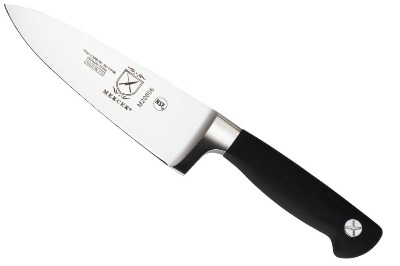
2. Mercer Culinary M20606 Genesis 6-Inch Chef’s Knife, Black
Product Description
The Mercer Culinary Genesis line sits a step above entry-level knives while still staying approachable in price. This 6 inch version uses high-carbon German steel forged into a full tang blade, meaning the metal runs the entire length of the handle for added strength and better balance. The handle uses a Santoprene material with a textured grip zone that feels secure during fast chopping.
This knife has a more substantial feel compared to the Victorinox, giving it a slightly more “chef-like” presence on the cutting board.
Best Use Cases
This knife works great for people who want a bit more heft and balance while still keeping the maneuverability of a shorter blade. It handles dense vegetables like carrots and potatoes with ease, slices proteins cleanly, and holds up well during longer prep sessions where consistency matters, like meal prepping for a family.
Key Features Explained Simply
- Full tang construction: The blade metal extends fully into the handle, which improves balance and makes the knife feel sturdier in hand.
- High-carbon German steel: This steel type is known for good edge retention and strength, so it stands up to regular use without chipping easily.
- Santoprene handle with finger guard: The handle includes a built-in guard near the blade that helps protect your fingers and gives better control during precise cuts.
- Textured grip zones: These add extra traction exactly where your fingers naturally rest.
Real-Life Usage Insight
Cooks who upgrade from a basic knife to this one often notice the difference in balance right away. The extra weight near the bolster makes rock-chopping herbs and mincing garlic feel more controlled. It also handles semi-frozen meat trims better than lighter blades, since the added heft helps push through resistance without extra effort.
Pros
- Excellent balance thanks to full tang design
- Strong edge retention
- Comfortable ergonomic handle with finger guard
- Handles denser produce and proteins well
- Sturdy build that feels durable over time
Cons
- Slightly heavier, which may not suit those who prefer ultra-light knives
- Costs more than basic entry-level options
- Needs occasional honing to keep peak sharpness
Performance Discussion
This knife performs impressively across a range of tasks. It slices through root vegetables cleanly, breaks down poultry with control, and keeps a consistent edge through repeated use. The balance point sits close to the bolster, which many cooks find reduces wrist strain during long chopping sessions.
Ease of Use
Beginners might notice the extra weight at first, but most adjust within a few uses. The finger guard also adds a layer of safety that newer cooks appreciate, since it naturally keeps fingers away from the blade path.
Value for Money
This knife sits in the mid-range price bracket, and it earns that price through better balance, sturdier construction, and a more refined cutting experience. For anyone ready to step up from a basic starter knife, this is a smart next purchase.
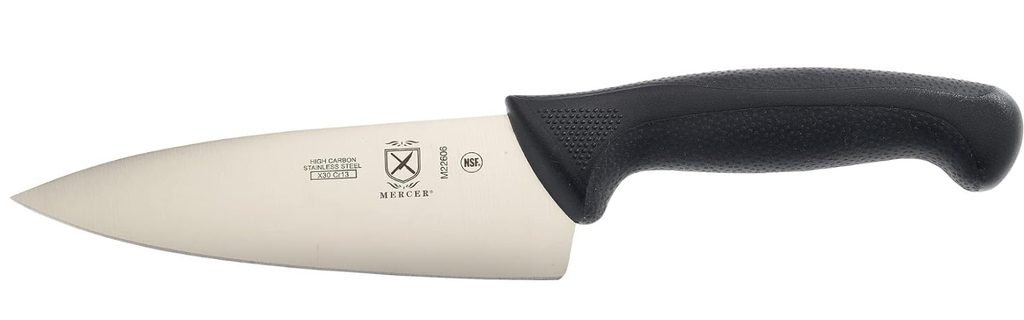
3. Mercer Culinary Millennia 6 Inch Chef’s Knife
Product Description
The Millennia line from Mercer Culinary is often the knife handed out in culinary schools because it strikes a strong balance between low cost and dependable performance. This 6 inch version uses Japanese steel for the blade and pairs it with a textured Santoprene handle designed for a firm, slip-resistant grip.
It looks similar to the Genesis line but comes in at a noticeably lower price, making it a favorite for students, beginners, and anyone who wants a reliable knife without spending too much.
Best Use Cases
This knife is great for everyday chopping tasks: dicing onions, mincing garlic, slicing fruit, and trimming vegetables. Culinary students often use it during training because it teaches proper knife technique without punishing small mistakes the way a heavier or more expensive knife might.
Key Features Explained Simply
- Japanese steel blade: Known for being sharp and relatively easy to maintain, this steel type gives the knife a clean, precise cutting edge.
- Santoprene handle: Soft yet grippy, this handle material stays comfortable through repeated use and resists slipping even when wet.
- Textured finger points: Small textured areas near the blade help guide finger placement for safer, more controlled cuts.
- Lightweight balance: The knife feels nimble, making it easier for beginners to control during fast or repetitive cutting tasks.
Real-Life Usage Insight
Culinary students commonly report that this knife holds up surprisingly well for its price. It handles daily classroom use, from breaking down vegetables to practicing knife cuts, without losing its edge too quickly. Home cooks who want a backup knife or a budget-friendly option for a second kitchen often land on this one too.
Pros
- Very affordable price point
- Reliable sharpness for everyday tasks
- Comfortable, non-slip handle
- Lightweight and easy to control
- Popular choice in culinary training programs
Cons
- Edge retention is decent but not as strong as pricier options
- Build feels a bit less premium compared to the Genesis line
- Not ideal for heavy-duty or bone-in cutting tasks
Performance Discussion
For the price, this knife performs above expectations. It slices cleanly through most fruits and vegetables and handles boneless proteins without much resistance. The edge does dull a bit faster than higher-end steel, so regular honing keeps it performing at its best.
Ease of Use
This is one of the easiest knives on this list to get comfortable with. The light weight and grippy handle make it forgiving for beginners still learning proper knife grip and cutting motion.
Value for Money
At this price point, it is tough to find a knife that performs this consistently. It is a smart pick for students, beginners, or anyone who wants a dependable extra blade without spending a lot.
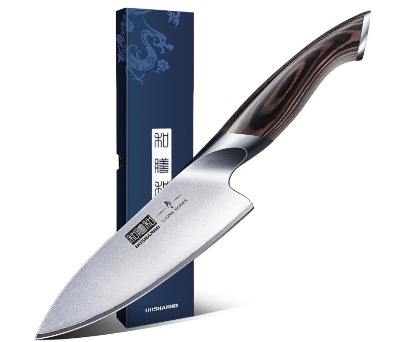
4. HOSHANHO 6″ Kitchen Knife, Professional Japanese High-Class Chef’s Knife
Product Description
The HOSHANHO knife brings a more premium, Japanese-inspired design into the mix. It uses high-carbon Japanese steel known for holding a sharp, precise edge, paired with an ergonomic handle shaped for comfortable, controlled movements. The blade often features a thinner profile compared to German-style knives, which gives it a different cutting feel focused on precision rather than brute force.
This knife appeals to cooks who enjoy detail-oriented prep work, like thin vegetable slices, precise herb cuts, or delicate protein trimming.
Best Use Cases
This knife performs best for precision tasks. Think julienning vegetables, slicing fish for home sushi nights, or making paper-thin cuts of cucumber or radish. It is also a strong pick for cooks who enjoy Asian-style cooking techniques that rely on clean, thin slices.
Key Features Explained Simply
- High-carbon Japanese steel: This steel type sharpens to a very fine edge and holds that sharpness well with proper care, giving you cleaner cuts with less pressure.
- Thinner blade profile: A slimmer blade reduces resistance as it moves through food, which is especially noticeable with softer produce and fish.
- Ergonomic handle design: Shaped to fit comfortably in hand during repetitive, detailed cutting motions.
- Sharp factory edge: Many users note the blade arrives noticeably sharper out of the box compared to standard Western-style knives.
Real-Life Usage Insight
Cooks who enjoy precision work, like thin vegetable ribbons or clean protein slices, tend to appreciate this knife the most. The thinner blade requires a slightly gentler touch compared to a German-style blade, since pushing too hard can feel less natural with this cutting style. Once you adjust your technique, though, the cuts come out remarkably clean.
Pros
- Extremely sharp factory edge
- Great for precision and detail work
- Lightweight, comfortable handle
- Attractive, premium-looking design
- Well suited for thin slicing tasks
Cons
- Thinner blade needs a bit more careful handling to avoid chipping
- Not the best choice for heavy chopping or bone-in cuts
- Requires more frequent honing to maintain that fine edge
- Pricier than basic Western-style options
Performance Discussion
This knife excels at tasks that reward precision. Thin slices of cucumber, delicate cuts of raw fish, and fine herb work all come out clean and consistent. It is not designed for rough use, so cooks who mainly need a workhorse chopping knife might find it a bit delicate for daily heavy use.
Ease of Use
Cooks with some knife experience will get the most out of this blade. Beginners can still use it comfortably, but the thinner edge rewards a lighter touch and proper cutting technique rather than forceful chopping.
Value for Money
Given the sharpness and design quality, this knife delivers solid value for cooks who care about precision cutting. It costs more than the Victorinox or Millennia options, but the cutting experience reflects that higher price for the right kind of user.
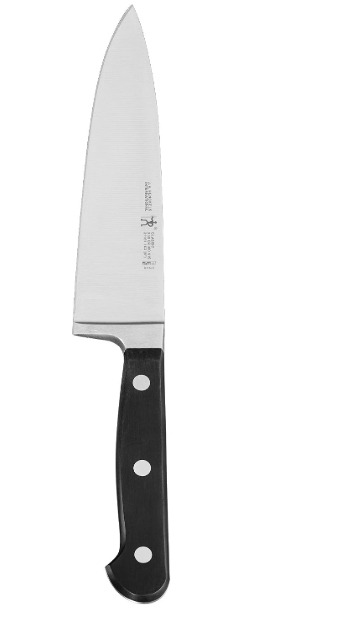
5. HENCKELS Classic Razor-Sharp 6-inch Chef Knife, German Engineered
Product Description
HENCKELS carries a long-standing reputation in knife making, and the Classic line reflects over a century of refinement in German blade engineering. This 6 inch chef knife uses German stainless steel and features a full-tang design with a traditional triple-rivet handle. It has a heavier, more traditional feel compared to the Japanese-style options on this list.
This knife brings a classic, timeless design that appeals to cooks who prefer a sturdy, no-nonsense blade built for years of regular use.
Best Use Cases
This knife handles a wide range of everyday kitchen tasks well, especially chopping vegetables, slicing proteins, and mincing herbs. Its added weight also makes it a strong option for slightly tougher cutting tasks, like breaking down denser vegetables or trimming meat.
Key Features Explained Simply
- German stainless steel blade: Known for strength and durability, this steel type resists chipping and holds up well through repeated use.
- Full tang, triple-rivet handle: The traditional handle design adds balance and a secure, sturdy grip that many cooks find reassuring during heavier tasks.
- Precision-honed edge: The blade gets honed using a traditional method that creates a durable, long-lasting edge.
- Classic bolster design: This adds weight near the blade for improved control and helps protect fingers during cutting.
Real-Life Usage Insight
Cooks who grew up using traditional German-style knives often gravitate toward this one because the weight and balance feel familiar. It handles daily chopping tasks with confidence, and the sturdier blade means less worry about chipping compared to thinner Japanese-style blades. It performs especially well for cooks who like a bit of heft behind their chopping motion.
Pros
- Durable, strong blade construction
- Comfortable, traditional handle design
- Good balance for chopping and mincing
- Long-lasting edge with proper care
- Backed by a well-known, established brand
Cons
- Heavier than some other options on this list
- Costs more than basic budget knives
- Slightly less nimble for very fine precision cuts compared to Japanese-style blades
Performance Discussion
This knife performs reliably across most kitchen tasks. It chops through vegetables with confidence, slices proteins cleanly, and holds its edge well between sharpenings. The added weight helps power through slightly tougher cuts, though it may feel less nimble than lighter blades during rapid, detailed slicing work.
Ease of Use
Cooks who prefer a knife with a bit more presence in hand will find this comfortable quickly. Beginners can use it too, though the extra weight might take a short adjustment period compared to lighter blades like the Victorinox or Millennia.
Value for Money
This knife sits in the mid-range price bracket and delivers strong durability and brand trust in return. For cooks who want a long-term investment piece with classic styling, it holds up as a smart purchase.
Comparison Insights
Now that we have gone through each knife individually, let’s line them up side by side based on a few key factors.
Weight and balance: The Victorinox and Millennia feel the lightest and most nimble, making them great for beginners or anyone who prefers speed over heft. The Genesis and HENCKELS Classic carry more weight near the blade, giving a sturdier, more grounded feel. The HOSHANHO sits somewhere in between, favoring precision over raw power.
Edge sharpness: The HOSHANHO tends to arrive the sharpest out of the box thanks to its Japanese steel and thinner grind. The HENCKELS and Genesis follow closely with strong factory edges built for durability. The Victorinox and Millennia are sharp enough for daily tasks but may need slightly more frequent honing.
Durability: The HENCKELS Classic and Genesis stand out for long-term durability thanks to their full-tang, thicker builds. The HOSHANHO, while razor sharp, needs a bit more careful handling since thinner blades chip more easily under rough use.
Comfort during long use: The Fibrox and Santoprene handles found on the Victorinox, Genesis, and Millennia all offer excellent grip, even with wet hands. The HENCKELS triple-rivet handle feels classic and secure but slightly less cushioned. The HOSHANHO handle favors control over cushion, which suits detailed work well.
Best value pick: The Victorinox Fibrox and Mercer Millennia both stand out as strong budget-friendly options that punch above their price. The Genesis and HENCKELS sit in the mid-range, offering more refined performance for a bit more money. The HOSHANHO leans premium, rewarding cooks who want precision above all else.
Buying Guide: What to Look for in a 6 Inch Chef Knife
Before you commit to any single knife, keep these points in mind. A good knife is not just about brand name. It comes down to how well the blade fits your hand, your cooking habits, and your kitchen routine.
Blade Material
Stainless steel resists rust and stays low maintenance, which makes it great for daily use. High-carbon steel sharpens to a finer edge and holds that sharpness longer, though it may need slightly more care. German steel tends to be tougher and more forgiving, while Japanese steel leans toward sharper, thinner edges built for precision.
Blade Weight and Balance
A heavier blade gives more power behind each cut and often feels more stable for tougher ingredients. A lighter blade moves faster and reduces fatigue, which works well for detailed or repetitive tasks. Think about what kind of cooking you do most often before deciding which feels right for you.
Handle Material and Grip
Rubber-like handles, such as Fibrox or Santoprene, offer excellent grip even with wet or greasy hands. Wood or wood-style handles often look more traditional and can feel warmer in hand, though they may need a bit more care to avoid moisture damage over time. Full-tang handles, where the blade metal extends into the grip, usually offer better balance and a sturdier overall feel.
Edge Retention
Edge retention refers to how long a blade stays sharp before it needs honing or sharpening again. Harder steels generally hold an edge longer but can be slightly more prone to chipping if mishandled. Softer steels sharpen easily but need more frequent touch-ups.
Comfort for Your Hand Size
If you have smaller hands, a lighter, slimmer handle usually feels more natural. If you have larger hands or prefer a firmer grip, a thicker handle with more presence, like the HENCKELS Classic, might suit you better.
Maintenance Needs
Some knives need regular honing to stay at peak sharpness, while others hold their edge longer between touch-ups. Hand washing is recommended for all the knives on this list, since dishwashers can dull edges and damage handles over time.
Budget
Set a realistic budget before shopping. A higher price does not always mean a better fit for your needs. Sometimes a budget-friendly option like the Victorinox or Millennia serves daily cooking needs just as well as a pricier premium blade.
Who Should Buy These Knives
Beginners learning basic knife skills will likely feel most comfortable with the Victorinox Fibrox or Mercer Millennia. Both are light, forgiving, and budget-friendly, making early mistakes less costly and less intimidating.
Home cooks who prep meals often might enjoy the Mercer Genesis or HENCKELS Classic. The added weight and balance help power through regular chopping tasks without feeling flimsy.
Cooks who enjoy detailed, precision-style cutting, like thin vegetable slices or home sushi prep, will likely get the most satisfaction from the HOSHANHO. Its sharp, thin edge rewards careful, controlled technique.
Anyone shopping for a backup or second knife for a vacation home, a dorm kitchen, or a secondary prep station will find the Millennia or Victorinox easy to justify thanks to their low price and dependable performance.
Cooks who want a long-term investment piece with a traditional feel and strong brand history should look closely at the HENCKELS Classic, since it blends durability with a timeless design.
Common Mistakes to Avoid When Buying or Using a 6 Inch Chef Knife
Buying based on looks alone. A knife might look impressive in photos, but comfort in your own hand matters far more than appearance. Try to check reviews about grip and balance before buying, not just blade design.
Ignoring blade maintenance. Even the best knife dulls over time. Skipping regular honing leads to more effort during cutting and a higher risk of slipping, which is actually more dangerous than using a sharp blade properly.
Washing knives in the dishwasher. Dishwasher heat and movement can dull edges, damage handles, and shorten the life of your knife. Hand washing and drying immediately after use keeps the blade in better shape for longer.
Using the wrong cutting board. Glass or stone cutting boards might look nice, but they wear down blade edges fast. Wood or plastic boards are much gentler on the metal.
Applying too much pressure while cutting. A sharp knife should glide through food with light pressure. Pushing hard usually means the blade needs honing, or your cutting technique needs a small adjustment.
Storing knives loosely in a drawer. Loose storage can dull the edge and even damage other items in the drawer. A knife block, magnetic strip, or blade guard keeps the edge protected between uses.
Overlooking blade size for the task. A 6 inch blade is fantastic for everyday prep, but trying to break down a large squash or a whole watermelon with it can feel like overkill on effort. Match your knife size to the task at hand for the smoothest experience.
Final Verdict
All five knives on this list earn their spot for different reasons, so the “best” one really comes down to your personal cooking style and budget.
If you want the strongest overall value and a knife that performs reliably for everyday cooking, the Victorinox Fibrox 6 Inch stands out as an easy recommendation. It is light, sharp, affordable, and trusted across both home kitchens and professional settings.
If you are a student or want a solid backup blade without spending much, the Mercer Culinary Millennia offers dependable performance at a friendly price.
If you want a bit more heft, balance, and a step up in build quality without jumping to premium pricing, the Mercer Culinary Genesis delivers a satisfying middle ground.
For cooks who love precision work and enjoy the feel of a razor-sharp, thinner blade, the HOSHANHO brings a rewarding, detail-focused cutting experience.
Lastly, if you want a sturdy, traditional knife built to last for years with a classic design, the HENCKELS Classic offers dependable German engineering that many cooks trust for the long haul.
No matter which one you land on, a 6 inch chef knife brings a nice balance of control and cutting power to daily kitchen tasks. Take a moment to think about your cooking habits, your hand size, and how much maintenance you are willing to put in, and you will end up with a knife that feels like a natural extension of your hand rather than just another tool in the drawer.

Mary is a home cooking enthusiast and kitchen gear reviewer with a passion for practical cookware and food preparation tools. She enjoys testing cutting boards, knives, kitchen gadgets, and other cooking essentials to help home chefs make smarter buying decisions. Through KitchenCutting.com, Mary shares honest product reviews, buying guides, and helpful kitchen tips to make cooking easier, safer, and more enjoyable.
3 Comments