
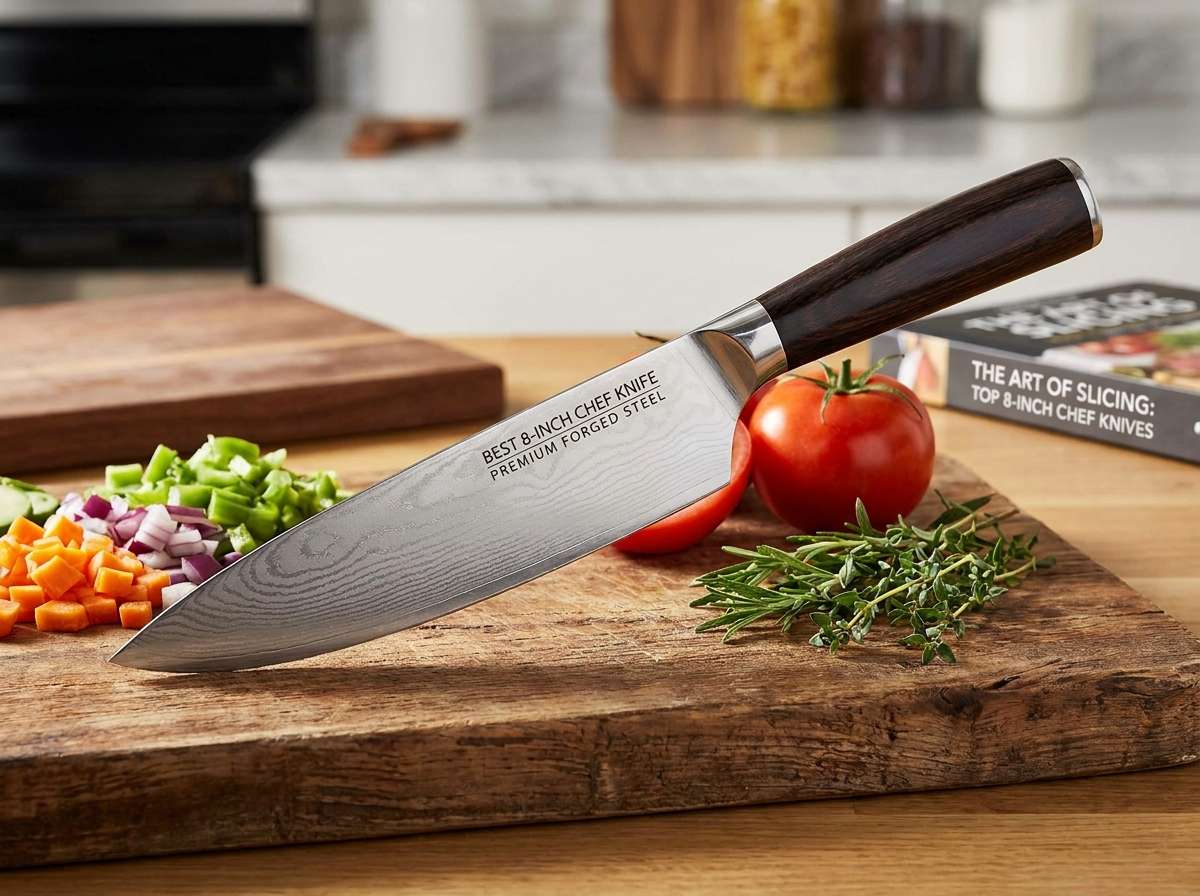
5 Best 8 Inch Chef Knife In 2026
If you spend any real time in the kitchen, you already know one thing: a dull, wobbly knife can turn a simple dinner into a chore. An 8 inch chef knife is the workhorse size that most home cooks and even line cooks reach for again and again. It’s long enough to break down a chicken or slice through a squash, but it’s still short enough to feel controlled in a smaller hand.
In this article
In this roundup, we’re going to walk through five popular 8 inch chef knives that show up again and again in kitchens and on shopping lists: the Victorinox Fibrox Pro, the HOSHANHO Japanese steel knife, the Mercer Culinary Millennia, the PAUDIN Chef Knife, and the KEEMAKE 8 inch knife. Each one has its own personality, price point, and set of trade-offs. Some lean toward the classic Western-style workhorse feel, and others chase that thin, sharp, Japanese-inspired edge.
We’ll break down the blade material, the handle design, how each knife feels during real cutting tasks like dicing onions, slicing tomatoes, breaking down poultry, and mincing herbs, plus the honest pros and cons of each pick. By the end, you’ll have a clear idea of which knife fits your cooking style, your budget, and your hand size.
Let’s get into it.
Why the 8 Inch Chef Knife Is the Size Most Kitchens Actually Need
Before we jump into the reviews, it helps to know why this particular blade length is such a big deal in the knife world.
An 8 inch blade sits in a sweet spot. Go shorter, like 6 inches, and you lose reach on bigger vegetables and larger cuts of meat. Go longer, like 10 or 12 inches, and the knife becomes harder to control for anyone without a lot of practice, plus it takes up more storage space and is trickier to sharpen evenly.
At 8 inches, you get enough blade to rock through a pile of herbs, break down a whole chicken, slice a loaf of crusty bread in a pinch, and dice a full onion in just a few strokes. It’s also the standard size taught in most culinary schools, so recipes and cutting tutorials almost always assume you’re working with this length. That’s part of why almost every major knife brand treats the 8 inch chef knife as their flagship model.
Small kitchens benefit too. An 8 inch knife stores easily in a knife block, a magnetic strip, or a drawer with a blade guard, without hanging over the edge like the bigger blades sometimes do.
Quick Comparison Table
| Knife | Blade Material | Handle | Best For | Approx. Weight | Dishwasher Safe |
|---|---|---|---|---|---|
| Victorinox Fibrox Pro | High carbon stainless steel | Fibrox TPE, non-slip | All-purpose daily prep, beginners | Around 6 oz | Yes |
| HOSHANHO Japanese Steel | High carbon Japanese steel | Ergonomic Pakkawood-style handle | Precision slicing, detailed prep | Around 7-8 oz | Hand wash recommended |
| Mercer Culinary Millennia | High carbon Japanese steel | Santoprene, textured grip | Culinary students, long prep sessions | Around 7 oz | Hand wash recommended |
| PAUDIN Chef Knife | High carbon stainless steel | ABS/Pakkawood ergonomic handle | Budget buyers, gifting | Around 8 oz | Hand wash recommended |
| KEEMAKE 8″ Chef Knife | High carbon stainless steel | Ergonomic Pakkawood handle | Home cooks who like a heftier feel | Around 8-9 oz | Hand wash recommended |
Now let’s break each one down properly.
1. Victorinox Fibrox Pro 8 Inch Chef’s Knife
Product Description
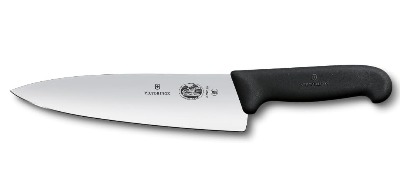
The Victorinox Fibrox Pro is one of the most recommended chef knives on the planet, and for good reason. It’s made in Switzerland by a company best known for Swiss Army knives, and this blade carries that same no-nonsense engineering. The blade runs about 8 inches long, made from high carbon stainless steel that’s stamped from a single sheet of metal, then hardened, ground, and polished. It doesn’t have a bolster, which some cooks love since it makes the full edge easy to sharpen from heel to tip.
The handle is where this knife really stands out. It’s made from Fibrox, a textured thermoplastic material that grips well even when your hands are wet or greasy. Culinary schools and restaurant kitchens have used this exact knife for decades, which tells you something about how well it holds up under daily pounding.
Best Use Cases
This knife shines at everyday prep work. Think chopping onions, mincing garlic, slicing chicken breasts, breaking down bell peppers, and dicing potatoes. It’s also a fine choice for people who are just building their first real knife collection and want one blade that can do almost everything well.
Key Features Explained Simply
- Stamped, not forged: this keeps the knife light and affordable, without sacrificing sharpness.
- No bolster: the blade goes flat all the way to the handle, so sharpening is simple and even.
- Fibrox handle: a rubbery, grippy material that stays secure even with wet or oily hands.
- NSF certified: this is a commercial kitchen standard for hygiene and safety, so you know it meets professional requirements.
Real-Life Usage Insight
During actual cutting tasks, this knife feels light in the hand, which makes long prep sessions less tiring on your wrist. Because the blade is thin, it glides through vegetables with very little resistance. Slicing through tomatoes gives a clean cut instead of squashing the fruit, and the pointed tip works well for tasks like removing the core from a bell pepper. Since there’s no bolster near the heel, you can use the full length of the edge, including the back part near the handle, which comes in handy for rocking through herbs.
Pros
- Very sharp straight out of the box
- Lightweight, so it’s easy on the wrist during long prep
- Grippy handle that stays secure even when wet
- Dishwasher safe, though hand washing keeps the edge sharper longer
- Backed by a long warranty and a trusted brand name
- Affordable for the quality you get
Cons
- The blade can feel a bit thin and flexible for heavier tasks like splitting bone
- The plain, plastic-looking handle isn’t the most attractive on display
- Since it’s stamped rather than forged, it lacks the heft some cooks prefer
Performance Discussion
In side-by-side cutting tests against pricier forged knives, this knife holds its own surprisingly well. It won’t out-cut a premium Japanese gyuto on razor-thin slices, but for daily home cooking, the difference is barely noticeable. The edge holds up for weeks of regular use before it needs a touch-up on a honing rod.
Ease of Use
This is about as beginner-friendly as chef knives get. The light weight and grippy handle make it forgiving for anyone still building confidence with a chef knife. New cooks tend to adjust to it fast because it doesn’t feel intimidating in the hand.
Value for Money
Given the price point, this is one of the best value chef knives you can buy. Culinary students often own this exact knife because it delivers restaurant-grade performance without the restaurant-grade price tag.
2. HOSHANHO Kitchen Knife in Japanese High Carbon Steel
Product Description
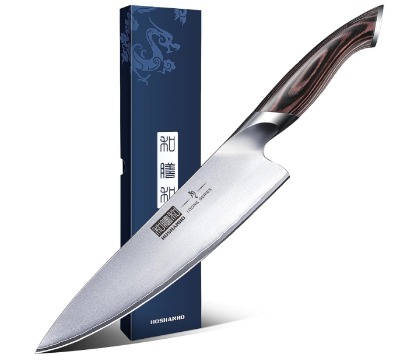
The HOSHANHO chef knife takes a different approach, leaning into the Japanese-style knife trend that’s grown very popular in home kitchens over the past several seasons. It’s built from high carbon steel and marketed as a professional-grade blade with an ergonomic handle designed to reduce hand fatigue. The blade angle tends to run thinner than a typical Western knife, which is common with Japanese-inspired designs, and it’s meant to deliver precise, clean cuts rather than heavy chopping power.
Best Use Cases
This knife works best for people who care about precision cuts, like thin slices of raw fish for a home sushi night, paper-thin cucumber rounds, or delicate herb chiffonade. It’s also a nice pick if you like the look and feel of a Japanese-style blade but don’t want to spend a fortune on a traditional handmade knife.
Key Features Explained Simply
- High carbon steel blade: this steel type sharpens to a finer edge than typical stainless blades, though it can be a bit more sensitive to rust if left wet.
- Thin blade profile: less resistance when cutting, so you get cleaner slices with less squashing.
- Ergonomic handle: shaped to sit comfortably in the palm during long prep sessions.
- Non-slip design: the handle texture is built to stay secure even during fast, repetitive cutting.
Real-Life Usage Insight
Out of the box, this knife feels noticeably sharp, sharper than most budget stainless knives. Because the blade is thinner, tasks like slicing tomatoes or cucumbers produce clean, thin slices instead of dragging or tearing. On tougher jobs, like cutting through a butternut squash, the thinner blade means you need a bit more careful technique since it isn’t built for prying or heavy leverage. It rewards a smooth, controlled cutting motion rather than brute force chopping.
Pros
- Very sharp edge that handles fine, precise cuts well
- Comfortable handle shape for extended use
- Attractive, professional-looking design
- Great for detailed prep like sashimi, garnish work, or fine dicing
Cons
- High carbon steel needs more careful drying to avoid spotting or rust
- Not ideal for heavy-duty tasks like cutting through bone or frozen food
- Sharpening this type of edge properly may need a whetstone rather than a basic pull-through sharpener
Performance Discussion
This knife performs best in the hands of someone who already understands basic knife technique, since the thin edge is less forgiving of twisting or side pressure. Used correctly, it delivers some of the cleanest slices in this entire roundup.
Ease of Use
Beginners can absolutely use this knife, but it does ask for a bit more care compared to a thick, tough Western-style blade. Drying it after washing and avoiding leaving it soaking in a sink full of water will keep it performing well for a long time.
Value for Money
For the price, you’re getting a level of sharpness that usually costs a lot more from bigger Japanese knife brands. It’s a solid pick if you want that thin, precise cutting feel without a big investment.
3. Mercer Culinary M22608 Millennia Black Handle 8-Inch Chef’s Knife
Product Description
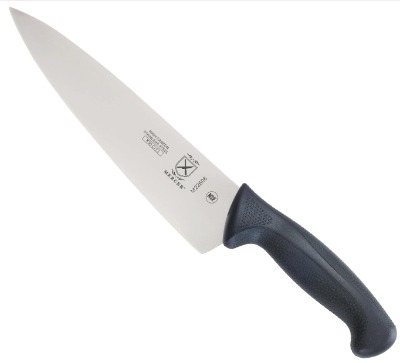
Mercer Culinary built its name in culinary schools, and the Millennia line is proof of that reputation. This 8-inch chef knife uses high carbon Japanese steel with a stamped construction, paired with a Santoprene handle that’s designed for grip, comfort, and safety during long shifts. It’s NSF certified, meaning it meets commercial food safety standards, and it comes with textured finger points near the bolster area to help prevent your hand from slipping forward onto the blade.
Best Use Cases
This knife is a favorite among culinary students, home cooks who prep in bulk, and anyone who spends long stretches at the cutting board. It handles chopping, mincing, dicing, and slicing with equal ease, and it’s a common recommendation for people learning proper knife skills for the first time.
Key Features Explained Simply
- One-piece high carbon Japanese steel: easy to sharpen and holds an edge reasonably well for everyday tasks.
- Santoprene handle: a textured rubber-like grip that stays comfortable even during hours of continuous cutting.
- Textured finger points: small ridges near the bolster that add grip and reduce the chance of your hand sliding.
- Lightweight stamped blade: keeps the knife nimble rather than heavy and tiring.
Real-Life Usage Insight
This knife feels balanced and steady during repetitive tasks, like dicing a large batch of onions for meal prep. The textured handle keeps a firm grip even as your hands get warm or slightly damp from vegetable juice. The blade takes an edge easily on a honing steel, and it holds that edge through a solid stretch of daily cooking before it starts to feel like it needs a proper sharpening.
Pros
- Comfortable grip designed for long prep sessions
- NSF certified for food safety standards
- Lightweight and easy to control
- Trusted by culinary programs and professional kitchens
- Reasonably priced for the quality on offer
Cons
- Not recommended for the dishwasher, which means a little extra care after each use
- The stamped blade lacks the weight some cooks prefer for heavier chopping
- The black handle design is functional, but not particularly flashy
Performance Discussion
Where this knife really earns its reputation is in comfort during repetitive tasks. If you’re prepping a big batch of vegetables for meal prep or working through a large recipe with lots of chopping, your hand won’t tire out as quickly compared to knives with harder, less textured handles.
Ease of Use
This is another excellent option for beginners and intermediate cooks. The grip is intuitive, the blade isn’t too heavy, and the balance point sits close to where your hand naturally rests, so it feels stable from the first cut.
Value for Money
Considering how widely this knife is used in professional training kitchens, the price is very reasonable. It’s a knife that grows with your skills rather than something you’ll want to replace once you get more comfortable in the kitchen.
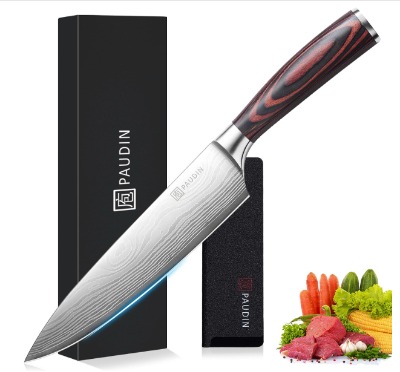
4. PAUDIN Chef Knife 8 Inch High Carbon Stainless Steel
Product Description
PAUDIN has built a strong following among home cooks looking for an affordable, good-looking chef knife that still performs well. This 8-inch model uses high carbon stainless steel, often noted as a durable steel blend that resists rust and holds a decent edge. The handle is shaped for comfort, and the knife typically ships in a gift box, making it a popular pick for holiday presents, housewarming gifts, or a first “real” knife for a new cook.
Best Use Cases
This knife suits home cooks who want dependable everyday performance without spending a lot, plus anyone shopping for a kitchen gift that still feels thoughtful and useful. It handles standard prep tasks like slicing vegetables, cutting cooked meat, and general chopping without any trouble.
Key Features Explained Simply
- High carbon stainless steel blade: strikes a balance between edge retention and rust resistance.
- Ergonomic handle: shaped to reduce hand fatigue during regular use.
- Gift-ready packaging: comes boxed nicely, which adds a nice touch if you’re buying it for someone else.
- Wide blade profile: gives a bit more surface area for transferring chopped food from the board to the pan.
Real-Life Usage Insight
Right out of the box, the edge feels reasonably sharp, though some users note it benefits from a quick touch-up on a honing rod before the first big cooking session. The handle sits comfortably in the palm, and the blade has enough weight to feel substantial without becoming tiring during a normal cooking session. It performs well on daily tasks like dicing onions, slicing cucumbers, and cutting up chicken breasts.
Pros
- Attractive design that looks great in a kitchen or as a gift
- Comfortable, ergonomic handle
- Good value for the price point
- Handles everyday cutting tasks without trouble
- Comes packaged nicely for gifting
Cons
- Edge retention isn’t as strong as pricier forged knives, so more frequent honing helps
- Some units may need a light sharpening before first use for the best results
- Not designed for heavy-duty tasks like breaking down whole poultry with bones
Performance Discussion
This knife performs solidly for standard home cooking. It’s not going to compete with premium forged blades on edge retention, but for the price, it holds up reasonably well through regular use, especially if you keep it honed between uses.
Ease of Use
Very beginner-friendly. The handle shape makes it comfortable for a wide range of hand sizes, and the blade isn’t too heavy or too light, sitting right in a comfortable middle ground.
Value for Money
This is a strong budget pick, especially if you want a knife that looks good, feels comfortable, and gets the job done without a big price tag. It’s also a thoughtful, practical gift option thanks to the presentation box.
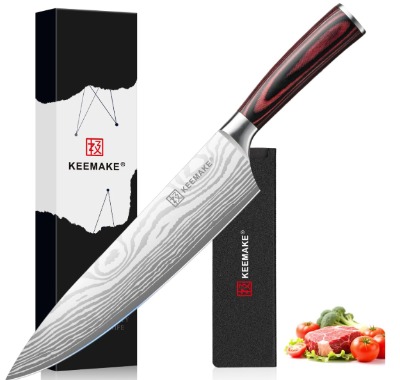
5. KEEMAKE 8″ Chef Knife
Product Description
The KEEMAKE 8 inch chef knife rounds out this list as another budget-friendly option built around a high carbon stainless steel blade and an ergonomic handle. It’s aimed at home cooks who want a knife with some visual flair along with dependable daily performance. Many versions feature a Pakkawood-style handle, giving it a slightly more premium look compared to plain plastic handles.
Best Use Cases
This knife fits well for everyday home cooking tasks, from slicing bread and vegetables to breaking down smaller cuts of meat. It’s also a good pick for someone upgrading from a low-quality starter knife set who wants something sharper and more comfortable without spending a lot.
Key Features Explained Simply
- High carbon stainless steel: gives a reasonably sharp edge along with decent rust resistance.
- Ergonomic Pakkawood-style handle: adds grip and a more polished look compared to basic plastic.
- Full tang construction in many versions: the blade metal runs through the handle, adding balance and durability.
- Wider blade design: helps when you need to scoop chopped ingredients off the cutting board.
Real-Life Usage Insight
The knife feels a bit heavier in the hand than some of the other picks on this list, which some cooks like for a more grounded feel during chopping. It handles onions, garlic, carrots, and other everyday vegetables cleanly. On tougher items like winter squash, the added weight helps push through with less effort compared to a lighter blade.
Pros
- Comfortable, good-looking handle
- Reasonably sharp edge for everyday cooking
- Slightly heavier feel that some cooks find more satisfying
- Affordable price point
- Works well as a step-up knife for beginners outgrowing basic knife sets
Cons
- Heavier blade may tire out your wrist faster during long prep sessions
- Edge may need more frequent honing compared to higher-end steel
- Not the best choice for delicate, precision-style cuts
Performance Discussion
This knife performs comfortably in the middle of the pack for this roundup. It won’t out-cut the thinner Japanese-style blades on precision tasks, but for standard home cooking, chopping, and slicing, it gets the job done reliably.
Ease of Use
Good for beginners, though those with smaller hands might find the added weight a little more tiring during extended use. It’s still an approachable, non-intimidating knife overall.
Value for Money
A solid budget option, especially if you like a slightly heavier knife and want something that looks a step above the most basic starter knives.
Comparison Insights: How These Knives Stack Up Against Each Other
Now that we’ve gone through each knife, let’s line them up directly so you can see where each one wins and where it falls short.
On sharpness out of the box, the HOSHANHO tends to edge ahead thanks to its thinner blade profile, closely followed by the Victorinox Fibrox Pro. The PAUDIN and KEEMAKE both perform well but may benefit from a quick honing before serious use.
On comfort during long prep sessions, the Mercer Culinary Millennia stands out because of its textured Santoprene handle, built specifically for hours of repetitive cutting. The Victorinox Fibrox Pro comes in close behind thanks to its light weight and grippy texture.
On weight and control, lighter knives like the Victorinox and Mercer options are easier for beginners to manage, while the KEEMAKE’s slightly heavier build appeals more to cooks who like a bit of heft behind their cuts.
On rust resistance and low-maintenance care, the stainless steel options, Victorinox, PAUDIN, and KEEMAKE, are a bit more forgiving if you forget to dry them right away. The HOSHANHO and Mercer, both built with high carbon Japanese steel, reward a bit more attention after washing.
On looks and gifting appeal, the PAUDIN stands out with its polished handle and presentation box, making it a strong pick if you’re buying for someone else rather than just for your own kitchen.
On price-to-performance ratio, the Victorinox Fibrox Pro remains hard to beat. It’s proven itself in professional kitchens for decades and still costs less than many “premium” home knives.
Buying Guide: What to Actually Look for in an 8 Inch Chef Knife
Shopping for a chef knife can feel more complicated than it needs to be, so here’s a simple breakdown of what actually matters.
Blade Material
Most knives in this size range use either standard stainless steel or high carbon stainless steel. Stainless steel resists rust better and needs less babying. High carbon steel tends to sharpen to a finer edge but usually asks for a bit more care, like drying it right after washing instead of letting it sit in the sink.
Blade Thickness and Profile
A thinner blade cuts through food with less resistance, which is great for precision tasks like slicing tomatoes or fish. A slightly thicker blade holds up better for tougher jobs like cutting through dense squash or occasionally tapping through small bones. Neither is “better” across the board, it depends on how you cook most often.
Handle Material and Grip
Handles usually come in a few common materials: hard plastic, textured rubber-like compounds such as Fibrox or Santoprene, or Pakkawood, which is a treated wood composite. Rubbery, textured handles tend to grip better when wet, which matters a lot if you’re rinsing vegetables and cutting at the same time.
Full Tang vs Partial Tang
Full tang means the metal of the blade extends all the way through the handle, which usually adds balance and long-term durability. Partial tang knives, like the stamped Victorinox and Mercer models, can still perform beautifully, but they tend to feel lighter overall, which some cooks prefer and others don’t.
Weight and Balance
Hold a knife, if you can, and notice where the weight sits. A knife that feels balanced right where your hand grips it will feel more natural during long cutting sessions than one that feels front-heavy or handle-heavy.
Edge Angle and Sharpness
Western-style knives, like the Victorinox and Mercer, usually have a slightly wider edge angle, built for durability during general use. Japanese-style knives, like the HOSHANHO, often have a thinner edge angle, built for precision slicing but needing a bit more careful sharpening technique.
Maintenance Requirements
Dishwasher-safe knives are convenient, but hand washing almost always extends the life of any blade’s edge, since dishwasher heat and detergent can dull steel faster over time and knock the blade against other items. If you want the lowest-maintenance option, the Victorinox is rated dishwasher safe, though hand washing is still the better habit for any knife you plan to keep sharp for years.
Budget
You don’t need to spend a fortune to get a genuinely good 8 inch chef knife. All five knives in this roundup sit in an affordable to mid-range price bracket, proving that a great kitchen knife doesn’t have to break the bank.
Who Should Buy Each of These Knives
Here’s a simple breakdown to help match each knife to the right kind of cook.
- New cooks building their first knife collection: the Victorinox Fibrox Pro is nearly impossible to go wrong with. It’s affordable, sharp, light, and forgiving.
- Home cooks who love precision slicing, sushi nights, or garnish work: the HOSHANHO’s thinner blade profile rewards careful technique with clean, precise cuts.
- Anyone doing long meal-prep sessions or following a culinary program: the Mercer Culinary Millennia’s comfortable, textured handle makes extended chopping much easier on your hands.
- Budget-conscious shoppers or people buying a knife as a gift: the PAUDIN offers a nice mix of looks, comfort, and presentation for a fair price.
- Cooks who like a heavier knife with a bit more visual flair: the KEEMAKE gives a satisfying weight and a nicer-looking handle compared to basic starter knives.
Common Mistakes to Avoid When Buying or Using an 8 Inch Chef Knife
A great knife can still let you down if it’s used or cared for the wrong way. Here are some common slip-ups worth avoiding.
Skipping the honing routine. A honing rod doesn’t sharpen a knife, it realigns the edge. Using one every few uses keeps your knife cutting cleanly for much longer between actual sharpenings.
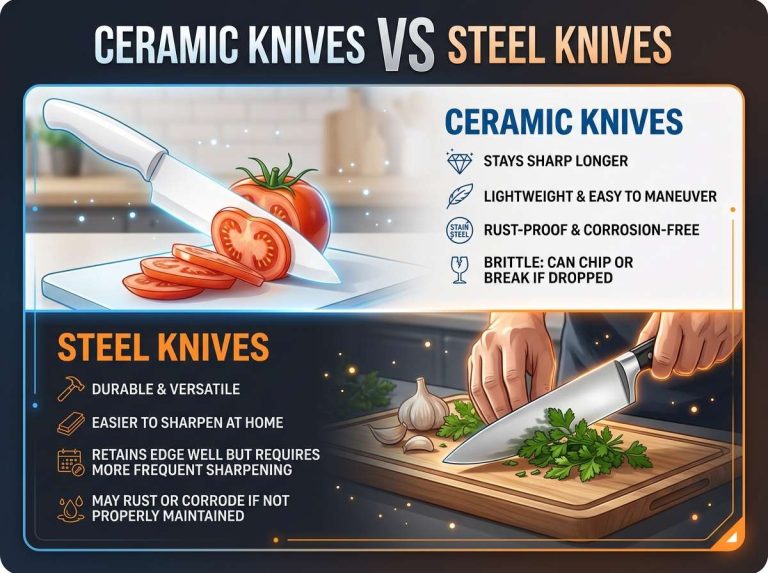
Cutting on hard surfaces. Glass cutting boards, stone countertops, or ceramic plates will dull a blade fast, no matter how good the steel is. Stick to wood or plastic cutting boards.
Letting the knife soak in a sink full of water. This is especially risky for high carbon steel blades, since it can lead to spotting or rust over time. Wash and dry your knife right after use.
Using the dishwasher on a non-dishwasher-safe knife. Heat, detergent, and knocking against other utensils can dull or even chip a blade. Always check the care label to confirm your specific knife is actually rated for it.
Buying based on size alone. A bigger blade isn’t automatically better. If a knife feels too heavy or too long for your hand and cooking style, you’ll avoid using it, which defeats the purpose of buying a good knife in the first place.
Ignoring handle comfort. A razor-sharp blade attached to an uncomfortable handle will still tire out your hand fast. Grip and balance matter just as much as the steel itself.
Storing knives loosely in a drawer. Tossing a sharp blade into a drawer with other utensils is a safety risk and it dulls the edge fast from all the friction and knocking around. A knife block, magnetic strip, or blade guard keeps both you and your knife safer.
Final Verdict
All five knives in this roundup earn their spot on this list, but they serve slightly different needs.
If you want one dependable knife that handles almost anything you throw at it, without asking much in return, the Victorinox Fibrox Pro is the safest, most proven pick here. It’s light, sharp, grippy, and backed by decades of real kitchen use around the world.
If precision cutting matters most to you, and you’re comfortable putting in a little extra care after washing, the HOSHANHO delivers some of the cleanest, sharpest cuts in this group.
If comfort during long prep sessions is your top priority, especially if you cook in big batches or you’re learning proper knife skills, the Mercer Culinary Millennia stands out for its ergonomic, textured grip.
If you’re shopping on a budget or looking for a knife that also makes a great gift, the PAUDIN brings solid performance wrapped in an attractive presentation.
And if you like a slightly heavier knife with a nicer-looking handle for everyday home cooking, the KEEMAKE rounds out this list as a dependable, good-looking option.
No matter which one you pick, remember that even the best chef knife performs poorly if it’s dull or poorly cared for. Keep it honed, dry it after washing, store it properly, and any of these five knives should serve you well for a very long time in the kitchen.

Mary is a home cooking enthusiast and kitchen gear reviewer with a passion for practical cookware and food preparation tools. She enjoys testing cutting boards, knives, kitchen gadgets, and other cooking essentials to help home chefs make smarter buying decisions. Through KitchenCutting.com, Mary shares honest product reviews, buying guides, and helpful kitchen tips to make cooking easier, safer, and more enjoyable.
2 Comments