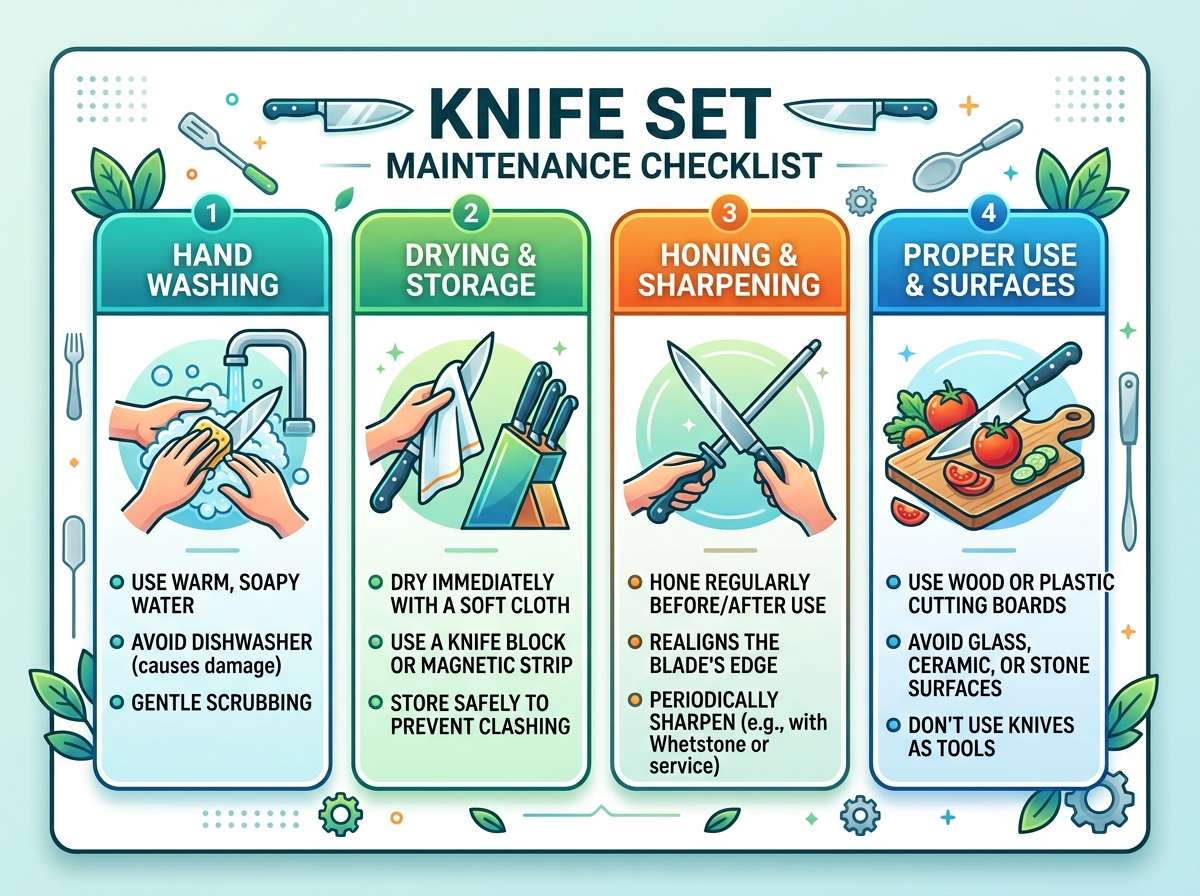
Knife Set Maintenance Checklist
If you own a knife set, you already know how good a sharp blade feels in your hand. It slides through a tomato with zero effort. It makes onions cry faster than you do. But over time, even the best knife set starts to lose that magic. The edge gets dull, rust spots show up, and handles feel loose or sticky.
In this article
The good news is that knife care is not hard at all. You just need a simple routine and a little bit of patience. This guide will walk you through a full knife set maintenance checklist that covers cleaning, sharpening, honing, storage, and rust prevention. By the end, you will know exactly how to keep your knives working like new for years.
Let’s get into it.
Why Knife Maintenance Actually Matters
A dull knife is not just annoying. It is actually more dangerous than a sharp one. When a blade is dull, you have to press harder to cut through food. That extra force makes the knife more likely to slip off the surface and slide into your fingers.
A well maintained knife also cuts cleaner. Clean cuts mean less bruising on fruits and vegetables, neater slices of meat, and food that cooks more evenly. On top of that, good care extends the life of your knife set. A quality knife can last decades if you treat it right. Skip the care, and even the best steel will chip, rust, or wear down fast.
So this is not just about looks. It is about safety, performance, and saving money in the long run.
Daily Knife Care Checklist
Daily habits are the backbone of good knife maintenance. These small steps take less than a minute but make a huge difference over time.
1. Hand wash right after use
Never toss your knives in the sink to soak with other dishes. Food acids, salt, and moisture can dull the edge and cause spotting or rust, especially on carbon steel blades. Wash each knife by hand with warm water and mild soap right after you finish cooking.
2. Dry it immediately
Water left on a blade is one of the biggest causes of rust and staining. After washing, dry the knife right away with a clean towel. Do not let it air dry in a rack, since moisture can sit in the seam between the blade and handle.
3. Skip the dishwasher
Dishwashers are rough on knives. The heat, harsh detergent, and knocking against other utensils can dull the edge, chip the tip, or damage the handle. Even knife sets that claim to be dishwasher safe tend to age faster when washed this way. Hand washing takes only a few extra seconds and protects your investment.
4. Use the right cutting surface
Cutting on glass, stone, or ceramic boards is one of the fastest ways to wreck a sharp edge. These hard surfaces grind down the blade every time it touches down. Stick to wood or plastic cutting boards instead. They are gentle on the steel and help the edge stay sharp much longer.
5. Store it safely after drying
Do not just leave a clean knife lying on the counter or tossed in a drawer with other utensils. Loose blades banging against metal spoons or forks can chip or dull fast. Put each knife back in its block, on a magnetic strip, or in a blade guard right after drying.
Weekly Knife Care Checklist
Weekly checks catch small problems before they turn into big ones.
1. Hone the blade
Honing is not the same as sharpening, and this trips up a lot of beginners. Honing straightens the edge of the blade rather than removing metal. Over regular use, the microscopic edge of a knife bends slightly to one side. A honing rod pushes it back into alignment.
Run the blade along the honing rod at a steady angle, usually around 15 to 20 degrees, several times on each side. Do this once a week if you cook often, or before any task that needs precision cutting.
2. Inspect the handle
Check that the handle is tight and free of cracks. Wood handles can dry out and loosen over time, especially in humid or dry kitchens. If you notice wobbling or gaps, it is a sign the knife needs attention before it becomes unsafe to use.
3. Look for early rust spots
Even with good care, small rust spots can pop up, especially on carbon steel or older stainless blades. Catching them early makes cleanup much easier. A quick wipe with a paste of baking soda and water usually lifts light rust before it spreads.
4. Wipe down your knife block or storage spot
Crumbs and dust build up inside knife blocks and drawer organizers. This buildup can trap moisture and encourage bacteria growth. A quick wipe with a damp cloth once a week keeps your storage area clean and safe for your blades.
Monthly Knife Care Checklist
Some tasks do not need daily or weekly attention but should not be skipped for too long either.
1. Sharpen the blade
Sharpening is different from honing. Sharpening actually removes a thin layer of metal to create a brand new edge. Depending on how often you cook, most home knife sets need sharpening every one to two months.
You can use a whetstone, a pull through sharpener, or an electric sharpener. Whetstones give the most control and the best results, but they take practice. Pull through sharpeners are easier for beginners, though they remove more metal over time. Pick a method that fits your comfort level and stick with it.
2. Oil wooden handles
If your knife set has wooden handles, they need occasional oiling to prevent drying and cracking. A light coat of food safe mineral oil once a month keeps the wood from soaking up moisture unevenly, which can cause splitting.
3. Deep clean the storage block
Beyond a quick wipe, give your knife block a deeper clean once a month. Remove any removable inserts and wash them separately. Let the block dry completely before putting knives back in, since trapped moisture inside the slots can quietly rust your blades from the inside out.
4. Check for chips along the edge
Run your finger carefully along the back of the blade, not the edge, and look closely under good light for small chips or nicks. These tiny flaws often happen from cutting bone, frozen food, or hard surfaces by accident. Catching chips early means a quick fix with a sharpening stone instead of a bigger repair job later.
Sharpening vs Honing: What’s the Real Difference
A lot of people mix these two terms up, so let’s clear it up simply.
Honing keeps an edge aligned. It does not remove metal, and you can do it often, even every time you cook, without harming the blade.
Sharpening creates a new edge by grinding away a small layer of steel. It should be done less often, since doing it too much shortens the life of the blade over time.
Think of honing as daily maintenance and sharpening as a deeper reset. Both matter, but they serve different jobs in your knife set maintenance checklist.
How to Prevent Rust on Your Knife Set
Rust is one of the most common enemies of a knife set, especially for carbon steel blades. Here are some easy habits that keep rust away for good.
- Dry every blade completely before storing it
- Avoid letting knives sit in water or damp towels
- Store knives in a dry spot with good air flow
- Apply a thin coat of food safe oil on carbon steel blades if you live in a humid area
- Wipe blades again before use if they have been stored for a long stretch without use
Stainless steel resists rust better than carbon steel, but it is not fully rust proof. Even stainless blades can develop spots if left wet for too long.
Best Ways to Store a Knife Set
Storage plays a bigger role in blade care than most people realize. Here are the most common options and how they stack up.
Knife blocks are classic and keep blades separated safely. Just remember to clean out the slots regularly, since crumbs and moisture can build up unseen.
Magnetic strips save counter space and let air flow around the blade, reducing moisture buildup. They also make it easy to grab the exact knife you need.
In drawer organizers protect knives from banging against other utensils while keeping them out of sight. Look for one with individual slots so blades do not touch each other.
Blade guards or sheaths are great for knives you travel with or store in a bag, like camping knives or knives you bring to a friend’s kitchen.
Whatever method you pick, the goal stays the same: keep the edge protected, keep the blade dry, and keep it away from other hard objects.
Common Mistakes That Damage Knife Sets Fast
Even careful cooks slip into habits that quietly wear down their knives. Watch out for these common issues.
Cutting on the wrong surface. Glass and stone boards look nice but destroy edges fast.
Leaving knives wet. Moisture left too long causes spotting, staining, and eventually rust.
Using knives for the wrong job. Prying open cans, cutting through bone, or scraping ingredients off a board with the blade edge all cause chips and dulling.
Storing knives loose in a drawer. This causes nicks from other utensils and is also a safety hazard when reaching in.
Skipping regular honing. Without honing, the edge bends out of alignment faster, making the knife feel dull even if it has not lost much material.
Using a dishwasher. As mentioned earlier, this is one of the fastest ways to shorten a knife’s lifespan.
Quick Knife Set Maintenance Checklist Summary
Here is the whole routine boiled down into one simple list you can save or print out.
After every use
- Hand wash with warm water and mild soap
- Dry completely with a towel
- Store safely in a block, strip, or drawer organizer
Every week
- Hone the blade with a honing rod
- Check the handle for cracks or looseness
- Look for early rust spots
- Wipe down the storage area
Every month
- Sharpen the blade using a stone or sharpener
- Oil wooden handles if needed
- Deep clean the knife block or organizer
- Check the edge for chips or nicks
Signs Your Knife Set Needs Attention Right Away
Sometimes a knife needs care outside the usual schedule. Watch for these warning signs.
- The blade slips instead of cutting cleanly through soft food like a tomato
- You notice visible rust spots spreading rather than shrinking
- The handle feels loose or wobbly during use
- Small chips appear along the cutting edge
- The blade looks discolored or stained in patches
If you spot any of these, deal with it right away instead of waiting for your next scheduled cleaning or sharpening session.
Final Thoughts
Taking care of a knife set does not need to be complicated or time consuming. A few small habits after every meal, a bit of extra attention each week, and a proper sharpening session once a month will keep your blades performing at their best for a very long time.
Good knife care protects your safety in the kitchen, keeps your food prep smooth, and saves you from replacing an expensive knife set too soon. Print out this checklist, stick it on your fridge, or save it on your phone, and let it guide your routine every time you cook.
A sharp, well cared for knife is one of the simplest joys of cooking. With this checklist in hand, your knife set will stay ready for anything you throw at it, one clean cut at a time.

Mary is a home cooking enthusiast and kitchen gear reviewer with a passion for practical cookware and food preparation tools. She enjoys testing cutting boards, knives, kitchen gadgets, and other cooking essentials to help home chefs make smarter buying decisions. Through KitchenCutting.com, Mary shares honest product reviews, buying guides, and helpful kitchen tips to make cooking easier, safer, and more enjoyable.