How to Flatten a Warped Cutting Board?
If you’ve been using your cutting board for a while, you might have noticed it’s not as flat as it used to be. A warped cutting board can be frustrating to work with, but the good news is you can fix it. This guide will walk you through everything you need to know about straightening your curved or bent cutting board and keeping it in great shape.
In this article
Why Cutting Boards Warp in the First Place
Before we dive into fixing your cutting board, let’s talk about why it warps. Knowing the cause helps you prevent the problem from happening again.
Wood is a living material that responds to moisture and temperature changes. When your wooden cutting board sits in a wet sink or gets exposed to too much humidity, the wood absorbs water. This causes the fibers to expand. If the water doesn’t dry evenly, different parts of your board swell at different rates. This creates the curve or warp you see.
Heat also plays a role in board warping. Leaving your cutting board near a hot stove, in direct sunlight, or washing it with very hot water can cause damage. The wood expands from the heat, and if it cools unevenly, it can bend permanently. Plastic cutting boards warp for similar reasons, though they’re often less forgiving than wood.
The grain direction matters too. Boards with grain running across the shorter side are more likely to cup or bow than boards with straight grain patterns. Some wood types naturally resist warping better than others. Bamboo boards tend to be more stable, while softer woods like pine can warp more easily.
How to Tell If Your Cutting Board Is Warped
You might suspect your cutting board has warped, but how can you be sure? Here are the signs to look for.
Place your cutting board flat on a level table or counter. Look at it from the side. If there’s a gap between the board and the surface, your board is warped. Try placing your hand under different parts of the board. You should feel resistance all over if the board is flat.
Another test is the water drop method. Pour a small amount of water on your cutting board. If it pools in certain spots instead of running off evenly, your board isn’t flat. When a board is bent, the surface gets uneven, and water won’t distribute normally.
Feel the surface with your hand. Run your palm across the top of the board. You should feel a smooth, even surface. If you notice high spots and low spots, your board needs straightening. Some warping is subtle and hard to see, but your hands can often feel it.
Method 1: The Water and Weight Method
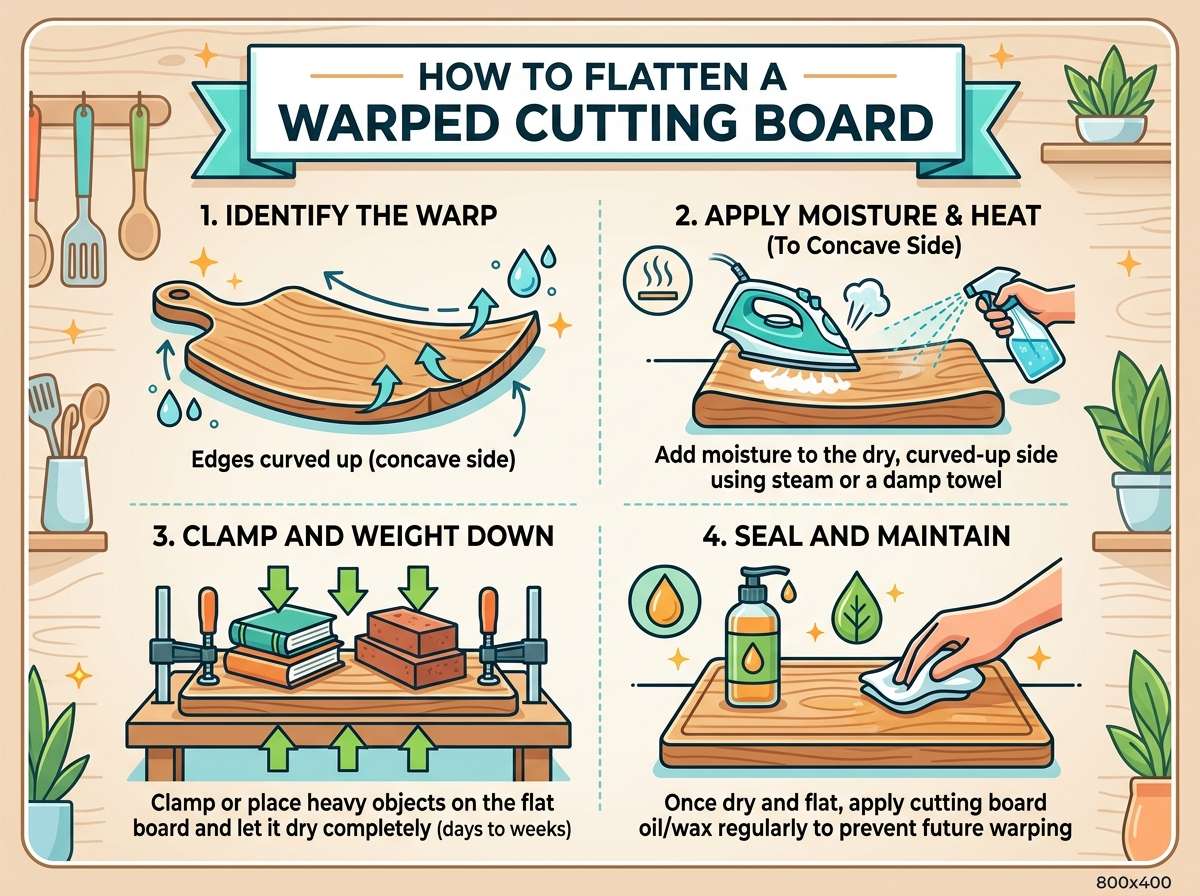
This is the easiest way to start fixing a warped cutting board. It works especially well for wood boards that have dried out and warped. You’ll need water, towels, and some heavy weights or objects.
Start by dampening some towels with warm water. Don’t make them dripping wet, just damp. Lay one damp towel flat on a level surface. Place your warped cutting board on top of the damp towel with the warped side down. This means the curve should face toward the towel.
Now place another damp towel on top of your cutting board. Cover the entire surface so the wood can absorb moisture evenly from both sides. Lay your heavy weights on top. You can use canned goods, heavy books, or anything heavy and flat. Spread the weight across the entire board so it presses down evenly.
Leave everything in place for 24 to 48 hours. The water will slowly soak into the wood, and the weight will press the board flat as it absorbs the moisture. Check on it after a day. If it’s still warped, give it another day.
Once the board feels flat, remove the weights and towels. Dry it completely with a clean towel. Stand it upright to air dry. Don’t lay it flat while it’s damp, or it might warp again. Dry it slowly in a room temperature area, not near direct heat. This process takes several days.
Method 2: The Oven Technique for Plastic Boards
Plastic cutting boards respond well to heat treatment. This method works best for plastic boards that have a slight warp but aren’t severely bent.
Preheat your oven to the lowest setting, usually around 200 degrees Fahrenheit. Make sure the temperature is low because high heat will damage or melt the plastic. Place some foil or parchment paper on your oven rack.
Lay your warped plastic board on the lined rack. Close the oven and wait. Check it every 5 to 10 minutes. You’re looking for the plastic to soften slightly. This happens gradually. You don’t want to leave it in so long that it warps more.
After about 15 to 20 minutes, the plastic should be warm and slightly flexible. Carefully remove the board from the oven using an oven mitt. It will be hot, so take care. Place it on a flat, level surface. If the warp is on the back, lay it warped side down. Lay it flat side down if the warp is on the top.
Place weights on top of the board while it cools. Heavy books, canned goods, or cast iron work well. Let it cool completely. This usually takes 1 to 2 hours. As the plastic cools, it will harden into its new flat shape. Once it’s cool, remove the weights and check your work.
Method 3: The Planing or Sanding Approach
If your cutting board has a permanent warp that won’t respond to water or heat, you might need to remove material. This method works for solid wood boards but isn’t ideal for thin boards or plastic.
Get a hand plane or belt sander. A hand plane is cheaper and gives you more control, but a belt sander works faster. You’ll also want to wear safety glasses and a dust mask because you’ll create a lot of sawdust.
If you use a hand plane, adjust it to take very thin shavings. Place your cutting board on a stable work surface. Push the plane along the grain of the wood, taking light passes. Check your progress often. You’re aiming to shave down the high spots until the whole board is level.
With a belt sander, start with a coarser grit sandpaper like 60 or 80 grit. Sand the high spots more than the low spots. Work slowly and check your progress regularly. Once the board is mostly flat, switch to a medium grit like 120 grit to smooth everything out. Finish with fine grit sandpaper like 180 or 220 grit for a smooth surface.
This method removes some thickness from your board, so only use it as a last resort. It also requires skill and the right tools. If you’re not comfortable with woodworking, ask a local woodworker or carpenter to help you.
Method 4: The Clamp and Wood Method
This approach uses clamps and a flat reference surface to straighten your board. You’ll need a bar clamp or pipe clamp, a flat board or piece of plywood, and some spacers.
Find a flat board or piece of plywood that’s longer than your warped cutting board. This will serve as your reference surface. Place your warped board on top of it, warped side up. The curve should be facing away from the flat board.
Insert spacers between the two boards along the edges. Use shims or wooden wedges to create even pressure. The spacers should push down on the high points of the warp. Use a bar clamp to hold everything together tightly.
Leave the clamps in place for several days. The consistent pressure will gradually flatten the board. Check the progress after 24 hours. If needed, adjust the spacers to increase pressure on stubborn spots.
This method works best on wood boards and requires some patience. It can take a week or more to see results, but it’s effective for stubborn warps.
Prevention Tips to Keep Your Cutting Board Flat
Once you’ve fixed your cutting board, you’ll want to keep it flat. Prevention is much easier than repair.
Never soak your cutting board in water. Wash it by hand with warm soapy water and a soft cloth. Rinse quickly and dry it immediately with a towel. Standing water is one of the biggest causes of warping.
Store your cutting board upright or on its side rather than lying flat. This allows air to circulate and prevents moisture from pooling on one side. If you must lay it flat, make sure it’s in a stable environment where humidity stays constant.
Avoid extreme temperature changes. Don’t wash your cutting board with scalding hot water, and keep it away from heat sources like ovens and direct sunlight. Allow your board to adjust slowly to room temperature.
Oil your wood cutting board regularly. A good food-safe oil like mineral oil or board conditioner creates a protective barrier against moisture. Apply oil every month or so, depending on how often you use your board.
Don’t put your cutting board in the dishwasher. The intense heat and moisture cause warping. Hand wash only, and dry immediately.
Keep your kitchen humidity at a normal level. Very dry air will cause wood to shrink and crack, while very humid air causes swelling and warping. A humidity level around 40-55% is ideal for wooden boards.
Choosing the Right Replacement Board
Sometimes a cutting board is too warped to save. If you’ve tried these methods and your board is still unusable, it’s time for a new one.
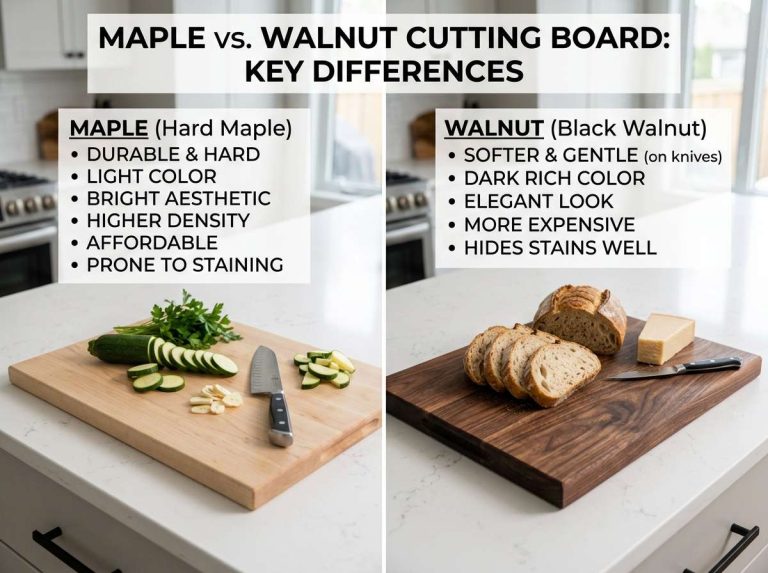
Look for boards made from wood types that resist warping well. Bamboo is incredibly stable and durable. Hardwoods like maple and walnut are better than softer woods like pine. Composite wood boards often resist warping better than solid wood.
Plastic boards are affordable and warp-resistant, though they do wear down with use. Rubber and silicone boards are also good choices if you want something that won’t warp. Glass boards won’t warp at all, but they’re hard on your knives.
Thicker boards resist warping better than thin ones. A board that’s at least 1.5 inches thick will hold up better over time. The more material there is, the harder it is for moisture to cause uneven expansion.
Common Mistakes to Avoid
People often make mistakes when trying to fix their cutting boards. Avoiding these errors will help you get better results.
Don’t use boiling hot water on your board. Very hot water causes rapid expansion and can make warping worse. Lukewarm or warm water is plenty for cleaning.
Don’t leave your board to dry in direct sunlight or near a heat source. Uneven drying causes uneven warping. Dry your board slowly in a room temperature area.
Don’t apply too much oil too often. A little oil is good, but too much makes the board slippery and can cause buildup. Once a month is usually enough.
Don’t store your board in a damp basement or a very dry place. Find a spot in your kitchen where temperature and humidity stay fairly stable.
Don’t expect perfect results if your board is severely warped. Some boards are too far gone. If you’ve tried multiple methods and your board is still unusable, replacing it might be your best option.
Quick Reference: Methods Ranked by Difficulty
Easiest: The water and weight method works for most people and requires basic supplies you probably already have.
Moderate: The oven technique works well for plastic boards but requires careful temperature control and attention.
Challenging: The planing or sanding approach requires tools and woodworking skill. Consider hiring someone if you’re not comfortable with these tools.
Moderate to Challenging: The clamp and wood method works but requires clamps and patience. Set it up correctly, and it’s very effective.
When to Call a Professional
Some situations call for professional help. If your cutting board is a nice wooden board that means a lot to you, a professional woodworker can restore it expertly. They have access to better tools and techniques than home methods offer.
If you’ve tried multiple methods and nothing works, a professional might be able to save your board. They can plane or sand it carefully to preserve the thickness while making it flat.
If you’re not comfortable using power tools or you don’t have the equipment, don’t struggle with the sanding or planing method. Let someone who knows what they’re doing handle it.
Final Thoughts
A warped cutting board doesn’t have to end up in the trash. You have several good options for fixing it. Start with the simplest method that seems right for your situation. The water and weight method works for most boards and takes just a few days. The oven method works quickly for plastic. The clamp method takes longer but is very effective. Sanding or planing is a last resort but works if you have the tools and skill.
The key to keeping your board flat once you’ve fixed it is proper storage and care. Hand wash and dry immediately. Store upright or on its side. Keep humidity stable and avoid extreme temperatures. Oil your wood board regularly. These simple steps will help your cutting board stay flat and useful for many years.
Your cutting board is a tool you use every day in your kitchen. Taking time to fix it and care for it makes sense. With the methods in this guide, you can flatten your warped board and get back to chopping, slicing, and preparing your meals without frustration. Start today with the method that works best for your board, and enjoy a flat, stable cutting surface again.

Mary is a home cooking enthusiast and kitchen gear reviewer with a passion for practical cookware and food preparation tools. She enjoys testing cutting boards, knives, kitchen gadgets, and other cooking essentials to help home chefs make smarter buying decisions. Through KitchenCutting.com, Mary shares honest product reviews, buying guides, and helpful kitchen tips to make cooking easier, safer, and more enjoyable.