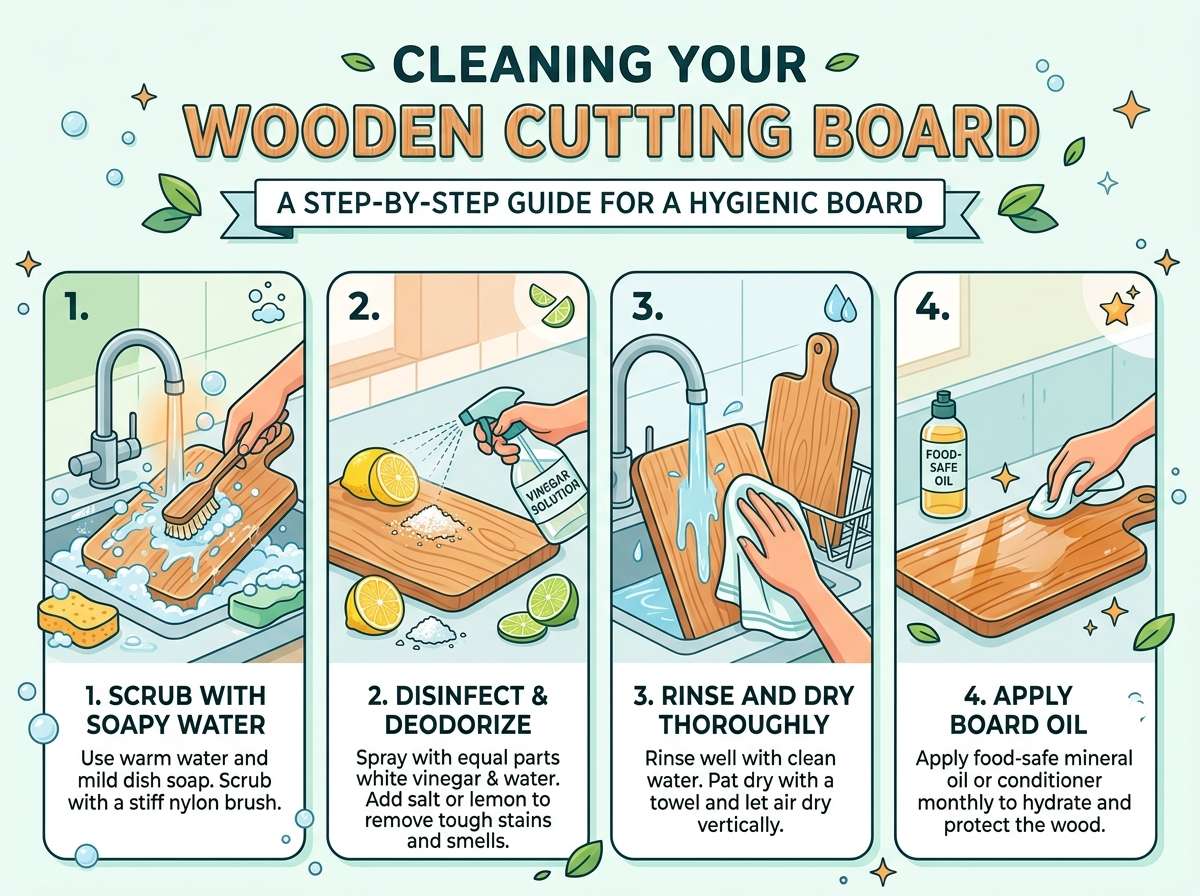
How to Clean a Wooden Cutting Board?
Your wooden cutting board is one of your kitchen’s best friends. It sits there looking beautiful, ready to help you chop vegetables, slice bread, and prepare meals for your family. But here’s the thing—wooden boards need special care. They’re not like plastic cutting boards. They need attention. They need love. And most importantly, they need to be cleaned the right way.
In this article
If you’ve ever wondered how to keep your wooden cutting board looking great and lasting for years, you’ve come to the right place. This guide will walk you through everything you need to know about cleaning wooden cutting boards. No fancy tips. No hard-to-find products. Just simple, real advice that works.
Why Clean Your Wooden Cutting Board Properly?
Before we jump into the how, let’s talk about the why. Your cutting board handles a lot. It comes into contact with raw meat, fresh vegetables, garlic, onions, and all kinds of food. Without proper cleaning, harmful bacteria can hide in the tiny cuts and grooves on your board’s surface.
A dirty wooden cutting board can make you and your family sick. Food poisoning is no joke. That’s why keeping your wooden board clean is not just about making it look nice. It’s about keeping your kitchen safe.
Wooden cutting boards also cost money. A good one can run you $30 to $100 or more. If you take care of it, it will last for decades. If you don’t, you’ll be buying a new one in a couple of years. Proper cleaning and care help your board stay strong, beautiful, and functional.
Wood is also a natural material. It can dry out. It can crack. It can warp. The right cleaning routine protects the wood and keeps it healthy for years of use.
What You’ll Need to Clean Your Wooden Cutting Board
The good news? You probably already have everything you need in your kitchen right now. You don’t need special cleaners or expensive products.
Here’s the basic list:
Warm water – This is your main ingredient. Warm water does most of the work.
Dish soap – Regular liquid dish soap works great. The kind you use to wash your dishes is perfect.
Baking soda – You might have this in your pantry for baking. It’s amazing for cutting boards too.
Lemon juice – Fresh lemons or bottled lemon juice both work well.
Salt – Table salt, sea salt, or kosher salt will do the job.
A soft cloth or sponge – Use something soft that won’t scratch the wood.
A brush – A soft brush with gentle bristles helps get into grooves.
Mineral oil – This keeps the wood from drying out. Food-grade mineral oil is best.
Vinegar – White vinegar is a natural cleaner that kills bacteria.
That’s it. These simple items are all you need for a clean, healthy wooden cutting board.
The Basic Daily Cleaning Method
Let’s start with the easiest method. This is what you’ll do most days after using your board.
Step 1: Rinse Right Away
Rinse your wooden cutting board with warm water as soon as you finish using it. Don’t let food sit on it. Don’t wait until later. Do it right away. This stops bacteria from settling in.
Run your board under running warm water. Use your hand to wipe away any food bits. Scrub gently in the direction of the grain, not against it. The grain matters because water and bacteria can hide against the grain.
Step 2: Wash with Soap
Put a small amount of dish soap on a soft cloth or sponge. Wash the entire surface of your board with warm, soapy water. Get both sides. Don’t forget the edges. Scrub gently but thoroughly.
Pay special attention to any grooves or cuts in the board. These spots collect bacteria and need extra attention.
Step 3: Rinse Again
Rinse away all the soap with clean, warm water. Make sure no soap remains. Soapy residue doesn’t taste good and can irritate your stomach.
Step 4: Dry It
Stand your board up or place it on its edge to dry. Never leave it flat with water sitting on it. Water can seep into the wood and cause damage.
Pat it dry with a clean cloth. Let air dry for a bit before putting it away. Make sure it’s completely dry before storing.
Deep Cleaning Your Wooden Cutting Board
Once a week or whenever your board needs a deeper clean, do this method. This removes stubborn stains, smells, and bacteria.
The Lemon and Salt Method
This is one of the best ways to deep clean your wooden board. Lemon is natural. Salt is natural. Together they work magic.
Cut a fresh lemon in half. Sprinkle coarse salt on the surface of your wooden cutting board. Take the lemon half and rub it all over the board. Press down as you rub. The salt acts like a gentle scrub. The lemon juice kills bacteria and removes odors.
Rub the entire surface. Get into the grooves. Don’t be shy. Then rinse with warm water and dry thoroughly.
Your board will smell fresh. It will look clean. And it will be clean.
The Baking Soda Paste Method
Baking soda is another superstar cleaner. It’s gentle on wood but tough on dirt and stains.
Mix baking soda with a little water to make a thick paste. It should look like cake batter. Spread this paste all over your cutting board. Let it sit for five to ten minutes. This gives the baking soda time to work.
Then scrub gently with a soft brush or cloth. Scrub in the direction of the grain. This helps lift out stains and kills odors.
Rinse with warm water until all the baking soda is gone. Dry thoroughly.
The Vinegar Method
White vinegar is a natural disinfectant. It kills germs and bacteria. It’s cheap and safe.
Mix equal parts white vinegar and water in a spray bottle. Spray the entire surface of your wooden cutting board. Let it sit for a few minutes. Then scrub with a soft cloth or brush.
Rinse with water and dry completely.
The smell of vinegar will fade as the board dries. Your board will be clean and safe to use.
Dealing with Stains and Smells
Wooden cutting boards can pick up stains from beets, turmeric, tomatoes, and other deeply colored foods. They can also hold onto smells from garlic, onions, and fish.
Removing Stubborn Stains
For tough stains, make a paste with baking soda and lemon juice. Spread it over the stain. Let it sit for fifteen to thirty minutes. Then scrub gently and rinse.
You can also try the salt and lemon method directly on the stained area. The citric acid in lemon helps break down the stain.
For really stubborn stains, repeat the process. Sometimes you need to do it twice.
Eliminating Food Smells
Garlic and onion smells cling to wood. Vinegar helps remove these smells. So does lemon.
Cut a fresh lemon in half and rub it all over the board. Let it sit for a few minutes. Rinse with water.
You can also sprinkle salt on the board and rub it with a lemon half. The combination works even better.
Baking soda also helps with smells. Sprinkle it on the board, let it sit, and then rinse.
If the smell is really strong, try this: Fill a bowl with water and add one tablespoon of baking soda. Place the bowl next to your cutting board overnight. The baking soda absorbs odors from the air and the board.
How to Oil Your Wooden Cutting Board
Oiling your wooden cutting board is crucial. Wood needs moisture. Without it, the board dries out. It cracks. It splinters. Oil keeps the wood supple and healthy.
When to Oil
Oil your board every month or every few months. If you live in a dry climate, oil it more often. If you notice the wood starting to look dull or dry, oil it.
What Oil to Use
Use food-grade mineral oil. This is safe for boards that touch food. Don’t use olive oil or vegetable oil. These oils can go rancid and smell bad.
Mineral oil is cheap and lasts a long time. A bottle will last you years.
How to Oil Your Board
First, make sure your board is completely clean and dry. Don’t oil a damp board.
Pour a little mineral oil onto a clean cloth. Rub it all over the board. Go with the grain. Don’t go against the grain. The grain is important.
Use enough oil to cover the whole board, but not so much that it’s dripping wet.
Let the oil soak in for a few hours. You can do this before bed and let it sit overnight.
Then wipe off any extra oil with a clean cloth. Your board should look shiny and healthy.
Storing Your Wooden Cutting Board
How you store your board matters too.
Don’t store it flat under other things. Don’t lean it against the wall flat. The weight can cause it to warp.
Stand it up vertically. Lean it at an angle. Let air flow around it. This keeps moisture from building up.
Store it in a cool, dry place. Not near the stove. Not in direct sunlight. Not in a damp basement.
A knife block or a wooden stand designed for cutting boards works great. So does leaning it in a cabinet where air can reach it.
Never wrap it in plastic or put it in a sealed bag. It needs to breathe.
Can You Use a Dishwasher?
Here’s a simple answer: Don’t do it.
Dishwashers are too harsh for wooden cutting boards. The hot water, the harsh detergent, and the intense heat can damage the wood. It can cause the board to warp. It can cause it to crack. It can strip away the finish.
Hand wash your wooden cutting board every single time. It takes just a few minutes. Your board will thank you.
Dealing with Mold and Mildew
If your board gets moldy or develops mildew, don’t panic. You can fix it.
Make a solution of equal parts white vinegar and water. Soak a cloth in it and wipe the entire board. Let it sit for several minutes.
Then scrub with a soft brush. Rinse with water and dry completely.
If the mold or mildew is stubborn, make a paste with baking soda and water. Apply it to the affected area. Let it sit. Then scrub and rinse.
The key is to dry the board completely after cleaning. Store it in a dry place with good air flow. This prevents mold from coming back.
Replacing Your Cutting Board When Needed
With proper care, your wooden cutting board can last for decades. But eventually, the time comes to replace it.
Signs your board needs to go:
- Deep cracks that go all the way through
- Chunks missing from the edges
- Warping that’s so bad the board rocks when you place it down
- A musty smell that won’t go away no matter what you do
- Splinters that appear no matter how much you sand
If your board is just scratched up or has surface stains, don’t throw it away. Scratches are normal. They mean your board has been loved and used. You can sand the surface to make it smooth again if the scratches bother you.
Common Mistakes People Make
Let’s talk about what not to do.
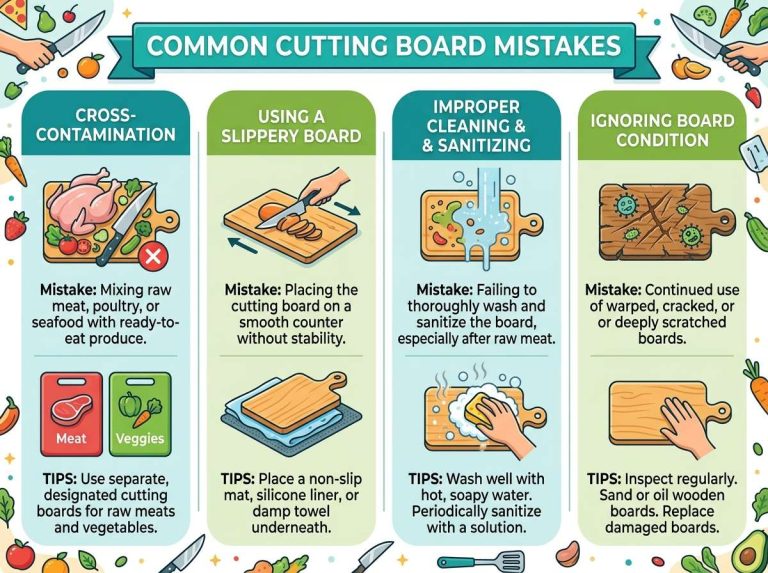
Don’t use hot water
Boiling hot water can damage wood. Warm water is all you need. It cleans just as well and is much safer for your board.
Don’t scrub hard against the grain
You can damage the wood. Always go with the grain. Be gentle.
Don’t let water sit on the board
Water damages wood. It causes warping and swelling. Rinse and dry right away.
Don’t use bleach
Bleach is too harsh. It can damage the wood and leave harmful residue.
Don’t sand your board every time you clean it
Sanding removes wood. You only need to sand when the surface is really rough or you want to refresh the board.
Don’t oil a wet board
Oil and water don’t mix. Your board must be completely dry before oiling.
Don’t use cutting board conditioners with beeswax if you don’t want to
Food-grade mineral oil works just fine on its own. Skip the fancy conditioners if you want to keep things simple.
Making Your Wooden Board Last
Your wooden cutting board is an investment. A good one is beautiful. A good one is functional. A good one becomes part of your kitchen’s personality.
Here’s the secret to making it last: Clean it regularly. Oil it regularly. Store it properly. Use it with care.
Don’t use it as a chopping block where you bang your knife down hard. Don’t use it as a serving board if you’re going to expose it to temperature changes. Don’t ignore small problems.
The more you use your board and the better you care for it, the longer it will last. Some of the best wooden cutting boards in the world are old boards that have been loved and cared for.
The Bottom Line
Cleaning a wooden cutting board is not hard. It doesn’t take much time. It doesn’t require fancy products or special skills.
Wash it with warm soapy water after every use. Deep clean it once a week with lemon and salt or baking soda. Oil it every month or few months. Store it properly. Let it dry completely.
That’s it.
Your board will stay clean. Your food will be safe. Your cutting board will last for years and years.
So next time you use your wooden cutting board, remember these tips. Treat it with care. It will repay you with years of reliable, beautiful service in your kitchen.
Your wooden cutting board doesn’t ask for much. But what it does ask for—proper cleaning, regular oiling, and thoughtful storage—will ensure it stays your kitchen’s best friend for a very long time.

Mary is a home cooking enthusiast and kitchen gear reviewer with a passion for practical cookware and food preparation tools. She enjoys testing cutting boards, knives, kitchen gadgets, and other cooking essentials to help home chefs make smarter buying decisions. Through KitchenCutting.com, Mary shares honest product reviews, buying guides, and helpful kitchen tips to make cooking easier, safer, and more enjoyable.