End Grain vs Edge Grain Cutting Boards
So you want to upgrade your kitchen setup and are thinking about getting a quality cutting board. Maybe you’ve scrolled through woodworking sites, visited kitchen stores, or asked friends about their favorite boards. You’ve probably heard people talk about “end grain” and “edge grain” cutting boards, but what do these terms actually mean? Why does it matter which one you buy? And does the difference really affect how you cook?
In this article
Let me break this down for you in plain English so you can make the best choice for your kitchen.
What Are Cutting Boards Made Of?
Before we dive into the grain stuff, let’s talk about what cutting boards are made from. Wood cutting boards come from trees. When you cut down a tree, you get logs. These logs have different parts to them, kind of like how a rope has threads twisted together.
The tree grows in rings. Every ring represents one year of growth. Inside the tree, you have fibers running in different directions. When woodworkers cut a log into boards, they can cut it different ways. The way they cut it determines how the wood looks and behaves. This is where end grain and edge grain come in.
Understanding Wood Grain: The Basic Concept
Wood grain is basically the direction of the fibers in the wood. Imagine bundled straws standing upright. If you cut them straight across the bundle, you see the ends of each straw. If you cut along the side of the bundle, you see the long side of the straws. That’s roughly how wood grain works.
The fibers in wood run lengthwise through the tree. When you cut the wood in different ways, the fibers line up differently on the surface. This surface is what becomes your cutting board, and it affects everything from how durable the board is to how it looks and feels.
What Is Edge Grain?
Edge grain cutting boards are the more common type you’ll find in stores. They’re also called “edge-grain boards” and sometimes referred to as “slab boards.”
Here’s how edge grain works: Imagine slicing a log lengthwise, along its side. You’re cutting parallel to the growth rings. When you look at the surface of this cut, you see thin stripes running across it. These stripes are the growth rings laying sideways. The long fibers of the wood are also running on their side.
Edge grain boards are made by taking wooden planks and gluing them side-by-side. The edges of the planks get glued together. So you’re essentially looking at the edge of all those planks when you set your board on your counter.
What Is End Grain?
End grain cutting boards are the premium type. They’re less common and usually cost more money.
Here’s the key difference: an end grain board is made by cutting the log straight across, like you’re cutting a tree trunk to look at the rings. When you cut this way, you’re looking at the ends of all those fibers. The growth rings show up as circular patterns on the surface.
To make an end grain board, woodworkers take wooden blocks (not planks) and arrange them in a pattern. These blocks are glued together with the cut ends facing up. When you look down at the board, you see the ends of all the wood fibers.
The Visual Differences
If you put an edge grain and end grain board side by side, you’ll spot them immediately.
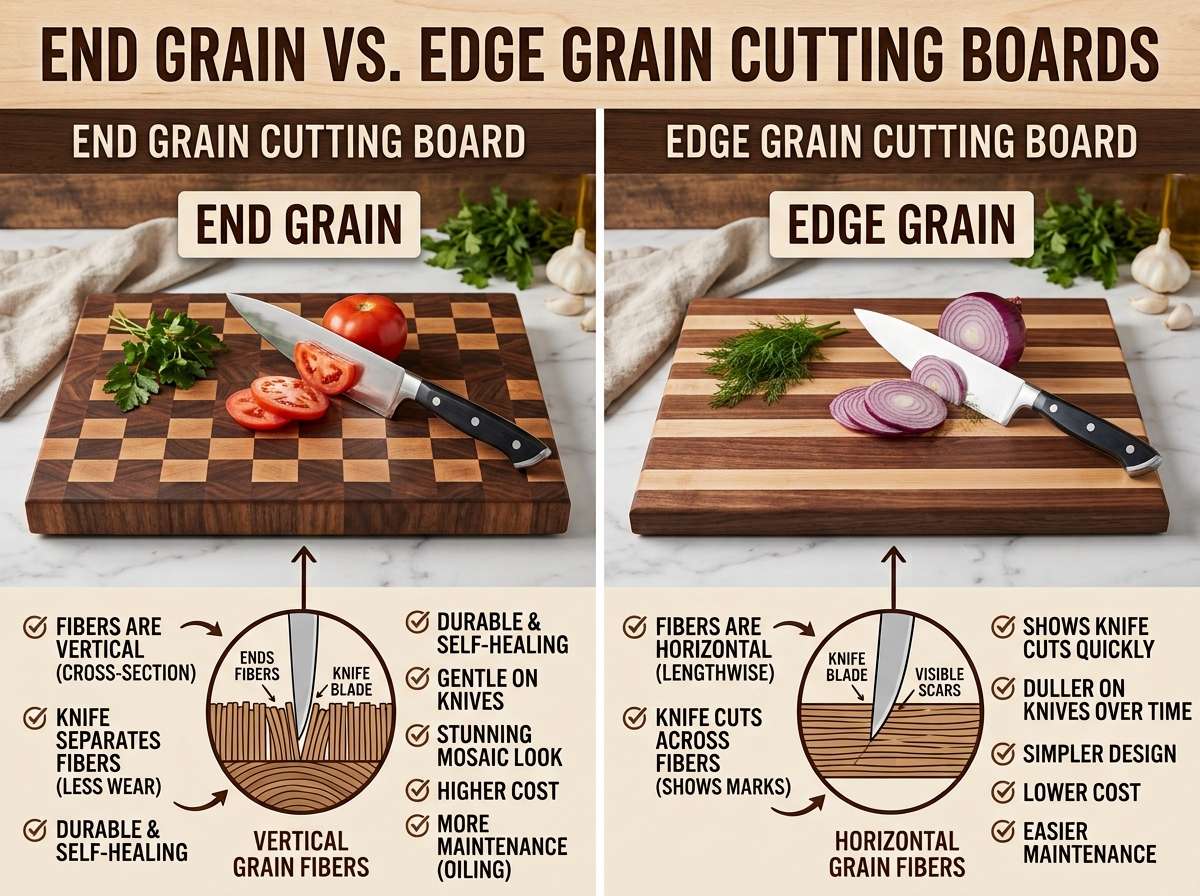
An edge grain board looks striped. You’ll see lines running across the surface, sometimes looking almost like a candy cane pattern. The wood grain is obvious and bold. The stripes can be thin or thick depending on how the board was made, but they’re definitely there.
An end grain board looks bumpy and textured. Instead of lines, you see a pattern of circular or polygonal shapes. It almost looks like you’re staring at a bunch of wooden coins glued together. The surface has more visual interest and depth to it. Many people think end grain boards look fancier and more beautiful.
Durability: Which One Lasts Longer?
This is one of the biggest reasons people choose one type over the other.
End grain boards win when it comes to durability. Here’s why: when you chop, cut, and slice vegetables on your board, your knife hits those wood fibers. On an edge grain board, you’re hitting the long side of the fibers. It’s like hitting the side of a bundle of straws. The fibers compress and separate, creating knife marks that turn into grooves. Over time, these grooves deepen, and the board starts to look worn and damaged.
With an end grain board, you’re hitting the ends of those fibers. The fibers have more resistance in this direction. When your knife hits them, they compress a little bit but then spring back. This is similar to how a bundle of straws resists damage if you push down on them from above. The fibers have more support holding them up, so they don’t separate and create deep grooves as easily.
This doesn’t mean an end grain board is indestructible. You can still damage it. But it holds up much better over years of regular use. Many professional chefs use end grain boards for this exact reason. They want their cutting surfaces to stay smooth and beautiful for as long as possible.
How Knives Respond to Different Boards
Your knives care about which board you use too.
Edge grain boards are harder on your knives. The long fibers of the wood are denser and more rigid. When your blade hits them, the wood doesn’t give as much. This creates more friction and more impact on your knife edge. Over time, constant cutting on an edge grain board will dull your knife faster.
End grain boards are gentler on knives. The ends of the wood fibers are softer and more forgiving. They compress and flex more when your blade hits them. This absorbs some of the impact energy, reducing the stress on your knife edge. Your knives will stay sharp longer if you use an end grain board.
This is actually a big deal if you care about your knives. A good chef’s knife costs real money, and maintaining its sharpness keeps it working well. Using an end grain board helps you protect that investment.
Maintenance and Care Requirements
Both types of cutting boards need care, but it matters for different reasons.
Edge grain boards are easier to maintain. They have a smoother, flatter surface, so they’re simpler to clean. Food doesn’t get trapped in deep crevices. You can wipe them down quickly and move on. They don’t absorb as much liquid because the surface is more compact.
End grain boards need a bit more attention. The textured surface has valleys and hills where food particles can hide. You need to wash them more thoroughly to get into all those little pockets. The texture also means more surface area, so they can absorb more liquid and moisture.
However, end grain boards actually handle moisture better than you might think. The way the fibers are arranged means liquids don’t soak in as deeply as they would in edge grain boards. But you still want to hand wash them and dry them promptly, just like any good cutting board.
Both types need occasional conditioning with food-safe mineral oil or wood conditioner. This keeps the wood from drying out and cracking. End grain boards might benefit from this conditioning more often since they have more surface area.
Cost Comparison
Let’s talk money. End grain cutting boards cost significantly more than edge grain boards.
You might find a decent edge grain board for anywhere from twenty to fifty dollars. A quality end grain board can run you from one hundred to several hundred dollars, depending on the size and wood type.
Why the big price difference? Making an end grain board is labor-intensive. Woodworkers have to cut blocks carefully, arrange them in a pattern, glue them together, and then finish the surface. The process takes more skill and time. Edge grain boards are simpler to make, which keeps the cost down.
If you’re on a tight budget, an edge grain board is a solid choice. You’ll get a functional cutting surface that works fine for everyday cooking. If you’re willing to spend more and want something that lasts longer and looks nicer, an end grain board is worth the investment.
Which Woods Work Best?
The type of wood matters for both styles.
Hardwoods are best for cutting boards. Softwoods like pine or fir don’t hold up well. They dent easily and can splinter. Good hardwoods include maple, walnut, cherry, hickory, and bamboo.
Maple is popular for edge grain boards. It’s hard, durable, and looks nice. Walnut is stunning for end grain boards because the dark grain patterns show up beautifully in the bumpy end grain style.
Bamboo is becoming trendy for both types. It’s technically a grass, not a wood, but it’s incredibly hard and sustainable. Bamboo cutting boards work great and cost less than hardwood boards.
The wood choice affects the final look and durability of your board, but the grain direction (edge vs end) still matters most for how the board performs.
Hygiene and Food Safety
Here’s something important: which board is more sanitary?
Both types can be perfectly sanitary if you wash them properly. The idea that end grain boards are less hygienic because of the texture isn’t really backed by science. Bacteria don’t hide in the wood differently based on grain direction.
What matters is how you clean. Wash your board with hot soapy water right after using it. You can also sanitize with a solution of one part white vinegar to one part water. Let it sit for a few minutes, then rinse.
Some people worry that the texture of end grain boards traps food. While food particles might get into the valleys, a good wash will get them out. The wooden fibers also have natural antimicrobial properties that help keep the board clean and fresh.
If you’re super concerned about bacteria, you can still use plastic cutting boards. But wood cutting boards, when properly maintained, are just as safe as plastic for food preparation.
Thickness Matters Too
Whether you pick edge grain or end grain, thickness affects how well the board works.
Thicker boards are better. They stay flat and stable while you’re cutting. Thin boards can rock back and forth, which is annoying and unsafe. A good cutting board should be at least one and a half inches thick, ideally closer to two inches.
End grain boards tend to be thicker anyway because of how they’re made. Edge grain boards come in various thicknesses. Always choose a thicker one if you have the option.
The Aesthetic Appeal
Let’s be real: how your cutting board looks matters too.
Edge grain boards are clean and simple. The striped pattern is classic and works with any kitchen style. If you like a minimal look, edge grain is your friend. The stripes can be really beautiful in the right light, especially if the wood has nice color variation.
End grain boards are statement pieces. They look more complex and interesting. The bumpy texture catches light differently. If you care about kitchen aesthetics and want your cutting board to look like a work of art, end grain wins.
Many people display their nice cutting boards on the counter instead of putting them away. If you’re thinking of showing off your board, end grain has more visual wow factor.
Butcher Block Boards
You’ll often hear the term “butcher block” when talking about cutting boards. This can mean either edge grain or end grain, so don’t get confused.
Butcher block just means a wooden cutting board, usually a thicker one. Historically, butchers used thick wooden blocks for chopping meat. The term now applies to any substantial wooden cutting board.
Some sellers use “butcher block” loosely, so always check whether they’re selling edge grain or end grain. The performance differences still apply no matter what they call it.
Reversible and Combination Boards
Some cutting boards have both edge grain and end grain sides. You get an end grain surface for cutting and an edge grain surface for serving or presentation.
These boards can be handy if you want the best of both worlds. The downside is that you don’t get the full benefits of either type. The end grain side might be thinner than a dedicated end grain board. The edge grain side might be thicker than needed.
If you really want both functions, buying two separate boards might serve you better. But combination boards work fine if you want one multi-purpose board.
Plastic vs Wood: The Comparison
Should you even consider wood, or would plastic be better?
Plastic cutting boards are cheap, colorful, and dishwasher safe. They’re convenient. But they have some downsides. They scratch easily, creating grooves where bacteria can hide. They can leach chemicals into food over time. They’re not great for your knives either.
Wood is a better choice for serious cooks. It’s naturally antimicrobial, more durable, and gentler on knives. It looks better and feels nicer to use. The only real advantage of plastic is the price and convenience factor.
If you’re going to invest time in cooking, a wood cutting board is worth it.
How to Choose: A Decision Guide
So which should you pick? Here’s how to think about it.
Go with edge grain if:
- Your budget is limited
- You want easy cleaning and maintenance
- You prefer a simple, classic look
- You don’t mind replacing it in a few years
- You’re starting your cooking journey
Go with end grain if:
- You cook regularly and want a long-lasting board
- You have quality knives you want to protect
- You like the way end grain looks
- You want something that will stay smooth and beautiful for years
- You’re willing to invest more upfront
Consider combination boards if:
- You want flexibility and don’t have space for multiple boards
- You like the look of both styles
- You need one board to do multiple jobs
Maintenance Tips for Either Board
Whatever you choose, here’s how to keep it in great shape.
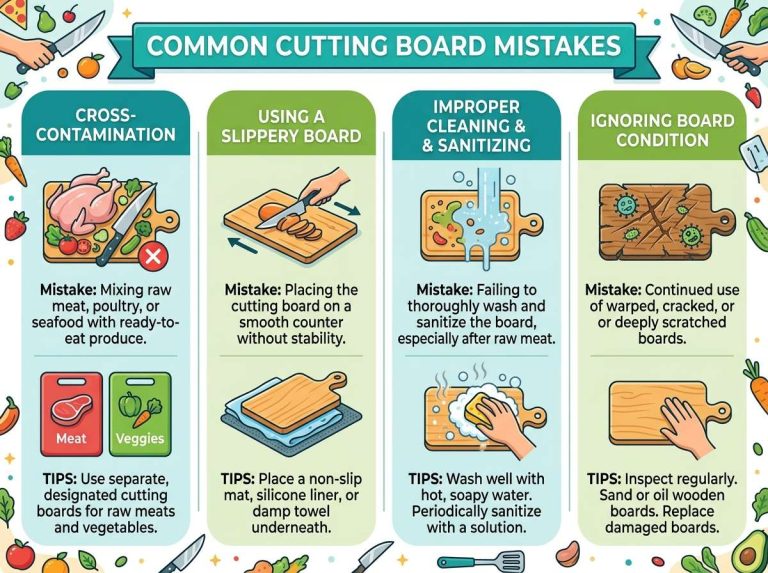
Wash immediately after use with hot soapy water. Don’t let food dry on the surface. Dry it right away with a towel so it doesn’t absorb too much water. Store it upright or flat, but never in a dishwasher (this goes for both types, though plastic can take it).
Oil your board regularly. Use food-safe mineral oil or a wood conditioner. Apply it every month or whenever the wood looks dry. This keeps it from cracking and extends its life.
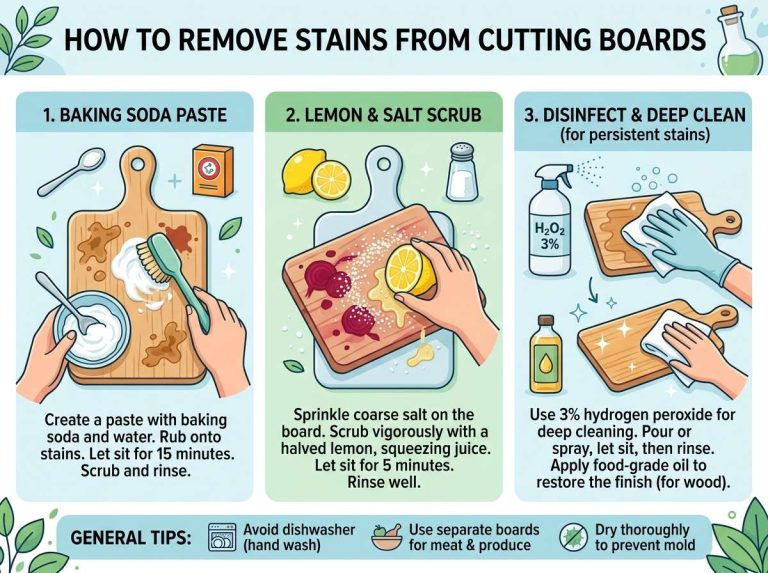
Remove stains or odors by rubbing with lemon and salt, or white vinegar. These natural cleaners are safe and effective.
If your board gets grooves or develops a rough surface, you can sand it down. Use fine-grit sandpaper and go with the grain. This takes more work on an end grain board but is totally possible.
Replace your board if it develops deep cracks or starts to splinter. No amount of maintenance can fix a seriously damaged board.
Real-World Performance
In actual kitchen use, the differences between edge grain and end grain boards are noticeable.
After a year of regular use, an edge grain board often looks noticeably worn. The knife marks become visible grooves. The surface is no longer smooth. It still works fine, but it looks tired.
An end grain board after a year looks almost like new. The texture hides minor knife marks. The surface stays relatively smooth. It looks well-maintained and cared for.
This difference becomes more obvious the more you cook. Professional kitchens use end grain boards specifically because they hold up better under heavy use.
Environmental Considerations
Both edge grain and end grain boards have environmental impacts, but wood is generally a sustainable choice.
Wood is renewable. Trees grow back. Hardwoods grow slower than softwoods, so sustainably sourced hardwood is important. Look for boards made from responsibly harvested wood. Bamboo is an excellent sustainable option since bamboo grows incredibly fast.
Plastic boards have environmental issues. Most are made from petroleum products and end up in landfills eventually. They don’t biodegrade, and producing them creates pollution.
From an environmental standpoint, both types of wood cutting boards beat plastic.
Final Verdict
Here’s the simple takeaway: end grain boards are better if you can afford them. They last longer, protect your knives better, and look stunning. If money is no object, go end grain.
Edge grain boards are great if you’re on a budget or don’t cook heavily. They’re still functional, good-looking, and will serve you well for several years.
The most important thing is that you use a wood cutting board instead of plastic and that you take care of it properly. Any wooden cutting board is better than a plastic one when it comes to knife health, food safety, and environmental impact.
Now that you understand the difference, you can make an informed choice. Visit a kitchen store and look at both types in person. Feel the texture. Check out the prices. Think about your cooking habits. Then choose the one that fits your needs and your budget.
Your knives will thank you, and your cutting board will last for years to come.

Mary is a home cooking enthusiast and kitchen gear reviewer with a passion for practical cookware and food preparation tools. She enjoys testing cutting boards, knives, kitchen gadgets, and other cooking essentials to help home chefs make smarter buying decisions. Through KitchenCutting.com, Mary shares honest product reviews, buying guides, and helpful kitchen tips to make cooking easier, safer, and more enjoyable.