Common Cutting Board Mistakes
A cutting board seems like the simplest tool in your kitchen. You put it on the counter, you chop your food, you wash it, and you move on. But this small slab of wood or plastic causes more kitchen problems than most people realize. Bacteria, cross contamination, dull knives, warped wood, and even bad smells all trace back to how you treat your board every single day.
In this article
If you cook at home often, your cutting board takes a lot of abuse. It gets cut into, soaked in water, left in the sun, and sometimes tossed in the dishwasher without a second thought. Small habits like these slowly wreck the board and put your food safety at risk too.
This guide walks you through the most common cutting board mistakes people make in home kitchens. Once you know what to avoid, your board will last longer, stay cleaner, and keep your knives sharper for a much longer time.
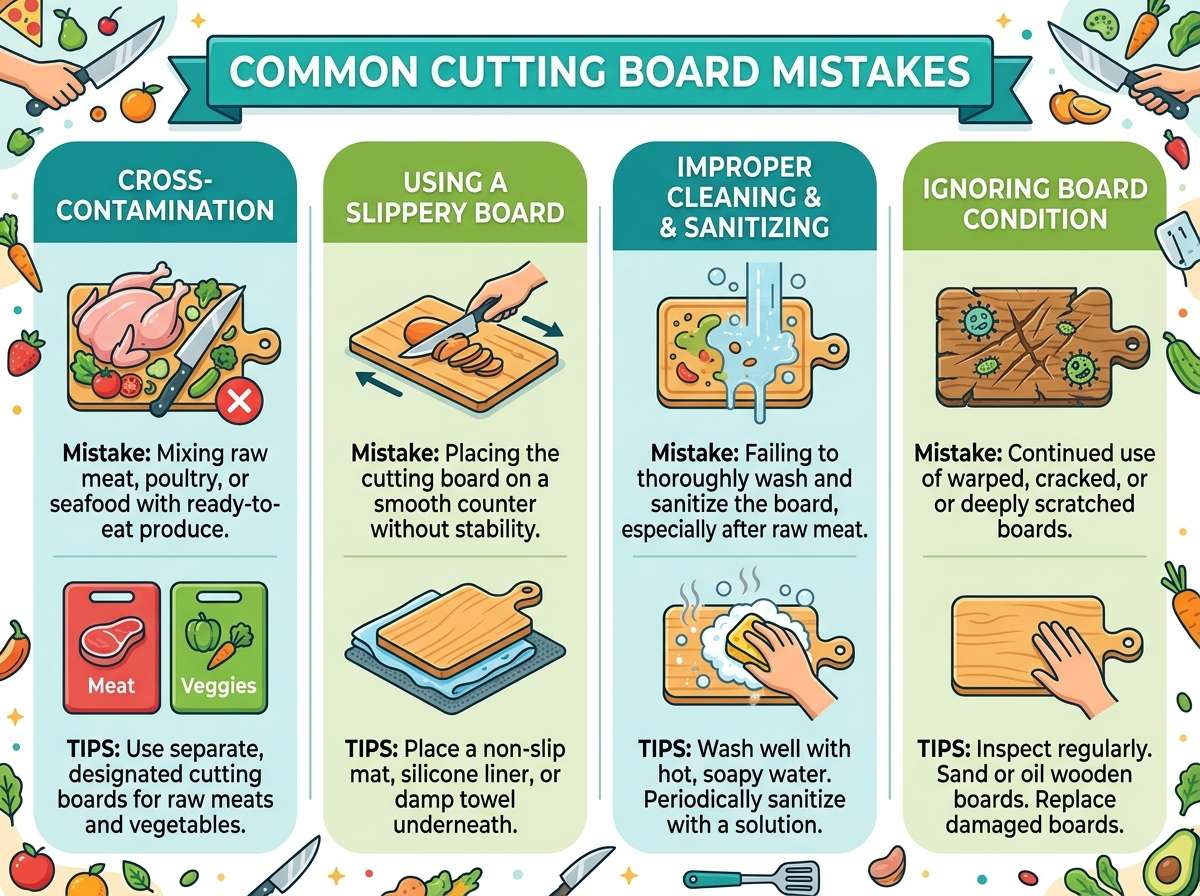
Using One Board For Everything
This is the biggest mistake almost everyone makes. Raw chicken, fish, vegetables, bread, and cheese all end up on the same board, one after another, with just a quick rinse in between.
Raw meat and poultry carry bacteria like salmonella and E. coli. When you cut raw chicken and then slice a cucumber on the same board without a proper wash, those germs jump straight onto your fresh produce. This is called cross contamination, and it’s one of the leading causes of food poisoning at home.
The fix is simple. Keep separate boards for raw meat, seafood, vegetables, and ready-to-eat foods like bread or fruit. Many kitchens use color coded boards, such as red for meat, green for vegetables, and yellow for poultry. You don’t need fancy color coded sets though. Even having two boards, one for raw protein and one for everything else, cuts your risk by a huge margin.
Washing Wood Boards The Wrong Way
Wood cutting boards need gentle care, but a lot of people treat them like plastic ones. Soaking a wood board in the sink, running it through the dishwasher, or leaving it wet on the counter all damage the wood over time.
Wood is a natural material, and it absorbs water. When it gets soaked again and again, it swells, cracks, and warps. Once cracks form, food particles and bacteria settle into those tiny grooves, and no amount of scrubbing gets them fully clean.
Instead, wash your wood board with warm soapy water right after use, rinse it quickly, and dry it standing up so air reaches both sides. Never leave it flat in a puddle of water on the counter. And never, under any circumstance, put a wood board in the dishwasher. The heat and prolonged soaking will ruin it fast.
Letting Plastic Boards Get Too Scratched
Plastic boards are popular because they’re cheap, light, and dishwasher safe. But here’s the catch: every time your knife cuts into plastic, it leaves a tiny groove. Over months of use, these grooves multiply and turn into deep scratches.
Those scratches become the perfect hiding spot for bacteria. Even a thorough wash with soap and hot water can’t reach deep inside a scratch. Studies on kitchen hygiene have shown that heavily scratched plastic boards can hold more bacteria than an old wood board, since wood actually has natural antimicrobial properties in some hardwoods.
Check your plastic board regularly. If it’s covered in deep grooves and knife marks, it’s time to replace it. Most kitchen experts suggest swapping out a heavily used plastic board every year or two, depending on how rough it looks.
Cutting Directly On The Counter
Some people skip the board entirely for quick jobs, like slicing a lemon or chopping a small onion, and just cut right on the countertop. This feels faster, but it’s a bad habit for a few reasons.
First, it dulls your knife much quicker than cutting on wood or plastic, since granite, marble, and quartz counters are far harder than any cutting board surface. Second, it leaves tiny scratches on your countertop that trap grime over time. Third, it spreads whatever bacteria was on your food straight onto a surface you touch constantly, and that surface rarely gets sanitized the way a board does.
Keep a small board handy near your prep area for quick jobs. It takes two seconds to grab and saves both your knife edge and your countertop finish.
Not Drying The Board Properly
Leaving a board wet, whether it’s wood or plastic, creates the perfect environment for mold and bacteria to grow. Damp surfaces left in dark cabinets or stacked wet against each other are basically breeding grounds for germs.
After washing, stand your board upright in a dish rack or against a wall so air can circulate around it. Avoid stacking a wet board flat under other dishes. If you notice a musty smell coming from your board, that’s a clear sign moisture has been sitting there too long, and it’s time for a deep clean or a replacement.
Skipping The Deep Clean
A quick rinse under the tap might look clean, but it doesn’t kill bacteria hiding in tiny cuts and grooves. Boards need a deeper clean every so often, not just a daily rinse.
For wood boards, sprinkle coarse salt over the surface and rub it with half a lemon. The salt scrubs away grime while the lemon’s acidity fights bacteria and lifts stains. Let it sit for a few minutes, then rinse and dry.
For plastic boards, a soak in a mix of water and white vinegar, or a diluted bleach solution, works well to kill lingering germs. Rinse thoroughly afterward so no chemical taste transfers to your food.
Doing this deep clean once a week keeps your board fresh and safer to use every day.
Ignoring Bad Smells
If your cutting board smells like onion, garlic, or fish no matter how many times you wash it, that smell is a warning sign. Odors soak into porous surfaces and stick around, especially in wood grain or plastic scratches.
Don’t just mask the smell with dish soap and move on. Try the salt and lemon scrub mentioned above, or a baking soda paste rubbed into the surface. Baking soda neutralizes odors instead of covering them up. If the smell keeps coming back no matter what you try, the board has likely absorbed bacteria deep into its structure, and replacing it is the safer choice.
Storing The Board In A Damp Spot
Where you store your board matters just as much as how you wash it. Tucking a slightly damp board into a closed cabinet or drawer traps moisture inside, and that moisture has nowhere to go. This creates warm, dark, wet conditions, which is exactly what mold loves.
Store your board somewhere with airflow. A vertical board holder on the counter, a slotted drawer, or a hook on the wall all work better than a sealed cabinet. If you must store it in a cabinet, make sure it’s completely dry first.
Forgetting To Oil Wood Boards
Wood boards need regular oiling to stay in good shape, but a lot of people forget this step entirely, or they use the wrong oil. Regular cooking oils like olive oil or vegetable oil go rancid over time and leave a sticky, smelly residue on your board.
Use a food safe mineral oil instead, or a specially made board conditioner. Rub a small amount into the wood with a cloth, let it soak in for a few hours, then wipe off the extra. Doing this once a month keeps the wood from drying out, cracking, or absorbing too much water during washing.
A well oiled board also looks better and lasts noticeably longer than a neglected one.
Using A Board That’s Too Small
A tiny board might seem convenient, but it actually makes cooking harder and messier. When you’re chopping vegetables on a board that barely fits your cutting motion, food slides off the edges, your knife hand gets cramped, and you end up cutting slower and less safely.
Get a board that gives you enough room to work comfortably, especially if you cook large meals or prep multiple ingredients at once. A bigger board also means less mess on your counter, since chopped food stays contained instead of spilling over the sides.
Placing The Board On An Unstable Surface
A board that slides around while you cut is a safety hazard. Wet countertops, smooth surfaces, or a board without any grip underneath can shift right when your knife comes down, and that’s how accidents happen.
Place a damp kitchen towel or a thin rubber mat under your board before you start cutting. This keeps it steady and stops it from sliding, especially on smooth counters like granite or laminate. Some boards come with rubber feet built in for exactly this reason, so look for that feature next time you shop for one.
Cutting Hot Items Straight On The Board
Placing a pan straight off the stove, or a hot pot, directly onto a cutting board can warp plastic and crack wood almost instantly. The sudden heat shock is tough on both materials, and it shortens the life of your board fast.
Let hot items cool for a few minutes, or use a separate trivet or heat pad for anything straight off the burner. Save your cutting board strictly for its job: cutting, not resting hot cookware.
Not Replacing The Board When It’s Time
Every cutting board has a lifespan. Even with great care, wear and tear builds up over time. Deep cuts, stains that won’t lift, persistent smells, warping, or cracks are all signs your board has reached the end of its useful life.
Holding onto a worn out board because it still technically works is not worth the food safety risk. A new board is a small cost compared to a foodborne illness. Check your board every few months for these warning signs and replace it once it clearly shows heavy damage.
Using The Same Side Every Time
Boards with two flat sides sometimes get used on just one side forever, while the other side stays untouched. This uneven wear means one side takes all the knife damage while the other stays fresh and unused, which is a waste of the board’s full lifespan.
If your board has two usable sides, alternate between them. This spreads out the wear evenly and stretches the life of your board. Just make sure both sides get cleaned and dried the same way after each use.
Not Sanitizing After Raw Meat
Even if you already use separate boards, sanitizing after cutting raw meat or poultry is still a step people skip. A quick soap wash removes visible mess, but it may not fully kill bacteria left behind on a porous surface.
After cutting raw meat, wash the board with hot soapy water, then follow up with a sanitizing rinse. A solution of one tablespoon of unscented bleach per gallon of water works well for this, or a food safe sanitizing spray. Let it sit briefly before rinsing clean. This extra step takes less than a minute but makes a real difference in keeping your kitchen safe.
Final Thoughts
Your cutting board might be small, but the mistakes people make with it add up to real risks for food safety, kitchen hygiene, and even how long your knives stay sharp. Small daily habits, like drying your board properly, using separate boards for raw meat, oiling wood regularly, and replacing a board once it’s worn out, protect both your health and your kitchen tools.
None of these fixes take much time or money. A little attention to how you wash, store, and use your board goes a long way toward a cleaner, safer kitchen. Once these habits become routine, you’ll notice your board lasts longer, your food tastes better, and your knives stay sharper for much longer than before.

Mary is a home cooking enthusiast and kitchen gear reviewer with a passion for practical cookware and food preparation tools. She enjoys testing cutting boards, knives, kitchen gadgets, and other cooking essentials to help home chefs make smarter buying decisions. Through KitchenCutting.com, Mary shares honest product reviews, buying guides, and helpful kitchen tips to make cooking easier, safer, and more enjoyable.