
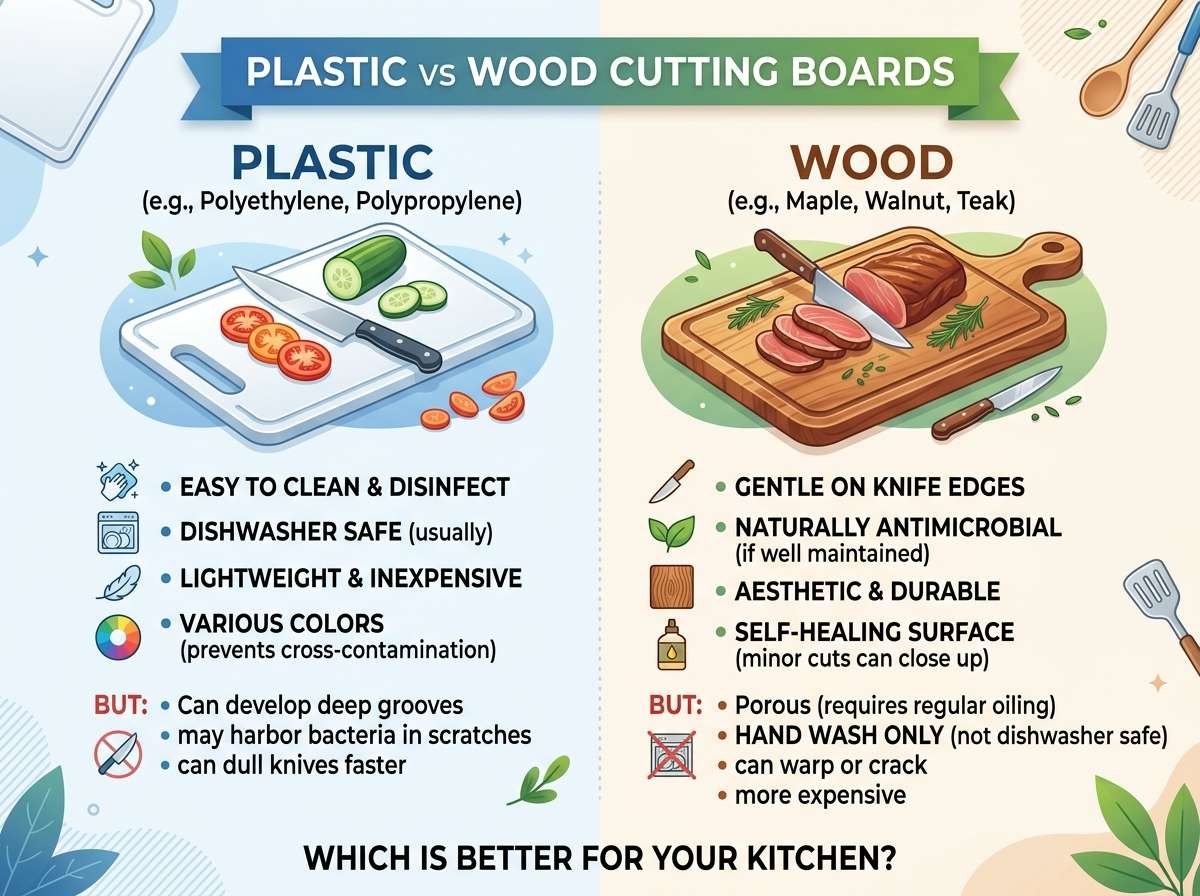
Plastic vs Wood Cutting Board
If you spend any time in the kitchen, you know that a cutting board is one of those tools you use almost every single day. You grab it to slice vegetables, chop herbs, cut meat, and prep everything else that goes into your meals. But here’s the thing that stumps a lot of people: should you use a plastic cutting board or a wood cutting board?
In this article
The answer isn’t as simple as you might think. Both options have their fans, and both come with real advantages and real disadvantages. Let me break this down for you in a way that makes sense.
What Makes a Cutting Board Matter Anyway?
Before we jump into comparing plastic cutting boards and wooden cutting boards, let’s talk about why your choice even matters. A cutting board does more than just give you a safe surface to chop on. It protects your knives from getting damaged by hitting hard countertops. It keeps your counters clean and prevents bacteria and food juices from spreading everywhere. It also determines how safely you can prepare your food.
Think of your cutting board as a gateway between the raw ingredients and your finished meal. That’s why picking the right one actually affects your cooking experience and food safety. The material you choose impacts everything from how long your knives last to how easy cleanup is to how well your board prevents bacteria growth.
Getting to Know Plastic Cutting Boards
Plastic cutting boards have been around forever, and they’re super popular. You’ll find them in most kitchens, and for good reason. Let me explain why they get so much use.
Why People Love Plastic Cutting Boards
Plastic boards are cheap. That’s the first thing people notice. You can grab a plastic cutting board at a supermarket for just a few dollars. This means you can afford to have multiple ones without feeling like you’re breaking the bank. Many people keep different plastic boards for different foods—one for vegetables, one for raw meat, one for cooked foods. This helps prevent cross-contamination.
Plastic is super durable in a specific way. It doesn’t splinter or crack easily. You can throw it around, wash it aggressively, and it just keeps going. For people who are rough with their tools or who have busy, chaotic kitchens, plastic boards are forgiving.
Cleanup is a breeze. Plastic cutting boards go right in the dishwasher. You can blast them with hot water, use strong soaps, and even bleach them if you want to disinfect. This ease of cleaning is a huge deal for food safety. A lot of home cooks feel confident that their plastic boards are truly clean after a dishwasher cycle.
Plastic boards resist stains and odors way better than wood. If you chop garlic, onions, or beets on a wooden board, those smells and stains stick around. Plastic? It wipes clean and doesn’t hold onto the scents of strong foods.
They’re lightweight. If you’re someone with less upper body strength or joint issues, plastic boards are easier to pick up and move around. This matters more than you’d think when you’re working in the kitchen.
The Dark Side of Plastic Cutting Boards
Here’s where it gets tricky. Plastic has some real downsides that don’t get talked about enough.
Plastic cutting boards get grooves and cuts from your knife way faster than wood. Every time your knife comes down and rocks across the plastic, it leaves tiny scratches. Over time, you get deep gouges all over the surface. These grooves are perfect places for bacteria to hide. Washing might not get bacteria out of those deep cracks. This is ironic because plastic was supposed to be the safer, more hygienic choice.
The scratches also mean your plastic board gets dull looking fast. After a few months of regular use, it starts to look beat up. This bothers people who care about how their kitchens look.
There’s something weird about cutting on plastic. A lot of cooks say the sound and feel of knife on plastic isn’t great. It doesn’t feel as natural or smooth as wood. Some people find this annoying enough to prefer wood despite plastic’s other benefits.
If you have concerns about chemicals, plastic boards raise some questions. When plastic gets worn down, micro-particles can end up in your food. Some plastics contain BPA or other chemicals that can leach into food, especially when you’re cutting hot foods or when the board gets damaged. This might not be a huge concern for everyone, but it’s worth knowing about.
Plastic is a petroleum product. If you care about the environment, plastic cutting boards carry that concern. They don’t break down quickly in landfills, and their production requires fossil fuels.
Wooden Cutting Boards: The Traditional Choice
Wooden cutting boards have been used for centuries. There’s a reason they’re still around today.
Why Wooden Boards Win Hearts
Wooden cutting boards feel amazing to use. The slight give when your knife hits wood, the sound it makes, the warmth of the material under your hands—all of this creates a better cooking experience. A lot of serious cooks swear by wood and say plastic just doesn’t compare.
Wood is naturally antibacterial. This might surprise you because people often say plastic is more hygienic. But wood has natural compounds that actually kill bacteria. When you cut meat on a wooden board, the bacteria don’t multiply the way they do on plastic. Studies have shown that wooden boards can actually be safer than plastic boards when it comes to bacterial growth, even if they get scratched.
Wooden boards are gentler on your knives. This is huge if you invest in quality knives. Every time your blade hits plastic, it gets pushed back slightly and dulls a tiny bit. Wood gives way and guides the knife, so your blades stay sharper longer. If you use expensive kitchen knives, a wood board will save you money on sharpening over time.
Wood looks beautiful. A nice wooden cutting board can sit on your counter and actually look good. It’s attractive enough to use as a serving board. You can bring it to the table. It adds warmth and style to your kitchen in a way plastic just can’t.
Wooden boards are durable in a different way than plastic. If you take care of them, they last for decades. Some wooden boards become better with age. They develop a nice patina. People pass down wooden boards through families. You won’t do that with a plastic board.
Wood is a renewable resource. If you buy boards made from sustainable sources, you’re making an environmentally smart choice. Wood is biodegradable and doesn’t come with the chemical concerns of plastic.
Wooden boards don’t hold odors or stains the way you’d think. Yes, they can discolor, but the natural wood doesn’t trap smells the way plastic does. The antibacterial properties of wood also mean that odor-causing bacteria don’t stick around.
The Challenges of Wooden Cutting Boards
Wooden boards require more care and attention. You can’t just throw them in the dishwasher. Hot water and soap will warp them. You have to wash them by hand with lukewarm water and mild soap. For busy people, this is a real hassle.
They can warp and crack. If you leave a wooden board wet, store it upright (instead of flat), or expose it to extreme temperature changes, it will damage. Getting a wooden board to last means treating it right.
Wooden boards need regular oiling. To keep wood in good condition, you should oil it every few months. You use food-grade mineral oil or special board oils. If you skip this, the wood dries out and becomes prone to cracking and splitting.
Wood can splinter. If you don’t care for it properly, wooden boards develop splinters that can end up in your food. This is a valid safety concern, though proper care prevents this.
Wooden boards are more expensive upfront. A quality wooden cutting board costs way more than a plastic one. If money is tight, the price difference is real.
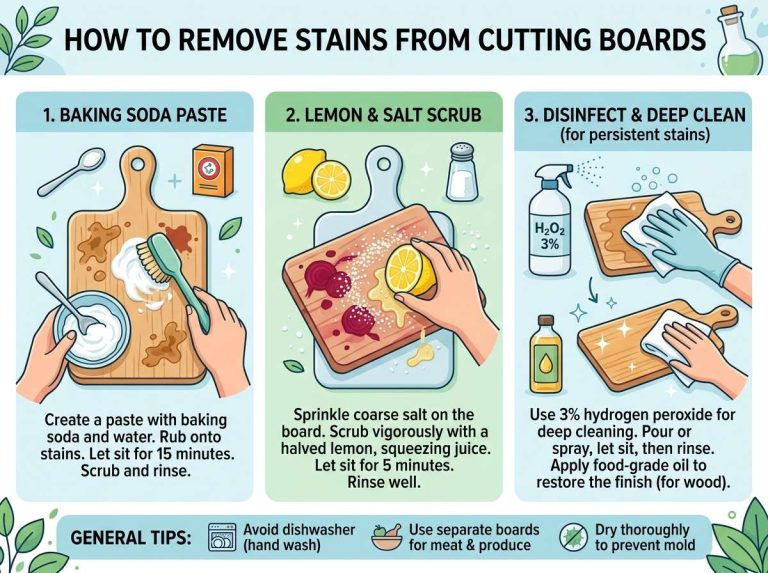
Wood can stain and discolor. Beets, turmeric, and other deeply colored foods leave marks on wooden boards. Some people don’t mind this because it shows the board has been used and loved. Others find it annoying.
Food Safety: The Real Story
Let’s get into what actually matters: keeping your food safe. This is where people get confused because both sides claim their material is better.
Here’s what science says. Wooden cutting boards don’t get as many deep grooves as plastic boards when used normally. Even when they do get cut marks, bacteria don’t multiply as well in wood as they do in plastic. The natural antimicrobial properties of wood give it an advantage. Studies comparing bacteria growth on wooden versus plastic boards often show that wooden boards end up with fewer bacteria after use.
Plastic boards get deeper grooves much faster because plastic is softer than wood. These grooves collect bacteria and food particles. Even after washing, bacteria hide in there and keep multiplying. The smooth surface of a new plastic board is safer than a used one, but a wooden board stays relatively safer even with age.
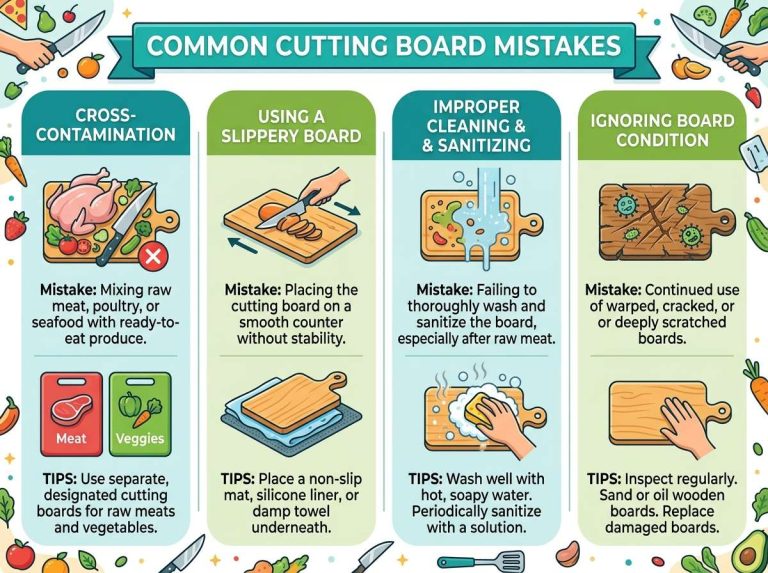
That said, you can use plastic boards safely if you follow good practices. Hand wash them if they’re damaged, replace them when they get too gouged up, and use separate boards for different foods to prevent cross-contamination.
For maximum food safety, the best approach is to use wooden boards for produce and cooked foods, and plastic boards specifically for raw meat that you’ll replace more often. Or get multiple plastic boards and rotate them out as they wear down.
The Environmental Picture
If you care about the planet, this matters. Plastic cutting boards end up in landfills and don’t break down for hundreds of years. They come from petroleum, which has its own environmental costs.
Wooden boards, if they come from responsibly managed forests, are sustainable. They’re biodegradable. They don’t require the energy-intensive production that plastic does. The only downside is that you need to avoid boards made from endangered wood species.
Look for wooden boards made from bamboo, which grows super fast, or from sustainably harvested hardwoods. This way you get the benefits of wood without contributing to deforestation.
Cost Comparison: What Actually Matters
Let’s be real about money because this influences most people’s decisions.
A cheap plastic cutting board costs two to five dollars. You can get one today. A decent plastic board that’s a bit thicker and better quality costs ten to twenty dollars.
A good wooden board starts around twenty to thirty dollars. A really nice one can go fifty, seventy-five, or even over a hundred dollars. A bamboo board sits somewhere in between.
Now here’s where the math gets interesting. If you use a plastic board and replace it every couple of years because it gets too damaged, you’re spending money regularly. If you use a wooden board and take care of it, it lasts decades. You spend more money once but save money over time.
For the knife care angle: if you cook a lot and own quality knives, the money you save on knife maintenance and sharpening by using a wood board might add up to more than the board’s cost difference.
For someone on a tight budget just getting started in the kitchen? Plastic makes sense. For someone cooking seriously? Wood might actually save money long-term.
Different Boards for Different Jobs
Here’s a practical thought: you don’t have to choose just one. A lot of smart cooks use both.
Keep a plastic board specifically for raw meat, poultry, and fish. Use it, wash it, and replace it when it gets too damaged. This eliminates any worry about cross-contamination.
Keep one or two wooden boards for vegetables, fruits, herbs, cheeses, and cooked foods. These boards get used more often but don’t have the same bacterial concerns as raw meat preparation.
This approach gives you food safety, longevity, and the feel you want when cutting. It costs a bit more than having just one board, but it’s a smart middle-ground strategy.
How to Care for Your Cutting Board
No matter what you choose, proper care makes a huge difference.
For plastic boards: wash with hot soapy water or in the dishwasher. Replace them when they get too scratched up. Don’t leave them in direct sunlight for long periods, as UV light can break down the plastic.
For wooden boards: hand wash with warm water and a mild soap immediately after use. Don’t soak them. Stand them upright to dry so water doesn’t pool and warp the wood. Oil them every few months with food-grade mineral oil or beeswax oil. Never put them in the dishwasher or microwave.
For either type: use separate boards for raw meat and other foods. Keep them on a clean, dry surface. Keep the board itself clean and don’t let food sit on it for hours.
Making Your Decision
So which one should you buy? That depends on your situation.
Get plastic boards if you’re on a tight budget, you don’t have time for special care, you cook a lot of raw meat, or you’re just starting out in the kitchen. Plastic gets the job done without much fuss.
Get wooden boards if you cook regularly, you want your tools to last a long time, you own quality knives, you care about environmental impact, you want the best cutting experience, or you’re willing to give proper care to your tools.
Get both if you want the benefits of each and don’t mind spending a bit more.
The Bottom Line
There’s no perfect cutting board. Plastic offers convenience and affordability. Wood offers durability, better cutting feel, natural food safety, and environmental benefits. Both work. Both have fans for good reasons.
The best cutting board is the one you’ll actually use and care for properly. If you hate caring for plastic, buy wood and love it. If you want simple cleanup, plastic serves you well. Your kitchen needs what works for your cooking style and your life.
What really matters is that you have a clean, properly maintained cutting board and that you follow good food safety practices no matter what material you pick. Everything else is details and personal preference. Find what makes you happy in the kitchen and go with that.
Now stop overthinking it and get yourself a cutting board. Your meal prep will thank you.
Cutting Board Care Tips Summary
Keep your cutting board in top shape with these easy practices:
- Wash immediately after use
- Use the right drying method for your board type
- Keep raw meat prep separated from other foods
- Replace plastic boards when they show heavy damage
- Oil wooden boards regularly
- Store your board flat if possible
- Keep it away from extreme temperatures
- Use the side of your knife, not just the edge
Your cutting board is one of your most important kitchen tools. Taking care of it means it takes care of you and your food for a long time.

Mary is a home cooking enthusiast and kitchen gear reviewer with a passion for practical cookware and food preparation tools. She enjoys testing cutting boards, knives, kitchen gadgets, and other cooking essentials to help home chefs make smarter buying decisions. Through KitchenCutting.com, Mary shares honest product reviews, buying guides, and helpful kitchen tips to make cooking easier, safer, and more enjoyable.


One Comment