
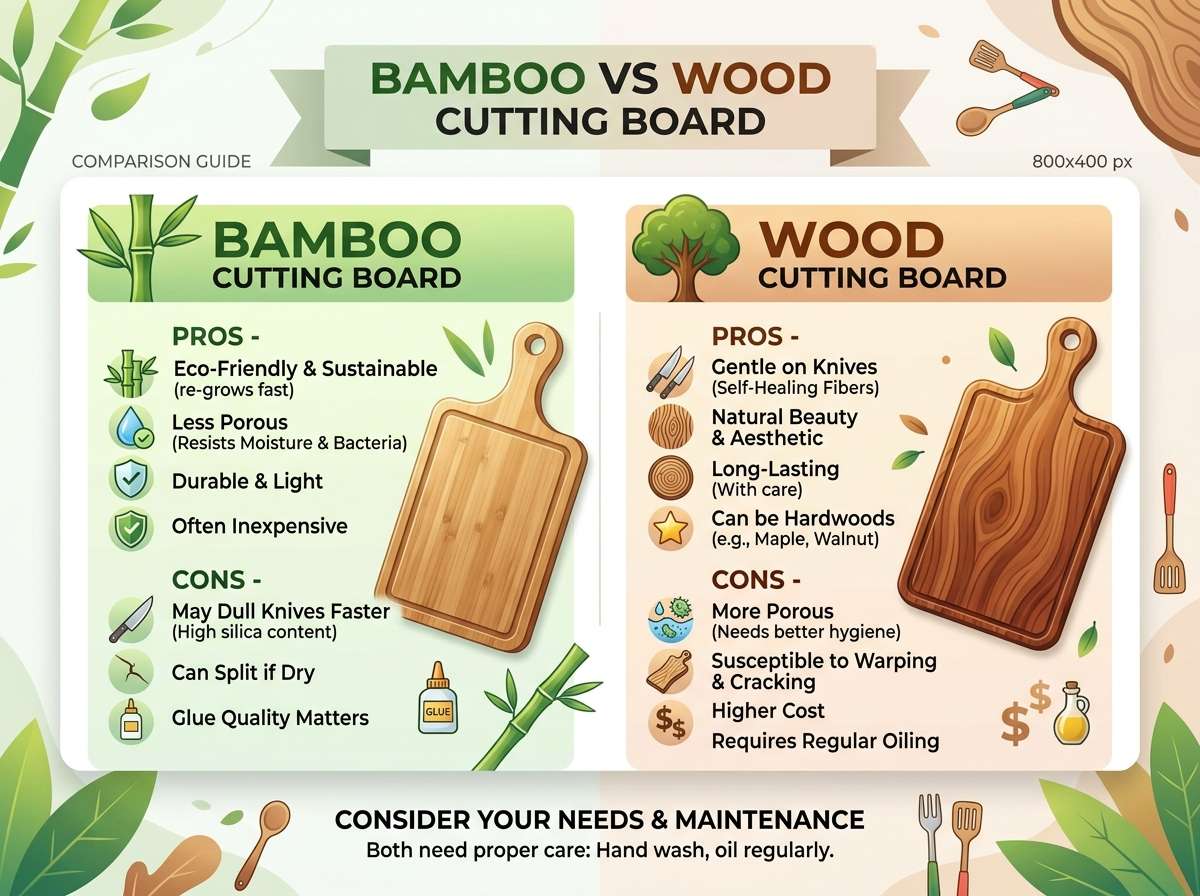
Bamboo vs Wood Cutting Board
If you spend any time in the kitchen, you know that a good cutting board is one of the most important tools you can own. It protects your knives, keeps your work surface clean, and makes meal prep so much easier. But when you’re standing in the kitchen store or scrolling through online options, you’ll quickly discover that not all cutting boards are created equal. The big question that most people face is this: should you go with a bamboo cutting board or stick with a traditional wood cutting board?
In this article
This choice might seem simple at first, but there’s actually a lot more to consider than you’d think. Both bamboo and wood cutting boards have their own strengths and weaknesses. Some people swear by bamboo, while others refuse to use anything but classic wood. The truth is, the right choice for you depends on what matters most to you in the kitchen.
Let me walk you through everything you need to know about both options. By the end of this guide, you’ll have a clear understanding of how these two types of cutting boards compare and which one might be the best fit for your kitchen.
The Basics: What Makes These Cutting Boards Different
Before we jump into the comparison, let’s talk about what makes bamboo and wood cutting boards different from each other. Yes, bamboo is technically a plant, but it actually grows and behaves in ways that are quite similar to wood. That said, they have different properties that affect how they perform in your kitchen.
Wood cutting boards come from trees. They’re made from hardwoods like maple, walnut, and cherry. These boards have been used in kitchens for centuries, and many professional chefs still love them. Wood has a warm, natural look that fits into almost any kitchen design.
Bamboo cutting boards, on the other hand, come from bamboo plants. Bamboo is actually a grass that grows incredibly fast. It’s pressed together and treated to create a dense, hard surface that works great for cutting. Bamboo boards became popular over the last couple of decades as people looked for eco-friendly kitchen options.
Durability: Which One Lasts Longer
When you buy a cutting board, you want it to last. Nobody wants to replace a cutting board every couple of years. So how do bamboo and wood compare when it comes to standing up to the test of time?
Wood cutting boards tend to be really durable when you treat them right. Hardwoods like maple are incredibly dense and hard. They can handle years of chopping, slicing, and dicing without falling apart. With proper care, a good wooden cutting board can last for decades. Many people have wooden boards that have been passed down through their families.
Bamboo cutting boards are also durable, but in a slightly different way. Because bamboo is harder than most woods, it actually resists knife marks better. This means your board will look newer longer because it won’t get those visible blade marks that happen over time. However, bamboo can be more prone to drying out and cracking if you don’t maintain it well. The pressed nature of bamboo makes it susceptible to splitting along its seams if it gets too dry.
The winner here really depends on your lifestyle. If you’re someone who takes good care of your kitchen tools and oils your cutting board regularly, both will last you a long time. But if you’re more of a set-it-and-forget-it type of person, a hardwood board might be more forgiving.
Knife-Friendliness: Keeping Your Blades Sharp
One of the most important things a cutting board does is protect your knives. A board that’s too hard will dull your blades quickly. A board that’s too soft will get destroyed. You need something that strikes the right balance.
Wood cutting boards are famous for being gentle on knives. The softer surface of wood gives slightly when your blade makes contact. This gentle give-and-take helps keep your knife sharp longer. Professional chefs often choose wood because they know it will preserve their expensive knives. When you cut on a wooden board, the wood actually compresses slightly under the knife pressure, which helps reduce the impact on the blade.
Bamboo cutting boards are harder than wood. Because of this hardness, they’re actually tougher on your knives. When you cut on a bamboo board, there’s less give, which means more stress on your blade. Over time, cutting on bamboo can dull your knives faster than cutting on wood. If you have high-quality chef’s knives that you’ve invested in, this is something to think about.
That said, bamboo is still softer than plastic or glass cutting boards, so it’s not a deal-breaker. But if you want the absolute best option for keeping your knives as sharp as possible, a wood cutting board is the way to go.
Hygiene and Food Safety: Keeping Your Kitchen Clean
When it comes to food safety, both bamboo and wood cutting boards have some natural benefits that might surprise you. For years, people thought plastic cutting boards were cleaner and safer, but research has actually shown otherwise.
Wood has natural antibacterial properties. Believe it or not, bacteria actually dies on wooden cutting boards over time. Studies have shown that harmful bacteria like salmonella and e. coli don’t survive well on wood. The wood naturally resists bacterial growth, which is great for food safety. This is one reason why wooden cutting boards have been used in restaurants and homes for so long.
Bamboo also has some antibacterial properties, though they’re generally not as strong as wood’s. Bamboo has its own natural compounds that help resist bacteria, but wood is still considered the stronger option when it comes to natural antibacterial protection.
Both bamboo and wood boards will have grooves and marks from daily use. These grooves can trap bacteria and food particles if you don’t clean them properly. The key to keeping either board safe is to clean it right after use. Wash it with hot soapy water, and occasionally give it a deep clean with vinegar or bleach solution.
One advantage of bamboo is that it’s less porous than some woods, which means bacteria might have a slightly harder time finding places to hide. But the difference is small enough that it really comes down to your cleaning habits.
Maintenance: How Much Work Are These Boards
Taking care of your cutting board is important if you want it to last. Let’s talk about what each type requires.
Wood cutting boards need regular oiling to stay healthy. You should oil your wooden board every few weeks or at least once a month. This keeps the wood from drying out and cracking. Food-grade mineral oil or specialized cutting board oil works great for this. The process is simple: you just apply the oil, let it soak in, and wipe away the excess.
Bamboo cutting boards also benefit from oiling, but they can sometimes be more finicky about it. Bamboo tends to dry out faster than wood, so some bamboo boards need more frequent oiling. However, bamboo is also less prone to warping than some woods, which is a nice bonus.
Both types of boards should be hand-washed and not put in the dishwasher. The heat and moisture of the dishwasher can damage both bamboo and wood, causing warping and splitting. A gentle hand wash with warm water and mild soap is the way to go.
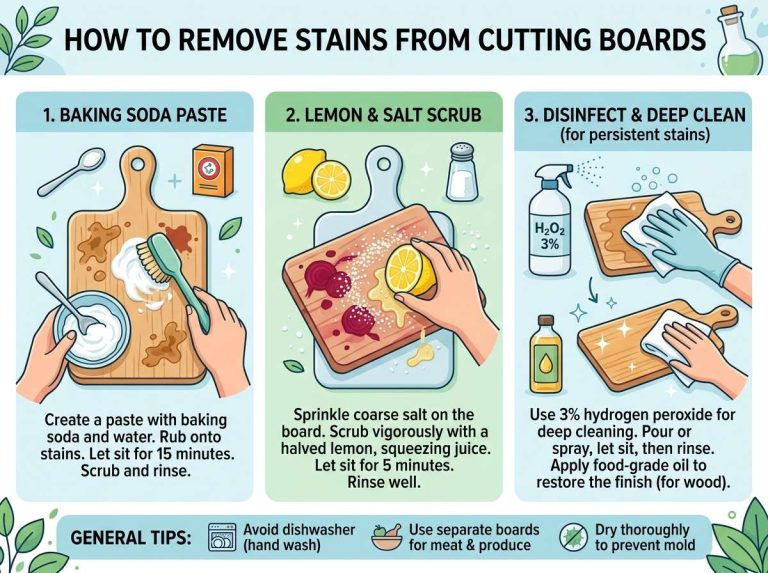
If you notice your board getting discolored or stained, both can be lightly sanded to refresh the surface. This takes a bit of work, but it’s a great way to keep your board looking nice for years.
Environmental Impact: Which Option is Better for the Planet
If you care about the environment, this might be an important factor in your decision. Let’s look at how bamboo and wood cutting boards compare from an eco-friendly perspective.
Bamboo is a renewable resource that grows incredibly fast. A bamboo plant can mature and be harvested in just a few years, while a tree might take decades or even centuries to grow. This makes bamboo seem like the more sustainable choice at first glance.
However, it’s not quite that simple. While bamboo grows fast, the processing involved in turning it into a cutting board can be energy-intensive. The bamboo has to be harvested, transported, processed, pressed together, and finished with oils or other treatments. Some bamboo cutting boards come from halfway around the world, which means shipping costs add to the environmental impact.
Wood cutting boards can also be sustainable, depending on where the wood comes from. If the wood comes from responsibly managed forests, it can be just as eco-friendly as bamboo. Look for certifications like FSC (Forest Stewardship Council) if you want to make sure your wooden board comes from sustainable sources.
The honest truth is that both can be eco-friendly if you choose the right product. An imported bamboo board from far away might actually have a bigger environmental footprint than a locally-sourced wooden board. Do some research on where your specific board comes from before making your decision.
Price: How Much Will You Spend
Money matters when you’re buying kitchen tools, so let’s talk about cost.
Bamboo cutting boards are generally cheaper than wooden cutting boards. You can find a decent bamboo cutting board for pretty reasonable prices. Bamboo is easier to manufacture at scale, which helps keep costs down.
Wood cutting boards, especially those made from high-quality hardwoods, tend to be more expensive. A good wooden board can cost quite a bit more than a bamboo option. However, remember that a quality wooden board can last for decades, so you’re really making a long-term investment.
When you think about price, it’s worth considering the cost per year of use. A cheaper bamboo board that lasts five years might cost you more per year than a pricier wooden board that lasts thirty years.
Appearance and Kitchen Design: Making Your Space Look Good
Let’s be honest, your cutting board is going to be visible in your kitchen. It’s not something you’ll hide away in a cabinet. So how it looks matters.
Wood cutting boards have that warm, natural aesthetic that works with almost any kitchen style. Whether you have a modern, minimalist kitchen or a cozy, rustic one, a wooden cutting board fits right in. The grain patterns on wood are beautiful and unique. No two wooden boards look exactly the same.
Bamboo cutting boards have a different look. They’re often lighter in color and have a more uniform appearance. Some people love the sleek, contemporary feel of a bamboo board. Others think it looks a bit plain compared to the natural beauty of wood grain.
This really comes down to personal preference. If you spend time in your kitchen and like things to look nice, the appearance of your cutting board might actually be important to your decision.
Smell and Flavor Transfer: Does It Matter
Here’s something people don’t always think about: does your cutting board affect the smell or taste of your food?
Wood cutting boards can absorb smells and flavors, especially from things like garlic and onions. This is actually because of the porous nature of wood. If you cut garlic on a wooden board and then cut fruit on it minutes later, there’s a chance some of that garlic flavor might transfer.
Bamboo is less porous than many woods, so it doesn’t absorb flavors and smells as readily. This can be an advantage if you want to avoid flavor transfer between different foods.
That said, both boards can be cleaned thoroughly to prevent any flavor issues. If you’re careful about rinsing and cleaning between uses, it’s not usually a problem. Using different boards for different types of food (one for veggies and fruits, one for meat) is also a great solution if this is a concern for you.
Size and Weight: Practicality in Your Kitchen
When you’re choosing a cutting board, you need to think about how you’ll actually use it. Is it going to live on your counter, or will you pull it out only when you need it?
Wood cutting boards come in many sizes, from small personal boards to large chef’s boards. The weight varies depending on the type of wood and the size. Generally, wood boards are heavier than bamboo boards of similar size.
Bamboo cutting boards are typically lighter than wooden boards. If you like to pull your board out and put it away, a lighter bamboo board might be easier to handle. If your board stays on the counter most of the time, the weight difference won’t matter as much.
Both materials can be found in various sizes, so you can choose based on your kitchen space and how much cutting surface you need.
The Best Use Cases for Each Type
So which cutting board should you actually buy? The answer depends on what matters most to you.
Choose a wood cutting board if:
- You want something that’s gentle on your knives
- You care about natural antibacterial properties
- You like the warm, beautiful aesthetic of wood grain
- You don’t mind spending a bit more for quality
- You’re willing to maintain your board with regular oiling
- You want something that can last for decades
Choose a bamboo cutting board if:
- You want something that’s budget-friendly
- You prefer a lighter weight board that’s easy to move around
- You want something that resists staining and visible marks
- You like the sleek, modern look of bamboo
- You want a more eco-friendly option that grows quickly
- You’re concerned about absorbing flavors and smells
Hybrid Options: The Best of Both Worlds
If you can’t decide between bamboo and wood, here’s a thought: get both. Many home cooks use different boards for different purposes. You might use a wooden board for your everyday cutting and a bamboo board specifically for things like raw meat, where you want extra food safety assurance and easier cleaning.
Some cutting board companies even make boards with both materials. You’ll find boards with bamboo on one side and hardwood on the other. These give you options depending on what you’re cutting.
Final Thoughts: Making Your Decision
At the end of the day, you can’t go wrong with either bamboo or wood. Both are great kitchen tools that are better for your knives and your food than plastic or glass. Both can last you a long time with proper care. Both have their fans for good reasons.
The key is to think about what matters most to you. Do you want the absolute best for your knives? Go with wood. Do you want something affordable and modern-looking? Bamboo is great. Are you torn between the two? Then get both and use each one for what it does best.
Remember that your cutting board is something you’ll use regularly. It’s worth taking time to choose one that you’ll be happy with. Whether you go with the warm, timeless appeal of hardwood or the eco-friendly, modern look of bamboo, you’re making a smart choice for your kitchen.
The cutting board you choose will become part of your daily cooking routine. It’ll support hundreds of meals and countless hours of food preparation. That’s why it matters to get one that fits your lifestyle, your kitchen, and your values. So take what you’ve learned here, think about what works best for you, and make your decision. Your kitchen—and your knives—will thank you for it.

Mary is a home cooking enthusiast and kitchen gear reviewer with a passion for practical cookware and food preparation tools. She enjoys testing cutting boards, knives, kitchen gadgets, and other cooking essentials to help home chefs make smarter buying decisions. Through KitchenCutting.com, Mary shares honest product reviews, buying guides, and helpful kitchen tips to make cooking easier, safer, and more enjoyable.

One Comment