Cutting Board vs Butcher Block
So you’re standing in the kitchen section of your favorite store, staring at rows of cutting surfaces. You’re thinking about what you really need for your kitchen. Is a regular cutting board enough, or do you need one of those fancy butcher blocks you see in restaurants? The answer isn’t as simple as you might think.
In this article
Let me break down the real differences between cutting boards and butcher blocks so you can make the right call for your kitchen.
What’s the Difference Between a Cutting Board and a Butcher Block?
Here’s the thing: people use these terms pretty loosely, but they’re not exactly the same thing. Understanding the difference starts with knowing how they’re made.
A cutting board is a flat surface used for chopping, slicing, and preparing food. You’ll find them in tons of materials: plastic, wood, bamboo, glass, and even stone. They come in all shapes and sizes. Most cutting boards sit flat on your counter or hang on a hook. They’re designed to be portable and easy to clean.
A butcher block is a specific type of thick wooden cutting surface. It comes from the way butchers prepared meat in shops for generations. These blocks are made of dense hardwood, usually end-grain construction, which means the wood pieces stand upright and are glued together. This creates a super durable surface that handles tough chopping work. Butcher blocks are typically thick and heavy. They stay in one spot on your counter because of their weight and size.
Think of it this way: all butcher blocks are cutting surfaces, but not all cutting surfaces are butcher blocks. That’s the key distinction.
The Materials Matter More Than You Think
When you’re picking between a cutting board and a butcher block, the material is everything.
Wooden Cutting Boards and Butcher Blocks
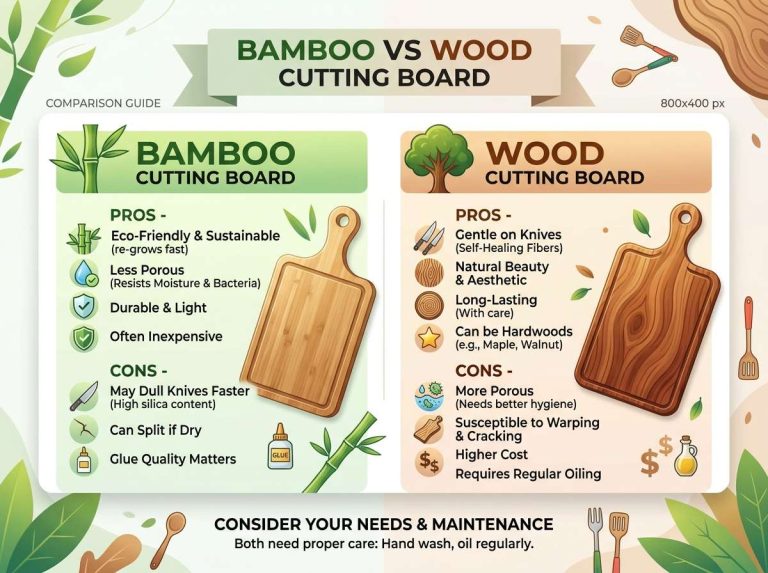
Wood is amazing for cutting food. It’s got natural antibacterial properties that kill harmful bacteria. Even when you scratch it, the wood naturally resists germs better than you’d expect. Your knife glides across wood smoothly, and that matters because it keeps your blade sharp longer.
The best hardwoods for food prep include maple, walnut, and cherry. These woods are tight-grained and don’t absorb water quickly. That means they last longer and resist staining. When you use them right and maintain them properly, wooden cutting surfaces become family heirlooms that last decades.
Butcher blocks specifically use end-grain construction. This means the wood’s growth rings face up. Think of it like standing pencils upright in a cup instead of laying them flat. This design lets the knife sink into the wood slightly, then the wood fibers bounce back. Your blade stays sharper. The surface heals itself after you cut, which is wild when you think about it.
Plastic Cutting Boards
Plastic boards are the workhorses of many kitchens. They’re cheap, lightweight, and super easy to clean. You can throw them in the dishwasher without worry. They don’t stain like wood does. They won’t warp or crack.
But here’s the catch: plastic dulls your knives faster. Every time your blade hits plastic, you lose a tiny bit of sharpness. Over time, your good knife becomes frustratingly dull. Plastic also gets scratched up, and those scratches trap bacteria. Even though plastic seems clean, those grooves harbor germs.
Bamboo Cutting Boards
Bamboo is trendy because it’s eco-friendly and sustainable. Bamboo grows super fast compared to trees, so it’s renewable. The boards are light, pretty to look at, and work great for everyday slicing and dicing.
The downside is that bamboo is harder than most hardwoods. That’s terrible for your knives. A sharp blade will dull much faster on bamboo than on maple or walnut. If you own good knives you’ve invested in, bamboo isn’t your best friend.
Glass and Stone
These materials are gorgeous and easy to clean. You can put them in the dishwasher and they never stain. But they’re murder on your knives. Glass and stone are way too hard. Your knife bounces off them and loses its edge immediately. Over time, you’ll develop knife maintenance problems because the blade takes a beating.
Save glass and stone for serving boards or presentation, not for heavy food prep work.
How Thickness Affects Your Kitchen Game
Here’s something many people overlook: how thick your cutting surface is really matters.
Thin cutting boards don’t work great for serious prep. They slide around on the counter. They flex when you push down hard on a knife. Your cuts aren’t clean because the surface moves under pressure. Plus, thin boards warp easily, especially wooden ones exposed to water and heat changes.
Thick cutting surfaces give you stability. Your knife stays in one place. You can use proper technique without fighting the board. A thick board won’t flex when you chop hard vegetables or break down meat. The board stays flat on your counter, right where you want it.
Butcher blocks are naturally thick, usually two to three inches or more. Regular cutting boards range from a quarter inch to one inch. If you can only have one cutting surface and you do real cooking, thicker is better.
Knife Care: Which Surface Keeps Your Blades Sharp
Your knives are tools you use almost every day. Taking care of them means picking the right cutting surface.
Wood is the blade’s best friend. The material is just soft enough that your knife doesn’t bounce. It’s not so soft that the blade sinks too deep. Wood gives your knife the perfect resistance. After you cut with a wood surface, your blade stays sharp longer between sharpenings.
When chefs talk about what surface they prefer, they almost always say wood. Professional cooks know that knife care starts with where they chop. A sharp knife is a safe knife because you don’t need to use muscle force. Your knife does the work.
If you own quality kitchen knives or plan to buy them soon, invest in a proper wooden surface. You’ll save money on knife maintenance over the years.
Maintenance and Care: The Real Talk
Let’s be honest: keeping your cutting surface clean and happy takes some work.
Wooden Surfaces
Wood needs care. You can’t throw it in a dishwasher. The hot water and harsh soap damage the wood. The heat warps it. You need to hand wash your wooden board with mild soap and cool water. Dry it right away.
You should also oil your wood regularly. Food-grade mineral oil or specialized wood oil keeps the grain protected. It prevents the wood from drying out and cracking. You’ll oil your board maybe once a month, depending on how much you use it.
Wood can hold onto smells. Garlic, onion, and fish can linger. But here’s a trick: cut a lemon in half and rub it all over the board, then let it sit. The acid cuts through the smell. You can also sprinkle salt and rub it with a lemon half.
Don’t leave wet wood sitting wet for hours. Don’t put it in the sun to dry because that can warp it. Keep it stored in a dry place where air can reach both sides.
Butcher Block Care
Since butcher blocks are thicker and more of an investment, many people treat them as permanent kitchen islands or tables. Some actually sit them on legs and use them like furniture. That’s fine, but they still need the same care as a regular wooden board. Hand wash, oil regularly, and keep them dry.
If you have a butcher block as a counter surface, seal it properly. Food-grade finishes create a protective layer. Some people use food-grade epoxy or mineral oil blends made for heavy-duty surfaces.
Plastic Board Care
This is where plastic wins. Toss it in the dishwasher. Let the machine do the work. Plastic won’t crack from hot water. It won’t stain from the heat. It comes out clean every time. If your life is busy and you want minimal fuss, plastic is practical.
The trade-off is your knives take the hit. But if you mostly use cheaper knives or chef’s knives that can take a beating, plastic works fine.
Space and Storage: Be Real About Your Kitchen
How much room do you actually have?
A butcher block is a real commitment. These things are heavy and bulky. Some blocks weigh fifty to one hundred pounds or more. You’re not moving it around. You need counter space that stays dedicated to your cutting surface, or you need a stand for it. For small apartments or studios, a full butcher block might not fit your life.
Regular cutting boards are flexible. You can store them in a cabinet, lean them against a wall, or hang them on hooks. A thin board takes up almost no space. You can pull it out when you need it and put it away after.
If your kitchen is tiny, a good wooden cutting board gives you most of the benefits of a butcher block without the space demands. You get a durable wooden surface that’s kind to your knives, but it doesn’t consume your counter space year-round.
Food Safety and Sanitation
People worry about bacteria in wooden surfaces. It’s a fair concern, but the science is interesting.
Wood has natural antimicrobial properties. Hardwood species actively kill harmful bacteria. Studies have shown that bacteria on wooden boards actually decreases over time, while bacteria on plastic boards stays around or grows. That’s counterintuitive but true.
The reason is that wood’s porous nature pulls bacteria down into the wood, where they die. Plastic’s smooth surface doesn’t do this. Bacteria sit on top and multiply.
Both surfaces need proper cleaning with hot soapy water. Both need to be dried properly. But wood has an advantage when it comes to fighting germs naturally.
One rule: use different boards for raw meat and vegetables. Cross-contamination is the real risk, not the material itself. If you use your cutting surface properly, both wood and plastic are safe.
Cost: What You’ll Actually Spend
Money matters when you’re picking kitchen tools.
A basic plastic cutting board costs five to fifteen dollars. Even a high-quality plastic set with multiple boards runs twenty to thirty dollars. They’re affordable.
A good wooden cutting board runs thirty to one hundred dollars depending on the wood and size. A quality wooden board is an investment but not extreme.
Butcher blocks are expensive. A decent one starts at one hundred to two hundred dollars. Premium butcher blocks with fancy woods can cost five hundred dollars or more. If you want one attached to a kitchen island or stand, add installation costs.
That said, a quality wooden cutting board or butcher block lasts decades with proper care. A plastic board might last a few years before it gets too marked up and bacteria-trapping. When you do the math over ten or twenty years, wood becomes cheaper per year of use.
When You Should Use Each One
Let’s talk practical scenarios.
Choose a Wooden Board or Butcher Block If:
You cook often and want your knives to stay sharp. You have kitchen space to dedicate. You care about the beauty of your kitchen tools. You’re willing to do light maintenance. You cook meat regularly or do serious vegetable prep. You want a cutting surface that lasts forever.
Choose a Plastic Board If:
You’re new to cooking and don’t have quality knives yet. Your kitchen space is limited. You want zero maintenance. You cook simple meals that don’t demand long prep sessions. You have kids and need something that survives abuse.
Use Glass or Stone If:
You’re setting up a serving platter or presenting food. You want something that looks fancy. You don’t need it for active food prep.
The Hybrid Approach
Here’s what many experienced home cooks do: they own both.
They keep a wooden board as their main cutting surface for vegetables, bread, and general prep. They use a plastic board exclusively for raw meat. That eliminates cross-contamination risk and gives the plastic board a specific job. A wooden surface stays sharp and beautiful. The plastic board takes the hits and gets replaced when needed.
This approach isn’t wasteful. It’s smart. You get the benefits of both worlds.
Sustainability and Environmental Impact
If you care about the environment, wood wins.
Wooden cutting boards come from trees, but responsible companies plant new trees. Wood is renewable. It biodegrades. It doesn’t sit in landfills for centuries.
Plastic comes from oil. It doesn’t break down for hundreds of years. Even recycled plastic eventually ends up as waste. If you use a plastic board for three years and replace it, that adds up environmentally.
A wooden board you use for twenty years has a much lower environmental footprint than five plastic boards over the same time period.
Aesthetic Appeal and Your Kitchen Vibe
This matters more than people admit.
Butcher blocks look expensive and sophisticated. They’re a statement piece. People notice them. Your kitchen looks more professional and intentional.
Wooden cutting boards are beautiful in a simpler way. They age gracefully. Knife marks tell stories. Stains create character. Many people love the aesthetic of a well-used wooden board.
Plastic boards are… practical. They’re not beautiful. They just work. That’s fine, but it’s not inspiring.
If you spend time in your kitchen and care about how it looks, a nice wooden surface makes you happy to be there.
The Bottom Line: Make Your Choice
A butcher block is perfect if you have space, cook regularly, own good knives, and want a permanent kitchen fixture that looks amazing. You’ll love it.
A quality wooden cutting board gives you similar benefits without the bulk. It’s sharper-friendly, natural, and beautiful.
Plastic boards are practical for specific situations, especially if you have limited space or want something carefree.
The worst choice is ignoring your cutting surface entirely. What you chop on affects your knife quality, your food prep experience, and how much you enjoy cooking.
Take time to think about your actual kitchen habits. How much do you cook? How much space do you have? Do you own good knives? How much maintenance are you willing to do? Answer these questions honestly, and the right choice becomes obvious.
Most people who try a quality wooden surface never go back to plastic for regular prep work. There’s something satisfying about it. Your knife feels better. Your cuts are cleaner. Your kitchen looks better.
Start with a good wooden cutting board if you’re unsure. You’ll spend less than a butcher block. You’ll get most of the same benefits. If you fall in love with it, you can upgrade to a butcher block later.
The point is this: your cutting surface matters. It affects your cooking, your knife maintenance, and your kitchen happiness. Pick the one that fits your real life, not the one that looks best in a catalog.
Happy chopping.