How to Clean a Plastic Cutting Board?
Plastic cutting boards are everywhere in kitchens. They’re cheap, they’re durable, and they’re super easy to find at any store. But here’s the thing: keeping them clean is just as important as any other kitchen tool. A dirty cutting board can spread bacteria and ruin the taste of your food. The good news? Learning how to clean a plastic cutting board is simple and takes just a few minutes.
In this article
In this guide, we’ll walk through everything you need to know about caring for your plastic cutting board. Whether you use it every day or once a week, these tips will keep it looking fresh and staying safe for your family.
Why Cleaning Your Plastic Cutting Board Matters
Let’s start with the basics. Your cutting board touches raw meat, fresh vegetables, and everything in between. That means bacteria and germs can build up fast. If you don’t clean it right, you could spread harmful bacteria like salmonella or E. coli to other foods.
Plastic boards are different from wood boards. Plastic doesn’t absorb liquids the same way, which actually makes it easier to clean. But plastic can get scratched and stained over time. These scratches trap food particles and bacteria inside them. That’s why regular cleaning is so important.
Keeping your cutting board clean does more than just prevent food poisoning. It also makes your board last longer. A well-maintained board will serve you for years. A neglected one might need replacing in months.
The Best Way to Clean a Plastic Cutting Board Right After Use
The easiest time to clean your cutting board is right after you’re done using it. Food and stains don’t have time to stick and dry on the surface.
Start by scraping off any large pieces of food. Use a spatula or butter knife. Get all the chunks into the trash. This step takes just a few seconds but makes a big difference.
Next, rinse the board under warm running water. Let the water flow over both sides. Warm water breaks down oils from meat and fish better than cold water. Use your fingers to wipe away stuck-on bits.
Now grab a sponge or dish brush. Dish brushes with stiff bristles work best on plastic because the bristles can reach into small scratches. Scrub in circular motions. Make sure you cover the entire surface, including the edges. Don’t forget the underside of the board. Bacteria can hide there too.
Use hot water if you can handle it, but don’t use water so hot it burns you. Hot water kills more bacteria than cold water. After scrubbing, rinse again under running water. Make sure all the soap is gone.
Shake off extra water and stand the board upright to dry. Air drying is the best method. Let gravity help you. Make sure air can reach both sides so it dries evenly.
Using Soap and Water for Daily Cleaning
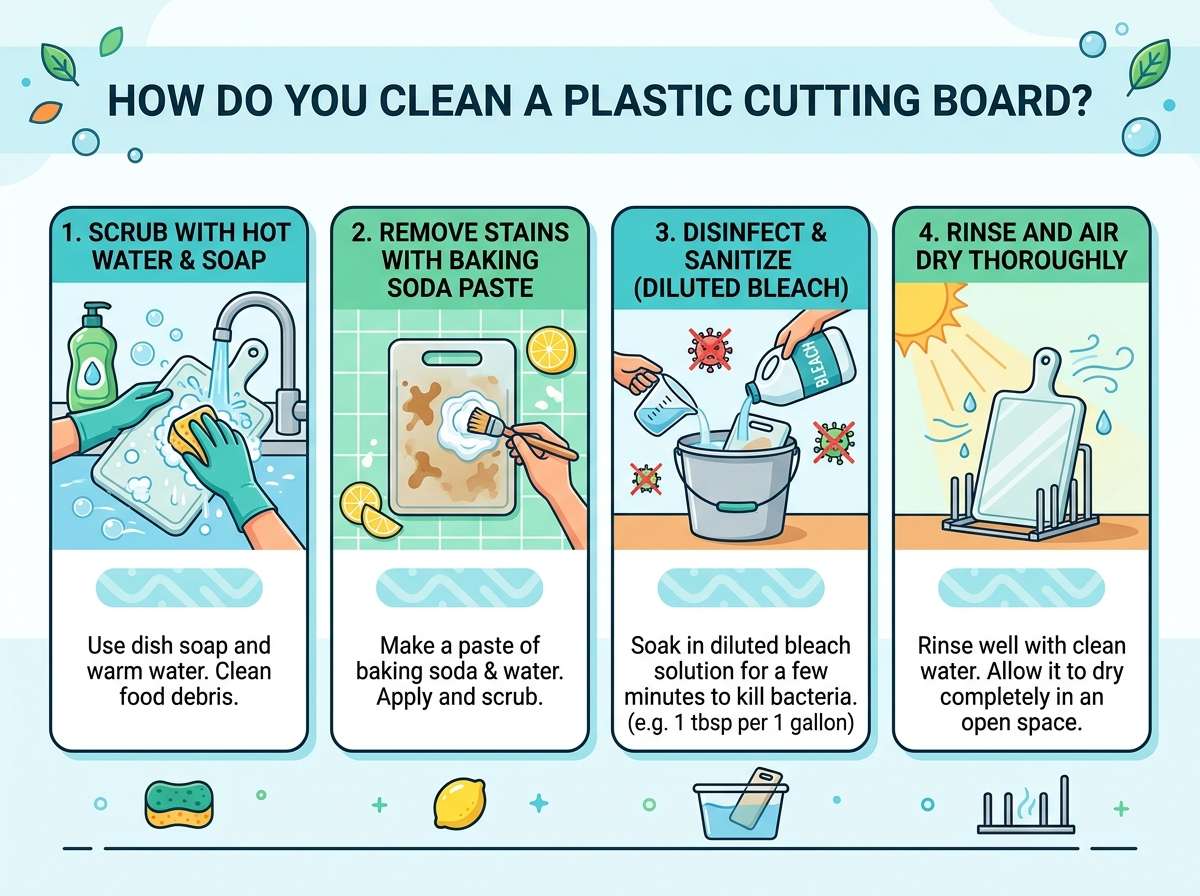
Plain dish soap and water do a great job on plastic cutting boards. You don’t need fancy cleaners or harsh chemicals. Regular dish soap is designed to break down grease and remove bacteria.
Apply a small amount of soap directly to the board or to your sponge. Any dish soap works. You can use whatever brand you already have in your kitchen. Dish soap is cheap, safe, and effective.
Scrub the entire board with your soapy sponge. Use firm pressure. This helps dislodge food and bacteria from the surface. Don’t be gentle. Your plastic board can handle a good scrubbing.
Pay special attention to any stains you see. These stains often harbor bacteria. Scrub these spots extra well. You might need to scrub for a few minutes if the stain is old.
Rinse very well under hot running water. Make sure no soap bubbles remain on the board. Soap left behind can taste bad and may irritate your stomach.
Dry with a clean towel or let it air dry. Both methods work fine. If you use a towel, make sure it’s clean. A dirty towel defeats the purpose of cleaning your board.
The Deep Cleaning Method for Stubborn Stains and Odors
Sometimes your plastic cutting board gets stained or smells bad. This happens to everyone. The good news is you can fix it with stuff you probably already have at home.
Baking soda is your best friend here. This white powder is amazing at removing stains and odors from plastic. Sprinkle baking soda all over the board. Cover it well. You want the powder to coat the entire surface.
Wet a sponge or cloth and squeeze out most of the water. Now scrub the board with the damp sponge and baking soda. The baking soda acts like a gentle abrasive. It scrubs away stains without damaging the plastic.
This method works great for onion smells, garlic odors, and fish smells that cling to plastic. The baking soda absorbs these odors instead of just masking them. You’re getting rid of the problem, not hiding it.
After scrubbing for a couple minutes, rinse the board well under hot water. Keep rinsing until all the baking soda is gone. Dry the board with a towel or let it air dry.
White vinegar is another powerful tool for deep cleaning. Vinegar cuts through grease and kills bacteria. Mix equal parts white vinegar and water in a spray bottle. Spray the entire board with this mixture.
Let it sit for a few minutes. The vinegar needs time to work. During this wait time, the vinegar breaks down oils and bacteria. After a few minutes, scrub the board with a sponge.
Vinegar can smell strong, but the smell goes away as it dries. You can rinse the board if the vinegar smell bothers you. Some people like to skip the rinse and let the vinegar dry on its own.
Using Bleach for Heavy Contamination
Sometimes you need something stronger. If you’ve had raw chicken on your board or you’re worried about bacteria, bleach is a good choice. Bleach kills almost all germs.
Make a solution with bleach and water. Use one tablespoon of bleach in one gallon of water. This creates a safe but effective cleaning solution. Never use bleach straight from the bottle. It’s too strong and can damage your board.
Submerge your cutting board in this solution or soak it for a few minutes. You can also spray the solution all over the board and let it sit. Leave it for five to ten minutes. This gives the bleach time to kill bacteria.
After soaking, scrub the board with a sponge. Scrub all surfaces. Then rinse very, very well under hot running water. You need to make sure all the bleach is gone. Bleach can make you sick if you ingest it.
Keep rinsing until you can’t smell any bleach. Run your fingers over the board. It should feel smooth and clean. Make sure no bleach residue remains.
Let the board dry completely. Air drying works well after bleach cleaning. The board should feel and smell fresh and clean.
Only use bleach occasionally, not every day. Daily bleach exposure can damage plastic over time. Save bleach for when you really need it.
How to Get Rid of Stains on Plastic Cutting Boards
Stains can make your board look old and dirty even if it’s clean. Red stains from tomatoes or beets are common. Yellow stains from turmeric happen all the time. Brown stains from cooking oils show up too.
Lemon juice works great on many stains. Lemons are acidic and they lift stains naturally. Cut a lemon in half and rub it all over the stained areas. The juice will coat the board. Let it sit for a few minutes.
Scrub the stained area with a sponge while the lemon juice is still wet. The combination of lemon juice and scrubbing lifts the stain. After scrubbing, rinse well and dry.
For tough stains, make a paste from baking soda and water. Mix baking soda with just enough water to create a thick paste. Spread this paste on the stains. Let it sit for ten to fifteen minutes.
Use an old toothbrush or a small brush to scrub the paste into the stains. The fine bristles of a toothbrush can reach into small scratches. Work the paste into every stained area.
After scrubbing, rinse the board very well. The stain should be gone or much lighter. You might need to repeat this process for really old stains.
Hydrogen peroxide can also remove stains. This clear liquid is gentle but effective. Spray hydrogen peroxide directly on the stain. Let it bubble and sit for a few minutes. Hydrogen peroxide creates tiny bubbles that lift stains away from the plastic.
After sitting, scrub the area and rinse well. Hydrogen peroxide is food-safe and doesn’t leave a smell. It’s a great option if you don’t like the smell of vinegar or bleach.
Removing Odors from Your Plastic Cutting Board
Garlic, onions, and fish leave strong smells on plastic boards. These odors can transfer to other foods if you don’t remove them. Getting rid of cutting board odors is easier than you think.
Baking soda is the top choice for odor removal. Sprinkle it generously on the board. Cover all surfaces. Let it sit for several hours or overnight. Baking soda absorbs odors instead of covering them up. After sitting, wipe away the baking soda and rinse the board.
Another trick is to rub the board with a cut lemon. The acid in lemon destroys odor molecules. Cut a fresh lemon in half and rub the cut side all over the board. Press firmly to release the juice.
You can also place crumpled newspaper on the board. Leave it there for a few hours. Newspaper absorbs odors. This method is free if you have old papers lying around.
Sunlight is a natural deodorizer. Leave your cutting board in direct sunlight for a few hours. The sun’s rays kill bacteria and break down odor molecules. This works best on a sunny day. Just make sure to bring the board in before evening.
Coffee grounds can remove odors too. Place used coffee grounds on the board and rub them in. Let them sit for ten minutes. Coffee has a strong smell that overpowers bad odors. Plus, the granules of coffee act like a mild abrasive.
The Right Way to Dry Your Plastic Cutting Board
Drying might seem like the easy part, but it matters more than you think. Wet boards can develop mold or mildew. Damp boards take longer to dry and create a home for bacteria.
Air drying is the best method. Stand your clean board upright against something. Make sure air reaches both sides. Lean it against a dish rack, stand it on its edge, or prop it against the back of your counter.
Let it dry naturally. This takes an hour or two depending on humidity and air movement. A fan in the kitchen speeds up drying. Open a window to increase air flow.
If you’re in a hurry, use a clean dish towel. Pat the board dry on both sides. Make sure the towel is clean. A dirty towel defeats the purpose of cleaning.
Don’t leave your board lying flat to dry. Water pools on the surface and takes forever to dry. Standing it up ensures water runs off and air can circulate.
Never put your plastic cutting board in the dishwasher while it’s still wet. Make sure it’s completely dry first. Storing a damp board can lead to mold growth inside the cabinet.
Storing Your Cutting Board Properly
Where you store your cutting board matters. It affects how long the board lasts and how clean it stays.
Store your board in a cool, dry place. A cabinet under the sink works, but make sure it’s dry. A pantry shelf is even better. Avoid damp areas like near the dishwasher or sink.
Stand the board upright rather than laying it flat. This allows air to circulate on all sides. It also prevents water from pooling on the surface if humidity is high.
If you have multiple cutting boards, stack them with something between each one. A paper towel or cloth between boards prevents them from sticking together.
Keep your board away from direct heat sources. Don’t store it next to the oven or a heating vent. Heat can warp plastic over time.
Don’t store your cutting board right after using it. Make sure it’s completely dry first. Even damp boards can develop mold if stored immediately.
Signs Your Plastic Cutting Board Needs Replacing
Nothing lasts forever. Eventually, your plastic cutting board will need replacing. Here are the signs.
Deep scratches and gouges are the biggest problem. Bacteria hide inside these scratches. Even with cleaning, you can’t get them completely clean. If your board has lots of deep scratches, it’s time for a new one.
Permanent stains that won’t come off indicate the plastic is degrading. The stains can harbor bacteria. A new board is safer.
Warping or bent edges mean the plastic is breaking down. Bent boards can rock on your counter and are harder to use. They’re also harder to clean properly.
A board that smells bad no matter what you do has absorbed odor molecules deep into the plastic. A new board will smell fresh.
Visible cracks, even small ones, are signs to replace your board. Cracks can harbor bacteria in ways you can’t clean.
Most people replace their plastic cutting boards every two to three years. It depends on how often you use them. A board you use daily will need replacing sooner than one you use once a week.
Common Mistakes People Make When Cleaning Cutting Boards
Lots of people have bad habits when cleaning their cutting boards. Here are the mistakes to avoid.
Don’t use a plastic board right after cleaning without letting it dry first. You’ll just wet the food you’re cutting. Let it dry completely.
Don’t leave your board sitting wet in the sink for hours. This invites bacteria growth and can cause permanent stains. Clean it right after using it.
Don’t use a dirty sponge to clean your board. You’re spreading bacteria instead of removing it. Use a clean sponge.
Don’t scrub so hard that you create deep scratches. Gentle but firm scrubbing is best. You want to clean the surface, not damage it.
Don’t forget the underside of the board. Bacteria loves hiding underneath. Clean both sides every time.
Don’t store a damp board in a closed cabinet. This creates the perfect environment for mold growth. Make sure it’s dry first.
Don’t use the same board for raw meat and vegetables without washing between uses. Cross-contamination can spread bacteria. This is really important.
Quick Tips for Maintaining Your Cutting Board
Here are some fast tips to keep your board in great shape.
Clean your board right after using it. Don’t let food dry on the surface. Dried food is harder to remove.
Use a cutting board mat under your board to prevent slipping. A mat also protects your counter.
Wash your hands after handling raw meat. Don’t just clean the board. Your hands can spread bacteria too.
Rotate between multiple boards if you have them. This gives each board time to dry between uses.
Use different colored boards for different foods if possible. One for meat, one for vegetables. This helps prevent cross-contamination.
Sand down your board if it develops rough patches. Fine grit sandpaper smooths out the surface. This prevents new bacteria from hiding in rough spots.
The Science Behind Cutting Board Cleanliness
Understanding why cleaning matters helps you do it right.
Plastic is non-porous, meaning it doesn’t absorb liquids like wood does. This makes it easier to clean because bacteria doesn’t soak in. But it also means bacteria can sit on the surface longer.
Hot water works better than cold water because heat breaks down oils and kills some bacteria. Bacteria hate heat. That’s why hot water is your friend.
Soap works by surrounding bacteria and lifting it away from surfaces. Soap has one end that attaches to bacteria and one end that attaches to water. This lets water wash the bacteria away.
Vinegar is acidic. Acids kill many types of bacteria by breaking down their cell walls. That’s why vinegar is so effective.
Bleach kills bacteria by destroying the molecules bacteria need to survive. It’s powerful but needs to be handled carefully.
Baking soda absorbs odors by trapping odor molecules inside its structure. It’s not covering up the smell. It’s actually removing it.
Final Thoughts on Keeping Your Plastic Cutting Board Clean
Your plastic cutting board is a tool you use nearly every day. Taking care of it keeps your family safe and makes your board last longer. The cleaning process is simple. Most of the time, hot water and dish soap are all you need.
For stubborn stains and odors, you have options. Baking soda, vinegar, lemon juice, and hydrogen peroxide are all safe and effective. Keep these items in your kitchen for quick access.
Remember to clean your board right after using it. Don’t let food sit on the surface. Dry your board completely before storing it. These simple habits add years to your board’s life.
Watch for signs that your board needs replacing. Deep scratches and permanent discoloration mean it’s time for a new one. A new board is a small investment in your family’s health.
Cleaning a plastic cutting board is not rocket science. You don’t need special products or complicated methods. Basic cleaning supplies and regular maintenance are all you need. Your cutting board will stay fresh, clean, and safe for years to come.
Start using these tips today. Your next meal will be prepared on a board that’s truly clean. Your family will thank you, even if they don’t know what you did behind the scenes. Good kitchen hygiene starts with a clean cutting board.

Mary is a home cooking enthusiast and kitchen gear reviewer with a passion for practical cookware and food preparation tools. She enjoys testing cutting boards, knives, kitchen gadgets, and other cooking essentials to help home chefs make smarter buying decisions. Through KitchenCutting.com, Mary shares honest product reviews, buying guides, and helpful kitchen tips to make cooking easier, safer, and more enjoyable.