Kikcoin 17”×11” Bamboo 10BAXL vs Titanium Cutting Board
As an Amazon Associate we earn from qualifying purchases.
In this article
Many home cooks compare the Kikcoin 17”×11” Bamboo 10BAXL vs Titanium Cutting Board when they shop for a new kitchen board. Both are large, both have two sides, and both promise easy cleanup. Yet they are made from very different materials, so the day-to-day experience can feel quite different.
This article helps beginners sort out those differences in plain words. The comparison rests on the listed features and typical use of each product, not on personal testing. Read on to see which board may suit your cooking habits, your budget and your kitchen.


Kikcoin 17”×11” Bamboo Cutting Boards Overview
The Kikcoin board is a large cutting board made from 100% bamboo. Bamboo is a grass that is often used for kitchen boards because it is firm and easy to shape. This board is reversible, so you can use either side for prep.
It has a deep, wide juice groove that catches liquids from meat or fruit. It also has an invisible built-in handle, which helps with lifting and storage. The listed features mention anti-slip silicone stickers on the underside to help it stay put on the counter.
The product is sold as a wooden chopping board that can also serve as a cheese or charcuterie board. Customers generally describe it as a strong seller in its category.
Titanium Cutting Board Overview
The Titanium cutting board is a double-sided board with a titanium surface and a PP (polypropylene, a common food-safe plastic) side. It measures 16”×11” and is sold as a food-grade board for separate prep areas.
One side is suggested for meat and the other for fruits and vegetables. The listed features describe a non-porous surface that helps limit liquids, odors and stains. It also has a built-in juice groove, a garlic grinding area and a hanging hole for drying.
Customers generally place it among the best sellers in its category. It is made by the brand Sumzzz.
Head-to-Head Comparison: Kikcoin vs Titanium Boards
The two boards share some goals, such as reversible use and a juice groove. They differ most in material, feel and care. The sections below look at each aspect in turn.
Design and Build
The Kikcoin board is solid natural bamboo with a polished, burr-free finish. Its wide, thick build is described as stable on the counter. The Titanium board uses a titanium surface paired with a PP side, which gives it a different look and weight profile.
Because the listed details are different, the bamboo board has the edge for a warm, natural wood look. The titanium board has the edge for a modern, non-wood build.
Key Features
Both boards are reversible and both include a juice groove. The Kikcoin adds a built-in handle and anti-slip stickers. The Titanium board adds a garlic grinding area and a hanging hole, and it is clearly marked for separate meat and produce sides.
Feature-for-feature, the Titanium board covers more dedicated prep tasks. The Kikcoin board is more focused on stability and serving. Neither is clearly ahead overall.
Performance
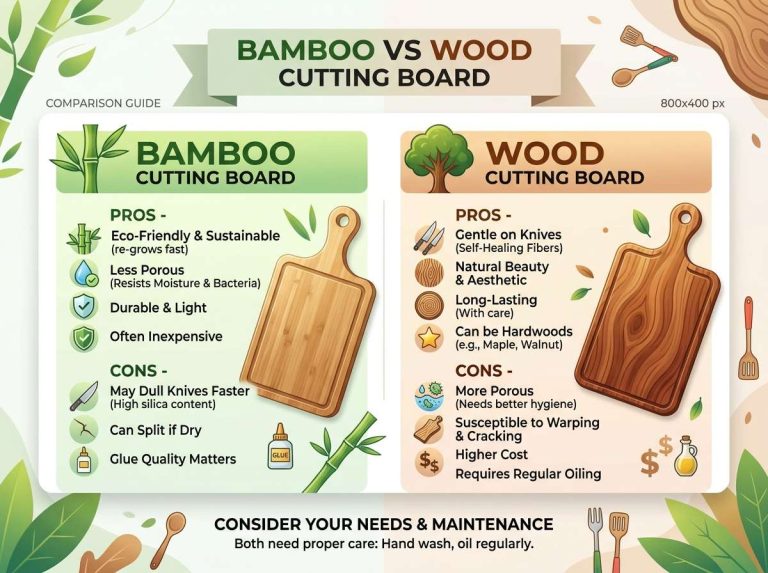
Bamboo is known to be gentle on knife edges, and the listed Kikcoin features describe it as ultra-gentle on blades. The titanium surface is described as non-porous, which the listed features say helps reduce absorption of liquids, odors and stains.
Each board targets a different performance strength. Bamboo leans toward knife comfort, while the titanium surface leans toward stain and odor resistance. The two are close here, with the best fit depending on what you value most.
Ease of Use
The Kikcoin board is easy to lift thanks to its built-in handle, and its anti-slip silicone stickers keep it from sliding during prep. Wood does need a little more attention over time, such as occasional oiling and drying, so most buyers keep it dry after washing.
The Titanium board is simple to rinse clean on both sides, and the hanging hole makes drying and storage straightforward. Its smooth surface is also less likely to hold residue, which many people find convenient in everyday cooking.
In short, both are easy to use day to day. The Titanium board has a slight edge for simple cleaning and storage, while the Kikcoin board has an edge for stable, slip-resistant prep.
Value for Money
The Kikcoin board is listed at a lower price point than the Titanium board. For a large, reversible bamboo board with a juice groove and handle, that can feel like a sensible buy.
The Titanium board costs more, but it adds a non-porous titanium surface, a garlic grinding area and a dedicated hanging hole. Buyers who want those extras may feel the higher price is justified.
Because the two boards serve slightly different needs, value depends on your priorities. The Kikcoin board has the edge for budget-minded shoppers, and the Titanium board has the edge for those who want more built-in prep features.
Pros and Cons of Each Board
Kikcoin 17”×11” Bamboo Cutting Boards: Pros
- Made from 100% bamboo with a smooth, burr-free finish.
- Anti-slip silicone stickers help hold the board in place.
- Reversible design and a deep juice groove help keep prep tidy.
- Built-in handle makes lifting and serving easier.
Kikcoin 17”×11” Bamboo Cutting Boards: Cons
- Wood needs occasional care, such as drying and oiling.
- Bamboo is not dishwasher-safe, so hand washing is the norm.
- Has fewer built-in extras, such as a garlic grinding area.
- Natural wood may show marks or scratches over time.
Titanium Cutting Board: Pros
- Non-porous titanium surface helps limit odors and stains.
- Both sides rinse clean with water, which keeps cleanup simple.
- Clearly designed for separate meat and produce prep.
- Includes a garlic grinding area and a hanging hole for drying.
Titanium Cutting Board: Cons
- Costs more than the Kikcoin board.
- Has a metal and plastic build rather than a natural wood feel.
- The PP side may not suit every buyer who prefers all-wood boards.
- Serving and presentation use is less of a focus than with the bamboo board.
Who Should Buy Which Board
The Kikcoin board suits buyers who want a natural wood look, a stable board and a sturdy serving option. It also suits shoppers who are watching their budget.
The Titanium board suits buyers who plan to prep meat and produce on separate sides and want a surface that resists stains and odors. It also suits those who like a hanging hole and a garlic grinding area.
What to Weigh Before Settling on One Board
Start with your material preference. Do you want a warm, natural wood board, or a modern non-wood surface? That decision shapes how the board feels and how you care for it.
Next, think about how you cook. If you often prep raw meat and vegetables, the separate sides of the Titanium board may help. If you mainly want a stable board for slicing and serving, the Kikcoin board may fit better.
Finally, check your budget and storage space. Both boards are large, so make sure your counter and cabinet can handle them.
Common Mistakes to Avoid
- Leaving wood boards soaking in water, which can cause warping over time.
- Putting a cutting board in the dishwasher without checking the care guidance.
- Using one side for raw meat and then cutting produce on it without rinsing first.
- Judging only by price.
- Ignoring how the board will be cleaned and stored day to day.
Final Verdict: Which Board Is the Better Pick?
Neither board is the better pick for every buyer. The right board depends on what you cook, how you like to clean and what look you want in your kitchen.
For buyers who want a natural wood board with a juice groove, a built-in handle and a stable feel, the Kikcoin board is a strong fit. It also suits shoppers who prefer a lower price.
For buyers who want separate meat and produce sides, a non-porous surface and extra prep features, the Titanium board is a good match. Its higher price reflects those added touches.
Frequently Asked Questions About the Kikcoin and Titanium Boards
Is a bamboo cutting board gentle on knives?
Bamboo is generally considered gentler on blade edges than harder materials. The Kikcoin board’s listed features describe it as ultra-gentle on blades. Good knife care still helps any board last longer.
Can I put either board in the dishwasher?
Wood boards are usually best washed by hand. Always check the care guidance that comes with your board before cleaning it. Rinsing with water and drying promptly is a simple habit for both boards.
Why would someone want two prep sides?
Two sides let you keep raw meat and produce apart, which can help with food hygiene. Both boards are reversible, but the Titanium board is specifically designed for separate prep. Using a clear routine makes this easier.
Do these boards work as serving boards?
The Kikcoin board is described as able to serve as a cheese or charcuterie board. The Titanium board is focused more on prep tasks. Choose based on how often you plan to serve food on it.
Which board is better for a beginner?
Both are approachable for beginners. The Kikcoin board offers a simple, stable, budget-friendly option. The Titanium board may suit beginners who want a clear system for separating foods and easy cleanup.

Mary is a home cooking enthusiast and kitchen gear reviewer with a passion for practical cookware and food preparation tools. She enjoys testing cutting boards, knives, kitchen gadgets, and other cooking essentials to help home chefs make smarter buying decisions. Through KitchenCutting.com, Mary shares honest product reviews, buying guides, and helpful kitchen tips to make cooking easier, safer, and more enjoyable.