Acacia vs Teak Cutting Board
If you have ever stood in a store staring at rows of wooden cutting boards, you know the struggle. Two names keep popping up again and again: acacia and teak. Both look gorgeous. Both feel sturdy in your hand. But they are not the same, and the small differences between them can affect how your board looks, how long it lasts, and how easy it is to keep clean.
In this article
This guide breaks down everything in plain, simple words. No fancy woodworking jargon, no confusing terms. Just a clear, honest look at acacia and teak cutting boards so you can pick the right one for your kitchen.
A Quick Look at Both Woods
Before we get into the deep comparison, let’s cover the basics.
Acacia wood comes from acacia trees, which grow fast in warm climates across Africa, Australia, and parts of Asia. Acacia has a rich, warm color that ranges from golden brown to deep chocolate, often with dramatic streaks running through the grain. It’s a hardwood, meaning it’s naturally tough and dense.
Teak wood comes from teak trees, mostly grown in Southeast Asia. Teak has been used for boats, outdoor furniture, and high-end kitchen tools for a long time because of its natural oils. Those oils make teak resistant to water, rot, and bugs. Teak has a warm honey-brown tone that tends to look more even and uniform than acacia.
Now let’s dig into the details that actually matter when you’re using these boards every single day.
Durability: Which Wood Holds Up Better?
Durability is often the first thing people think about when buying a cutting board. After all, nobody wants to spend money on something that cracks or warps after a few months.
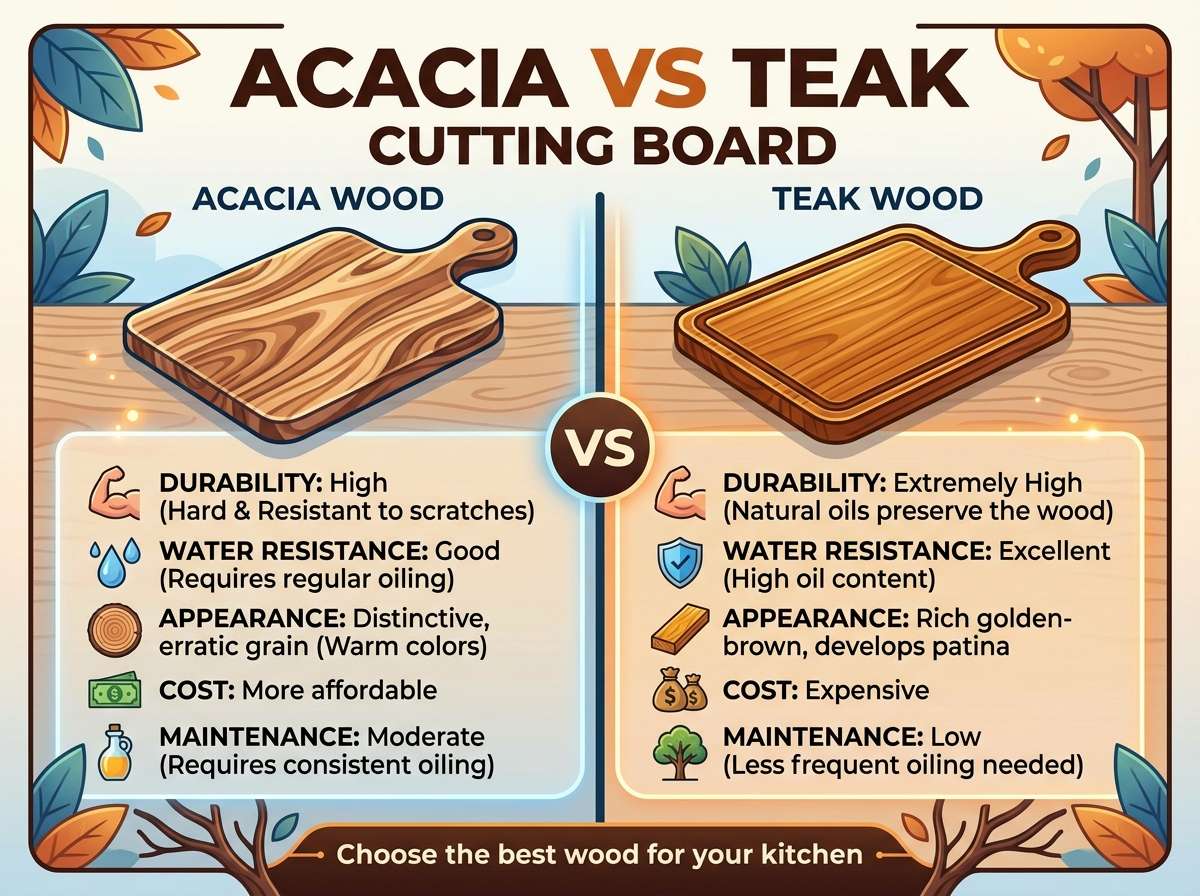
Teak is famous for being tough as nails. Its natural oils protect the wood fibers from breaking down, even with constant exposure to water and knife cuts. This is the same reason teak gets used for outdoor furniture and yacht decks. A teak board can last for many years with basic care, showing very little sign of wear.
Acacia is also a hardwood, so it holds up well too. It resists dents and scratches better than softer woods like pine or bamboo. That said, acacia doesn’t have the same natural oil content as teak, so it can dry out faster if you skip regular oiling. Over time, dry acacia wood may start to show small cracks, especially in hot or dry kitchens.
The winner here: Teak edges out acacia in raw durability, thanks to its natural oils. But acacia still performs well if you keep up with maintenance.
Water Resistance: Handling Moisture Like a Pro
A cutting board deals with water constantly, from washing vegetables to wiping down after use. So water resistance is a big deal.
Teak’s natural oils act like a built-in shield against water. Even after repeated washing, teak resists soaking up moisture, which lowers the risk of warping or swelling. This makes teak a favorite for people who wash their boards often or live in humid areas.
Acacia handles water reasonably well too, since it’s a dense hardwood. But without oil, it can absorb small amounts of moisture over time, leading to slight warping if it’s not dried properly after each wash. The fix is simple: always dry your acacia board standing up right after washing, and give it a light oil treatment every few weeks.
Knife Friendliness: Protecting Your Blades
Here’s something many buyers don’t think about until later: how the wood treats their knives.
Both acacia and teak are considered “knife-friendly” woods, meaning they’re gentle on blade edges compared to glass, ceramic, or plastic boards. Wood has a bit of natural give, so your knife edge doesn’t dull as fast.
Between the two, acacia tends to be slightly softer on the surface, which some cooks say feels gentler under the blade. Teak is a touch harder, but still much kinder to knives than non-wood alternatives.
If you’re someone who cooks a lot and cares about keeping your knives sharp, either wood works fine. Just remember to always use a cutting board rather than cutting directly on countertops, since stone and quartz surfaces will dull blades quickly.
Maintenance and Care: What Does Daily Life Look Like?
This is where the two woods start to show real differences.
Teak needs very little upkeep. Because of its natural oil content, you can go longer stretches without applying mineral oil, and the board will still look and feel great. A quick wipe with soap and warm water, followed by air drying, is usually enough.
Acacia needs a bit more attention. Since it lacks that built-in oil, you should apply food-safe mineral oil or a wood conditioner every two to four weeks, depending on how often you use it. Skipping this step for too long can lead to a dry, dull-looking board, or even small surface cracks.
Here’s a simple care routine that works for both woods:
- Wash with mild soap and warm water after each use
- Avoid soaking the board or leaving it in standing water
- Dry it upright with a towel right after washing
- Apply food-safe mineral oil regularly (weekly for acacia, monthly for teak)
- Keep it away from direct sunlight and heat sources like stoves or dishwashers
- Never put either board in the dishwasher
If you follow this routine, both acacia and teak boards can last for a very long time.
Appearance and Style: Which Looks Better?
Looks matter more than people admit, especially since a cutting board often sits out on the counter as part of your kitchen decor.
Acacia wood is known for bold, dramatic grain patterns. Each board looks unique, with swirls, dark streaks, and color variation that make it stand out. If you like a rustic, natural, one-of-a-kind look, acacia delivers that in spades.
Teak has a more consistent, refined appearance. Its golden-brown tone stays fairly even across the board, giving it a polished, classic look. Teak fits well in kitchens with a warm, traditional, or coastal design theme.
There’s no wrong answer here since it really comes down to personal taste. Some cooks love the wild character of acacia grain, while others prefer the calm, steady beauty of teak.
Weight and Handling
Both woods are on the heavier side compared to bamboo or plastic boards, but there are small differences worth noting.
Acacia is generally denser and heavier, which gives it a solid, sturdy feel on the counter. This weight also means it stays put while you’re chopping, without sliding around.
Teak tends to be a bit lighter than acacia, though it’s still heavier than most softwoods. This makes teak boards a little easier to lift, move, and store, especially if you’re switching between multiple boards during meal prep.
If you want a board that feels rock-solid and stationary, go with acacia. If you prefer something a bit easier to carry around the kitchen, teak might suit you better.
Odor and Food Safety
Nobody wants their cutting board to smell weird or transfer flavors onto their food.
Fresh acacia wood sometimes has a mild, natural wood scent when it’s brand new, but this fades quickly after a few washes. It doesn’t hold onto food smells if cleaned properly.
Teak has almost no odor at all, even when new, thanks to its tight wood grain and natural oils that seal it off from absorbing smells. This makes teak a great pick if you’re sensitive to scents in your kitchen.
Both woods are food-safe hardwoods, meaning they don’t release harmful chemicals into your food, as long as you avoid harsh chemical cleaners and stick to gentle soap and water.
Price Comparison: What Will You Actually Pay?
Budget plays a big role in most kitchen purchases, so let’s talk numbers in general terms.
Acacia is usually the more wallet-friendly option. Since acacia trees grow fast and are widely farmed, the wood is easier to source in large amounts, which keeps prices lower. This makes acacia a popular pick for budget-conscious shoppers who still want a hardwood board.
Teak tends to cost more, sometimes noticeably so. This comes down to slower growth cycles and higher demand for teak in furniture, boats, and outdoor products. Genuine teak also often comes from managed forests with sustainability certifications, which can add to the cost.
If you’re on a tight budget, acacia gives you great value for the price. If you don’t mind spending extra for long-term durability and low maintenance, teak might be worth the investment.
Sustainability and Sourcing
Eco-conscious buyers care about where their wood comes from, and both options have decent answers here.
Acacia trees grow quickly, often reaching harvest size in a shorter time than many hardwoods. This fast growth cycle makes acacia a more renewable option overall, and many acacia products come from responsibly managed farms.
Teak grows more slowly, but reputable teak suppliers now rely on plantation-grown trees rather than wild harvesting, which helps protect natural forests. Look for certifications like FSC (Forest Stewardship Council) on teak products to make sure you’re buying from a sustainable source.
Both woods can be eco-friendly choices as long as you buy from brands that are transparent about their sourcing.
Which One Should You Pick?
Here’s a simple breakdown based on different needs.
Go with acacia if:
- You want a bold, unique look with dramatic wood grain
- You’re working with a tighter budget
- You don’t mind oiling your board regularly
- You like a heavier, sturdier feel on the counter
Go with teak if:
- You want low-maintenance care with minimal oiling
- You care a lot about water and moisture resistance
- You prefer a classic, even wood tone
- You’re willing to spend more for long-term durability
Honestly, you can’t go too wrong with either one. Both are solid hardwoods that beat out plastic, glass, or softwood boards in almost every way. It really comes down to your budget, your style preference, and how much time you’re willing to spend on upkeep.
Common Questions About Acacia and Teak Boards
Can I put oil on both boards the same way? Yes, both woods respond well to food-safe mineral oil or specialized cutting board conditioner. Acacia just needs it more often since it lacks natural oils.
Is one wood better for meat and the other for vegetables? Not really. Both woods work fine for any food type, as long as you wash and dry the board properly after each use. Some cooks like to keep separate boards for raw meat and produce, but that’s a hygiene habit rather than something tied to the wood type.
Will either board crack over time? Cracking usually happens from dryness, heat exposure, or soaking in water. Both acacia and teak can crack if neglected, so regular oiling and proper drying go a long way in preventing this.
Which one is heavier? Acacia is generally a bit heavier and denser than teak, giving it a more solid feel on the counter.
Do these boards work for both prep and serving? Absolutely. Both acacia and teak look great as serving boards for cheese, bread, or charcuterie, along with their everyday use as prep boards.
Final Thoughts
At the end of the day, both acacia and teak cutting boards bring real value to your kitchen. Acacia gives you bold looks and a friendlier price tag, while teak brings effortless durability and a refined, classic finish. Think about how much time you want to spend on care, how much you’re ready to spend upfront, and what look fits your kitchen best.
No matter which one lands on your counter, you’re getting a hardwood board that will serve you well for years, as long as you treat it with a little basic care. Wash gently, dry fully, oil regularly, and your acacia or teak board will stay a trusted kitchen companion for a long time to come.

Mary is a home cooking enthusiast and kitchen gear reviewer with a passion for practical cookware and food preparation tools. She enjoys testing cutting boards, knives, kitchen gadgets, and other cooking essentials to help home chefs make smarter buying decisions. Through KitchenCutting.com, Mary shares honest product reviews, buying guides, and helpful kitchen tips to make cooking easier, safer, and more enjoyable.