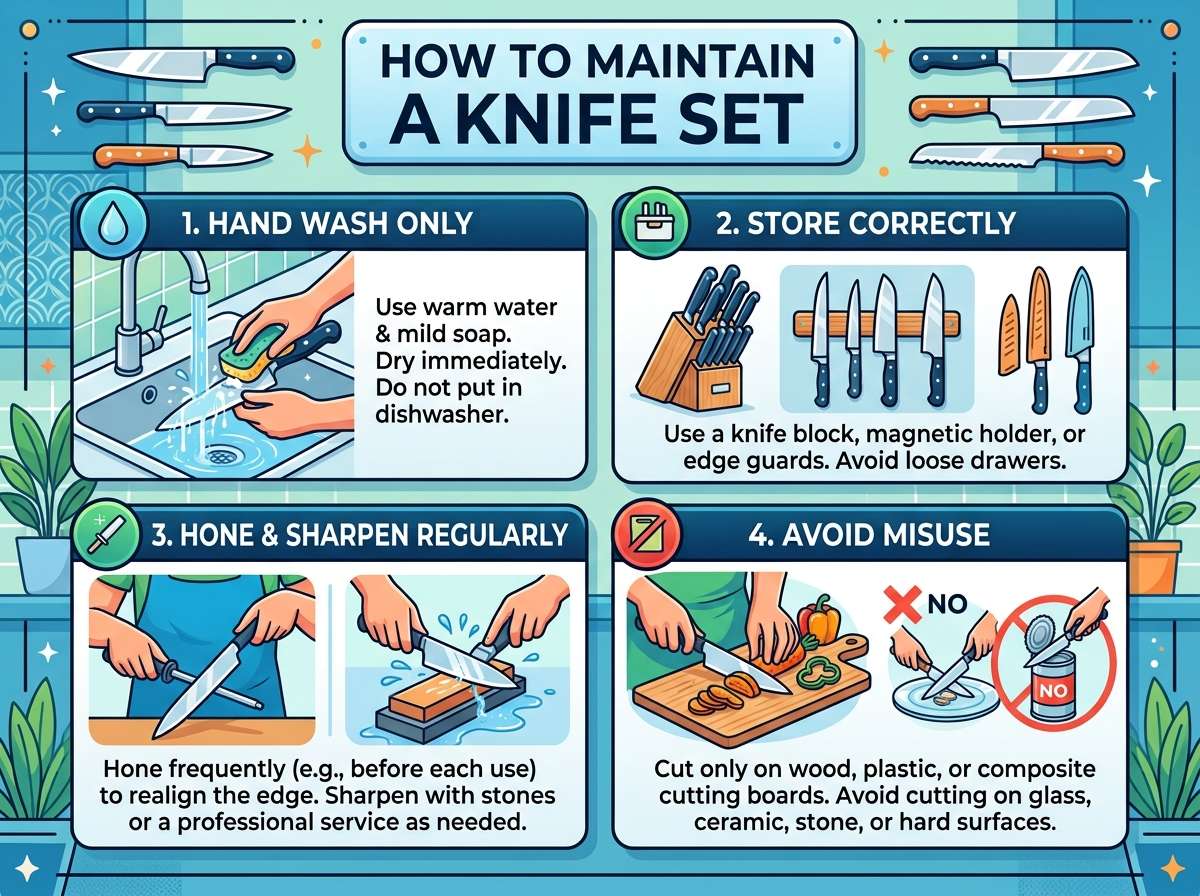
How to Maintain a Knife Set?
Your knife set is one of the most important tools in your kitchen. A sharp, well-maintained knife makes cooking easier, faster, and safer. But many people don’t know how to care for their knives properly. The good news? It’s not hard at all. This guide will teach you everything you need to know about knife care and maintenance.
In this article
Why Knife Maintenance Matters
Taking care of your knives keeps them sharp and ready to use. A dull knife is actually more dangerous than a sharp one because you have to use more force, and it can slip. When you maintain your knives well, they last longer and work better in the kitchen. Think about it like this: a little care now saves you money later because your knives won’t need replacing as often.
Good knife maintenance also makes your cooking tasks simpler. Cutting vegetables, meat, and bread becomes much easier with a sharp blade. You’ll spend less time fighting with your ingredients and more time enjoying the cooking process. Plus, a well-maintained knife set looks great on display or in your knife block.
The Basics of Knife Care
Before you jump into sharpening and honing, let’s talk about the everyday care your knives need. These simple habits protect your blades and keep them in top shape.
Hand Wash Your Knives
Never put your knives in the dishwasher. This is the most important rule. The dishwasher is rough on knife blades. The hot water, harsh detergents, and banging against other dishes will dull and damage your knives faster than anything else.
Instead, hand wash your knives right after you use them. Use warm water and a mild dish soap. Grab a soft sponge or cloth and gently wipe both sides of the blade. Pay attention to the edge and the handle. Rinse the knife under clean water and dry it right away with a soft cloth. Never let knives sit wet in the sink or drip dry on the counter.
Taking three minutes to hand wash your knife properly is worth it. This one habit will make a huge difference in how long your knives last.
Dry Your Knives Immediately
Water spots can form on your blade if you let it air dry. More importantly, wet knives can rust, especially if they’re made from carbon steel. After washing, use a clean, soft towel to dry each knife completely. Pay special attention to the handle and the base of the blade where water likes to hide.
Store your knives while they’re completely dry. This prevents rust and keeps the blade in perfect condition.
Store Your Knives Properly
How you store your knives matters just as much as how you wash them. Never toss knives into a drawer loose. The blade will hit other utensils and dull quickly. The knife can also damage other items, and you might cut yourself reaching into the drawer.
The best storage options include a knife block, a magnetic strip on the wall, or knife sheaths for each blade. A knife block is great for the kitchen counter because it looks nice and keeps knives organized. Magnetic strips work well if you have limited counter space. If you’re storing knives in a drawer, use a knife roll or cloth to protect the blades.
Make sure your storage location is cool and dry. Humidity can cause rust, so avoid storing knives near the stove or dishwasher where steam rises.
Honing Your Knives
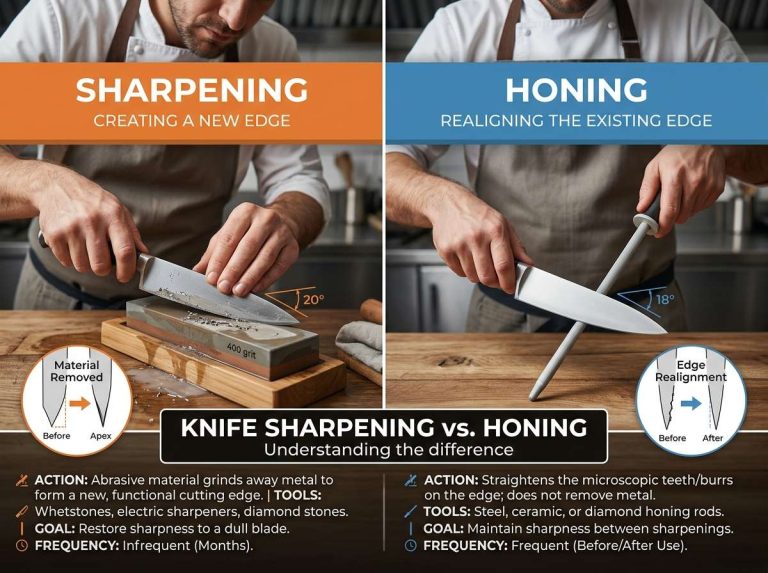
Honing is different from sharpening, and many people mix these two up. Honing realigns the edge of your blade and should happen much more often than sharpening.
What is Honing?
When you use a knife, the edge gets pushed slightly to the side. The blade itself isn’t really dull yet—it’s just bent a little. A honing steel fixes this problem. Running your knife edge along a honing steel pushes the edge back into alignment.
Think of it like this: if sharpening removes metal to create a new edge, honing straightens an existing edge back into shape.
How to Hone Your Knife
Get a honing steel, which is a long metal rod with a handle. Hold the steel in one hand straight up, with the tip pointing away from you. Grab your knife in your other hand and place the blade against the steel at about a twenty-degree angle.
Pull the knife toward you while sliding it down the steel. The motion should be smooth and controlled, not aggressive. The blade should travel from the base of the knife near the handle all the way to the tip. Do this about five to ten times on each side of the blade.
You don’t need much pressure. Let the steel do the work. Light, smooth strokes are all you need.
When Should You Hone?
Get into the habit of honing your knife every week or every few uses, depending on how often you cook. Home cooks might hone their knives once a week. Professional chefs hone between every single use or multiple times per day.
Regular honing keeps your knives in great shape and means you’ll need to sharpen them less often. It’s like brushing your teeth—a little prevention goes a long way.
Sharpening Your Knives
Sharpening is different from honing. When your knife is truly dull and honing no longer helps, it’s time to sharpen. Sharpening removes a small amount of metal to create a brand new, sharp edge.
Signs Your Knife Needs Sharpening
How do you know when sharpening time has come? Try the tomato test. Take a tomato with a thin skin and try to slice it with your knife. A sharp blade will glide through the skin smoothly. A dull blade will crush or slip off the skin without cutting.
Another test is the paper test. Try to cut a piece of paper. A sharp knife cuts cleanly. A dull knife will tear the paper or refuse to cut at all.
If you’re struggling to cut through regular kitchen tasks, your knife definitely needs sharpening.
Using a Whetstone
A whetstone is a flat stone used to sharpen knives. There are different types, but a two-sided stone works great for most home cooks. One side is coarser for dull blades, and the other side is finer for finishing and polishing the edge.
Start by soaking your whetstone in water for about fifteen minutes. Place it on a stable surface with a damp cloth underneath so it doesn’t slide around.
Hold your knife at about a twenty-degree angle to the stone. Push the blade forward and across the stone with light pressure, moving from the base of the knife to the tip. You’re trying to create a thin metal line along the edge of the blade. This is called a burr.
Do this five to ten times on one side, then flip the knife and repeat on the other side. The burr tells you that you’ve sharpened all the way to the edge.
Once you have a burr on both sides, switch to the finer side of the stone. Do a few more strokes on each side until the blade feels smooth and sharp. Wipe the knife clean and test it on paper or a tomato.
Using a Knife Sharpener
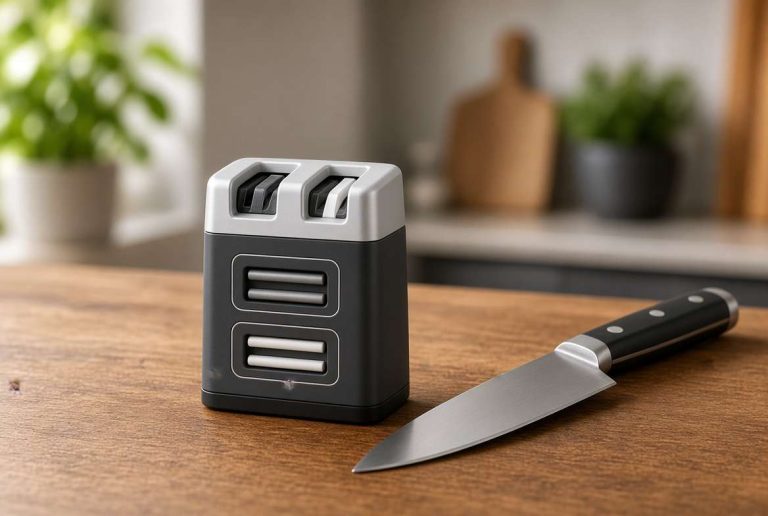
If a whetstone feels too complicated, an electric knife sharpener or a pull-through sharpener can work too. These devices are simpler to use and take the guesswork out of angle and pressure.
A pull-through sharpener has slots you pull your knife through. It’s quick and easy, though it removes a bit more metal than honing. Electric sharpeners do the work for you with a motor, which is even simpler.
The downside of these methods is they might not last as long as a whetstoned knife, but they’re great for beginners who want fast results.
How Often Should You Sharpen?
This depends on how often you cook and how well you maintain your knives. If you hone regularly, you might only need to sharpen every few months or even less often. Heavy users might sharpen every month or two. Light home cooks might go six months between sharpenings.
Listen to your knife. When it starts to struggle with tasks it used to do easily, it’s time to sharpen.
The Handle Matters Too
Don’t forget about the handle when you maintain your knife set. The handle is where you grip the blade, and it needs care just like the metal part does.
Clean the Handle
Wipe down the handle while you’re washing the blade. Use the same warm soapy water and soft cloth. If your handle has cracks or crevices, use an old toothbrush to clean into the gaps.
Never let the handle soak in water for long periods. This can cause wood handles to swell or crack. Dry handles thoroughly after washing.
Protect Different Handle Materials
Different handle materials need different care. Wood handles look beautiful but need oil occasionally to stay in good condition. Food-grade mineral oil works great. Apply a light coat, let it soak in for a few minutes, and wipe away excess.
Plastic and synthetic handles are easier to maintain—just keep them clean and dry. Metal handles should be dried completely to prevent corrosion.
Bone or composite handles fall somewhere in between. Keep them clean and dry, and avoid soaking them.
Special Situations
Some situations need extra care to keep your knives in perfect shape.
After Using Acidic Foods
Tomatoes, citrus, and vinegar are acidic and can damage knife blades over time. After cutting acidic foods, wash your knife immediately with water and soap. Dry it right away. This prevents the acid from sitting on the blade and causing damage.
Before Storing for Long Periods
If you’re storing knives for several months, make sure they’re completely clean and dry. You might even apply a thin coat of food-grade mineral oil to the blade to prevent rust. Wipe away excess before storing.
When Traveling
If you need to transport your knives, use knife sheaths or wrap them in a knife roll. Never pack them loose in a suitcase or bag where the blade can get damaged or cause injury.
Common Mistakes to Avoid
Don’t Use the Wrong Cutting Surface
Cutting on glass, metal, or marble surfaces will dull your knives fast. Always use a wooden or plastic cutting board. Wood is actually gentler on knife edges than plastic.
Don’t Let Knife Edges Hit Hard Objects
Bones, shells, and frozen foods can chip or dull knife edges instantly. Be careful about what you’re cutting, and use the right knife for each task.
Don’t Ignore Rust or Discoloration
If you notice rust spots or dark spots on your blade, deal with them right away. Light surface rust can be rubbed off with a soft cloth. Serious rust or stains might need professional attention.
Don’t Neglect the Blade Between Sharpenings
Honing regularly means your knives stay sharp longer and need professional sharpening less often. This saves money and keeps your knives ready to use.
Don’t Use Dirty Surfaces
Always make sure your cutting board is clean before using your knife. Dirt and debris can damage the edge and introduce bacteria.
Professional Sharpening Services
If you feel nervous about sharpening your own knives, professional services are available. Many cutlery shops, kitchen supply stores, and even some grocery stores offer sharpening services. A professional can restore a badly dull or damaged blade to perfect condition.
Professional sharpening costs vary but is usually reasonable. It’s a good option for expensive knives or if you’re just not comfortable sharpening at home.
Building Your Maintenance Routine
The key to keeping your knives in great shape is developing a routine. Here’s a simple schedule to follow:
Every time you use your knives: Hand wash and dry them right away. Never leave them in the sink.
Weekly or every few uses: Hone your knives with a honing steel to keep the edge aligned.
Every few months: Sharpen your knives when they start to feel dull. Use a whetstone or sharpening service.
Monthly: Check your knives for any signs of rust, discoloration, or damage. Clean the handles thoroughly.
Annually: Consider having your knives professionally sharpened if you use them heavily, or just check in to make sure everything is still in good working order.
Investing in the Right Tools
You don’t need expensive equipment to maintain your knives well. Here’s what to get:
A honing steel is essential. A basic one costs just a few dollars and lasts for years.
A whetstone is useful if you sharpen frequently. A decent two-sided stone runs twenty to fifty dollars.
A pull-through sharpener is a budget-friendly option if whetstones seem too intimidating.
Good cutting boards made of wood or plastic are important investments.
A soft cloth for drying is simple but essential.
Food-grade mineral oil for wooden handles and blades is cheap and lasts a long time.
The Payoff
Taking time to maintain your knife set pays off in so many ways. Sharp knives make cooking faster and more enjoyable. Well-maintained knives last for years or even decades. You’ll spend less money replacing dull or damaged knives. Your knife set will always be ready when you need it.
Plus, there’s something satisfying about using a perfectly sharp knife. The way it glides through an onion or slices tomato cleanly is a joy that dull knives can never give you.
Final Thoughts
Knife maintenance isn’t complicated or time-consuming. It’s simple, affordable, and worth every minute you invest. Start with the basics: hand wash and dry your knives, hone them regularly, and sharpen when needed. Store them properly and watch for signs of damage.
Your knives will reward your care by staying sharp, looking beautiful, and working perfectly for years to come. Once you get into the habit of proper maintenance, it becomes second nature. Soon you’ll wonder how you ever cooked with dull, poorly maintained knives.
Take care of your knife set today, and your blades will take care of you every time you step into the kitchen. Happy cooking, and enjoy your sharp, well-maintained knives.

Mary is a home cooking enthusiast and kitchen gear reviewer with a passion for practical cookware and food preparation tools. She enjoys testing cutting boards, knives, kitchen gadgets, and other cooking essentials to help home chefs make smarter buying decisions. Through KitchenCutting.com, Mary shares honest product reviews, buying guides, and helpful kitchen tips to make cooking easier, safer, and more enjoyable.