High Carbon Stainless Steel Knife Benefits
If you love cooking or you just want a knife that works hard without letting you down, you have probably heard the term “high carbon stainless steel” thrown around a lot. It sounds fancy, but it is actually one of the easiest materials to understand once you break it down. This guide walks you through what makes this blade material so good, why chefs and home cooks keep coming back to it, and how it can make your time in the kitchen a whole lot smoother.
In this article
By the end, you will know exactly why a high carbon stainless steel knife deserves a spot in your kitchen drawer, and you will be able to spot a good one the next time you go shopping.
What Is High Carbon Stainless Steel, Really?
Before we jump into the benefits, let’s clear up what this material actually is. A regular stainless steel knife is made mostly with steel and chromium. The chromium is what keeps rust away, but it can make the blade a bit softer and less sharp over time.
Carbon steel knives, on the other hand, hold an edge like a champion and cut like a dream, but they rust easily and need a lot of care.
High carbon stainless steel blends the two. It takes the toughness and edge retention from carbon steel and mixes it with the rust resistance from stainless steel. You get a blade that stays sharp longer, resists stains and rust, and does not demand babysitting like a plain carbon steel knife would.
Think of it as the best of both worlds packed into one tool.
Why This Material Stands Out From Other Knife Types
There are tons of knife materials out there, from ceramic to titanium to plain stainless steel. So why does high carbon stainless steel keep showing up as the top pick for chefs, butchers, and home cooks alike? Here is a simple breakdown of the reasons.
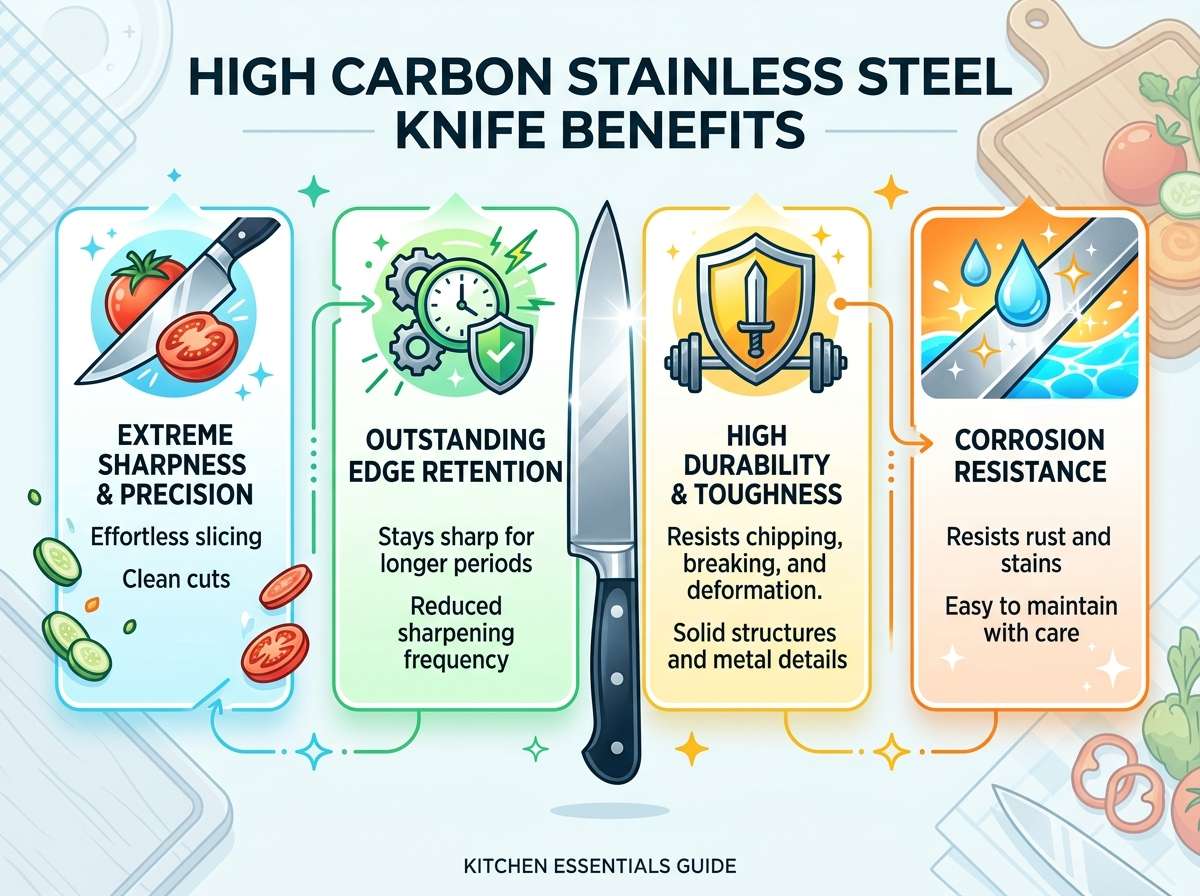
1. It Holds a Sharp Edge Much Longer
One of the biggest complaints people have about regular stainless steel knives is that the edge dulls fast. You sharpen it, use it for a week, and suddenly it feels like you are sawing through a tomato instead of slicing it.
High carbon stainless steel fixes this problem. The added carbon content makes the steel harder, and harder steel holds its edge for a longer stretch of time. This means fewer trips to the sharpening stone and more time actually cooking.
For anyone who preps food often, this single benefit alone can save hours over time.
2. It Fights Off Rust and Stains
Plain carbon steel knives are known for rusting if you leave them wet for even a short while. That is a real hassle, especially if you are busy in the kitchen and do not have time to dry every blade the second you finish using it.
High carbon stainless steel still contains enough chromium to form a protective layer that blocks rust and stains. You still want to dry it after washing, since no steel is completely rust-proof, but it gives you way more breathing room than pure carbon steel does.
This makes it a practical option for people who want performance without constant maintenance.
3. It Cuts With Precision and Control
A sharp, hard blade means clean cuts. When your knife glides through vegetables, meat, or herbs without dragging, you get more even slices and better control overall. Sloppy cuts often come from a dull or soft blade that bends or slips instead of slicing straight through.
With a high carbon stainless steel knife, the extra hardness keeps the edge thin and stable, so it slices cleanly through tough skins, dense produce, and fibrous cuts of meat.
Home cooks notice this right away when they switch from a basic stainless blade to a high carbon stainless one. The difference in cutting feel is night and day.
4. It Is Built to Last
Nobody wants to buy a new knife every year. High carbon stainless steel blades are known for lasting a long time when you treat them right. Because they resist corrosion and hold their shape well, they do not wear down as fast as softer steel options.
A well-made knife from this material can stay in your kitchen for decades. Many professional chefs pass down their favorite blades to family members or apprentices simply because the steel holds up so well over years of heavy use.
If you look at cost per use rather than the price tag alone, this type of knife often turns out to be a smart long-term investment.
5. It Balances Toughness and Flexibility
Steel that is too hard can become brittle, which means it might chip or crack under pressure. Steel that is too soft bends out of shape easily. High carbon stainless steel strikes a nice middle ground.
Manufacturers carefully control the carbon content to get a blade that is hard enough to stay sharp but flexible enough to avoid snapping when it hits a bone or a thick root vegetable. This balance is part of why the material is trusted across so many knife styles, from chef knives to boning knives to pocket knives.
6. It Requires Less Maintenance Than Pure Carbon Steel
People who love carbon steel knives often talk about the ritual of oiling the blade, drying it right after use, and watching out for any sign of rust forming. That level of care is not for everyone, especially beginners who just want a reliable tool.
High carbon stainless steel takes a lot of that pressure off. You still need basic care, like hand washing and drying, but you do not have to treat it like a delicate object. It fits much better into a normal, busy kitchen routine.
7. It Looks Sharp and Feels Premium
There is also a visual and tactile side to this. High carbon stainless steel blades usually have a bright, polished shine that plain carbon steel cannot match, since carbon steel tends to develop a dark patina over time. If you like a clean, shiny blade sitting on your knife block, this material delivers that look while still performing at a high level.
The weight and balance of these knives often feel more refined too, giving you a solid, confident grip during use.
How This Material Performs Across Different Kitchen Tasks
Let’s talk about real kitchen scenarios, since specs on paper only tell part of the story.
Slicing vegetables: A sharp, hard edge glides through onions, carrots, and peppers with barely any pressure needed. Thin, even slices come naturally instead of feeling like a struggle.
Cutting meat: Whether you are trimming fat, slicing steak, or breaking down poultry, the edge stays clean and precise cut after cut, without rolling or bending.
Chopping herbs: A fine edge means less bruising on delicate herbs like basil or cilantro, so your food keeps its fresh flavor and bright color.
Breaking down fish: The thin, sharp blade makes it easier to separate skin from flesh and remove bones without tearing the meat apart.
Across all these tasks, the common thread is control. A sharper, harder blade simply gives you more command over every cut you make.
Common Myths About High Carbon Stainless Steel
There is some confusion floating around about this material, so let’s clear a few things up.
Myth: It never rusts. Truth: It resists rust much better than plain carbon steel, but it is not completely immune. Leaving it wet for long periods can still cause spotting or light rust, especially near the edge.
Myth: It is too hard to sharpen. Truth: It does take a bit more effort to sharpen compared to soft stainless steel, but a decent whetstone or honing rod handles it just fine. The upside is that you will not need to sharpen it nearly as often.
Myth: All high carbon stainless steel knives perform the same. Truth: Quality varies a lot between brands. Things like the exact carbon percentage, heat treatment process, and blade construction all affect performance. A cheap knife labeled with this material will not perform like a well-made one from a trusted brand.
How to Take Care of a High Carbon Stainless Steel Knife
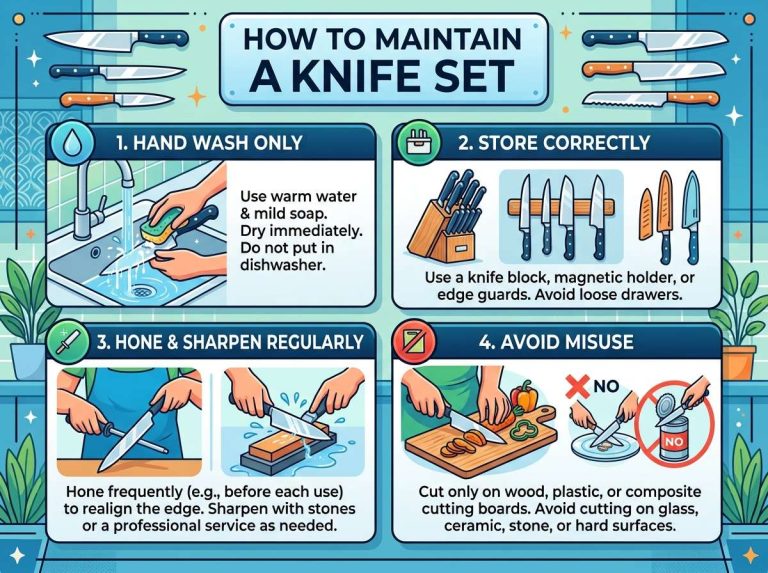
Good care keeps any knife performing at its best, and this material is no exception. Here are some simple habits to build into your routine.
- Wash the blade by hand with warm water and mild soap right after use.
- Dry it completely with a towel instead of letting it air dry.
- Store it in a knife block, magnetic strip, or blade guard rather than tossing it in a drawer with other utensils.
- Use a cutting board made of wood or soft plastic instead of glass or stone, since hard surfaces dull the edge faster.
- Hone the blade regularly with a honing rod to keep the edge aligned between full sharpenings.
- Sharpen it a few times a year, or more often if you use it daily, using a whetstone or a trusted sharpening service.
These small habits add years of life to your blade and keep the cutting performance sharp.
Who Benefits Most From This Type of Knife
This material fits a wide range of people, but a few groups get the most value from it.
Home cooks who cook often get a blade that stays sharp through daily meal prep without constant sharpening sessions.
Beginners in the kitchen appreciate that it does not demand the intense care that pure carbon steel needs, making it a forgiving option while they build their skills.
Professional chefs rely on the edge retention and durability during long, fast-paced shifts where there is no time to stop and sharpen a dull blade.
Outdoor and camping cooks like that it resists rust better than plain carbon steel, since outdoor conditions expose knives to moisture more often.
Anyone who wants a long-term investment benefits from a knife built to last for years instead of one that needs replacing every season.
What to Look for When Buying One
If you decide this material sounds right for your kitchen, keep these points in mind while shopping.
Check the carbon content. Higher carbon percentages generally mean better edge retention, but the exact sweet spot depends on the brand and how the steel was treated during manufacturing.
Look at the blade construction. Full tang blades, where the steel runs through the entire handle, tend to offer better balance and durability compared to partial tang designs.
Feel the weight and grip. A knife should feel comfortable and balanced in your hand, not too heavy at the tip or too light in the handle.
Read about the heat treatment. Reputable brands often mention their heat treatment process, since this step has a huge effect on how hard and durable the final blade turns out.
Compare price to purpose. A budget option works fine for casual use, but if you cook often, spending a bit more on a well-made blade usually pays off through better performance and longer life.
Final Thoughts
A high carbon stainless steel knife brings together sharpness, strength, and low maintenance in a way that few other blade materials manage. It holds an edge far longer than regular stainless steel, resists rust much better than pure carbon steel, and gives you clean, controlled cuts across almost any kitchen task.
For anyone who wants a dependable blade that does not demand constant attention but still performs like a serious cutting tool, this material checks nearly every box. With a bit of basic care, a good knife made from it can stay sharp, shiny, and reliable for a very long time, making it one of the smartest additions you can make to your kitchen setup.

Mary is a home cooking enthusiast and kitchen gear reviewer with a passion for practical cookware and food preparation tools. She enjoys testing cutting boards, knives, kitchen gadgets, and other cooking essentials to help home chefs make smarter buying decisions. Through KitchenCutting.com, Mary shares honest product reviews, buying guides, and helpful kitchen tips to make cooking easier, safer, and more enjoyable.