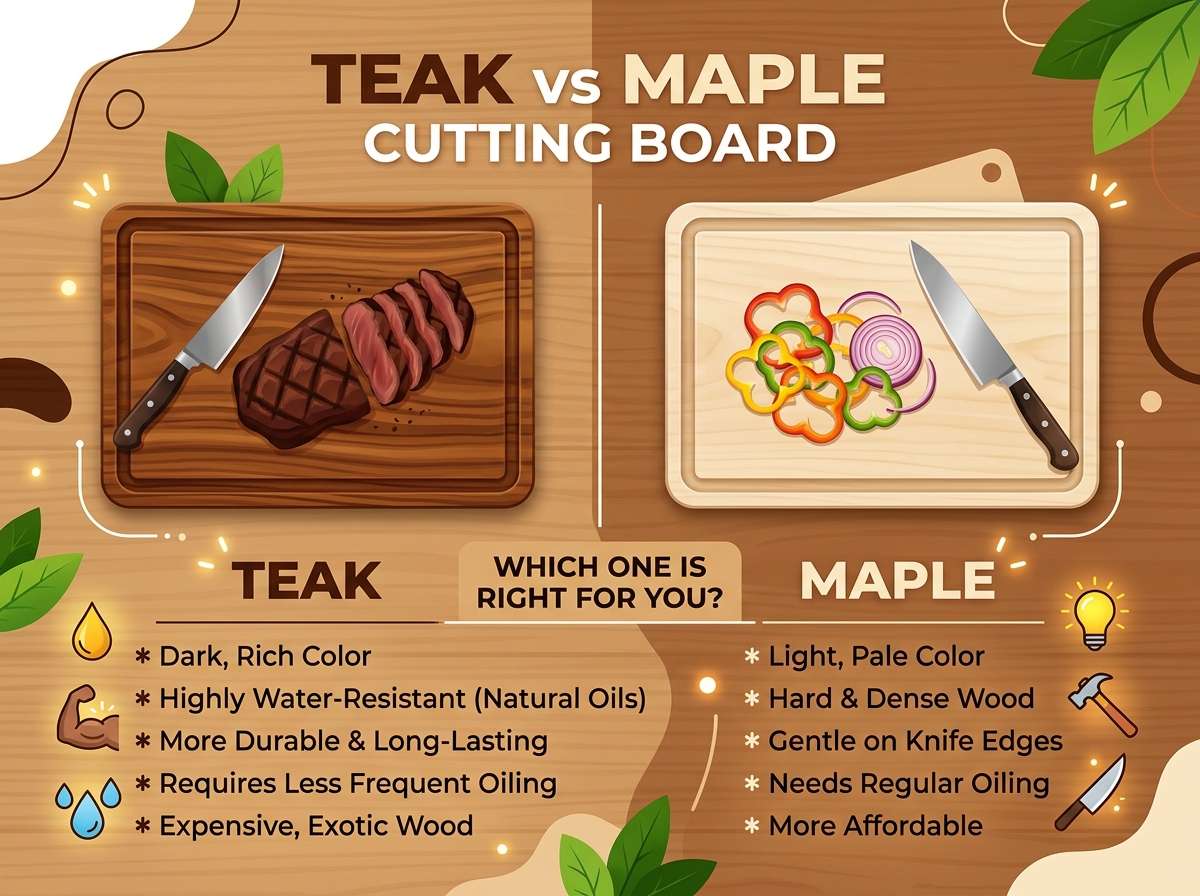
Teak vs Maple Cutting Board
If you spend time in the kitchen, you know that a good cutting board makes all the difference. It’s not just about chopping your vegetables or slicing your meat. A quality cutting board protects your knives, keeps your counters clean, and honestly, it can make cooking feel more enjoyable. But when you start shopping for one, you’ll quickly discover there are many options out there. Two of the most popular choices are teak and maple. Both have loyal fans, but they’re actually pretty different from each other. Let me walk you through everything you need to know about each one so you can make the right choice for your kitchen.
In this article
What Makes a Good Cutting Board?
Before we dive into the specifics of teak and maple, let’s talk about what actually matters in a cutting board. A great wooden cutting board needs to be durable, gentle on your knives, easy to clean, and resistant to stains and odors. It should also be attractive enough to sit on your counter without looking out of place. Some people care about sustainability, while others just want something that will last for years without falling apart.
The best cutting boards also resist bacteria growth and don’t absorb odors too easily. They should be easy to maintain and not require a ton of special care. Nobody wants to spend an hour treating their cutting board every week. At the same time, you don’t want something so low-maintenance that it falls apart after a few months of regular use.
Understanding Teak: The Tropical Powerhouse
Teak is a hardwood that comes from trees grown in Southeast Asia, mainly in countries like Indonesia and Thailand. This wood has been used for furniture and boat building for hundreds of years because it’s incredibly durable and beautiful. When you see a teak cutting board, you’re looking at wood that’s golden-brown in color, with a smooth, almost slick feel to it.
Why Teak is Special
The first thing you notice about teak is its natural oils. These oils are one of the biggest reasons why teak is so popular for kitchen items. The oils make the wood naturally resistant to water and moisture, which means your teak cutting board won’t absorb liquids as easily as other woods. This resistance to water is huge because it means your board won’t swell up, warp, or develop mold and mildew problems.
Teak is also incredibly hard. On the hardness scale for wood, teak ranks very high, which means it resists dents and scratches better than softer woods. When you chop on teak, the wood doesn’t get gouged up as easily. Over time, this means your cutting board looks newer for longer.
The natural oils in teak also give it antibacterial properties. This isn’t a marketing gimmick. The oils actually help prevent bacteria from growing on the surface, which is a nice bonus for food safety. Combined with regular washing, a teak cutting board is a hygienic choice for food preparation.
The Color and Look
Teak has a warm, honey-gold color that looks really nice on a kitchen counter. It’s elegant without being fussy. The wood has a tight grain pattern that gives it a smooth, refined appearance. Over time, teak can darken slightly, which many people find adds to its character. Some teak boards develop a silver-gray patina if they’re exposed to sun, but underneath, the wood is still in great condition.
Maintenance Requirements
Here’s where teak has a big advantage. Teak doesn’t need a lot of special care. You can wash it with regular soap and water, dry it thoroughly, and you’re done. You don’t have to oil it constantly or treat it with special conditioners every month. That said, if you want to keep it looking at its best and maintain those natural oils, many people do oil their teak boards occasionally—but it’s not required for the board to work well.
Knife Performance
Teak is hard but not so hard that it damages your knives. It’s actually gentler on knife edges than plastic cutting boards. When you cut on teak, your knife blade doesn’t dull as quickly. The slight give in the wood, combined with its hardness, creates the perfect balance for maintaining sharp edges. Many professional chefs actually prefer cutting on teak for this exact reason.
The Price Factor
Teak cutting boards are generally on the expensive side. You can find cheap options, but a quality teak board is an investment. A good one might run you anywhere from fifty to one hundred dollars or more, depending on the size and thickness. But the durability often justifies the price because these boards can last for decades if you take care of them.
Sustainability Concerns
One thing to think about with teak is sustainability. Teak trees are grown in plantations, but some environmental groups worry about logging practices and deforestation in Southeast Asia. If sustainability matters to you, look for teak from certified sources that use responsible harvesting methods.
All About Maple: The Kitchen Classic
Maple is a hardwood that grows in North America, particularly in Canada and the northern United States. It’s been used in kitchens for generations and remains one of the most popular wood cutting board materials. When you hold a maple cutting board, you feel like you’re holding something classic and reliable.
Why Maple is Popular
Maple is incredibly hard. In fact, it’s even harder than teak in some cases. This hardness makes maple cutting boards extremely durable and resistant to dents and gouges. You can chop on a maple board every single day, and it will still look great years later. The wood is very dense, which means it doesn’t absorb liquids as easily as softer woods.
The tight grain structure of maple gives it a smooth surface that’s easy to clean. Food particles don’t get stuck in crevices because the grain is so fine. This smoothness also makes maple boards look sleek and professional.
The Look and Feel
Maple is light colored, ranging from pale cream to light tan. This neutral color works with any kitchen design and looks clean and fresh on a counter or cutting board. The wood has a smooth, fine grain that catches the light nicely. Many people love how maple looks because it’s bright and cheerful without being distracting.
Maintenance of Maple Boards
Maple requires a bit more care than teak. Because maple doesn’t have the natural oils that teak does, the wood can dry out over time. Regular oiling keeps a maple board looking nice and prevents the wood from cracking or splitting. Most people oil their maple boards every month or so, depending on use and climate.
The good news is that oiling a maple board is simple. You just use food-grade mineral oil or beeswax conditioner and rub it into the wood. It takes maybe five minutes, and your board will look beautiful and stay protected.
Knife Performance with Maple
Maple is fantastic for your knives. The hardness of the wood means it has a slight give that’s gentle on knife edges. Your blades will stay sharper longer when you cut on maple compared to plastic or glass. Many butchers and professional kitchen workers prefer maple because it performs so well with knives.
Price and Value
Maple cutting boards are generally cheaper than teak boards. You can get a quality maple board for thirty to sixty dollars depending on size. They offer excellent value for the price because they’re durable and last for many years. Some people buy maple early in their cooking journey because it’s affordable, and then they keep using it for years.
Local and Sustainable
If sustainability is important to you, maple has an advantage. It’s grown in North America, so transportation impacts are lower. The maple wood industry is well-managed with replanting programs, so there’s less environmental concern compared to some tropical hardwoods.
Head-to-Head Comparison
Now let’s put these two side by side and see how they really compare in everyday use.
Durability and Longevity
Both teak and maple are incredibly durable and can last for decades. Teak’s natural oils give it a slight edge in terms of resistance to water damage and warping. Maple is just as durable but needs regular oiling to stay in top condition. If you treat both well, they’ll both last a lifetime. The difference is that teak forgives you more if you’re not perfect about maintenance.
Water and Moisture Resistance
Teak wins here. The natural oils mean teak sheds water better than maple. If you accidentally leave your board wet or store it in a humid area, teak handles it better. Maple can absorb water if it’s not sealed with oil, which can lead to warping or swelling. For someone who wants a low-maintenance option, teak’s water resistance is a big benefit.
Antibacterial Properties
Teak’s natural oils give it antibacterial qualities that maple doesn’t have naturally. That said, both woods are food-safe and can be kept clean with regular washing. The antibacterial advantage of teak is nice but not crucial if you practice good kitchen hygiene.
Aesthetics and Kitchen Style
This one really comes down to personal preference. Teak’s warm, golden tone works well with rustic, natural, or traditional kitchen styles. Maple’s light, neutral color works with almost any design scheme and looks especially nice in modern or farmhouse kitchens. Both woods age beautifully, just in different ways.
Maintenance Time and Effort
Maple requires more regular oiling to stay in peak condition. If you’re willing to spend five minutes once a month oiling your board, maple is no problem. If you want something you can just wash and forget about, teak requires less hands-on care. Teak can go longer between oil treatments without any problems.
Cost Comparison
Maple is generally cheaper upfront. You might spend thirty to fifty dollars on a quality maple board. Teak is pricier, often ranging from sixty to over one hundred dollars. However, when you consider that both last for decades, the difference in cost per year is pretty small. You’re really paying for teak’s lower maintenance needs.
Noise and Feel
Both woods give you a satisfying chopping experience. Maple tends to be slightly firmer, while teak has a bit more of a smooth, gliding feel. Neither is loud like plastic or glass. The difference is subtle, and both feel good to work with.
Food Safety
Both teak and maple are food-safe options. As long as you wash them regularly with soap and water and keep them clean, both boards are safe for food preparation. Neither will leach harmful chemicals into your food. They’re both better choices than plastic or glass from a food safety perspective.
Which One Should You Actually Buy?
Here’s the truth: you can’t really go wrong with either teak or maple. The choice depends on your situation and what matters most to you.
Buy teak if you want low maintenance and don’t mind spending more upfront. Teak is perfect if you’re busy, if you forget to oil things, or if you live in a humid climate. It’s also the better choice if you want a board that looks slightly more luxurious or special. The warmth and character of teak makes it feel like a real investment in your kitchen.
Buy maple if you want a classic, reliable option that looks great in any kitchen and costs less. Maple is the smart choice if you don’t mind doing a little regular maintenance or if you prefer that warm, hands-on feeling of caring for your tools. It’s also better if sustainability and supporting local wood sources matter to you.
Many people actually end up with both. They might use a maple board for everyday cutting and reserve a teak board for special occasions or serving. Having options means you get to enjoy both styles.
Tips for Caring for Your Cutting Board
No matter which wood you choose, here are some basics that apply to both teak and maple boards.
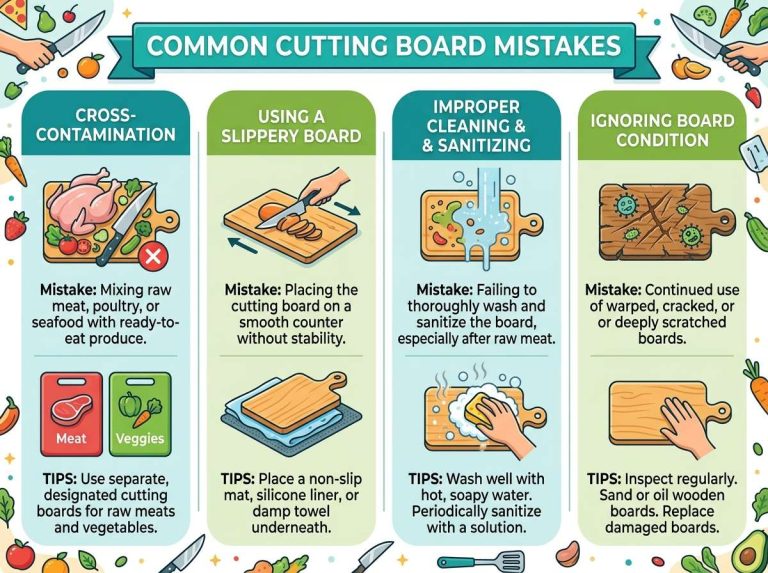
Always wash your board with soap and warm water after use. Don’t let food sit on it or leave it wet for long periods. Dry it standing upright or laying flat, whichever works best. Avoid putting your cutting board in the dishwasher because the heat and water can damage the wood over time.
Store your board in a dry place away from direct heat. A knife rack or board holder keeps it upright and allows air to circulate. If you store it flat, make sure it’s not in a damp area.
Oil your board regularly. For maple, do it monthly or every few months depending on use. For teak, you can do it less often—maybe every few months—but it’s still nice to do occasionally to maintain the finish.
Don’t use your board as a serving platter if you can avoid it. While it looks nice, the more you use it for food prep and chopping, the longer it will last. Save your fancy presentations for other serving pieces.
If your board develops stains, you can usually lighten them with lemon juice and salt. Sprinkle salt on the board, then rub it with a cut lemon half. Let it sit for a few minutes, then wash as usual.
Common Myths About Cutting Boards
Let’s clear up some confusion you might see online.
Myth: Plastic cutting boards are more sanitary. Truth: Wood cutting boards are actually just as sanitary as plastic when used properly. Studies show that wood has natural antibacterial properties that plastic doesn’t have. Clean both the same way, and you’re fine.
Myth: You need special products to maintain wood boards. Truth: Simple soap and water work fine. You don’t need expensive sprays or special cleaners. Regular oiling with food-grade mineral oil is all you need for maple.
Myth: Teak is always perfect and never needs care. Truth: While teak is more forgiving, it still benefits from occasional oiling and proper storage. It’s low-maintenance but not no-maintenance.
Myth: Maple and teak are basically the same. Truth: They have different properties, different price points, and different maintenance needs. They’re popular for different reasons.
Making Your Final Decision
Think about how you cook. Do you prep meals every single day, or are you more of a casual cook? Do you love taking care of your tools, or do you prefer things simple? Is your kitchen style modern and clean, or warm and rustic?
Think about your climate too. If you live in a humid area or spend a lot of time near water in your kitchen, teak’s moisture resistance is really valuable. If you’re in a dry climate, either option works fine.
Think about your budget. Can you comfortably spend a hundred dollars on a cutting board, or does sixty sound more reasonable? Both are good investments, but one might feel better for your wallet.
Think about your values. Do you care about where your wood comes from? Are you concerned about sustainability? Both teak and maple can be sourced responsibly, but they come from different places with different environmental impacts.
The Bottom Line
A quality cutting board is one of the best investments you can make for your kitchen. Whether you choose teak or maple, you’re getting a tool that will serve you well for years. Teak offers natural beauty, low maintenance, and impressive durability. Maple gives you classic style, value for money, and the satisfaction of caring for something you use every day.
Many serious cooks actually have both and love them for different reasons. You might start with maple because it’s affordable and then graduate to teak once you fall in love with quality cutting boards. Or you might pick teak right away and never look back.
The real secret is this: any cutting board you actually use is better than the perfect cutting board sitting in a cabinet. Pick the one that makes sense for your kitchen, your budget, and your life. Take care of it, wash it properly, and it will take care of you for years to come. That’s what matters in the end.
Your knife will thank you, your counters will stay protected, and your kitchen prep will feel more enjoyable. That’s the real value of a great cutting board, whether it’s made from teak or maple.

Mary is a home cooking enthusiast and kitchen gear reviewer with a passion for practical cookware and food preparation tools. She enjoys testing cutting boards, knives, kitchen gadgets, and other cooking essentials to help home chefs make smarter buying decisions. Through KitchenCutting.com, Mary shares honest product reviews, buying guides, and helpful kitchen tips to make cooking easier, safer, and more enjoyable.