How to Choose a Knife Set?
Your kitchen deserves good tools. If you spend time cooking, you know how much a great knife can change everything. A dull blade makes you work harder, takes longer to prepare food, and honestly, it gets frustrating fast. The right knife set becomes your best friend in the kitchen, making prep work feel less like a chore and more like something you actually enjoy.
In this article
So you’re thinking about getting a new knife set. Great! But where do you start? Walk into a kitchen store or scroll online, and you’ll see endless options. Cheap sets. Expensive sets. Sets with ten knives. Sets with fifty pieces. It’s easy to feel lost. That’s why I’m here to help you navigate this world and find a knife set that works for your life, your cooking style, and your budget.
Why You Actually Need the Right Knife Set
Before we talk about what to look for, let’s cover why it matters in the first place. A bad knife set wastes your time and energy. When your knives are dull, you push harder. When they’re poorly balanced, your hands get tired. When they’re the wrong size, simple tasks feel awkward.
A good knife set does the opposite. Sharp blades glide through vegetables. Well-balanced knives feel natural in your hand. The right size knife for each task makes cooking faster and easier. You’ll notice the difference right away, and you’ll wonder why you waited so long to upgrade.
Plus, good knives last for years. We’re talking decades if you treat them right. That means a quality set becomes an investment in countless meals with your family and friends. That’s worth getting right.
Understanding Knife Set Basics
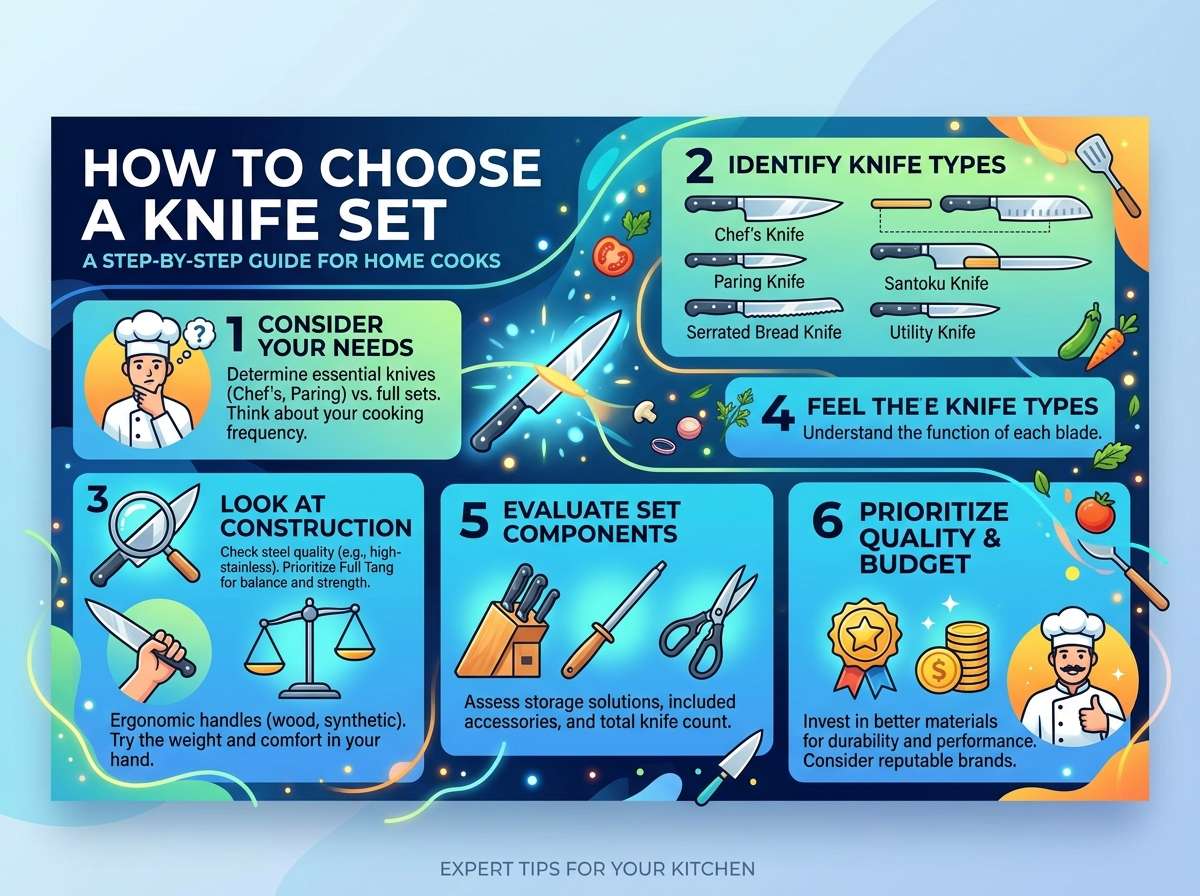
Let’s talk about what actually goes in a knife set. You don’t need to know every piece, but getting familiar with the main ones helps you make smart decisions.
The Chef’s Knife
This is the workhorse of your kitchen. It’s the knife you’ll reach for about 90% of the time. The chef’s knife handles everything from cutting onions to slicing meat to chopping herbs. Most chef’s knives run between 7 and 10 inches long. For home cooks, an 8-inch blade is the sweet spot. It’s big enough to handle most jobs but not so big that it feels unwieldy.
The Paring Knife
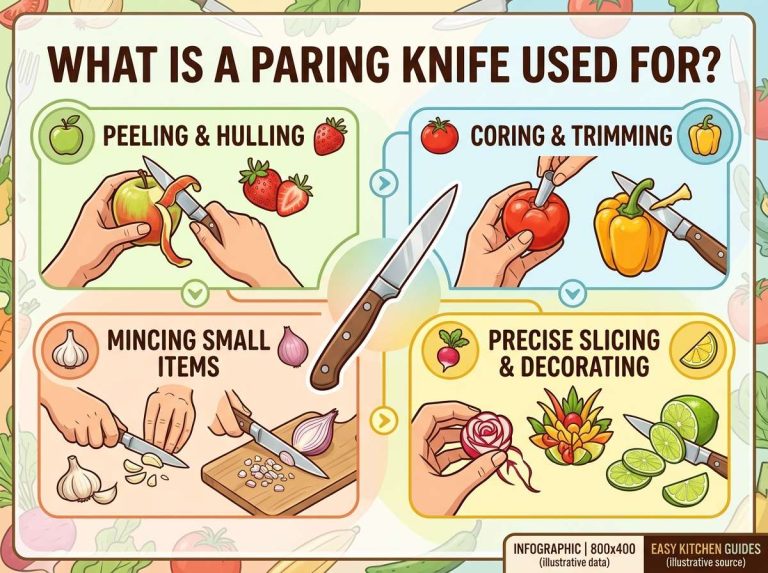
This small knife is perfect for delicate work. You use it to peel vegetables, trim fat, cut small fruits, and handle anything that needs precision over power. Most people don’t realize how much they’ll use a paring knife once they have one. The blade is usually 3 to 4 inches long, making it easy to control.
The Serrated Bread Knife
Those teeth aren’t just for show. A serrated blade crushes bread without compressing it. You’ll also use it for tomatoes, citrus fruits, and anything with a tough exterior and soft inside. The teeth grip the food while the rocking motion slices cleanly. A good bread knife makes a real difference in your sandwich game.
The Utility Knife
This is the middle child. It’s bigger than a paring knife but smaller than a chef’s knife. Use it for medium-sized tasks where a chef’s knife feels too big. Some people swear by their utility knife. Others barely touch theirs. It depends on your cooking style.
Boning and Fillet Knives
If you cook a lot of meat or fish, these specialized knives earn their place. A boning knife has a narrow, sharp blade that lets you work around bones with precision. A fillet knife is similar but has a more flexible blade, perfect for following the curves of fish. If you mostly buy pre-cut meat, you might not need these.
Santoku Knives
This Japanese knife style has become super popular. It’s similar to a chef’s knife but has a straighter edge and a slightly different balance. Some people find them easier to control. Try one out before buying if you can, since they feel different from Western-style chef’s knives.
The Different Types of Knife Sets
Now that you know the pieces, let’s talk about how they come packaged. Knife sets fall into a few basic categories.
The Small Complete Set
These sets usually include a chef’s knife, paring knife, and bread knife. That’s it. Three knives. You might think that sounds too minimal, but honestly? You can cook almost anything with just these three. Small sets are great if you live in a tiny apartment or want to start simple. They’re also easier on your budget.
The Standard Home Cook Set
These are the most common sets you see. They usually come with 4 to 7 knives, a honing steel, and a block or storage solution. You get your chef’s knife, paring knife, bread knife, and maybe a utility knife plus a few others. This is what most home cooks need.
The Large Comprehensive Set
Some sets include 10, 15, or even more pieces. You get specialty knives, steak knives, kitchen shears, and every tool you could dream of. These look impressive. They fill a big block on your counter. But here’s the truth: most home cooks never use half the knives in these sets. Unless you cook professionally or really love specialized equipment, you’re paying for stuff you won’t touch.
Custom or Mix-and-Match Sets
Some brands let you build your own set. You pick each knife separately. This approach costs more upfront but gives you exactly what you want. If you know your cooking style well, this can be smart.
Material Matters: Stainless Steel vs. Carbon Steel
The material your knife is made from changes how it performs. Let’s break down the main options.
Stainless Steel
Most home cooks pick stainless steel knives, and for good reason. They resist rust and corrosion. You can throw them in the dishwasher without worrying. They’re forgiving. They’re also usually cheaper than carbon steel options. The downside? Stainless steel dulls a bit faster than carbon steel, so you’ll sharpen them more often. But honestly, that’s not a huge deal for most people.
Carbon Steel
True carbon steel holds a sharper edge longer and responds better to sharpening. Professional chefs often prefer it. But here’s the catch: carbon steel is high-maintenance. It rusts easily if you don’t dry it right away. It can stain. It needs more care. For a busy home cook, stainless steel is usually the smarter choice.
High Carbon Stainless Steel
This is the middle ground. It has more carbon than regular stainless steel, so it holds an edge better. But it still resists rust pretty well. Many quality knife sets use high carbon stainless steel. It’s a smart choice for people who want good performance without the fussy maintenance.
What to Look for in Quality Knives
Now let’s talk about what separates a great knife from a mediocre one. You don’t need to be an expert to spot quality.
The Blade
Run your finger along the edge (carefully!). A quality blade feels smooth and sharp. Look at the blade shape. The edge should come to a clean point or edge without chips or irregularities. The blade should be the same thickness throughout, not thicker in some spots. When you hold the knife up to the light, it should look even.
The Balance
Hold the knife in your hand like you’re about to use it. It should feel balanced. Some people prefer the weight forward in the blade. Others like it in the handle. Try different knives to see what feels natural. A well-balanced knife reduces fatigue when you’re doing lots of cutting.
The Handle
Your handle needs to feel good in your hand. Not too slippery, not too rough. It should have a guard or bolster between the blade and handle to protect your fingers. The handle should be attached securely with no wiggle. Some handles are made from wood. Others use plastic or composite materials. Wood looks beautiful but needs more care. Plastic is practical and dishwasher safe.
The Tang
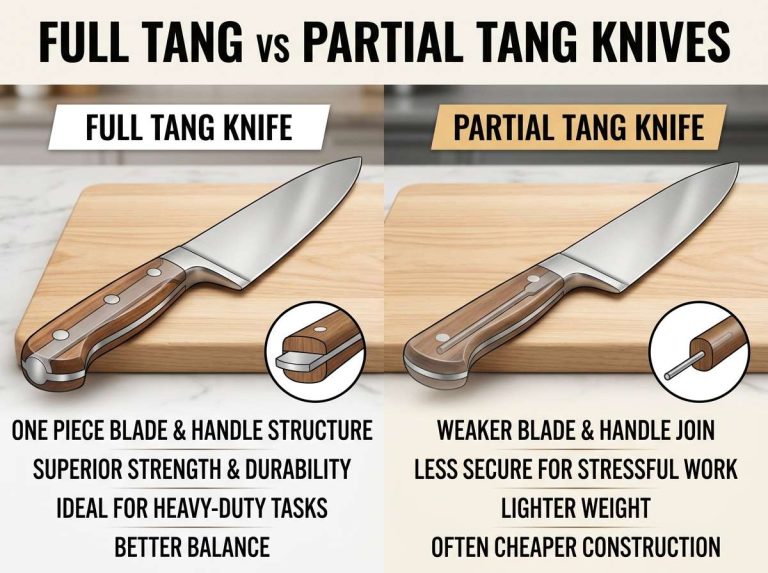
The tang is the part of the blade that extends into the handle. A full tang (where the metal runs the entire length of the handle) is more durable than a partial tang. Full tang knives usually feel more substantial and last longer. They’re worth the extra cost.
Weight and Feel
The best knife is one that feels good to you. Some people like heavy knives that do the work for you. Others prefer lighter knives they can control better. Visit a store if you can and hold different knives. See what speaks to you.
Budget Considerations
Let’s be real. Money matters. The good news? You don’t need to spend a fortune on quality knives.
Budget-Friendly Sets ($20-$50)
These sets exist, and some are better than others. Expect decent quality for the price. The knives probably won’t hold an edge as long. The handles might not feel as premium. But you can definitely find usable knives in this range. Check reviews carefully.
Mid-Range Sets ($75-$200)
This is where you get the best value. Sets in this range usually offer good quality, decent materials, and knives that last for years. Most home cooks are happy at this price point. You’re paying for quality without excessive markups.
Premium Sets ($200+)
These sets feature high-quality materials, excellent craftsmanship, and often come from well-known brands. They look beautiful and perform great. But they cost more because of the brand name and materials. If you love cooking and want something special, it’s worth it. For casual cooks, it might be overkill.
Here’s my honest take: spend what you can afford, but don’t cheap out completely. A $40 set might seem like a good deal until you’re frustrated with dull blades. Spending $100 on a quality mid-range set means you’ll actually enjoy cooking. Skip the massive $300 sets with fifty pieces you’ll never use.
Consider Your Cooking Style
What you cook matters a lot. Different cooking styles call for different knives.
Heavy Meat Eaters
If you cook lots of meat, you might want a boning knife or fillet knife in your set. You’ll use them regularly, which means they’re worth having.
Vegetable Heavy Cooking
Vegetable prep is where your chef’s knife shines. A good chef’s knife and paring knife might be all you really need. Some cooks also love a utility knife for mid-sized vegetables.
Bread Bakers
If you make bread, a quality serrated bread knife is non-negotiable. Don’t skimp on this one. A dull bread knife is worse than useless.
Asian Cuisine Lovers
If you cook lots of stir-fries and Asian dishes, look at santoku or nakiri knives. Many people find these more comfortable for these cooking styles than traditional Western chef’s knives.
The Minimalist
If you want to keep things simple, get a small set with three knives. A chef’s knife, paring knife, and bread knife cover almost everything. Everything else is nice-to-have, not need-to-have.
Storage Matters Too
Your knife set needs a home. How you store them matters for safety, performance, and longevity.
Knife Blocks
These are the most common storage solution. Wooden blocks look nice on your counter and keep knives organized. Plastic blocks are more practical. The drawback is they take up counter space and can be hard to clean inside. Make sure slots are snug so knives don’t rattle around.
Magnetic Strips
A magnetic strip on your wall is space-efficient and looks sleek. Knives stay visible and accessible. The downside is everyone can see them, and they’re not great for small kids around. Make sure your knives have metal handles for this to work.
Drawer Inserts
If you prefer knives out of sight, use a drawer insert with slots. Keep them organized and protected. The only downside is you don’t see them, so you might forget what you have.
Knife Rolls
These fabric or leather rolls hold knives safely and are portable. Great if you like to move your knives around. They don’t look as nice on display but keep everything protected.
Whatever you choose, store knives safely. Keep them away from the edges where someone might knock them. Protect the blades so they don’t get damaged. And make sure kids know where they are.
How to Actually Pick Your Set
Now let’s get practical. Here’s how to choose.
Step One: Be Honest About Your Cooking
Do you cook every day or just on weekends? Do you make elaborate meals or stick to simple dishes? What foods show up most in your kitchen? Write it down if it helps. This shapes everything else.
Step Two: Pick Your Preferred Materials
Go with stainless steel if you want low-maintenance. Choose high carbon stainless if you want better edge retention. Skip pure carbon steel unless you love fussy maintenance. Most people pick stainless or high carbon stainless.
Step Three: Decide on Set Size
Small sets for minimalists. Standard sets for regular cooks. Big sets only if you need every specialized knife. Think about your actual cooking, not fantasy cooking.
Step Four: Visit a Store
This is important. Hold different knives. Feel the weight and balance. See what feels natural in your hand. You can’t know this from pictures online.
Step Five: Check Reviews
Read what actual buyers say. Look for patterns. If one set has hundreds of five-star reviews, that’s a good sign. If many people mention the same problem, pay attention. Avoid sets where reviews say “broke after a few months” or “dulled immediately.”
Step Six: Look at the Warranty
Good brands stand behind their products. A solid warranty means the company trusts their knives. Check what’s covered and for how long.
Step Seven: Compare Prices
Same set, different stores, different prices. Shop around. Wait for sales. But don’t let price be your only factor. A cheap set that frustrates you isn’t a bargain.
Taking Care of Your New Knives
Once you pick your set, you need to treat it right. Good knives last for decades with proper care.
Hand Wash, Don’t Dishwash
Yes, many sets are marketed as dishwasher safe. Don’t do it anyway. Dishwashers bang knives around, which dulls them and can damage handles. Hand wash in warm soapy water, then dry right away. It takes two minutes.
Use a Honing Steel Regularly
Your honing steel keeps your blade aligned and sharp between proper sharpenings. Use it weekly if you cook regularly. This keeps your knives performing better longer.
Sharpen When Needed
Your knives will eventually get dull. When they do, sharpen them. You can use a whetstone, professional sharpening service, or an electric sharpener. Different methods have pros and cons, but any of them work. Just do it.
Store Properly
Keep blades protected. Use a block, strip, or sheath. Don’t throw knives loose in a drawer where the blade hits other utensils.
Use the Right Knife for the Job
Your chef’s knife can do a lot, but it’s not meant for everything. Use your paring knife for small jobs. Use your bread knife for bread. Don’t use kitchen knives as tools to pry things open or scrape off stuck-on food.
Common Mistakes to Avoid
Let’s talk about what trips people up when buying knife sets.
Buying Too Many Knives You’ll Never Use
That fifty-piece set with steak knives, utility knives, and six specialty blades probably isn’t worth it. You’ll use three or four of them. Save your money.
Ignoring How the Knife Feels
Online shopping is convenient, but with knives, feel matters. Try before you buy if possible. A knife that feels awkward in your hand is a mistake, no matter how good the reviews are.
Choosing Based Only on Price
The cheapest option isn’t the best value. Neither is the most expensive. Good knives fall in the middle. Spend enough to get quality, but don’t overpay for branding.
Forgetting About Maintenance
A beautiful knife set means nothing if you let it get dull and damaged. Budget for maintenance. Factor in sharpening costs when deciding what to buy.
Buying the Wrong Set for Your Style
If you never eat bread, don’t pay for a fancy bread knife. If you rarely cook meat, skip the boning knife. Get what you’ll actually use.
Not Reading Reviews Carefully
Scan beyond the star rating. Read what people actually say. That’s where real information lives.
The Bottom Line
Choosing a knife set doesn’t have to be complicated. Focus on what you need. Hold them in your hand. Read reviews. Pick something in the mid-range that feels good to you. Treat it well.
A quality knife set transforms your kitchen experience. Prep work becomes easier. Cooking feels more enjoyable. You’ll reach for those knives day after day. That’s worth getting right.
Start with a small set if you’re unsure. Add to it later if you find you need more. There’s no rule saying you have to buy a complete set all at once. Build over time. Keep it simple.
And remember, the best knife set is one you’ll actually use and take care of. It doesn’t matter how fancy or expensive it is if it sits unused in a cabinet. Get something you’ll love, and you’ll be happy for years to come.
Now go find your perfect set. Your future meals are waiting.

Mary is a home cooking enthusiast and kitchen gear reviewer with a passion for practical cookware and food preparation tools. She enjoys testing cutting boards, knives, kitchen gadgets, and other cooking essentials to help home chefs make smarter buying decisions. Through KitchenCutting.com, Mary shares honest product reviews, buying guides, and helpful kitchen tips to make cooking easier, safer, and more enjoyable.