What to Do With Old Knives?
Old knives pile up in kitchen drawers faster than most people notice. You buy a shiny new chef’s knife, and suddenly the dull paring knife from years ago has nowhere to go. Maybe it’s rusty. Maybe the handle is cracked. Maybe it just doesn’t cut anymore, no matter how hard you try. So what do you actually do with it?
In this article
The good news is that old knives don’t have to end up as clutter or trash. There are many paths open to you, from simple sharpening tricks to full-on craft projects. This guide walks through every option, step by step, in plain language, so you can pick the path that fits your knife, your time, and your goals.
Why Old Knives Deserve a Second Look
Before tossing anything in the bin, it helps to pause and think about what makes a knife “old” in the first place. Sometimes a blade looks worn out but still has plenty of life left. Other times, the metal is truly done, and the smartest move is proper disposal or recycling.
Old knives usually fall into a few groups:
- Blades that are dull but structurally sound
- Blades with rust or stains but no cracks
- Handles that are broken, loose, or falling apart
- Blades that are chipped, bent, or snapped
- Knives that are simply outdated in style but still sharp
Each of these calls for a different approach. A dull blade just needs sharpening. A broken handle might need a repair or a full replacement. A snapped blade, though, is usually best repurposed into something new or sent off for recycling.
Knowing which category your knife falls into is the first real step toward deciding its fate. This one habit alone saves a lot of wasted effort later.
Option One: Sharpen It and Bring It Back to Life
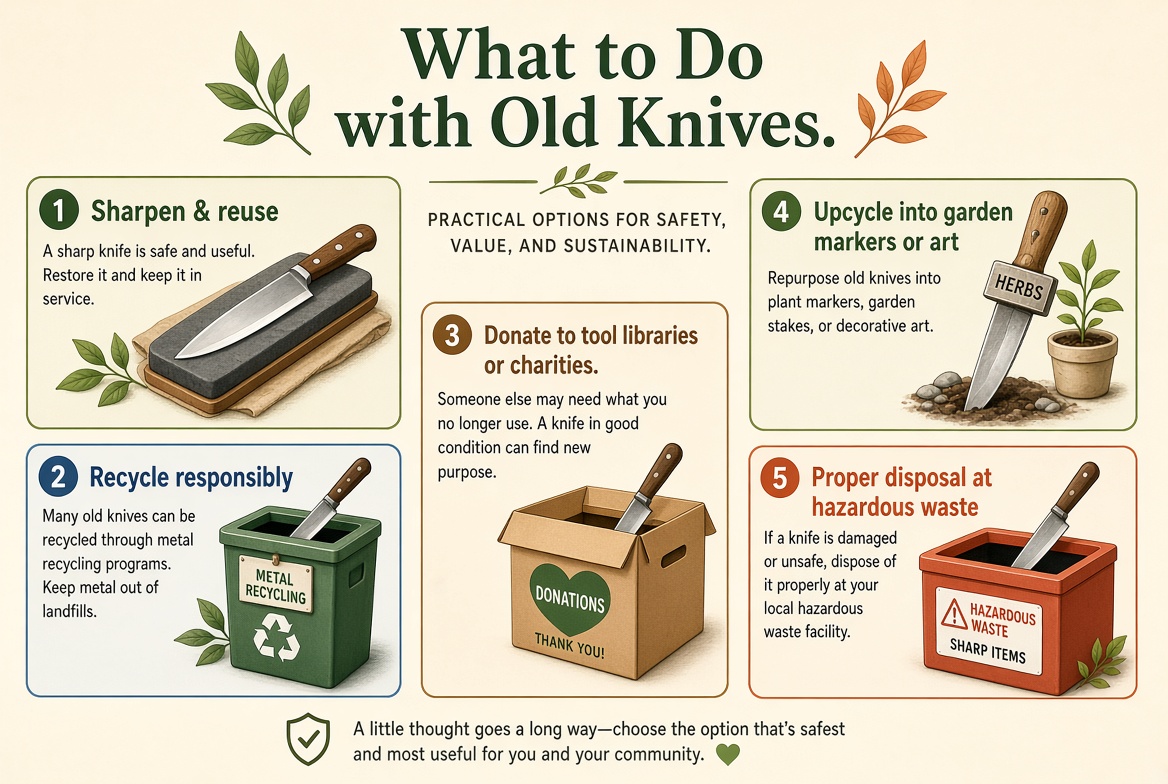
Most “old” knives are not actually broken — they’re just dull. A whetstone, a honing rod, or even a budget-friendly knife sharpener can restore an edge that feels brand new. This is often the easiest and cheapest fix, and it keeps a perfectly good tool out of the landfill.
Here’s a simple way to sharpen a dull blade at home:
- Soak a whetstone in water for about ten minutes if it’s a water stone.
- Hold the knife at a steady angle, usually around fifteen to twenty degrees.
- Pull the blade across the stone in smooth, even strokes.
- Flip the blade and repeat on the other side.
- Finish with a honing rod to straighten the edge.
If sharpening at home feels intimidating, plenty of hardware stores, farmers markets, and kitchen shops offer professional sharpening services for just a few dollars per blade. This is a great option if you have several old knives sitting around and want them all fixed at once.
Once sharpened, an “old” knife can outperform a brand new one that’s never been properly maintained. Sharp steel, not shiny packaging, is what actually makes a knife good.
Option Two: Fix Loose or Broken Handles
A wobbly handle is one of the most common reasons people toss a knife that’s otherwise fine. Luckily, handles are often fixable with basic tools.
For wooden handles:
- Tighten loose rivets with a small clamp
- Sand down cracks and refinish with mineral oil
- Replace the wood scales entirely using a kit from a hardware store
For plastic handles:
- Use strong epoxy to reattach cracked pieces
- Wrap with paracord for a sturdier, non-slip grip
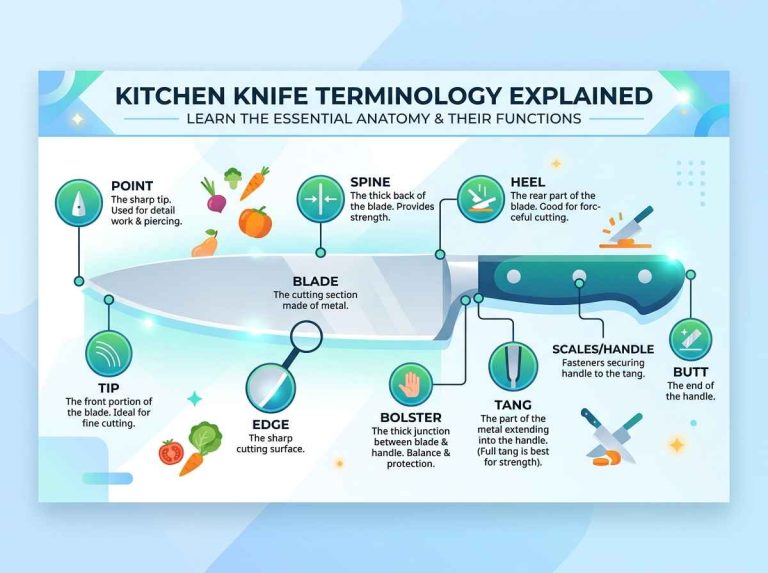
- Swap in a new handle if the tang (the metal part inside the handle) is still solid
Fixing a handle is often cheaper and more satisfying than buying a whole new knife. It also gives older blades — especially ones with sentimental value, like a knife passed down from a parent or grandparent — a new lease on life.
Option Three: Turn Old Knives Into DIY Projects
If a knife is too far gone to use safely for cutting, it doesn’t mean the metal is useless. Steel is durable, and with a bit of creativity, an old blade can become something completely different.
Garden Tools
An old kitchen knife makes a surprisingly good garden tool. The flat blade works well for slicing through roots, weeds, or packed soil. Just sand down any rust, add a fresh coat of oil to prevent corrosion, and you have a rugged little hand tool for the yard.
Bottle Openers
Some old blades, especially thick ones, can be reshaped into bottle openers with the help of a grinder. This takes a bit of skill, but it’s a fun weekend project for anyone who enjoys metalwork.
Wall Art and Decor
Old knives with interesting shapes or handles can be mounted on a wooden board and hung as rustic wall decor. This works especially well for vintage-style blades or ones with wooden or bone handles that have character.
Letter Openers
A small paring knife with a broken tip can be sanded smooth and turned into a letter opener. It’s a simple project that takes less than an hour and gives the blade a whole new job.
Herb Choppers and Mini Cleavers
Sometimes a blade is too short or worn for regular cooking tasks but still works great for chopping fresh herbs. Keep one dedicated old knife just for basil, parsley, or cilantro, so your good knives stay reserved for tougher jobs.
Option Four: Donate Knives That Still Work
If a knife is sharp, sturdy, and safe, but you simply don’t need it anymore, donation is a great route. Thrift stores, community kitchens, shelters, and even local theater groups (for props) often accept gently used kitchenware.
A few tips before donating:
- Clean the blade thoroughly and dry it well to prevent rust
- Wrap the blade in cardboard or cloth for safe transport
- Call ahead, since some donation centers have specific rules about sharp objects
- Consider culinary schools, which sometimes accept older knives for student practice
Donating is a simple way to keep useful tools in circulation instead of adding them to a landfill, and it helps someone else who might not have the budget for new kitchenware.
Option Five: Sell Knives With Value
Not every old knife belongs in the donation pile. Some are worth real money, especially vintage brands, hand-forged blades, or knives with unique craftsmanship. Before giving one away, it’s worth doing a quick search to see if the brand or style has collector value.
Places to sell old knives include:
- Local marketplace apps
- Knife collector forums and groups
- Estate sale companies
- Antique shops that specialize in tools and kitchenware
Even a knife that looks a bit rough can clean up nicely with some polishing and rust removal, which can boost its resale value quite a bit.
Option Six: Recycle the Metal
When a knife is too damaged to fix, repurpose, donate, or sell, recycling is the responsible next step. Steel is one of the most recyclable materials on the planet, and sending an old blade to a scrap metal facility keeps it out of the trash entirely.
Steps for recycling a knife safely:
- Wrap the blade tightly in cardboard, cloth, or thick tape so the edge is fully covered.
- Label the package clearly as “sharp object” so handlers know to be careful.
- Check your local recycling guidelines, since some curbside programs don’t accept metal blades directly.
- Look for a scrap metal yard or a specialty recycling center that takes small metal items.
- Separate the handle if it’s made of plastic or wood, since these usually need to be tossed separately from the metal.
Recycling isn’t glamorous, but it’s one of the most eco-friendly ways to close the loop on an old knife’s life.
Option Seven: Dispose of It the Right Way
Sometimes a knife truly can’t be saved, repurposed, or recycled easily — maybe it’s rusted through, snapped in pieces, or made from low-quality metal that isn’t worth much. In that case, safe disposal is the last resort.
Never just toss a bare blade into a regular trash bag. Sanitation workers can get seriously hurt handling loose sharp objects. Instead:
- Wrap the blade securely in multiple layers of cardboard or thick paper
- Tape the wrapping shut so it won’t come loose
- Label the package “sharp” or “knife inside” in clear letters
- Place it in a rigid container, like an empty detergent bottle, for extra protection if possible
This small extra step takes less than five minutes but keeps everyone who handles your trash safe.
Cleaning Old Knives Before Deciding Their Fate
Regardless of the path you choose, cleaning an old knife first makes a big difference. Rust and grime can hide the true condition of the blade, making a perfectly good knife look ruined.
A simple cleaning routine:
- Soak the blade in warm, soapy water for a few minutes.
- Scrub gently with a soft brush or sponge, avoiding steel wool on delicate finishes.
- For rust spots, use a paste of baking soda and water, or a bit of white vinegar, and scrub in small circles.
- Rinse well and dry immediately to prevent new rust from forming.
- Add a light coat of mineral oil or cooking oil to protect the blade going forward.
A clean knife is much easier to evaluate. You might find that a blade you assumed was ruined actually just needed a good scrub and a fresh edge.
How to Store Knives So They Don’t Become “Old” Too Fast
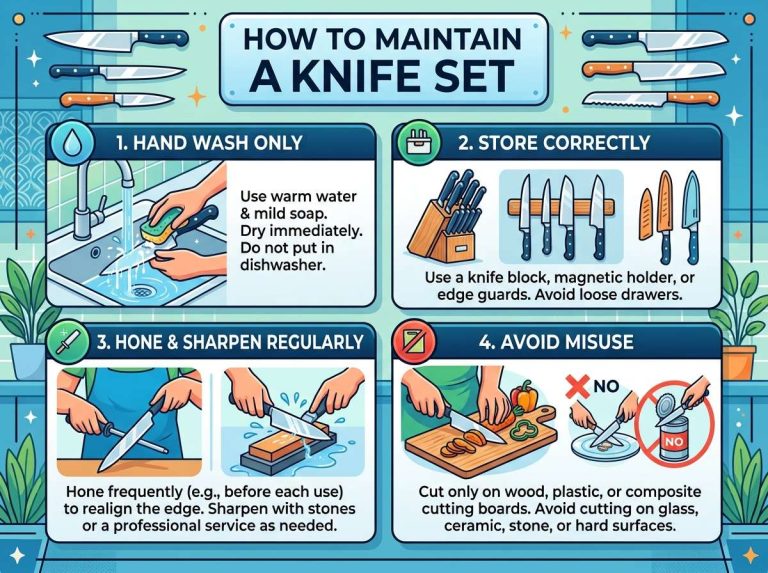
Part of avoiding a drawer full of neglected knives is proper storage from the start. Knives that get tossed loosely into drawers dull faster, rust more easily, and are more likely to get chipped from banging against other utensils.
Better storage options include:
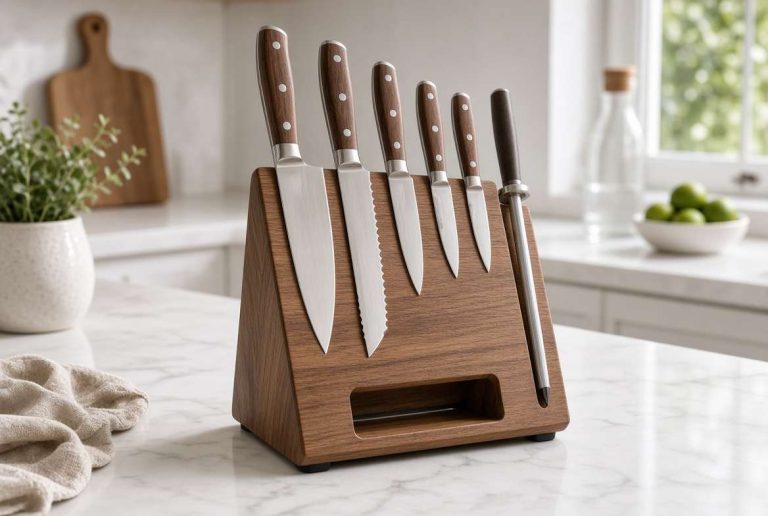
- A wooden knife block on the counter
- A magnetic strip mounted on the wall
- Blade guards or sheaths for drawer storage
- A dedicated knife roll for anyone who travels with their own knives, like chefs or campers
Good storage habits mean fewer knives end up “old” before their time, saving you money and reducing waste in the long run.
A Quick Decision Guide
If you’re staring at a pile of old knives and feeling stuck, here’s a simple way to sort them:
- Still sharp and useful? Keep it or donate it.
- Dull but structurally fine? Sharpen it.
- Handle broken but blade solid? Repair the handle.
- Blade damaged beyond repair? Turn it into a DIY project or recycle the metal.
- Rusted through or unsafe? Wrap it carefully and dispose of it properly.
This simple checklist takes the guesswork out of the process and helps you move through a whole drawer of knives in no time.
Final Thoughts
Old knives don’t have to be a source of guilt or clutter sitting in the back of a drawer. With a little effort, most blades can be sharpened, repaired, or transformed into something new and useful. The ones that truly can’t be saved still deserve a responsible send-off through recycling or safe disposal, rather than just being thrown carelessly into the trash.
Next time you find yourself holding an old, worn knife and wondering what to do with it, run through the options above. Sharpen it, repair it, repurpose it, donate it, sell it, recycle it, or dispose of it safely. Each path keeps useful material in circulation and out of landfills, all while giving your kitchen a bit more breathing room.
A knife’s story doesn’t have to end the moment it stops feeling sharp. With the right approach, it can keep serving a purpose, just in a brand new form.

Mary is a home cooking enthusiast and kitchen gear reviewer with a passion for practical cookware and food preparation tools. She enjoys testing cutting boards, knives, kitchen gadgets, and other cooking essentials to help home chefs make smarter buying decisions. Through KitchenCutting.com, Mary shares honest product reviews, buying guides, and helpful kitchen tips to make cooking easier, safer, and more enjoyable.