How Do You Use a Fish Knife?
If you have ever sat down for a nice dinner and found a strange, curved knife next to your plate, you are not alone. That odd-looking tool is a fish knife, and it confuses a lot of people the first time they see it. It looks nothing like a regular dinner knife, and that alone can make anyone feel a bit lost.
In this article
The good news is that using a fish knife is actually pretty easy once you know a few basic tricks. This guide will walk you through everything step by step, in plain and simple words, so you can feel confident the next time fish shows up on your plate.
What Exactly Is a Fish Knife?
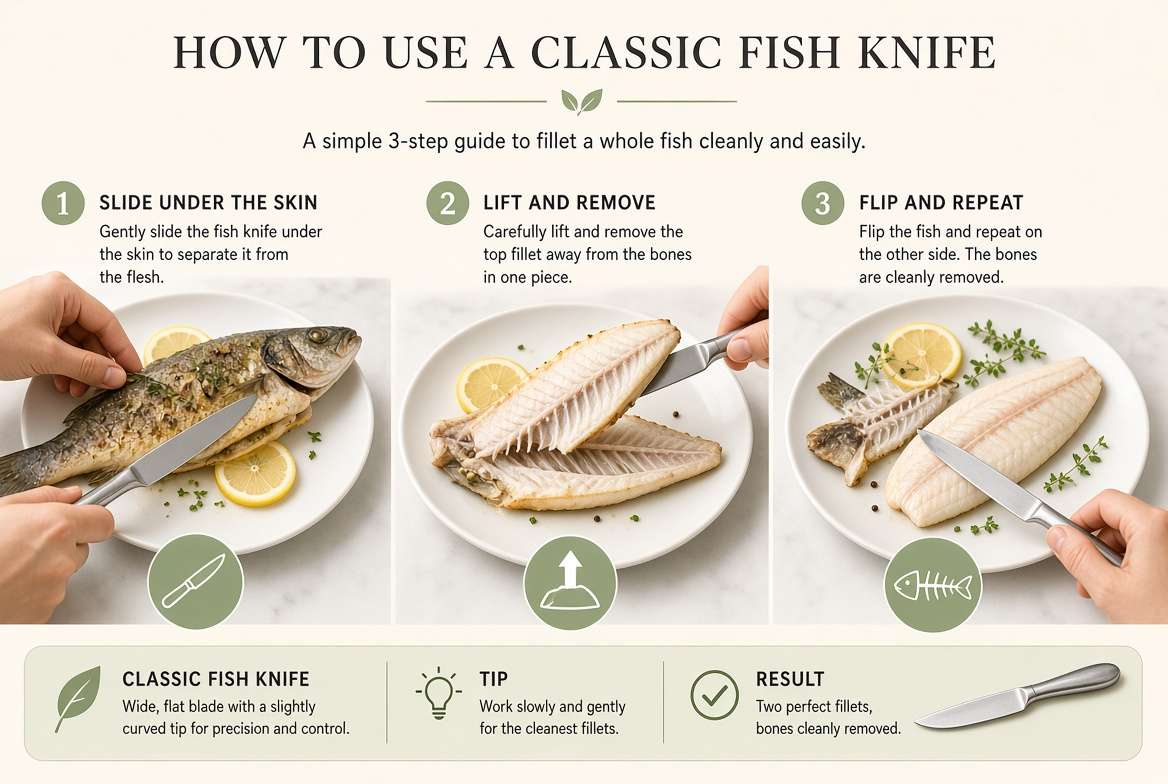
A fish knife is a special piece of cutlery made just for eating fish. It usually has a wide, flat blade with a slightly curved edge and sometimes a pointed or notched tip. Unlike a regular table knife, it is not sharp like a blade you would use to cut steak.
Instead, the fish knife is designed to gently separate fish meat from bones and skin. The blunt edge means it will not tear soft fish flesh apart, and the shape helps you slide it under the meat with ease.
You will often see this knife paired with a fish fork, which usually has a wider, shorter shape than a regular fork. Together, these two tools make eating fish at a fancy dinner much smoother.
Why Fish Gets Its Own Knife
You might wonder why fish needs a special knife at all. The answer comes down to texture and bones. Fish meat is soft and flaky, so a sharp, heavy knife would just smash it instead of cutting it cleanly.
Also, fish often has small, thin bones running through the flesh. A fish knife’s blunt edge and flat shape let you press down gently and feel for bones without cutting through them by accident. This makes the whole eating experience safer and a lot less messy.
Restaurants that serve fine dining meals almost always place fish knives on the table when fish is part of the meal. It is part of proper table setting etiquette, and knowing how to use one shows that you are comfortable with formal dining.
Where You Will Usually Find a Fish Knife
At a formal table setting, cutlery is arranged in a certain order, and the fish knife has its own spot. Look for it on the right side of your plate, often placed just outside where the regular dinner knife sits.
The general rule for cutlery is simple: you work from the outside in as each course is served. So if your meal starts with a fish course, the fish knife and fork will be the outermost pair on the table.
If fish is served later in the meal, the knife might sit closer to the plate instead, depending on how many courses come before it. Either way, once fish is served, you will know it is the tool meant for that course.
Holding the Fish Knife the Right Way
Now let’s get into the part everyone actually wants to know: how you actually hold and use this thing.
Start by holding the fish knife in your right hand and the fish fork in your left hand, just like you would with a normal knife and fork. Your grip does not need to be tight or awkward. Hold it the same relaxed way you hold any other utensil at the table.
Since the blade is not sharp, you are not going to be sawing back and forth like you might with meat. Instead, you will use gentle pressure to guide the knife through the fish.
Step-by-Step: How to Actually Eat Fish With It
Here is a simple breakdown you can follow anytime you sit down to a fish dinner.
Step one: Look at how the fish is presented.
Take a quick look at the fish on your plate. Notice if it still has skin on it, if there is a visible bone line running down the middle, or if it has already been filleted for you.
Step two: Use the fork to hold the fish steady.
Press the fork gently into the fish to keep it from sliding around. You do not need to stab it hard, just enough pressure to hold it in place.
Step three: Slide the knife along the bone line.
If the fish still has bones, gently run the flat edge of the knife along the natural line where the bones sit. This helps loosen the meat from the skeleton without cutting through anything sharp.
Step four: Lift and separate small portions.
Rather than cutting big chunks like you would with meat, use the knife to lift small, bite-sized pieces of fish and guide them onto your fork. The flat blade acts almost like a spatula here.
Step five: Push instead of saw.
If you need to break the fish apart a bit more, push down gently with the side of the blade rather than sawing back and forth. This keeps the fish from falling apart into a messy pile.
Step six: Set bones aside neatly.
As you find small bones, use the tip of the knife to move them to the edge of your plate. This keeps your plate looking tidy and makes it easier to keep eating without any surprises.
Common Mistakes People Make
Even smart, careful people make small mistakes with a fish knife simply because it feels unfamiliar. Here are a few things to watch out for.
Trying to cut like it’s a steak knife.
Since fish is soft, pressing down hard with a fish knife can cause it to squish or fall apart instead of cutting cleanly. Light pressure works much better than force.
Ignoring the bones.
Some people rush through the meal and forget to check for bones carefully. Slowing down just a little and running the knife gently along the fish first can save you from an uncomfortable surprise.
Using the wrong hand for the wrong tool.
It sounds small, but mixing up which hand holds the knife and which holds the fork can throw off your rhythm. Stick with knife in the right hand, fork in the left, the same as standard table manners.
Forgetting it is not for hard-shelled seafood.
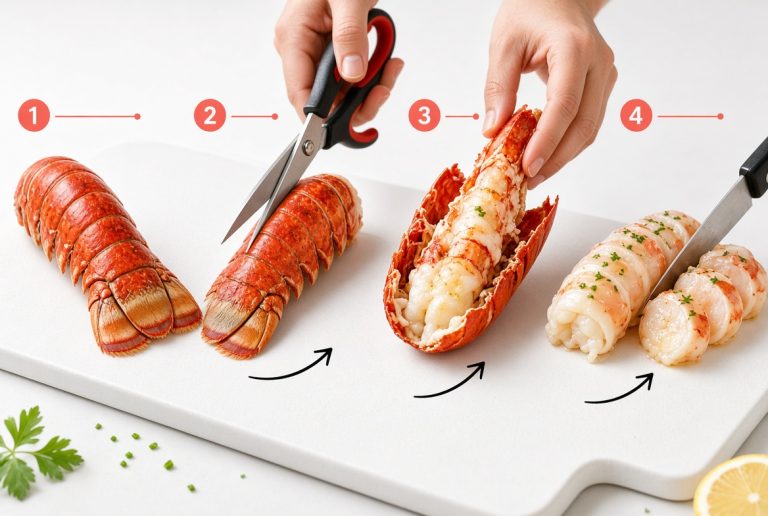
A fish knife is made for fillets and soft fish meat, not for cracking open shellfish like crab or lobster. Different tools exist for that job, so save the fish knife for its intended purpose.
Fish Knife Versus Regular Knife: What’s the Difference?
It helps to understand exactly how this tool differs from a normal dinner knife, since the differences explain why it works so well for fish.
A regular table knife has a sharper edge meant for slicing through firmer foods like meat or vegetables. Its blade is usually straight and narrow, built for control and precision cuts.
A fish knife, on the other hand, has a wider and flatter blade. The edge is dull on purpose, and the shape often curves slightly to help slide under the fish and separate it from the skin or bones. Some versions even have a small notch near the tip, which some people use to help remove tiny bones with more control.
This difference in design is exactly why swapping a regular knife in for a fish knife just does not work as smoothly. The tools are built with very different jobs in mind.
Tips for Using a Fish Knife Like a Pro
If you want to feel extra comfortable the next time you are faced with a fish course, keep these tips in mind.
Take your time and do not rush. Fish is softer and more delicate than most meats, so a slower, gentler approach always works better than fast, forceful cuts.
Watch how the fish is arranged on the plate before diving in. Many chefs plate the fish in a way that already hints at where the bone line runs, so a quick look can save you a lot of guessing.
Practice at home before a big event. If you have an upcoming dinner where you know fish will be served formally, try practicing with a fish knife during a regular meal at home first. This builds muscle memory so it feels natural later.
Keep your movements small and controlled. Big sweeping motions are not needed here. Small, deliberate movements give you more control and help avoid a messy plate.
Pair it with the right fork. Using a fish fork alongside the fish knife makes the whole process easier, since the fork is shaped to help hold and lift the delicate meat.
Do You Really Need a Fish Knife at Home?
A common question people ask is if they need to own a fish knife for everyday meals. Honestly, for casual home cooking, a regular butter knife or a small dinner knife works just fine for most people. Fish knives are mostly used in formal dining settings, fancy restaurants, or special occasions like weddings and holiday dinners.
That said, if you eat fish often and want a smoother experience, having a set of fish knives and forks at home is not a bad idea. They are affordable, easy to find, and can make family fish dinners a little more enjoyable, especially if you serve fish with bones still in it.
Cleaning and Caring for a Fish Knife
Taking care of your fish knife is simple and mostly the same as caring for any other piece of cutlery. Hand washing is usually the safest option, especially if the knife has a decorative handle made from materials like mother of pearl or wood, since these can wear down in a dishwasher over time.
Dry it right after washing to avoid water spots, especially if it is made from stainless steel or silver-plated metal. Store it separately from sharper knives to avoid scratches on the flat blade, since fish knives often have a more delicate finish than regular cutlery.
A Quick Recap
Learning how to use a fish knife really comes down to a few simple ideas. It has a flat, blunt blade built to gently separate fish from bones and skin, not to slice through food with force. You hold it in your right hand, use the fork in your left hand to steady the fish, and guide the knife along natural bone lines with light pressure.
Avoid sawing motions, keep movements small, and take your time separating the meat into bite-sized pieces. Set bones neatly to the side as you find them, and remember this tool is meant only for soft fish fillets, not shellfish.
Once you practice a couple of times, using a fish knife becomes second nature. The next time you sit down to a fancy fish dinner, you will handle that curvy little knife like you have been doing it your whole life.

Mary is a home cooking enthusiast and kitchen gear reviewer with a passion for practical cookware and food preparation tools. She enjoys testing cutting boards, knives, kitchen gadgets, and other cooking essentials to help home chefs make smarter buying decisions. Through KitchenCutting.com, Mary shares honest product reviews, buying guides, and helpful kitchen tips to make cooking easier, safer, and more enjoyable.