How to Cut a Lobster Tail?
Cutting a lobster tail sounds fancy, but it’s really not hard once you know the steps. If you’ve ever stared at a raw lobster tail and felt a little lost, don’t worry. This guide walks you through every step in plain, easy words so you can butterfly, split, or slice your lobster tail like someone who’s done it a hundred times.
In this article
By the end of this article, you’ll know how to prep a lobster tail for grilling, baking, boiling, or broiling. You’ll also learn the tools you need, the safety tips to keep in mind, and a few tricks that make the whole process smoother.
Let’s get into it.
Why Learning to Cut a Lobster Tail Matters
A lot of home cooks skip lobster because they think it’s too tricky to handle. But cutting a lobster tail is a basic kitchen skill, just like deveining shrimp or filleting fish. Once you learn it, you can make restaurant-style lobster dinners at home for a fraction of the cost.
Cutting the tail the right way also helps the meat cook evenly. It lets seasoning and butter soak in, and it makes the lobster look really nice on the plate. So this isn’t just about looks. It actually changes how your lobster tastes and cooks.
What You’ll Need Before You Start
Before you touch the lobster, gather your tools. Having everything ready makes the job faster and safer.
Here’s what you need:
- A sharp pair of kitchen shears or lobster shears
- A sharp chef’s knife
- A cutting board (a plastic one works best since it won’t soak up smells)
- A small bowl of ice water (if the tail is fresh, not frozen)
- Paper towels
- A kitchen towel or dish cloth for grip
If your lobster tail is frozen, you’ll also need time. Thaw it in the fridge overnight, or place it in a bowl of cold water for about thirty minutes if you’re short on time. Never thaw lobster tail on the counter at room temperature. This can lead to bacteria growth and ruin the texture of the meat.
Types of Lobster Tail Cuts
There’s more than one way to cut a lobster tail, and each method works better for certain cooking styles. Here are the main cuts people use:
Butterfly cut – This is the most popular method. It opens the shell and meat like a book, so the lobster sits pretty on top of the shell while cooking. It’s great for baking, broiling, and grilling.
Split cut – This cuts the tail all the way in half, top to bottom, giving you two even halves. It’s a fast option and works well when you want smaller portions.
Piggyback cut – This method lifts the meat out of the shell but leaves it attached at the base, resting on top like it’s riding piggyback. It looks elegant and is often used for fine dining plates.
Full removal – Here, you take the meat out of the shell completely. This is handy if you’re making lobster rolls, pasta dishes, or salads where the shell isn’t needed at all.
We’ll cover how to do each of these below, starting with the most common one.
How to Butterfly a Lobster Tail
This is the classic cut you see in restaurants and cooking shows. It’s simple once you get the hang of it.
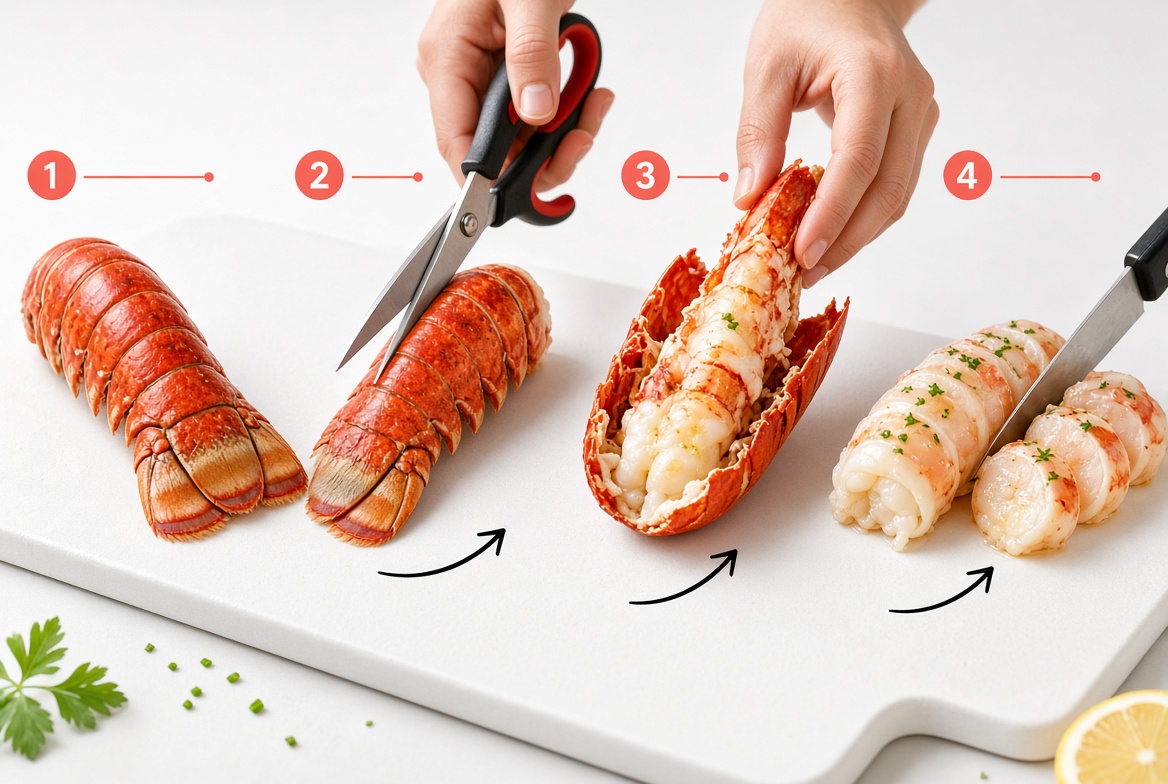
Step 1: Place the tail shell-side up. Lay the lobster tail flat on your cutting board with the hard, curved shell facing up and the soft underside facing down.
Step 2: Cut down the middle of the shell. Using your kitchen shears, cut straight down the center of the top shell, starting from the wide end (where the body used to be) and stopping just before the tail fin. Don’t cut all the way through the meat, just the shell.
Step 3: Open the shell gently. Use your fingers to pull the shell apart slightly along the cut line. This exposes the meat underneath.
Step 4: Cut through the meat, but not the bottom shell. Now take your knife and slice down through the meat, following the same line as the shell cut. Go deep enough to almost reach the bottom shell, but don’t cut all the way through it. The bottom shell acts like a natural tray that holds the meat together.
Step 5: Pull the meat up and over. Gently lift the meat up through the cracked-open shell so it sits on top, resting outside the shell instead of buried inside it. Press it down lightly so it stays in place.
And that’s it. Your lobster tail is now butterflied and ready for the oven, grill, or broiler.
How to Split a Lobster Tail in Half
If you want two clean halves instead of one butterflied piece, splitting is the way to go.
Step 1: Lay the tail flat. Place it shell-side down this time, so the soft underside faces up.
Step 2: Steady the tail with a towel. Hold the tail firmly with a kitchen towel to protect your hand and give you a better grip.
Step 3: Cut straight down the center. Use a sharp chef’s knife to cut lengthwise, right down the middle, from the head end to the tail fin. Apply steady pressure and go slow. You want one clean cut, not several small chops.
Step 4: Separate the two halves. Once you’re through, gently pull the two halves apart. You’ll now have two equal portions, each with meat and shell attached.
This cut is great for grilling since both halves cook evenly and get that nice charred flavor on the meat side.
How to Do a Piggyback Cut
This one takes a little more care, but it’s not too hard once you understand it.
Step 1: Butterfly the shell first. Follow steps one through three from the butterfly method above. Cut the top shell down the middle and pull it open slightly.
Step 2: Loosen the meat from the shell. Slide your fingers or a spoon gently between the meat and the shell to loosen it, but keep the base of the meat attached near the tail fin.
Step 3: Lift the meat up and rest it on top. Pull the meat upward and let it rest on top of the shell, connected only at the base. It should look like the meat is “riding” on top of the shell, which is where the name comes from.
This cut looks impressive on a plate and is often used for special dinners or holiday meals.
How to Remove Lobster Meat Completely From the Shell
Sometimes you don’t need the shell at all. Maybe you’re making a creamy lobster bisque, a lobster roll, or tossing the meat into pasta. Here’s how to get the meat out cleanly.
Step 1: Cut the shell open. Use your shears to cut down the top of the shell, just like the butterfly method.
Step 2: Crack the bottom shell too. Flip the tail over and gently crack or cut the underside shell as well. This loosens the meat from all sides.
Step 3: Pull the meat out in one piece. Grip the tail fin with one hand and use your other hand or a small spoon to pull the meat out from the wide end. It should slide out mostly in one solid piece.
Step 4: Remove the vein. Lobster tails have a thin, dark vein running down the back of the meat, similar to shrimp. Use the tip of your knife to make a shallow slit and lift the vein out with the knife tip or your fingers. Rinse the meat under cold water if needed.
Now your lobster meat is fully ready for chopping, slicing, or cooking in any recipe that calls for shell-free lobster.
Tips for Cutting Lobster Tail Safely
Cutting seafood can be a little tricky if the shell is hard or the tail is slippery. Here are some tips to make it safer and easier:
- Keep your knife sharp. A dull blade slips more and actually raises your risk of cutting yourself.
- Cut on a stable surface. Place a damp towel under your cutting board so it doesn’t slide around.
- Go slow with the shears. Lobster shell is tough, so don’t rush the first cut.
- Keep your fingers curled under when holding the tail, away from the blade path.
- If the tail is still cold or slightly frozen, it’s easier to cut than if it’s fully warmed up.
These small habits go a long way in keeping your kitchen time smooth and injury-free.
Common Mistakes to Avoid
Even simple tasks can go wrong if you’re not careful. Here are a few mistakes beginners often make when cutting lobster tail:
Cutting too deep on the first pass. Going too fast and cutting all the way through the shell and meat at once can make a mess. Take it slow and cut in stages.
Skipping the deveining step. That dark line running through the meat is the digestive tract. It’s not harmful, but it doesn’t taste great and looks unappealing on the plate.
Using a dull knife. This is probably the biggest issue. A sharp knife glides through lobster meat cleanly, while a dull one tears and mashes it.
Not thawing frozen tails properly. Cutting a half-frozen tail is much harder and can lead to uneven cuts. Always thaw fully before cutting.
Forgetting to pat the tail dry. Wet lobster tail can slip out of your grip. A quick pat with a paper towel before cutting helps a lot.
What to Do After Cutting the Lobster Tail
Once your lobster tail is cut the way you want, it’s time to season and cook it. A simple mix of melted butter, garlic, lemon juice, and a pinch of paprika works wonders. Brush this over the meat before grilling, baking, or broiling.
Cooking times depend on the size of the tail, but a good rule of thumb is about one minute per ounce of meat when baking at a moderate oven temperature. The lobster is done when the meat turns opaque and firm, with a slight pink or red tint on the outside.
Let the lobster rest for a couple of minutes after cooking. This helps the juices settle back into the meat instead of running out the moment you cut into it.
Frequently Asked Questions
Do I need special tools to cut a lobster tail? Not really. A sharp knife and kitchen shears are enough. Lobster shears make the job a bit easier since they’re built to handle the tough shell, but regular kitchen shears work fine too.
Can I cut a lobster tail while it’s still frozen? It’s much harder and more dangerous to cut a frozen tail. Always thaw it first, either overnight in the fridge or in cold water for about thirty minutes.
Is the dark vein in the lobster tail safe to eat? Yes, it’s safe, but most people remove it because of the texture and appearance. It’s the lobster’s digestive tract, similar to the vein found in shrimp.
Which cut is best for grilling? The split cut or butterfly cut both work great for grilling since they expose more meat directly to heat, giving you that smoky, charred flavor.
How do I know if my lobster tail is fresh? Fresh lobster tail should smell like the ocean, slightly briny but not fishy or sour. The shell should look firm, not mushy or discolored.
Final Thoughts
Cutting a lobster tail isn’t as scary as it looks. With a sharp knife, a steady hand, and a little patience, you can butterfly, split, or fully remove lobster meat like someone who’s been doing it for years. Each method has its own use, so try a few and see what works best for your favorite recipes.
Once you get comfortable with these cuts, cooking lobster at home becomes a lot less intimidating and a lot more fun. So grab a tail, follow the steps above, and enjoy a restaurant-quality seafood dinner right from your own kitchen.

Mary is a home cooking enthusiast and kitchen gear reviewer with a passion for practical cookware and food preparation tools. She enjoys testing cutting boards, knives, kitchen gadgets, and other cooking essentials to help home chefs make smarter buying decisions. Through KitchenCutting.com, Mary shares honest product reviews, buying guides, and helpful kitchen tips to make cooking easier, safer, and more enjoyable.