How to Dispose of Kitchen Knives?
Kitchen knives are essential tools. They help us chop, slice, and prepare our meals with ease. But what happens when your favorite kitchen knife breaks, becomes dull beyond repair, or you simply want to get rid of it? Throwing it away isn’t as simple as tossing it in the trash. Knife disposal requires care and thought. This guide will walk you through every way to safely dispose of your old kitchen knives.
In this article
Why You Can’t Just Throw Kitchen Knives in the Garbage
Your first instinct might be to throw broken knives in the trash bin. Stop right there. This is dangerous and irresponsible.
When you toss a sharp blade into the garbage, you put garbage collectors at risk. These workers could cut themselves on the exposed blade. They could suffer serious injuries. Beyond that, many landfills have rules about sharp objects. Some places will reject trash that contains dangerous items.
Sharp kitchen blades can also damage the equipment at waste processing facilities. This creates extra costs for the facility. It can also slow down the entire waste processing system.
Even dull knives pose risks. A broken knife has jagged edges that can cut skin easily. The tip might be sharp even if the blade’s edge isn’t. You never know how dangerous a knife is until someone gets hurt.
Responsible knife disposal is about safety—yours, the garbage collector’s, and everyone else’s.
Method 1: Donate Your Knives If They’re Still Good
The best way to dispose of a kitchen knife is to not dispose of it at all. If your knife is still in good condition, find it a new home.
Who Should Get Your Old Knives?
Donate sharp, usable knives to friends or family members who cook. Many people would love a free quality knife. Ask around before throwing anything away. You might be surprised who wants your old kitchen tools.
Schools with culinary programs sometimes accept knife donations. Call local cooking schools or vocational programs in your area. They might have protocols for accepting used kitchen equipment.
Community centers often have cooking classes. These facilities sometimes need knives for their teaching kitchens. A quick phone call can reveal whether they’ll take your donation.
Online Options for Giving Away Knives
Social media groups let you post free items. Join local community groups on popular platforms. Post a photo of your knife and let people know it’s available.
Freecycle networks exist in many towns. These groups focus on giving away items before they hit the landfill. You might need to join first, but it’s free and easy.
Apps for sharing used goods work well too. List your knife for free and let someone nearby come pick it up.
Thrift Stores and Consignment Shops
Some thrift stores accept kitchen items. Call ahead and ask about their knife policy. They might take your donation or even pay you a small amount if the knife is nice.
Consignment shops work differently than thrift stores. They’ll sell your knife and give you a cut of the profits. You don’t get paid upfront, but you might make some money.
Method 2: Recycle Your Old Knives
Many people don’t realize that metal kitchen knives can be recycled. Steel and other metals are valuable resources.
Finding Local Recycling Centers
Search online for metal recycling facilities near you. These places accept metal items of all kinds, including kitchen knives. They’ll melt the metal down and create new products.
Call your local recycling center before dropping off knives. Ask about their policies. Some centers want knives wrapped to protect workers. Others might refuse certain items. It’s always better to ask first.
Preparation for Recycling
Wrap your knife blade in heavy material before recycling. Bubble wrap works well. So does newspaper, but you might need several layers. The goal is to make sure the blade can’t cut through the wrapping.
Tape the wrapping securely. Make sure nothing is loose or exposed.
Tell the recycling center staff that you have a knife. Don’t hide it in your pile of recyclables. Clear communication keeps everyone safe.
Metal Scrap Yards
Scrap yards buy metal items by weight. If you have multiple knives or kitchen items, a scrap yard might actually pay you. They separate different metals and recycle them.
Call ahead. Ask what metals they accept and how much they pay. Bring your wrapped knives to the facility during business hours.
Method 3: Sharpen and Repurpose Your Knife
Before you get rid of a dull knife, consider sharpening it. Many people think a dull knife is ready for disposal. That’s not always true.
DIY Sharpening Methods
A honing steel realigns the blade’s edge. If your knife is just dull and not damaged, a honing steel might revive it. These tools are cheap and easy to use.
Sharpening stones require more skill but work great. You can learn to sharpen knives at home. YouTube has plenty of tutorials.
Honing steel versus sharpening stone: a honing steel quick-fixes dull edges. A sharpening stone actually removes metal to create a new edge. Both have their place in the kitchen.
Professional Knife Sharpening Services
Local knife sharpening services exist in most towns. These professionals have the right equipment to sharpen any blade. They can fix damaged edges and make old knives like new.
Some sharpening services come to your home. They’ll sharpen your knives right in your kitchen. Check online reviews and pricing before calling.
Creative Repurposing Ideas
A broken knife handle can hold a plant cutting. Cut the blade off and use the wooden handle as a plant stake for small pots.
Decorative knife displays look great in farmhouse kitchens. Hang old knives on a wall using special magnetic strips. Make sure they’re secure and out of kids’ reach.
Artist communities sometimes want old metal tools. Reach out to sculpture studios or metalworking classes. They might use old knives in their projects.
Method 4: Throw Knives Away Safely
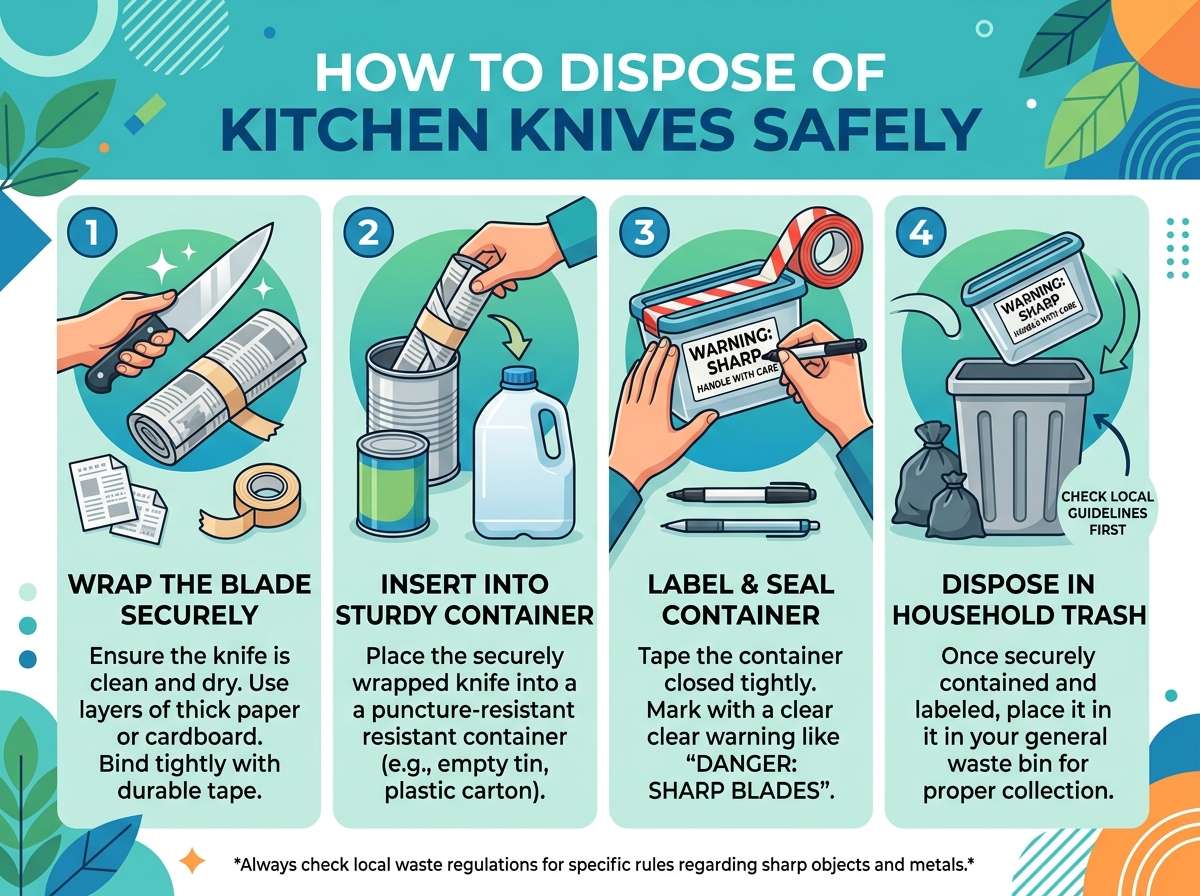
Sometimes you have no other option. Your knife is broken. It’s bent. The blade is chipped beyond repair. In these cases, proper disposal in the regular trash is acceptable if done safely.
Wrapping Your Knife for the Garbage
Use thick materials to wrap the blade. Don’t use thin plastic bags—the blade will cut through. Instead, try cardboard tubes from paper towels or wrapping paper.
Wrap the blade tightly in several layers of newspaper. Make it three inches thick if possible. This creates a buffer zone between the sharp blade and anyone handling the trash.
Duct tape or heavy-duty packing tape keeps everything secure. Use lots of tape. Make sure nothing can come unwrapped.
Containing the Entire Knife
Place your wrapped knife in a sturdy bag or container. A paper grocery bag works, but plastic is fine too. Make sure the knife can’t poke through.
Label the bag clearly. Write “CAUTION: SHARP KNIFE INSIDE” in big letters. This alerts garbage collectors to be careful.
Some people put their wrapped knife in a small cardboard box. This adds protection and makes the knife less likely to damage the bag.
Alerting Your Garbage Collector
If possible, tell your trash collector that the bag contains a sharp object. A quick conversation can make a huge difference. These workers appreciate when people protect them from hidden dangers.
Place the bag on top of your trash. Don’t bury it under other garbage. Workers need to see it quickly so they can handle it with care.
Never put knives in your recycling bin mixed with other items. Even wrapped, they’re hazardous. Recycling centers have different equipment and fewer precautions than landfills.
Method 5: Hardware Store Disposal Programs
Some hardware stores have programs for getting rid of old items, including kitchen knives.
Checking Store Policies
Call major hardware stores in your area. Ask if they accept old kitchen items for disposal. Some stores have special programs for this.
Home improvement stores sometimes have take-back programs. They might take old tools or kitchen equipment. The policy varies by store and location.
Blade Collection Events
Certain communities host blade collection events. Usually held at hazardous waste facilities, these events accept sharp objects that are hard to recycle normally.
Check your city or county website for hazardous waste collection days. Call ahead to confirm they accept kitchen knives. Bring your wrapped knife to the event.
These events are specifically designed for dangerous items. The staff knows how to handle sharp objects safely. Your knife will be disposed of properly.
Method 6: Specialty Knife Services and Retailers
Knife retailers sometimes accept old blades.
Knife Shops and Cutlery Stores
Local knife shops might take your old knife when you buy a new one. They understand knives and know how to handle disposal safely.
Call cutlery stores near you. Explain your knife situation. Some might even buy your blade if it’s a quality brand.
Specialty kitchen supply stores sometimes have similar programs. They want to encourage people to buy new equipment from them. Taking your old knife is good for business.
Manufacturer Programs
Some knife manufacturers have trade-in programs. You send them your old knife, and they give you a discount on a new one.
Check the manufacturer’s website if you know who made your knife. Look for a customer service number. Call and ask about their disposal or trade-in options.
Premium knife brands are more likely to have these programs. They value customer loyalty and want to be your one-stop knife source.
Understanding Local Regulations
Different areas have different rules about trash disposal.
City and County Rules
Your city or county probably has regulations about sharp objects. These rules protect waste workers and landfill employees.
Call your local waste management facility. Ask about their specific rules for disposing of sharp kitchen items.
Some places require special containers or labeling. Others need you to contact them before throwing away dangerous items.
Hazardous Waste Facility Locations
Your area likely has at least one hazardous waste facility. These places accept items that regular landfills won’t take.
Search online for hazardous waste near you. Most facilities are free for residents. You might need to register or call ahead.
Bring your wrapped knife during operating hours. Tell staff what you’re dropping off. They’ll handle it from there.
Restaurant and Commercial Kitchen Disposal
If you work in food service, your restaurant has protocols for knife disposal. The back-of-house manager handles this.
Commercial kitchens have special containers for sharp objects. These containers get picked up by waste management services trained to handle them.
Follow your restaurant’s procedures. They’ve been designed with safety in mind.
Safe Handling Tips While Your Knife Waits for Disposal
You have a knife that needs to go. It’s sitting in your kitchen. What do you do until disposal day?
Temporary Storage Solutions
Keep the knife separate from regular kitchen tools. Don’t leave it loose in a drawer. Someone could cut themselves reaching for a wooden spoon.
Store it in a knife block if possible. The blade stays sheathed and safe inside. No one accidentally grabs it.
A knife sheath or blade guard works great for temporary storage. Slide the guard over the blade. Make sure it’s tight.
Wrap the blade in plastic wrap or aluminum foil. This isn’t permanent, but it works short-term. Change it every few days to prevent moisture buildup.
Keeping It Away From Kids and Pets
High shelves keep knives out of reach. Pets can’t knock them down. Kids can’t grab them. Put your knife somewhere secure.
Locked drawers work well too. Not every family has kids, but someone visiting might. Better safe than sorry.
Label anything storing your knife. Make sure everyone in your household knows what’s inside.
Preventing Rust and Damage
Keep your knife dry while it waits for disposal. Moisture causes rust. Rust makes the knife unsafe.
Store it in a cool, dry place. Your kitchen cabinet works fine. The bathroom does not—too much moisture.
If the knife is going to wait more than a week or two, wipe it with a dry cloth every few days. This prevents rust from forming.
Special Cases: Broken and Damaged Knives
Some knives present special disposal challenges.
Serrated Knives
Serrated blades are trickier to handle because of their bumpy edge. The small teeth can poke through wrapping more easily.
Use extra layers of material. Make the wrapping thicker than you would for a regular blade.
Heavy cardboard is especially good for serrated knives. The bumps won’t cut through sturdy cardboard.
Bent or Broken Blades
A bent blade is sometimes easier to handle than a sharp one. The angle makes it less likely to cut through wrapping.
A blade broken in half creates two hazards. Wrap each piece separately. Label clearly that there are multiple pieces.
Ceramic Knives
Ceramic blades break into sharp shards. Wrap them in towels and place them in a bag. The shards won’t cut through fabric as easily as metal blades.
Tell the disposal facility that you have ceramic pieces. They need different handling than metal.
Extremely Dull Knives
A truly dull blade is less dangerous but still needs care. It can still cut skin if you’re not careful.
Wrap it the same way you would any knife. Safe disposal practices apply to all blades, even old dull ones.
The Environmental Impact of Knife Disposal
How you dispose of your knife affects the environment.
Landfills and Sharp Objects
When knives end up in landfills, they don’t biodegrade. Metal lasts hundreds of years. Your kitchen knife might be in the ground long after you’re gone.
Recycling is better than landfilling. Steel has great value as a recycled material. Most of the metal in new knives comes from recycled sources.
Recycling Benefits
Recycled steel uses much less energy than new steel production. That means fewer carbon emissions. That means a smaller environmental footprint.
Recycling one knife might seem small. Multiply that by millions of people doing the same thing, and it matters.
Donation and Reuse
The most environmentally friendly option is donating your knife. When someone else uses it, the original resources last longer. No new knife needs to be manufactured.
This is the circular economy in action. Your old knife continues its useful life with someone else.
What Happens to Recycled Kitchen Knives
You’ve wrapped your knife and dropped it at the recycling center. What happens next?
The Recycling Process
Metal recycling facilities sort items by type. Stainless steel goes one way. Carbon steel goes another. Handles get separated from blades.
The metal gets shredded or melted in furnaces. At extremely high heat, the metal becomes liquid.
The liquid metal gets poured into molds. It cools and becomes new metal products. This could be new knives, car parts, appliances, or countless other items.
Creating New Products
Recycled steel from your old knife might become part of a car bumper. It could be part of a building’s steel frame. It might even become part of new kitchen knives someday.
The cycle continues. Metal is one of the most recyclable materials on Earth. Your blade can be recycled again and again.
Common Mistakes People Make
Avoid these disposal mistakes.
Mixing Knives with Other Recyclables
Never put a knife in your recycling bin without wrapping. The sharp blade can injure workers at the sorting facility. These facilities aren’t equipped to handle loose sharp objects.
Always inform the facility that you have a knife. Give them time to handle it separately.
Not Warning Anyone About Your Knife
If you’re throwing away a wrapped knife, tell your garbage collector. A simple heads up prevents injuries and problems.
It’s not their job to unwrap things and see what’s inside. They shouldn’t have to discover your knife the hard way.
Insufficient Wrapping
Wrapping your knife in a single layer of plastic or newspaper isn’t enough. That blade will cut right through.
Use thick, sturdy material. Use multiple layers. Make it at least an inch thick on all sides of the blade.
Hiding the Knife in Your Trash
Don’t bury your knife under other trash. Don’t hide it in the middle of your bin. It needs to be visible and accessible.
Place the wrapped knife on top of your trash or in a separate bag. Make it obvious what you’re throwing away.
Ignoring Local Regulations
Every area has different rules. Your city’s rules might differ from the next town over. Don’t assume you know your local regulations.
Call your waste management provider. They’ll tell you exactly what they accept and need.
Step-by-Step Guide to Safe Kitchen Knife Disposal
Let’s go through the entire process from start to finish.
Step 1: Assess Your Knife
Look at your blade. Is it still sharp and usable? Can it be fixed? Or is it truly beyond saving?
If it’s good enough to use, explore donation options. Only move to disposal if the knife is truly unwanted or broken.
Step 2: Try to Donate or Sell
Before throwing anything away, give it another chance. Post it online. Ask friends. Contact local schools or community centers.
This step takes minimal effort but might find your knife a great new home.
Step 3: Check Recycling Options
Call your local recycling center. Ask if they accept metal kitchen items. Find out if they need any special wrapping or preparation.
If they accept knives, that’s your easiest path forward.
Step 4: Wrap Your Knife Properly
Use thick, sturdy material. Wrap the blade multiple times. Use heavy tape to secure everything.
Make sure nothing is sharp or exposed when you’re done.
Step 5: Label Everything
Write a warning on the outside of the bag or container. Make sure it’s obvious that a sharp object is inside.
This protects the people handling your trash.
Step 6: Communicate Your Plan
Tell your trash collector or recycling center what you’re bringing. Give them a heads up before disposal day.
A quick conversation prevents problems and injuries.
Step 7: Drop Off or Dispose
Take your wrapped, labeled knife to the appropriate facility. Tell staff what you’re dropping off. Let them handle it from there.
You’ve done your part. The professionals will take care of the rest.
Final Thoughts on Kitchen Knife Disposal
Your old kitchen knife deserves better than being tossed in the trash unsafely. Whether you donate it, recycle it, or throw it away carefully, you’re making a responsible choice.
Kitchen knives are essential tools. They deserve respect even when we’re done using them. Safe disposal protects workers, protects our communities, and respects the environment.
The next time you have a knife to dispose of, remember these options. Try donation first. Recycle if possible. Only throw away as a last resort. And if you must throw it away, wrap it well and warn your collectors.
Your kitchen knife’s story doesn’t have to end in a landfill. With a little effort, you can give it a safer, better destination. That’s good for everyone.
Take care of your old blades. Be responsible. Be safe. Your local waste workers will thank you.

Mary is a home cooking enthusiast and kitchen gear reviewer with a passion for practical cookware and food preparation tools. She enjoys testing cutting boards, knives, kitchen gadgets, and other cooking essentials to help home chefs make smarter buying decisions. Through KitchenCutting.com, Mary shares honest product reviews, buying guides, and helpful kitchen tips to make cooking easier, safer, and more enjoyable.