Why Do Wooden Cutting Boards Crack?
You bought a nice wooden cutting board. It looked great on the counter. Then one day you spot a thin line running across the surface. Your heart sinks a little.
In this article
Don’t worry. You are not alone, and it is not always your fault. Wood is a natural material, and it reacts to the world around it. Once you know why wooden cutting boards crack, you can stop most cracks before they start.
This guide explains every common cause in simple words. You will also learn how to fix small cracks, how to care for your board, and when it is time to let it go.
Why Wooden Cutting Boards Crack: The Short Answer
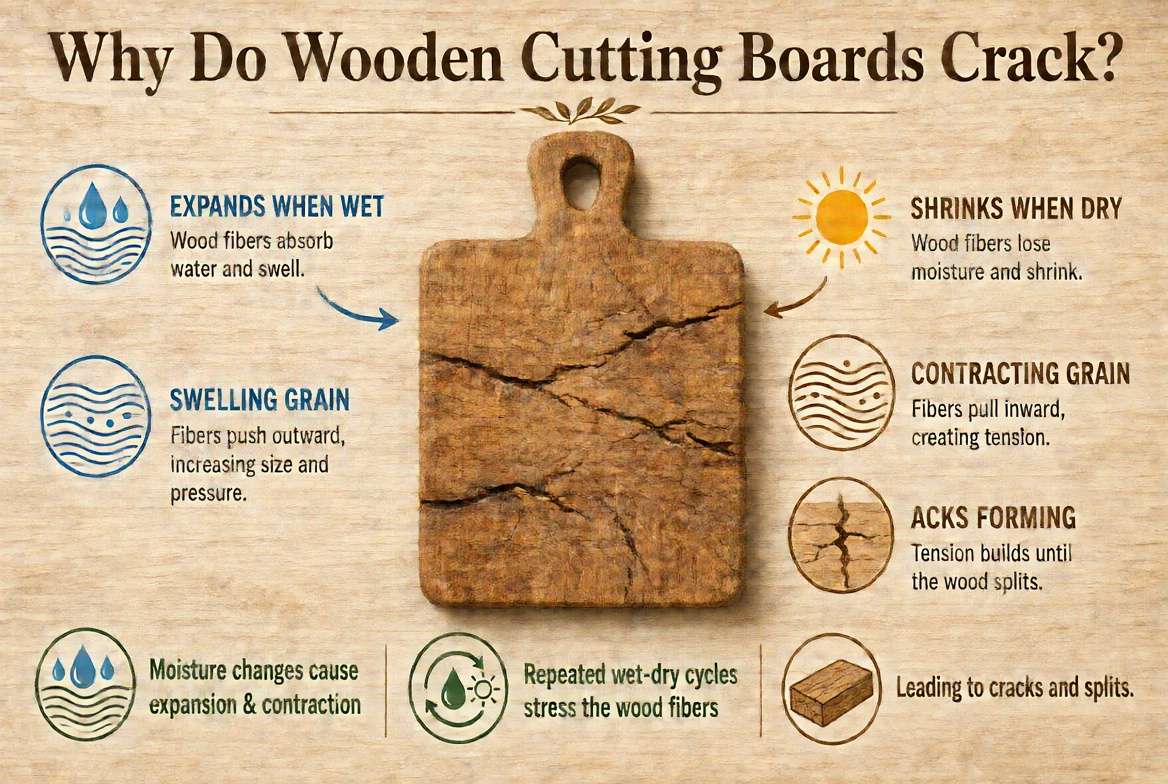
Wooden cutting boards crack because the wood dries out, swells with water, or gets stressed by heat and heavy use. Wood takes in and releases moisture all the time. When that moisture changes too fast, the fibers pull apart. That pull shows up as a crack.
Poor glue joints, the wrong wood type, and rough habits can make things worse. Most boards fail from a mix of these causes, not just one.
Let’s walk through each one.
Wood Is Alive (Sort Of)
A tree is full of water. After the wood is cut and dried, it still keeps a small amount of moisture inside. It also keeps trading that moisture with the air.
When the air is humid, the wood soaks up water and swells. When the air is dry, the wood gives up water and shrinks. This constant swelling and shrinking is called wood movement.
Wood does not move the same way in every direction. It moves a lot across the grain and very little along the length of the grain. This uneven movement creates stress inside the board. When the stress gets too high, the wood splits.
So even a perfect board can crack if the moisture around it changes too quickly.
Cause 1: The Board Dries Out
Dryness is the number one reason wooden cutting boards crack.
Think about what happens every time you wash your board. The surface gets wet, and then it dries. If the board has no oil on it, the water pulls natural oils out of the wood. Over time, the wood turns dry and brittle.
Dry wood has no flexibility. It cannot bend a little under pressure. So when you chop hard or the air gets dry, the fibers snap instead of flex.
You can spot a dry board easily. It looks pale and dull. It feels rough or chalky. Water soaks in fast instead of beading up on top.
If your board looks like that, it needs oil right now.
Cause 2: Too Much Water
Dryness is a problem, but so is the opposite. Water can wreck a board too.
Here is what happens when a board gets soaked. The outer layer swells quickly, but the inside stays dry. The outside pushes against the inside, and this uneven pressure causes cracks and warping.
Some common water mistakes are:
- Soaking the board in the sink
- Leaving the board in a puddle of water
- Letting wet food sit on it for hours
- Washing it and leaving it flat on the counter to dry
That last one surprises people. When a board lies flat and wet, only the top side dries. The bottom stays damp. The top shrinks while the bottom stays swollen, and the board bends. A bent board often cracks soon after.
Cause 3: The Dishwasher
Please keep your wooden board out of the dishwasher. This is one of the fastest ways to ruin it.
A dishwasher blasts the board with hot water and strong soap. Then it bakes the board with hot, dry air. That is a huge shock for wood.
The heat strips the oils. The soap dries out the fibers. The sudden swing from wet to dry makes the board shrink and crack. Many boards split after just one or two cycles.
Even a sturdy hardwood board will not survive this for long. Always wash by hand.
Cause 4: Sudden Temperature Changes
Wood does not like shocks. Fast changes in heat can cause problems, just like fast changes in moisture.
Here are some examples:
- Setting a hot pan straight onto the board
- Placing the board next to a stove or oven
- Leaving the board in direct sunlight by a window
- Washing a cold board with very hot water
Heat dries wood unevenly. One side loses moisture faster than the other, and the wood pulls itself apart. You might see tiny hairline cracks first. These can grow bigger with each use.
Keep your board away from heat sources. Use trivets for hot pans, and keep the board in a spot with steady room temperature.
Cause 5: The Type of Wood
Not all woods act the same. Some crack easily, and some hold up for many years.
Hardwoods with tight grain work best for cutting boards. Maple, walnut, and cherry are popular picks. Their fibers sit close together, so water has a harder time getting in. They also resist deep knife marks.
Softer woods, like pine or fir, cause more trouble. They dent easily and soak up water fast. Their open grain lets moisture in and out quickly, so they crack and warp more often.
Woods with very open pores, like oak, can also give you trouble. Water and food bits sneak into those pores. That makes the board harder to keep clean, and it can speed up damage.
If you already own a board made from a softer wood, don’t panic. Just give it extra care.
Cause 6: Grain Direction and Board Style
The way a board is built has a big effect on how well it lasts. There are three main styles.
Edge grain boards are made from long strips of wood glued side by side. You cut on the long side of the strips. These boards are strong and popular. They handle moisture changes fairly well.
Face grain boards use the wide, flat side of the wood. They look pretty, but they can warp and crack more easily. A single wide piece of wood has more room to move.
End grain boards show the ends of the wood fibers, like a checkerboard. Knives slide between the fibers instead of cutting across them. This makes the board gentle on your knives. End grain boards often “heal” small cuts. But the many glue lines can split if the board dries out or takes in too much water.
No style is perfect. Each one needs oil and good habits.
Cause 7: Weak Glue Joints
Most cutting boards are made from several pieces of wood glued together. The glue lines are strong, but they are not magic.
A poor glue job can fail over time. Maybe the maker used the wrong glue. Maybe the wood pieces had different moisture levels when they were joined. Maybe the clamping was uneven.
When this happens, the seams open up. You will see a crack that runs right along the joint. This is not a crack in the wood itself. It is a glue failure.
Water makes this worse. Water seeps into the seam and weakens the glue. Heat and dryness can also break the bond.
If a brand-new board splits along the seams within a few weeks, the build quality might be the problem. In that case, ask the seller about a return or replacement.
Cause 8: Low-Quality or Wet Wood
Sometimes the crack starts long before the board reaches your kitchen.
Wood has to dry slowly and evenly before a maker turns it into a board. This process is called seasoning or kiln drying. If the maker rushes it, the wood keeps hidden stress inside. That stress shows up later as cracks.
Wood that is too wet when it gets cut will shrink a lot once it dries in your home. Wood that has knots, hidden splits, or pith (the soft center of the tree) also cracks more easily.
You cannot always see these flaws. A trusted maker with good materials makes a big difference.
Cause 9: Heavy Chopping and Rough Use
A cutting board takes a beating. Every knife strike puts pressure on the wood.
Light slicing causes no harm. But swinging a heavy cleaver or pounding on one spot can create tiny cracks. Over time, these small cracks join together and spread.
Using the board as a hammer surface, a trivet, or a prying tool can also hurt it. Dropping it on a hard floor can cause a split too, especially if the board is already dry.
Use a sharp knife. A dull knife makes you press harder, and that adds more stress to the wood.
Cause 10: Poor Storage
Where you keep your board matters more than you think.
Some storage mistakes lead straight to cracks:
- Leaning the board against a hot stove
- Storing it in a damp cabinet
- Stacking heavy items on top of it
- Keeping it wet in a sink rack
- Leaving it in a sunny spot all day
The best way to store a board is to stand it on its edge in a dry, airy spot. That lets air reach both sides, so it dries evenly.
How to Tell If a Crack Is Serious
Not every crack means the end. Some are small and harmless. Others are a real problem.
Hairline cracks are very thin lines on the surface. They usually come from dryness. You can often fix them with oil and good care.
Small surface cracks might feel rough under your finger. You can sand them out and oil the board.
Deep cracks go far into the wood or all the way through. These trap food bits and moisture. Bacteria can grow inside them, and you cannot clean them well.
Split seams happen when the glue fails. Small ones might be repaired. Large ones are hard to fix.
A good rule is simple. If you can clean the crack fully and it does not grow, you can keep the board. If food gets stuck inside or the crack keeps spreading, it is time to replace the board.
How to Fix a Cracked Wooden Cutting Board
You can save many boards with a bit of work. Here is an easy way to do it.
Step 1: Wash and dry the board. Use warm water and a little mild soap. Wipe it well with a towel. Then let it dry on its edge for several hours.
Step 2: Sand the surface. Start with medium sandpaper, then move to a fine one. Sand with the grain, not against it. This removes shallow cracks and rough spots.
Step 3: Wipe off the dust. Use a slightly damp cloth, then let the board dry again.
Step 4: Fill small gaps if needed. For a narrow crack, you can press in a mix of fine sawdust and food-safe wood glue. Wipe off the extra, then let it dry fully. Sand it smooth after.
Step 5: Oil the board. Pour food-safe mineral oil on the surface. Rub it in with a clean cloth. Cover every side, including the edges. Let it soak in for a few hours or overnight.
Step 6: Add a board wax. A mix of beeswax and mineral oil seals the surface. It helps keep water out.
This routine will not fix a huge split. But it works well for small cracks and dry boards.
The Best Oils for Cutting Boards
Not every oil is safe for a kitchen board. Some turn sticky or go bad.
Good choices:
- Food-grade mineral oil. It never goes rancid, it is cheap, and it is easy to find.
- Fractionated coconut oil. It stays liquid and does not spoil.
- Board butter or cream. This is a mix of oil and wax, and it adds extra protection.
- Beeswax blends. These add a water-resistant layer on top of the oil.
Oils to skip:
- Olive oil. It can go rancid and smell bad.
- Vegetable oil. It also turns rancid over time.
- Regular coconut oil. It can spoil and leave a strange smell.
- Nut oils. They might cause problems for people with allergies.
Stick with mineral oil and a wax blend, and you will be fine.
How Often Should You Oil Your Board?
A new board needs oil more often. Oil it once a day for the first week. Then oil it once a week for the first month. After that, oil it about once a month.
Here is a simple test. Sprinkle a few drops of water on the board. If the water beads up, your board is still protected. If the water soaks in and leaves a dark spot, it needs oil.
Boards in dry homes need more oil. Boards that get used and washed every day also need more.
When in doubt, add a little more oil. Wood rarely suffers from too much oil.
Daily Care Habits That Prevent Cracks
Good habits protect your board better than any fancy product. Here is what to do.
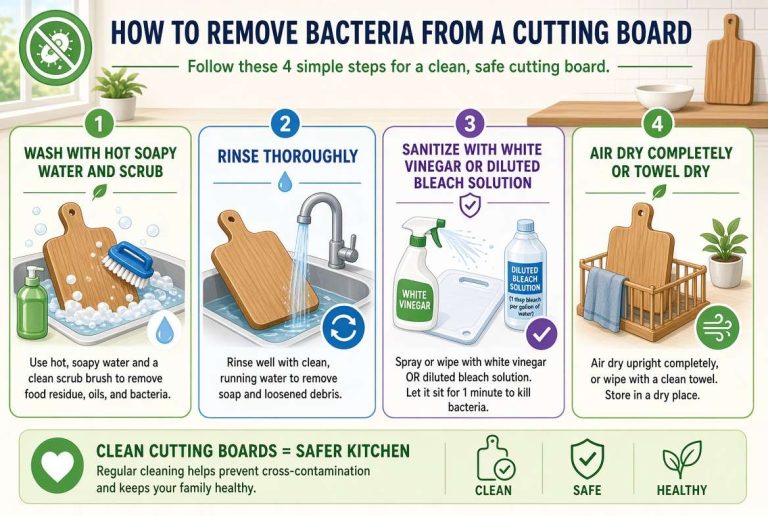
Wash it by hand. Use warm water, mild soap, and a soft sponge. Wash it quickly, and do not let it sit in water.
Dry it right away. Wipe both sides with a towel. Then stand the board on its edge so air can flow around it.
Never soak it. Even a short soak can cause swelling and warping.
Keep it away from heat. Don’t set it near the stove, oven, or a sunny window.
Rotate the sides. Use both sides of the board. This helps it wear and dry evenly.
Clean it deeply once in a while. Rub coarse salt and half a lemon over the surface. Then rinse, dry, and oil it.
Use the right tools. A sharp knife is gentler than a dull one. Avoid heavy cleavers on a thin board.
These small habits take only a minute or two. They can add many years to your board’s life.
How to Remove Stains and Smells Without Damage
Stains and smells tempt people to use harsh cleaners. Please don’t. Strong chemicals dry out the wood and can lead to cracks.
For smells, rub the board with a cut lemon or a paste of baking soda and water. Let it sit for a few minutes, then rinse and dry.
For stains, scrub gently with coarse salt and a damp cloth. For tough marks, a light sanding works well.
After any deep cleaning, always oil the board again. Cleaning pulls oil out, and you need to put it back.
Is a Cracked Cutting Board Safe to Use?
This is a fair question. The answer depends on the crack.
A tiny, shallow crack that you can clean well is usually fine. Sand it, oil it, and keep going.
A deep crack is different. Raw meat juices, bits of vegetables, and moisture can get stuck inside. You cannot scrub that deep. Bacteria can build up in those hidden spots.
If a crack is deep, wide, or full of dark stains, retire the board. Your health matters more than saving an old piece of wood.
You can still reuse an old board in other ways. Use it as a serving tray for bread or cheese. Or turn it into a trivet for hot dishes. Just keep it away from raw meat.
Wood vs. Other Cutting Boards
Some people give up on wood after a few cracks. Others want to know how wood compares to other options.
Plastic boards are cheap and go in the dishwasher. But knives leave deep grooves in them, and those grooves trap bacteria.
Bamboo boards are hard and look nice. They are very tough on knives, though, and the glue lines can split too.
Rubber boards are gentle on knives and last a long time. They cost more and are harder to find.
Wood boards feel great to use, protect your knives, and look beautiful. They do need regular care, but the effort pays off.
If you enjoy cooking and want a board that lasts, wood is still a top pick.
Quick Tips for Buying a Board That Will Not Crack Easily
A good start makes a big difference. Look for these signs when you shop:
- A hardwood like maple, walnut, or cherry
- Tight grain with no big gaps
- Smooth edges and no rough spots
- Even glue lines with no visible gaps
- A thick, heavy build
- A food-safe finish
- A maker who offers care tips
A thicker board handles stress better than a thin one. Thin boards bend and crack more easily.
Common Myths About Cracking Boards
“Cracks mean the board is bad.” Not always. Many small cracks come from dryness and can be fixed.
“You should oil only once.” Wood needs oil again and again, not just once.
“Soap ruins wood.” Mild soap is fine in small amounts. The problem is soaking and harsh cleaners.
“Any oil works.” Some oils spoil. Stick with food-grade mineral oil or a wax blend.
“Thicker boards never crack.” Thick boards last longer, but they still need care.
Quick Recap: What Causes Wooden Cutting Boards to Crack
Here is a quick list to remember:
- Dry wood with no oil
- Too much water or soaking
- Dishwasher use
- Heat and sudden temperature changes
- Soft or porous wood types
- Weak glue joints
- Poor-quality or wet wood
- Heavy chopping and rough use
- Bad storage spots
Fix these, and your board will last much longer.
Frequently Asked Questions
Why did my new cutting board crack so fast?
New boards can crack if the wood was not dried well or the glue was weak. Dry air in your home can also cause it. Oil the board often during the first few weeks.
Can I fix a crack with wood glue?
Yes, for small splits. Use food-safe wood glue. Press the crack closed, wipe off the extra glue, and let it dry fully. Sand and oil it after.
Does mineral oil really stop cracks?
It helps a lot. Oil keeps the wood flexible and slows water from getting in. It cannot fix a board that already has deep damage.
Can I put a wooden cutting board in the dishwasher?
No. The heat and water will dry out and warp the board. Always wash by hand.
How long should a wooden cutting board last?
With good care, a quality board can last ten years or more. Some last for decades.
Why does my board crack in winter?
Heaters make indoor air very dry. The wood loses moisture and shrinks. Oil your board more often when the air gets dry.
Is it normal for end grain boards to crack?
Small cracks can happen if the board dries out. A regular oil routine usually prevents them.
Final Thoughts
Wooden cutting boards crack for simple reasons. They dry out, soak up too much water, or get hit with heat and rough use. Poor glue and low-quality wood add to the problem.
The good news is that you control most of these causes. Wash by hand. Dry the board right away. Store it on its edge. Oil it often. Keep it away from heat.
These steps cost almost nothing, and they take very little time. In return, you get a board that looks good and works well for years.
A little care today saves you from buying a new board tomorrow. Give your board some love, and it will serve your kitchen for a very long time.

Mary is a home cooking enthusiast and kitchen gear reviewer with a passion for practical cookware and food preparation tools. She enjoys testing cutting boards, knives, kitchen gadgets, and other cooking essentials to help home chefs make smarter buying decisions. Through KitchenCutting.com, Mary shares honest product reviews, buying guides, and helpful kitchen tips to make cooking easier, safer, and more enjoyable.