Julienne Slicer Vs Mandoline
Many home cooks see a julienne slicer and a mandoline side by side and wonder if they are the same tool. The short answer is that they overlap, but they are not identical. Knowing the difference helps you pick the right tool for the vegetables you cook most often.
This guide explains what each tool is, how each one works, and where they differ in cut shape, thickness control, speed and safety. It also covers simple tips for beginners, common mistakes to avoid, and answers to frequent questions.
Key Takeaways
- A julienne slicer usually focuses on thin, matchstick-style strips, while a mandoline is built for flat, even slices and often offers several cut types.
- A mandoline generally gives more control over thickness through adjustable settings.
- Both tools need a hand guard or gloves to keep fingers away from the blade.
- Your main cooking tasks should guide your choice more than the tool’s name.
- Regular cleaning and careful storage keep the blade sharp and the tool safe to use.
What Is a Julienne Slicer and What Is a Mandoline?
Defining the Julienne Slicer
A julienne slicer is a hand tool made to cut vegetables into thin strips. These strips are often called julienne, or matchsticks. The name comes from French cooking, where julienne refers to a specific thin cut.
Most julienne slicers have a small frame, a blade or set of blades, and a way to hold the food. You push the produce across the blade to create the strips. Many models are compact and easy to store.
Defining the Mandoline Slicer
A mandoline is a flat, platform-style slicer. It has a long, smooth surface, a fixed blade, and a holder that moves the food back and forth. Cooks use it to make very even slices, and many models can also cut strips, waffle cuts or wedges.
Because the blade sits in a fixed position, the cut depends on the blade setting and how you move the food. Many mandolines include a dial or lever that changes the slice thickness.
Why the Two Names Often Get Mixed Up
The two names are used loosely in stores and online. Some products called julienne slicers look and work like small mandolines. Other products sold as mandolines include a julienne blade.
Because of this overlap, the label on the box may not tell the full story. Look at the blade types, the thickness options and the included accessories instead. These details show what the tool can actually do.
How Julienne Slicers Work
Blade Types and Cutting Styles
Julienne slicers usually use one or more small blades set at a specific spacing. The blades are sharp and cut the vegetable into strips as you pass it through. Some models have a single blade for one cut size, while others offer a few blade options.
The cutting style is mostly straight and narrow. Because the cut is focused on strips, the tool is less about making wide, flat slices. Still, the basic action is similar to pulling food over a grater-like surface.
Common Cuts a Julienne Slicer Can Make
The most common cut is the julienne strip, which is thin and about the length of a matchstick. Carrots, zucchini, cucumbers and bell peppers are typical choices. These strips cook quickly and work well in stir-fries, salads and garnishes.
Some models also make small dice or wider strips. The exact options depend on the design. Check the product details before you buy if you need a specific shape.
How Mandoline Slicers Work
Adjustable Thickness Settings
Most mandolines have an adjustable blade or platform. Turning a dial or moving a lever changes how far the blade sticks out. This sets how thick each slice will be.
Thickness control is one of the main reasons cooks choose a mandoline. Thin slices suit salads of potatoes or cucumbers, while thicker slices suit gratins or roasted vegetables. Once you find a setting that works, you can repeat it for batch after batch.
Common Cuts a Mandoline Can Make
A mandoline usually makes flat slices, which are the most basic cut. Many models also include a julienne blade, so the same tool can produce strips. Some offer crinkle cuts or waffle cuts with a special blade.
The range of cuts depends on the blades that come with the model. A basic mandoline may only offer flat slices, while a fuller set adds strips and decorative shapes. Check the included accessories before you buy.
Julienne Slicer vs Mandoline: Key Differences
Cut Shape and Thickness Control
A julienne slicer is built mainly for thin strips. Its thickness is set by the blade spacing, so the strip size is fixed for each blade. Changing the cut usually means changing the blade or the model.
A mandoline offers more flexibility. The adjustable blade lets you change slice thickness in small steps. Because of this, a mandoline often gives more control over the final shape.
Speed, Effort and Consistency
Both tools can save time compared with cutting by hand. A julienne slicer tends to work quickly on small, firm vegetables. Each pass produces a batch of strips with little effort.
A mandoline can cut a large quantity of even slices in a short time. Consistency is one of its strengths, since the blade stays at the same setting. Even so, the effort depends on the food. Dense or round produce may need more pressure and care.
Safety Features to Compare
Safety features differ between models. Many mandolines include a hand guard, a food holder with teeth, or a foot that keeps the blade covered between cuts. Some julienne slicers include a guard or a protective cover for the blade.
When comparing options, look for a guard that holds the food firmly and keeps your fingers well away from the edge. Check how the blade is stored and how easy it is to clean. These features matter as much as cut quality.
Which Kitchen Tasks Suit Each Tool
Best Uses for a Julienne Slicer
A julienne slicer suits cooks who make a lot of strips for stir-fries, slaws or garnishes. It works best with firm produce such as carrots, cucumbers and peppers. Its compact size also makes it a good fit for small kitchens.
It is less suited to tasks that need wide, flat slices. For those, a mandoline or a knife may work better.
Best Uses for a Mandoline
A mandoline suits cooks who need even slices for gratins, potato dishes, salads or pickles. The adjustable thickness helps match the slice to the recipe. It is also useful when you want uniform pieces that cook at the same rate.
It is a good choice for larger batches. Because the cut is steady, the results look neat on the plate. Still, it takes more space to store than a small julienne slicer.
Tasks Where Either Tool Works
Some tasks can be done with either tool. Making cucumber rounds, cutting carrot strips or preparing cabbage for slaw are common examples. In these cases, the choice often comes down to storage space, blade options and personal preference.
For occasional use, a julienne slicer may be enough. For frequent cooking with varied cuts, a mandoline with several blades may be more useful.
Beginner Tips for Using a Mandoline or Julienne Slicer Safely
Using a Hand Guard and Cut-Resistant Gloves
Always use a hand guard or the food holder that comes with the tool. Keep your fingers away from the blade, even for the last small piece. Many cooks also wear cut-resistant gloves for extra protection.
Never try to catch a falling piece with your hand. Let it drop and reach for it with the holder or tongs instead.
Preparing Produce for Even Slices
Trim the vegetable so it sits flat on the surface. A stable base helps the slices stay even. For round produce such as pot atoes or cucumbers, cut a thin strip off one side first so it rests steadily.
Choose produce that is firm but not hard. Very soft fruit can squash under the blade, while very hard produce may need more force than is safe.
Cleaning and Storing the Blade
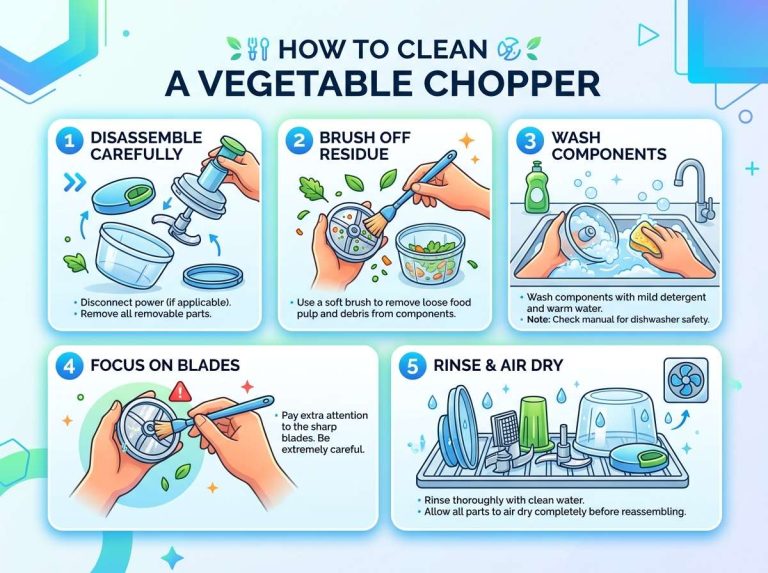
Clean the blade soon after use, while food residue is still soft. Use a brush and handle the blade by its edges or base. Dry it fully before storing.
Store the tool with its blade covered or in a protective case. This keeps the edge safe and prevents accidental cuts when you reach into a drawer.
Common Mistakes Beginners Make
Using Too Much Pressure
Many beginners push hard, thinking that force makes a cleaner cut. In practice, a steady and gentle motion works better. Pressing too hard can cause the food to slip or the blade to catch.
If the blade is slowing down, check if the food is too large or the blade needs cleaning. Forcing it often leads to accidents.
Slicing Produce That Is Too Soft or Too Round
Soft produce such as ripe tomatoes can crush and stick to the blade. Round produce like onions or small potatoes can roll and wobble. Both problems lead to uneven slices and unsafe grips.
Cut a flat side first, or use a different tool for these foods. This simple step improves both safety and results.
Frequently Asked Questions
Is a julienne slicer the same as a mandoline?
No, they are not always the same. A julienne slicer is mainly built for thin strips, while a mandoline is built for flat, even slices and often includes several cut options. Some products blur this line, so check the blades and features before you buy.
Can a mandoline make julienne cuts?
Many mandolines can, as long as they include a julienne blade. Without that blade, the tool will usually only make flat slices. Check the included accessories to confirm.
Are julienne slicers safe for beginners to use?
They can be used safely when you follow basic rules. Use the guard or holder, keep your fingers away from the blade, and move slowly. Beginners should also consider cut-resistant gloves for added protection.
Do I need both a julienne slicer and a mandoline?
Most home cooks do not need both. A mandoline with a julienne blade can cover many tasks. A separate julienne slicer may be useful if you cook strips often and want a compact tool.
How do I keep a mandoline or julienne slicer sharp?
Clean the blade gently after each use and dry it fully. Store it covered so the edge is not knocked. If the blade feels dull, check the manufacturer’s advice on sharpening or replacement.
Conclusion
A julienne slicer and a mandoline overlap, but they serve different strengths. A julienne slicer suits thin strips and compact storage, while a mandoline offers adjustable thickness and more cut options. Safety, cleaning and the type of food you cook should guide your choice.
Whichever tool you pick, use a guard, work steadily and keep the blade clean. With these habits, both tools can make your everyday prep faster and more consistent.

Mary is a home cooking enthusiast and kitchen gear reviewer with a passion for practical cookware and food preparation tools. She enjoys testing cutting boards, knives, kitchen gadgets, and other cooking essentials to help home chefs make smarter buying decisions. Through KitchenCutting.com, Mary shares honest product reviews, buying guides, and helpful kitchen tips to make cooking easier, safer, and more enjoyable.