Kitchen Knife Care Guide
A kitchen knife care guide helps you keep your blades sharp, safe and in good shape for years. Many people buy a good knife and then wonder why it stops cutting well. The answer is usually simple: small habits make a big difference over time.
This guide explains the basics in plain words. You will learn how a knife is built, how sharpness works, and how to clean, store, hone and sharpen your blades. You will also see common mistakes and how to avoid them.
Key Takeaways
- Wash knives by hand, dry them right away, and store them where the edge is protected.
- Hone your blade often to realign the edge, and sharpen only when it no longer cuts well.
- Choose cutting boards made of wood or plastic, and avoid hard surfaces like glass or stone.
- Match the knife to the task, and keep it away from heat, bones and frozen food.
Why Kitchen Knife Care Matters
A kitchen knife meets food, water, heat and hard surfaces every day. Without care, it wears down faster than it should. Good habits protect the blade and make cooking safer.
What Happens to a Knife Over Time
The thin edge slowly bends, chips or dulls. Moisture can cause rust, especially on some types of steel. A handle can also loosen or crack if it sits in water.
Regular checks help you catch these changes early, when they are easier to fix.
How Good Care Protects Your Investment
A well-kept knife stays sharp longer and needs less work to restore. That means fewer trips to a professional and fewer replacements. Care also improves safety, since a sharp knife requires less force and is less likely to slip.
The Basics of Knife Anatomy
Knowing the parts of a knife helps you follow sharpening guides and product manuals. It also helps you understand how to care for each part.
Blade, Edge, Spine and Tang
The blade is the long, cutting part. The edge is the sharpened side that does the cutting. The spine is the thick, unsharpened top, opposite the edge.
The tang is the part of the metal that extends into the handle. A full tang runs the length of the handle, which usually adds balance and strength.
Common Knife Materials Explained
Most kitchen knives are made from steel, but the type varies. Stainless steel resists rust and stains well, which suits everyday use and beginners.
Carbon steel holds a very sharp edge and is often easy to sharpen. However, it can rust or discolor if left damp.
How Blade Sharpness Works
A sharp knife separates food cleanly. A dull knife crushes or tears it. Knowing why helps you make better care decisions.
The edge is extremely thin. With use, it can roll over or wear away. Maintenance either realigns the edge or removes a small amount of metal to create a new one.
The Difference Between Honing and Sharpening
Honing realigns an edge that has rolled to one side. It removes very little metal and is a quick routine step.
Sharpening removes a small amount of metal to form a fresh edge. It is needed less often than honing, so do it with care. Sharpen when honing no longer restores a clean cut.
What a Dull Knife Looks and Feels Like
A dull knife often slips off a tomato skin instead of piercing it. It may need more pressure, and food may look torn rather than cleanly cut. Some people also notice a shiny, rounded look along the edge.
A knife that bruises herbs or squashes soft bread is another sign. If the blade skids across the board, check the edge.
Daily Cleaning and Washing Steps
Clean your knife after each use. Food, acid and moisture can dull the blade and stain the metal. A quick, careful wash keeps it in good condition.
Hand Washing Versus Dishwasher Use
Hand washing is the gentlest option for most kitchen knives. Use warm water, mild dish soap and a soft sponge, then rinse well.
Dishwashers are harder on knives. Strong detergent, high heat and jostling can dull edges, loosen handles and cause rust.
Drying and Storing After Each Use
Dry the knife right away with a clean towel. Do not leave it to air dry in the rack, because water can sit in the joint between blade and handle.
Return the dry knife to its storage place. Leaving a knife wet, even briefly, is one of the most common causes of rust and staining.
Safe Storage Options
Good storage protects the edge and keeps you safe. It stops the blade from knocking against other objects and keeps children and careless hands away from sharp steel.
Knife Blocks, Magnetic Strips and Sheaths
A knife block holds knives upright, with the edges facing the wood. Make sure the slots are dry before inserting blades.
A magnetic strip mounts on a wall and holds knives by the spine, saving counter space. Sheaths, or blade covers, protect the edge during storage or carrying.
Keeping Knives Apart in a Drawer
Loose knives in a drawer can knock together and dull each other. If a drawer is the only option, use an insert or individual sheaths to keep each knife separate.
Cutting Board Choices and Their Effect on Edges
The cutting surface directly affects the edge. Some materials are gentle, while others wear the blade quickly. The right board supports good knife care.
Wood, Plastic and Glass Boards Compared
Wood boards are generally kind to knife edges because they have some give. They need oiling and drying to avoid cracking.
Plastic boards are common, fairly gentle and easy to clean. Glass boards dull blades quickly, so they are not the usual choice for knife work.
Surfaces to Avoid
Avoid cutting on granite, marble, ceramic, stone and metal. These hard materials can chip or roll the edge in a single cut.
Honing Steps for Everyday Maintenance
Honing is a simple habit that keeps the edge aligned. It takes only a few minutes and works well between sharpenings.
How to Use a Honing Rod
Hold the rod upright on a stable surface, with the tip resting on a towel. Angle the knife against the rod at roughly fifteen to twenty degrees.
Draw the blade down and across the rod in smooth strokes, alternating sides. Use light pressure and stop when the edge feels sharp again.
How Often to Hone
Many home cooks hone their knives once or twice a week, though needs vary. Heavy daily use may call for more frequent honing.
Keep the rod near the knife block so honing becomes a natural part of your routine.
Sharpening Methods for Beginners
Sharpening restores an edge by removing a small amount of metal. Several methods exist, each suited to different skill levels and budgets.
Whetstones, Pull-Through Sharpeners and Professional Services
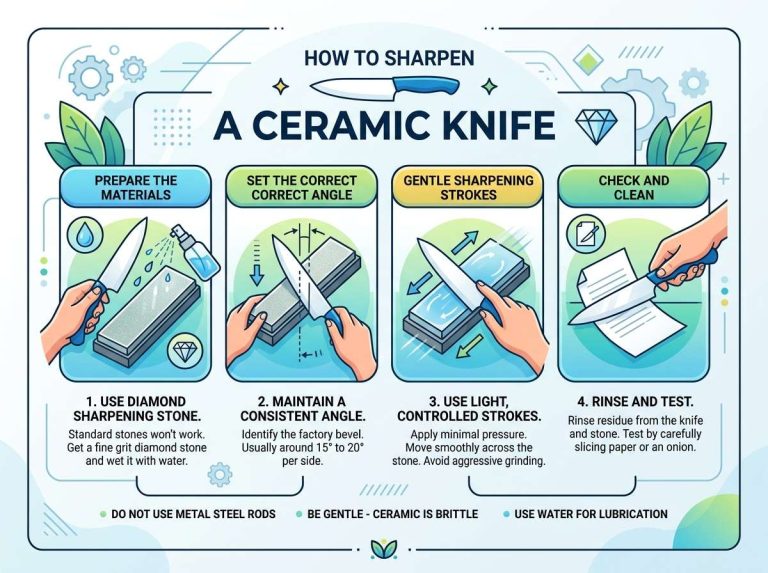
A whetstone is a block of stone used with water or oil. It offers the most control but takes practice to hold the right angle. Beginners often start with a coarse stone for repairs and a fine one for polishing.
A pull-through sharpener has fixed slots. You draw the blade through, and it sharpens automatically. It is quick but can remove more metal than a whetstone.
A professional service suits valuable knives or badly damaged edges. Many shops and knife specialists offer it.
Signs It Is Time to Sharpen
Sharpen when honing no longer restores a clean cut. Visible chips, rolled sections or struggling with soft foods are clear signs. Waiting too long makes the job harder.
Do not sharpen on a schedule alone. Usage determines wear, so check performance first.
Preventing Rust, Chips and Damage
Most knife damage comes from moisture, heat and hard surfaces. Simple precautions prevent most of these problems.
Stainless Steel Versus Carbon Steel Care
Stainless steel needs little special attention, though it can spot if left wet or exposed to salty food. Keep it dry and clean.
Carbon steel needs more care. Dry it right after washing and keep it lightly oiled. A patina, a darker surface layer, can form over time and offers some protection.
Avoiding Heat, Bone and Frozen Food Mistakes
Do not leave knives near heat sources or in hot dishwater for long periods, as heat can warp handles and affect the steel. Avoid cutting bones, which can chip the edge.
Frozen food is also hard on blades. Let items thaw slightly or use another tool. Prying with the tip can bend or snap the blade.
Seasonal and Long-Term Care Tips
Long-term care keeps a knife performing well for years. Some tasks need only occasional attention, so a simple routine helps.
Oiling and Protecting Carbon Steel Blades
If you store a carbon steel knife for a long time, apply a thin layer of food-safe oil. Wipe off the excess so the surface is not greasy. This protects the metal from moisture in the air.
Check stored knives now and then. A quick wipe and fresh oil can stop small spots from spreading.
Checking Handles and Rivets
Look at the handle every few months. Check for loose rivets, cracks or gaps where the handle meets the blade. Loose parts can trap moisture and become unsafe.
If a handle feels wobbly, stop using the knife until it is repaired. A professional can often tighten or replace the handle.
Common Beginner Mistakes to Avoid
Many knife problems start with simple habits. Recognizing them is the first step to fixing them.
Overloading the Dishwasher and Soaking Blades
A crowded dishwasher lets knives knock together and dull the edges. Soaking a knife in water for a long time invites rust and can loosen the handle. Wash knives one at a time, right after use.
Using the Wrong Tool for the Job
A chef’s knife is made for chopping and slicing, not for prying lids or cutting through thick bones. Using the wrong blade can chip or bend the edge. Choose a paring knife for small tasks and a serrated knife for crusty bread.
Keeping a few purpose-built knives on hand reduces strain on your favorite blade. Care starts with using each knife as it was designed.
Frequently Asked Questions
How often should I sharpen my kitchen knives?
No fixed schedule suits every kitchen. Sharpen when honing no longer restores a clean cut. Heavy users may need to sharpen more often.
Can I put my kitchen knives in the dishwasher?
Hand washing is generally better. Dishwashers use strong detergent and high heat, which can dull edges and loosen handles. Mild soap and water is the gentler option.
What is the difference between honing and sharpening?
Honing realigns a rolled edge without removing much metal. Sharpening removes a small amount of metal to form a fresh edge. Honing is done often, while sharpening is needed less frequently.
What is the best way to store kitchen knives?
A knife block, a magnetic strip or individual sheaths all work well. Each protects the edge and keeps it away from other objects. Always store knives dry.
Which cutting boards are kindest to knife edges?
Wood and plastic boards are generally gentle on edges. Glass, stone, granite and marble are hard and can dull or chip a blade quickly. Choose a softer surface for everyday cutting.
Conclusion
Good knife care comes down to a few steady habits. Wash by hand, dry right away, and store knives where the edge is protected. Hone often, sharpen when needed, and use gentle cutting surfaces.
With these steps, a knife stays sharp, safe and dependable for years. Small, consistent care makes the biggest difference.

Mary is a home cooking enthusiast and kitchen gear reviewer with a passion for practical cookware and food preparation tools. She enjoys testing cutting boards, knives, kitchen gadgets, and other cooking essentials to help home chefs make smarter buying decisions. Through KitchenCutting.com, Mary shares honest product reviews, buying guides, and helpful kitchen tips to make cooking easier, safer, and more enjoyable.