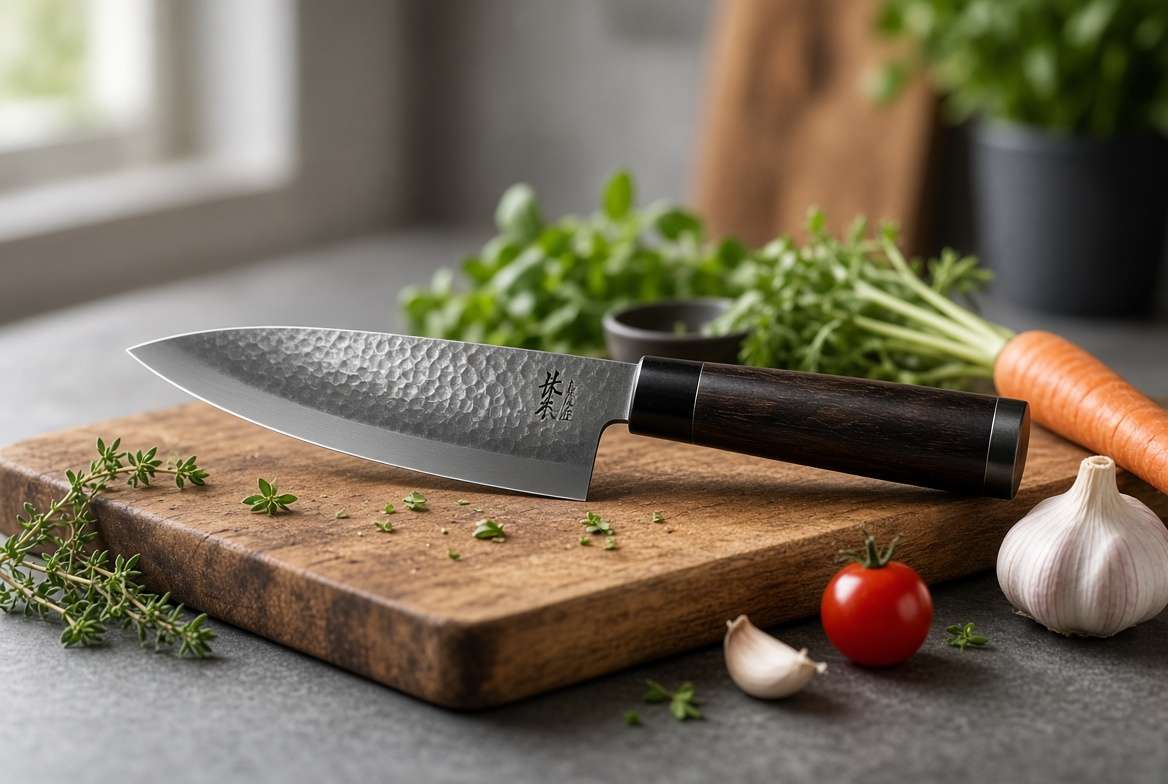
5 Best Affordable Japanese Chef Knife In 2026
If you have ever tried to slice a tomato with a dull knife, you already know the pain. The blade slips, the tomato squishes, and you end up more frustrated than fed. A good Japanese chef knife fixes that problem fast. These knives are famous for their thin blades, sharp edges, and light feel in the hand, and the best part is you no longer need a huge budget to own one.
In this article
In this guide, we look at five affordable Japanese-style chef knives that give home cooks real value without the scary price tag some premium brands carry. We break down what each knife does well, where it falls short, and who it fits best. By the end, you will know exactly which knife matches your kitchen habits and your budget.
Let’s get into it.
Why a Japanese Chef Knife Makes Such a Big Difference
Japanese knives are built a little differently than the thick, heavy Western knives many of us grew up using. Most Japanese blades use harder steel, which lets makers grind the edge much thinner. A thinner edge cuts through food with less force, so your wrist and hand do less work over time.
This matters more than people expect. A sharp, thin blade glides through onions, herbs, and proteins instead of crushing them. Less crushing means less bruising on soft produce, cleaner cuts on meat, and food that actually looks like it came from a restaurant plate.
Weight is another factor. Many Japanese knives sit lighter than their Western cousins, which makes long prep sessions feel less tiring. If you cook often, that lighter feel adds up over a week of meals.
The catch used to be price. Traditional handmade Japanese knives from famous knife-making towns can cost several hundred dollars. Luckily, plenty of budget-friendly brands now copy the same core design ideas, steel treatments, and edge angles at a fraction of the cost. That is exactly where today’s five picks come in.
How We Picked These Knives
Before jumping into the reviews, here is a quick note on what we looked at for each product. We focused on blade steel and hardness, edge sharpness out of the box, handle comfort, balance and weight, build quality, price versus what you get, and how each knife holds up during regular home cooking tasks like chopping vegetables, slicing meat, and mincing garlic.
None of these knives are meant to replace a professional forged blade costing hundreds of dollars. They are built for home cooks who want a noticeably better cutting experience without spending a fortune.
Quick Comparison Table
| Knife | Blade Length | Steel Type | Best For | Approx. Price Range |
|---|---|---|---|---|
| Huusk Japanese Stainless Chef Knife | Around 7 inches | Stainless steel | General prep, gifting | Budget |
| HOSHANHO High Carbon Chef Knife | 8 inches | High carbon steel | Daily heavy-duty chopping | Budget to mid |
| HOSHANHO Nakiri Knife | 7 inches | High carbon steel | Vegetables, precise slicing | Budget |
| Brewin CHEFILOSOPHI 5-Piece Set | Set of 5 | High carbon stainless steel | Building a starter knife collection | Mid |
| SHAN ZU Damascus Chef Knife | 8 inches | Damascus steel | All-purpose prep with a premium look | Mid |
Now let’s break each one down in detail.
1. Huusk Japanese Stainless Chef Knife with Sheath
Product Description
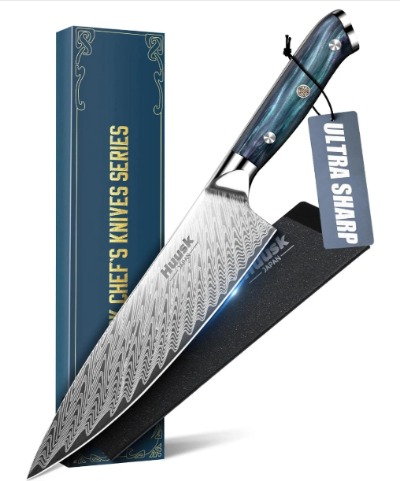
The Huusk knife became popular online largely because of its curved handle and rustic, hand-forged look. It ships with a wooden-style handle, a curved blade shape reminiscent of a small cleaver crossed with a chef knife, and a protective sheath for storage. It markets itself as an ultra-sharp stainless steel blade designed for everyday kitchen tasks.
Best Use Cases
This knife works nicely for slicing meat, breaking down smaller cuts, chopping vegetables, and general prep work. The curved blade shape makes it handy for a rocking motion when mincing herbs or garlic.
Key Features Explained Simply
The blade is made from stainless steel, so it resists rust and stays low maintenance compared to carbon steel options. The handle has a distinct curve that some people find fits naturally into the palm, almost like holding a small hatchet. The included sheath protects the edge when stored in a drawer, and it also makes the knife easier to transport if you take it camping or to a friend’s kitchen.
Real-Life Usage Insight
Out of the box, the edge feels sharp enough for basic slicing tasks right away. Vegetables like carrots, onions, and cucumbers cut cleanly with light pressure. Where it gets trickier is with the handle shape. The curve takes a short adjustment period, especially for anyone used to a straight Western-style handle. Once your grip adapts, control feels reasonable for straightforward cuts, though the design is less ideal for fine, delicate slicing like sushi-style fish cuts.
Pros
- Sharp edge straight out of the box
- Rust-resistant stainless steel blade
- Comes with a protective sheath
- Distinct, eye-catching design that also works as a gift
- Lightweight enough for extended use
Cons
- Curved handle needs an adjustment period
- Not ideal for very precise, thin slicing tasks
- Edge retention is average, so it needs more frequent touch-ups than higher-end steel
- Sheath fit can feel loose on some units
Performance Discussion
For everyday chopping and slicing, this knife performs at a solid entry level. It handles onions, peppers, and boneless meat trims without much resistance. Push it toward tougher tasks like breaking down a whole chicken or slicing dense root vegetables, and you will notice the blade needs more guidance and force than a full-size chef knife with a straight edge.
Ease of Use
Beginners generally find the sharp edge forgiving since it does most of the cutting work. The unusual handle shape is the main learning curve. Once you get comfortable with the grip, day-to-day use feels smooth.
Value for Money
Given the low price point and included sheath, this knife offers good value if you want a fun, functional starter blade. It is not built for heavy daily professional use, but for casual home cooking, it earns its price back quickly.
2. HOSHANHO Kitchen Knife in Japanese High Carbon Steel, 8 Inch Chef’s Knife
Product Description
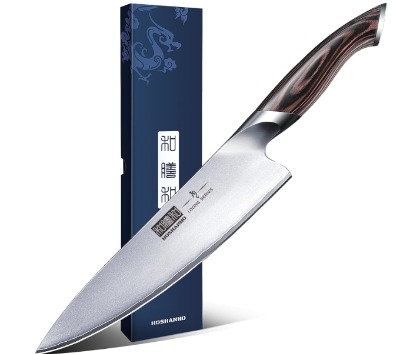
This HOSHANHO chef knife takes a more traditional approach with an 8-inch blade made from high carbon steel and an ergonomic, non-slip handle. It aims to sit somewhere between a professional-grade knife and a budget-friendly option, giving home cooks a taste of high carbon steel performance without the high carbon price tag.
Best Use Cases
This knife shines for daily chopping duties: dicing onions, slicing proteins, breaking down vegetables, and general all-purpose prep. The 8-inch length gives enough surface area for larger cutting boards and bigger ingredients like squash or melon.
Key Features Explained Simply
High carbon steel holds an edge longer than standard stainless steel and takes a sharper grind, which means cleaner cuts with less sawing. The trade-off is that carbon steel needs a little more care, since it can react to moisture and acidic foods if left wet for long periods. The ergonomic handle design helps reduce hand fatigue, and the textured grip keeps the knife steady even when your hands get slippery from washing produce.
Real-Life Usage Insight
The blade feels noticeably sharper than typical stainless kitchen knives found in basic starter sets. Slicing through tomatoes produces clean, thin cuts without squashing the flesh, a good sign of a properly ground edge. Chopping onions and garlic feels fast, and the weight distribution keeps the knife balanced rather than blade-heavy or handle-heavy.
Because it is carbon steel, drying the blade right after washing matters more here than with a pure stainless knife. Skip that step regularly, and you may start to see small discoloration spots over time.
Pros
- Genuinely sharp edge that holds up well between sharpenings
- Comfortable, non-slip ergonomic handle
- Good balance between blade and handle
- 8-inch size handles a wide range of ingredients
- Strong value for a high carbon steel blade at this price
Cons
- Requires drying right after washing to avoid spotting
- Not dishwasher safe
- Slightly heavier than the smaller Nakiri-style knives on this list
Performance Discussion
This is one of the stronger all-around performers here. It handles dense vegetables, boneless meats, and herb chopping with confidence. The edge retention beats basic stainless steel knives by a clear margin, so you spend less time honing between uses.
Ease of Use
The ergonomic handle makes this an easy knife to hold for long stretches, and the sharp factory edge means beginners will not need to fight the blade to get clean cuts. The main learning curve is remembering the extra carbon steel maintenance step.
Value for Money
For the price, getting genuine high carbon steel performance is a strong deal. If you are willing to hand wash and dry it promptly, this knife rewards that small effort with sharper, longer-lasting cuts.
3. HOSHANHO 7 Inch Nakiri Knife
Product Description
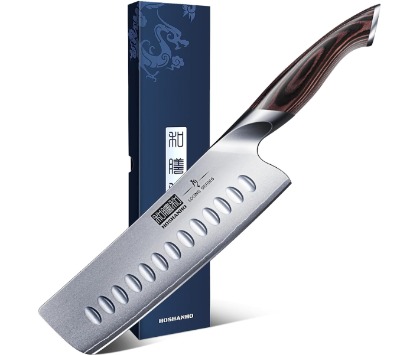
The Nakiri is a traditional Japanese vegetable knife shape, and this 7-inch version from HOSHANHO follows that design closely. Instead of a curved tip like a Western chef knife, the Nakiri has a straight, rectangular blade that runs flat from heel to tip.
Best Use Cases
This knife is built almost entirely around vegetable prep. Slicing cabbage, dicing potatoes, chopping leafy greens, and cutting cucumbers into even rounds are all tasks where this shape shines. It is less suited for tasks that need a rocking motion or precise tip work, like trimming fat off meat or deboning.
Key Features Explained Simply
The flat blade profile allows the entire edge to touch the cutting board at once, which means every chop goes all the way through in a single motion rather than a rocking or sawing action. High carbon steel gives it a sharp, long-lasting edge similar to the 8-inch HOSHANHO model. The lighter weight compared to a full chef knife also reduces fatigue during long vegetable prep sessions, like when you are making a big batch of soup or slaw.
Real-Life Usage Insight
Using this knife on a pile of carrots or a head of cabbage feels satisfying almost immediately. The straight edge produces even slices with a simple up-and-down motion, so consistency comes naturally even for less experienced cooks. Julienning vegetables for stir fry becomes noticeably faster once you get used to the flat blade action.
Where it struggles is with round or oddly shaped foods that need the tip of a knife to start a cut, like piercing into a squash or trimming around a bone. For that kind of task, this Nakiri is simply the wrong tool, and that is by design rather than a flaw.
Pros
- Excellent for vegetable-focused meal prep
- Even, consistent slices with minimal effort
- Lightweight, comfortable for long prep sessions
- Sharp high carbon steel edge
- Great for people who cook a lot of plant-based meals
Cons
- Not versatile for meat, poultry, or fish
- No pointed tip limits certain cutting tasks
- Best paired with a second knife rather than used alone
Performance Discussion
Within its specific lane, this knife performs excellently. Vegetable prep speed improves noticeably compared to using a general chef knife for the same tasks. It is a specialist tool, and it performs like one.
Ease of Use
Very beginner friendly for vegetable work. The straight blade removes guesswork, and the light weight keeps hand fatigue low even during large batch cooking.
Value for Money
As a second or third knife added to a kitchen that already has a general chef knife, this offers strong value for anyone who cooks vegetables often. On its own as a single knife purchase, it is less practical since it cannot cover meat or fish prep well.
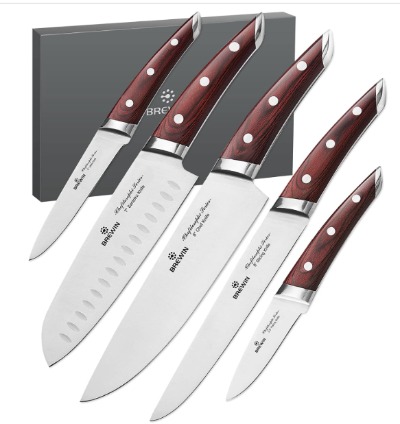
4. Brewin CHEFILOSOPHI Japanese Chef Knife Set, 5 Pieces
Product Description
This set from Brewin includes five knives with red pakkawood handles, aiming to give a full starter collection in one purchase. Pakkawood is a resin-treated wood material known for durability and a smooth, polished look, and the ergonomic handle design carries across all five knives in the set.
Best Use Cases
This set works best for someone building out a kitchen from scratch or upgrading an old mismatched knife drawer. Having multiple blade sizes covers a wider range of tasks than a single knife can, from bread slicing to fine paring work.
Key Features Explained Simply
High carbon stainless steel blends some of the edge quality of carbon steel with the lower maintenance of stainless steel, giving a reasonable middle ground for people who do not want to worry about drying blades immediately. The red pakkawood handles add a visual pop and a comfortable, secure grip thanks to their smooth yet grippy texture. Getting five knives in one purchase also means consistent design and weight across your whole knife set, rather than a mismatched drawer of random brands.
Real-Life Usage Insight
Testing across a normal week of cooking, the larger chef knife in the set handles the bulk of daily prep work, while the smaller utility and paring knives cover fruit, garnish, and detail tasks the bigger blade is too clunky for. Having a matching bread knife also removes the need to keep an old serrated blade around just for loaves and bagels.
The main thing to watch is that quality across a five-piece set can vary slightly knife to knife, since manufacturing an entire matched set at a budget price sometimes means the smallest blades get slightly less attention during edge finishing.
Pros
- Covers a wide range of kitchen tasks in one purchase
- Attractive, cohesive design across all five knives
- Comfortable ergonomic pakkawood handles
- Good stainless steel corrosion resistance
- Great starter set for a new kitchen
Cons
- Individual blade quality can be slightly less consistent than single-knife purchases
- Smaller knives in the set feel less premium than the main chef knife
- Storage space needed for five separate blades
Performance Discussion
As a complete package, this set performs well for general household cooking. The main chef knife carries most of the weight in daily use and performs comparably to other mid-range options on this list. The smaller knives round out the collection nicely for tasks the chef knife is not suited for.
Ease of Use
Because each knife in the set is sized for a specific task, beginners often find it easier to grab the right tool rather than forcing one knife to do everything. The ergonomic handles keep grip comfortable across extended use.
Value for Money
Buying five knives individually at similar quality would likely cost more than this set as a bundle. For anyone starting fresh or replacing a full drawer of old knives, this delivers strong value in one purchase.
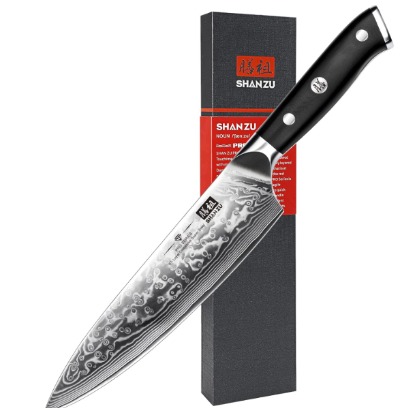
5. SHAN ZU Chef Knife, 8 Inch Damascus Kitchen Knife
Product Description
The SHAN ZU knife brings Damascus-style steel into an affordable price range. Damascus steel is made by folding and layering multiple steel types together, which creates the wavy pattern visible on the blade and can contribute to a durable, sharp edge.
Best Use Cases
This 8-inch blade works well as a true all-purpose chef knife. It handles meat, vegetables, herbs, and general prep with the kind of versatility you want from a single main knife in the kitchen.
Key Features Explained Simply
The layered Damascus construction gives the blade a distinct wavy pattern, and layered steel construction can add strength and edge retention compared to single-layer stainless blades. The 8-inch length strikes a practical middle ground, long enough for bigger cutting jobs but not so long that it feels unwieldy in a home kitchen. The handle design keeps a traditional chef knife shape, which makes it a comfortable, familiar choice for anyone coming from a standard Western knife.
Real-Life Usage Insight
Slicing through chicken breast, dicing onions, and mincing garlic all feel smooth and controlled with this knife. The blade holds its edge well across a normal week of cooking before needing a touch-up on a honing rod. The classic handle shape means there is close to zero adjustment period, since it mimics the grip style most home cooks already know.
The Damascus pattern also gives it a more premium look on the counter or in a knife block, which matters if you like your kitchen tools to look as good as they perform.
Pros
- Genuinely versatile all-purpose blade
- Attractive Damascus pattern and finish
- Strong edge retention for the price
- Familiar handle shape with no learning curve
- Handles both meat and vegetable prep well
Cons
- Requires hand washing to protect the finish and edge
- Slightly pricier than the most basic options on this list
- Full Damascus performance benefits are harder to notice for very light home use
Performance Discussion
Among all five knives here, this one performs closest to an everyday workhorse chef knife you could use for nearly every task in the kitchen. It does not specialize the way the Nakiri does, but that trade-off means fewer gaps in what it can handle.
Ease of Use
Very approachable for beginners and experienced cooks alike, since the handle and blade shape follow familiar chef knife proportions. No awkward grip adjustment needed.
Value for Money
Given the Damascus construction and all-purpose performance, this knife sits at a fair price point for what it delivers. It costs a bit more than the most basic picks on this list, but the added versatility and edge quality justify the difference for most home cooks.
Comparison Insights
Looking at all five knives side by side, a few patterns stand out. The Huusk knife wins on personality and price, but its curved handle limits precision work. The two HOSHANHO knives share the same high carbon steel approach, with the 8-inch chef knife covering general tasks and the Nakiri specializing hard in vegetable prep. The Brewin set solves a different problem entirely, giving you range instead of a single standout blade. The SHAN ZU knife lands closest to an ideal single-knife purchase for someone who wants one blade that does almost everything well.
If your kitchen mostly needs one dependable knife, the SHAN ZU or the HOSHANHO 8-inch chef knife make the most sense. If you cook a ton of vegetables, adding the Nakiri alongside a general chef knife creates a strong combo. If you are starting from zero, the Brewin set gets you fully equipped in a single purchase.
Buying Guide: What to Look for in an Affordable Japanese Chef Knife
Blade Steel
Stainless steel resists rust and needs less maintenance, making it friendlier for people who forget to dry knives right after washing. High carbon steel and Damascus steel generally hold a sharper edge for longer, but they ask for a bit more care, mainly drying the blade promptly and avoiding long soaks in the sink.
Blade Length
Shorter blades around 6 to 7 inches offer more control for detail work and smaller kitchens. Longer 8-inch blades cover bigger cutting boards and larger ingredients more efficiently. Most home cooks land comfortably with an 8-inch chef knife as their main blade.
Handle Comfort and Grip
A knife only performs as well as your grip allows. Ergonomic, textured handles reduce slipping, which matters even more once your hands get wet or oily during cooking. Try to think about how the handle shape fits your hand, since curved or unusual shapes may need an adjustment period.
Weight and Balance
A well-balanced knife feels centered rather than heavy at the tip or the handle. Lighter knives reduce fatigue during long prep sessions, an important detail for anyone who cooks daily rather than occasionally.
Maintenance Needs
Carbon steel and Damascus blades reward you with sharper cuts but ask for hand washing and prompt drying. Stainless steel blades forgive a little more neglect. Be honest with yourself about how much upkeep you are actually willing to do regularly, since a great knife left wet in a sink loses its edge and shine fast.
Price Versus Purpose
A single all-purpose knife covers most tasks reasonably well. A specialized blade like a Nakiri performs its specific job better than a general knife ever could, but only covers a narrow range of tasks. Decide if you want one flexible knife or a small collection built around specific cooking habits.
Who Should Buy These Knives
Home cooks who currently rely on old, dull, mismatched knives will notice an immediate difference switching to any of these five options. People who cook vegetables often will appreciate the Nakiri’s speed and consistency. Anyone building a kitchen from scratch benefits most from the Brewin five-piece set, since it covers a wide range of tasks in one purchase. Cooks who want a single dependable all-rounder should lean toward the SHAN ZU or the HOSHANHO 8-inch chef knife. Gift shoppers or casual cooks drawn to a distinct look may enjoy the Huusk knife for its curved design and included sheath.
These knives are not aimed at professional chefs running a commercial kitchen all day, since that setting calls for higher-end forged blades built for constant heavy use. For regular home cooking, though, all five options deliver a clear step up from typical big-box store knife sets.
Common Mistakes to Avoid When Buying and Using a Japanese Chef Knife
Skipping the maintenance instructions. Carbon steel and Damascus blades need prompt drying after washing. Leaving them wet, even for a short time, can lead to spotting or discoloration.
Using a dishwasher. Heat, moisture, and movement inside a dishwasher damage sharp edges quickly and can dull or chip a blade far faster than hand washing.
Cutting on hard surfaces. Glass cutting boards, stone counters, or ceramic plates dull a sharp edge fast. Stick to wood or soft plastic cutting boards to protect the blade.
Ignoring honing. A honing rod realigns the edge between full sharpenings and takes only a few seconds before cooking. Skipping this step lets the edge dull faster than it needs to.
Buying based on looks alone. A beautiful Damascus pattern or a unique handle shape matters less than blade sharpness, steel quality, and how the knife actually feels in your hand during real cooking tasks.
Storing knives loosely in a drawer. Blades bumping against other utensils dull faster and pose a safety risk. A knife block, magnetic strip, or blade guard keeps both you and the edge protected.
Overbuying before knowing your needs. A five-piece set sounds appealing, but if your cooking mostly involves vegetables, a single quality Nakiri paired with one general chef knife might serve you better than a full set with pieces you rarely touch.
Final Verdict
All five knives reviewed here offer real value for home cooks looking to upgrade from a basic knife set without spending premium prices. The HOSHANHO 8-inch chef knife stands out as the strongest all-around performer thanks to its sharp high carbon steel edge and comfortable ergonomic handle. The SHAN ZU Damascus knife comes in close behind, offering excellent versatility with a more familiar handle shape and an attractive finish.
For vegetable-heavy cooking, the HOSHANHO Nakiri earns its place as a specialist tool that speeds up prep dramatically. The Brewin CHEFILOSOPHI set makes the most sense for anyone building a full kitchen from the ground up, since it solves multiple knife needs in a single purchase. The Huusk knife remains a fun, budget-friendly pick for casual cooks or as a gift, even though its curved handle asks for a short adjustment period.
At the end of the day, the right knife comes down to your own cooking habits. Think about what you cook most often, how much maintenance you are willing to do, and what kind of grip feels natural in your hand. Any of these five options will get you cutting sharper, faster, and with a lot less effort than a dull, generic kitchen knife ever could.

Mary is a home cooking enthusiast and kitchen gear reviewer with a passion for practical cookware and food preparation tools. She enjoys testing cutting boards, knives, kitchen gadgets, and other cooking essentials to help home chefs make smarter buying decisions. Through KitchenCutting.com, Mary shares honest product reviews, buying guides, and helpful kitchen tips to make cooking easier, safer, and more enjoyable.