Best Boos Cutting Board In 2026
As an Amazon Associate we earn from qualifying purchases.
In this article
Shopping for the best Boos cutting board can feel confusing at first. John Boos makes many wooden boards, and the names, sizes and thicknesses all look alike. This guide is for beginners who want a clear, simple way to sort through the options.
The five boards in this round-up share a few things. All are made from maple wood, all are reversible, and all come from the same American brand with a long history of making wooden kitchen boards. This comparison rests on the listed features and typical use, not on personal testing, so the goal is to help you read the details with confidence.


1. John Boos R-Board Series Rectangular Wooden: best for everyday slicing and serving
What this board is and who it suits
This is a thick, rectangular maple board of 18 by 12 inches, with a thickness of 1.5 inches. It uses edge-grain construction, which means the wood strips are laid on their edges so the top surface shows the long lines of the grain. Edge-grain boards are a common, practical choice for everyday food prep.
It suits home cooks who want a solid, mid-sized board for chopping vegetables, slicing bread or setting out cured meats and cheese. Because it is reversible and has finger grips, it can serve as a cutting board on one side and a simple serving board on the other.
Best use cases
The board fits well on a counter for daily chopping and slicing. It also works for casual entertaining, such as arranging a charcuterie spread. The recessed finger grips make it easier to lift and turn the board without slipping.
Key features in simple words
The wood is maple, a hard and fine-grained wood that many cooks prefer. The oil finish helps the surface look fresh and resist drying out. The level surface is described as suitable for good knives, which means the board is meant to be gentle on a sharp blade when used with care.
What daily use usually feels like
At 10 pounds, this board is heavy enough to stay put on the counter while you chop. That weight also means it is not something you will move around often. Many buyers find the 1.5-inch thickness feels sturdy under the knife.
Performance and ease of use
The board is designed for slicing, chopping and serving with a steady, level cutting area. Care is simple but must be done by hand. The listed care guide recommends John Boos oil and cream, which are sold separately, so you should plan for that extra cost.
Value for money
At the listed price, this board sits in the middle of the range in this round-up. Buyers who want a large, sturdy, American-made maple board may see the price as reasonable for what they receive.
Pros
- Solid maple construction with a reversible design
- Recessed finger grips make handling easier
- Thick, sturdy build suited to daily chopping
- Made in the USA by a long-established brand
Cons
- At 10 pounds, it is heavy to move around
- Hand-wash only, with no dishwasher option
- Recommended oil and cream are sold separately
- Price is higher than basic plastic or small wood boards
2. John Boos Block R03 Maple Wood Edge: best for large prep and serving spaces
What this board is and who it suits
This is the largest board in this round-up, measuring 20 by 15 inches and 1.5 inches thick. It is an edge-grain maple board with reversible sides and recessed finger grips. Its size gives plenty of room for big jobs.
It suits people who cook for a crowd, prepare large cuts of food, or like a generous surface for entertaining. Those with a small kitchen may find the size harder to store, so measuring your space first is a good idea.
Best use cases
This board works well for preparing a big batch of vegetables or slicing a large loaf of bread. It also gives room to arrange a generous charcuterie spread for guests. The extra space helps when you want to keep several ingredients separate while you work.
Key features in simple words
Like the smaller R-Board, this one uses maple and an edge-grain build. The reversible design lets you use either side, and the oil finish helps protect the wood surface. The finger grips give you a secure way to lift the board, even at this size.
What daily use usually feels like
The board is large enough that it will take up a good share of your counter. Many cooks use boards this size on a dedicated spot near the stove or sink. Because of its size, it is best kept flat so it stays stable during use.
Performance and ease of use
The wide, level surface gives you plenty of room to work without crowding the food. Care is the same as the other maple boards: hand-wash, dry well and use the recommended oil and cream. Keeping the board dry between uses helps preserve the wood over time.
Value for money
This is the most expensive board in the middle group, and its price reflects its generous size. For someone who regularly needs a large work surface, the investment may make sense. For occasional cooks, a smaller board may be a better fit for the budget.
Pros
- Generous 20 by 15 inch surface for large jobs
- Reversible, with recessed finger grips
- Thick maple build that feels solid
- Edge-grain design suited to everyday cutting
Cons
- Its large size needs more counter and storage space
- Hand-wash only, with no dishwasher option
- Care products are sold separately
- Price is at the higher end of this round-up
3. John Boos Chop-N-Slice Series Rectangular Maple: best for light, easy-to-store boards
What this board is and who it suits
This is a rectangular maple board measuring 16 by 10 inches and 1 inch thick. It weighs 4.5 pounds, which makes it much lighter than the thicker R-Board models. It is part of the Chop-N-Slice collection, which the brand describes as lightweight and easy to lift and store.
It suits cooks who want a dependable wooden board without the weight of a thick butcher block. It also fits people who have limited storage and need something they can easily stand up or tuck away.
Best use cases
The board handles everyday tasks such as slicing fruit, chopping vegetables and cutting bread. Its lighter weight makes it easy to carry from the counter to the table for serving. It can also work as a simple cheese or appetizer board.
Key features in simple words
The board is made from Northern Hard Rock Maple, which is a dense and durable wood. It is reversible, so both sides can be used. The listed information says the boards are NSF certified, a standard tied to food safety for commercial kitchen equipment. The brand also describes the board as a sustainable alternative to plastic and easier on knives.
What daily use usually feels like
At 4.5 pounds, the board is easy to pick up with one hand. That lightness can be a real advantage if you move it often. A thinner board can also flex a little more than a thick one, so it is wise to place it on a steady surface.
Performance and ease of use
The board gives a smooth, dependable surface for general cutting. Because it is thinner, it may not feel as solid under heavy chopping as a thicker board would. Care is hand-wash and dry, and the brand advises regular oiling, especially for new boards or in dry climates.
Value for money
This is the least expensive board in this round-up. For many beginners, it offers a practical way to get a real wooden board without a large spending commitment. Buyers who need a heavy-duty block may want to look at the thicker models instead.
Pros
- Lightweight and easy to lift and store
- Reversible, with a durable maple surface
- Lowest price in this round-up
- Often described as gentler on knives than plastic
Cons
- Thinner build may feel less steady under heavy chopping
- No recessed finger grips listed
- Hand-wash only, not dishwasher safe
- Oil and cream must be bought separately
4.
John Boos Chop-N-Slice Series Square Wooden: best for small tasks and tight spaces
What this board is and who it suits
This is the smallest board in this round-up, measuring 10 by 10 inches and 1 inch thick. It weighs 4 pounds and has softened corners. It uses edge-grain maple construction and is reversible.
It suits people who need a compact board for quick jobs, such as chopping a few vegetables, slicing a sandwich or serving a small plate of snacks. It is also a good match for small kitchens, apartments or a second board for a different task.
Best use cases
The square shape works well for limited counter space. It is handy for small daily tasks or as a serving board for cheese and crackers. Some cooks keep a small board like this for cutting fresh herbs or bread.
Key features in simple words
The eased corners are softened so the board feels smoother when you handle it and easier to wash. The oil finish helps protect the wood. Like the other boards, it is reversible, so both sides can be used.
What daily use usually feels like
Because it is small and light, it is simple to move, rinse and store. The compact size means you will not have much room to spread out, so it suits focused, smaller tasks. Many people find it a helpful companion to a larger board.
Performance and ease of use
The smooth surface makes basic slicing and chopping easy. The limited space, however, means large recipes may need several batches. Care is hand-wash and dry, plus the brand’s recommended oil and cream, sold separately.
Value for money
This board costs less than the larger models and is a sensible option for light, occasional use. Buyers who need a big work surface will likely need a bigger board. For a small kitchen or a simple second board, the price may feel fair.
Pros
- Compact size fits small kitchens and tight spaces
- Softened corners feel smooth and are easy to wash
- Reversible solid maple construction
- Lightweight at 4 pounds and simple to store
Cons
- Small surface can be limiting for big recipes
- At 1 inch thick, it is less substantial than thicker boards
- Hand-wash only, with no dishwasher option
- Care products are sold separately
5. John Boos CCB Series Rectangular Wooden Maple: best for heavy-duty end-grain use
What this board is and who it suits
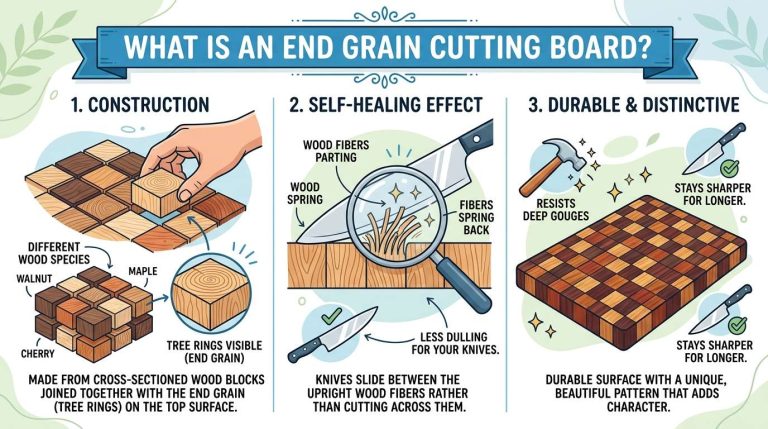
This is the heaviest and thickest board in this round-up, measuring 20 by 15 inches and 2.25 inches thick. It weighs 21 pounds and uses end-grain construction, where the wood is laid so the ends of the fibers face up. End-grain boards are often chosen for serious, heavy use.
It suits experienced home cooks or serious food lovers who want a long-lasting, substantial work surface. It is less suited to anyone who needs a board they can easily move or store.
Best use cases
This board is well suited to heavy chopping, large prep sessions and as a centerpiece for food display. Its weight keeps it steady while you work. It is also a striking piece for a serving table.
Key features in simple words
The end-grain build is the main feature in a board like this, the wood pieces are arranged so the cut ends face up. Many cooks describe end-grain surfaces as gentler on knife edges, though care and oiling still matter.
The board also has recessed finger grips and a reversible design, so it can be turned and used on either side.
What daily use usually feels like
At 21 pounds, this board stays firmly in place once it is set down.
That same weight means it is hard to lift and move, so most people will leave it on one spot. Its thickness of 2.25 inches gives it a solid feel under the knife.
Performance and ease of use
The large, level surface gives plenty of room for heavy prep and steady cutting. Because it is end-grain, it takes more attention to keep clean and oiled. Care is hand-wash only, with the recommended oil and cream sold separately.
Value for money
This is by far the most expensive board in this round-up. Its price reflects its size, weight and construction. For most beginners, a lighter board will cover everyday needs at a much lower cost, so this model suits buyers who have a clear need for a heavy-duty block.
Pros
- Thick, heavy end-grain build for demanding use
- Large 20 by 15 inch surface with plenty of room
- Reversible, with recessed finger grips
- Made in the USA by a long-established brand
Cons
- At 21 pounds, it is very hard to move
- Highest price in this round-up by a wide margin
- End-grain surfaces need more regular care
- Hand-wash only, with care products sold separately
Comparison insights: how these boards differ in performance, ease of use and value
The five boards differ mainly in size, thickness, weight and construction. The two edge-grain R-Board and Block R03 models feel closest to each other in build. The Chop-N-Slice boards are lighter and thinner, while the CCB model is in a class of its own.
In terms of performance, the thicker boards feel more solid under heavy chopping. The thinner Chop-N-Slice boards are easier to handle but may feel less steady. Edge-grain and end-grain are the two main wood layouts, and each suits different habits.
For ease of use, the lighter boards win for moving and storing. The heavier boards win for stability once they are placed on the counter. Every board in this group is hand-wash only, so care is a shared trade-off.
On value, the Chop-N-Slice Square is the lowest-cost entry point, while the CCB is the highest. The R-Board and Block R03 sit in between, with the Block R03 giving the most surface area for its price. The best value depends on how much space and weight you need.
Buying guide: key factors explained in plain words
Size is the first thing to think about. A larger board gives more room to work, but it needs more counter and storage space. Measure your kitchen before you choose.
Thickness and weight go together. A thicker board is heavier and feels more solid, while a thinner board is easier to lift. Think about how often you will move the board and if you want it to stay in one place.
Wood grain matters too. Edge-grain boards show long strips of wood on top and are a common, practical choice. End-grain boards show the ends of the wood fibers and are often chosen for heavier use, though they need more regular care.
Care is the last factor. Every board here is hand-wash only, and the brand recommends oil and cream, which are sold separately. Plan for that routine and cost before you buy, since it keeps wood boards in good shape over time.
Who should buy these products: matching each buyer to a board
If you want a solid, everyday maple board with finger grips, the R-Board Series fits well. It balances size, weight and value for many home cooks.
If you cook for a crowd or need a big surface, the Block R03 is the closest match. Its generous size suits large prep and entertaining, as long as you have the counter space.
If you want something light and easy to store, the Chop-N-Slice Rectangular is a practical choice. It gives you a real wooden board at a lower cost and weight.
<
If you are short on space or want a second board for quick jobs, the Chop-N-Slice Square is a good fit. Its small footprint and softened corners make it simple to use and clean.
If you have a clear need for a heavy-duty, long-lasting block and are comfortable with extra care, the CCB Series is the match. Its weight and end-grain build suit serious prep rather than casual use.
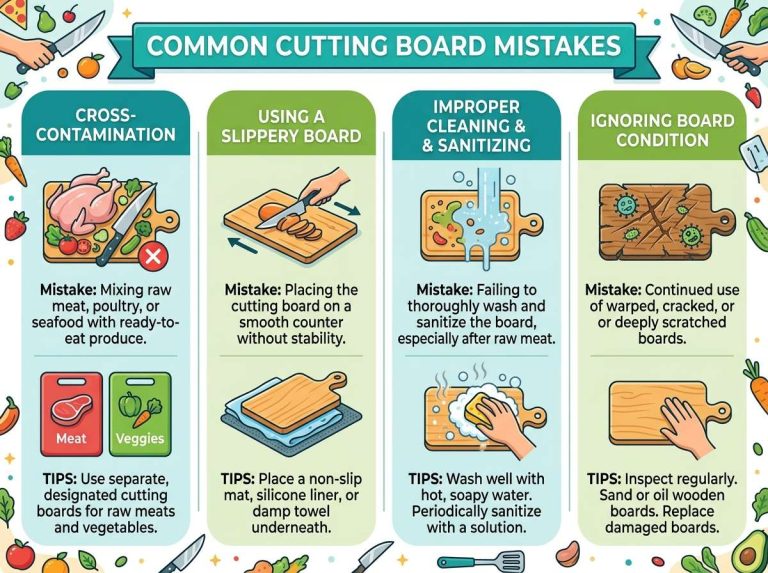
Common mistakes to avoid when buying and caring for a wooden board
One common mistake is buying the largest board without checking the space. A big board that does not fit your counter or cupboard can become a daily frustration. Measure first and think about where it will live.
Another mistake is skipping the care routine. Wood boards need hand-washing, thorough drying and regular oiling to stay in good shape. Letting a board soak or air-dry in a damp spot can lead to warping and cracks over time.
Some buyers also forget the cost of the recommended care products. Since the oil and cream are sold separately, it helps to budget for them up front. Ignoring this step can leave a new board less protected than it should be.
Finally, many people expect one board to do every job. A thin, light board and a thick, heavy block suit different tasks. Picking with your actual cooking habits in mind usually leads to a better result.
Final verdict: which John Boos board may suit you
There is no single best option for everyone. The right board depends on your space, how often you cook, and how much weight you are willing to handle. Each of these five boards has a clear role.
For most beginners, the R-Board Series offers a balanced mix of size, sturdiness and value. The Chop-N-Slice Rectangular is a strong choice if you want something lighter and more affordable. The other models serve more specific needs, from large prep spaces to heavy, long-term use.
In short, match the board to your kitchen and your habits. Take the time to think about size, weight and care, and the choice becomes much clearer.
Frequently Asked Questions
What is the difference between edge-grain and end-grain boards?
Edge-grain boards show long strips of wood on the cutting surface. End-grain boards show the ends of the wood fibers. End-grain is often chosen for heavier use but usually needs more regular care.
Can I put these boards in the dishwasher?
No. All five boards in this round-up are listed as hand-wash only. Dishwashers can cause wood to warp or dry out, so washing by hand and drying well is the safer routine.
Do I need to buy oil and cream for these boards?
The listed care guidance recommends John Boos Mystery Oil and Board Cream, which are sold separately. Regular oiling helps protect the wood and keep the surface in good shape, so budget for these products.
Which board is best for a small kitchen?
The Chop-N-Slice Square is the most compact option at 10 by 10 inches. Its small size and light weight make it easier to store in limited space.
Are these boards made in the USA?
The listing for each board says it is made in the USA. John Boos has been making wooden kitchen boards since 1887, so the brand has a long history with this type of product.

Mary is a home cooking enthusiast and kitchen gear reviewer with a passion for practical cookware and food preparation tools. She enjoys testing cutting boards, knives, kitchen gadgets, and other cooking essentials to help home chefs make smarter buying decisions. Through KitchenCutting.com, Mary shares honest product reviews, buying guides, and helpful kitchen tips to make cooking easier, safer, and more enjoyable.