5 Best Cutting Board For Chicken In 2026
As an Amazon Associate we earn from qualifying purchases.
Finding the best cutting board for chicken involves balancing hygiene, material durability, and ease of cleaning. Raw poultry requires surfaces that resist bacteria and remain easy to sanitize after every use. This guide examines five popular options to help you determine which material and design fit your kitchen routine.
These products are common options for home cooks looking to manage raw meat safely. While they vary in material—ranging from stainless steel to bamboo and flexible plastic—they all aim to simplify food preparation. This comparison relies on the provided product specifications and typical use cases, rather than personal hands-on testing.



1. Stron-Dura Small Stainless Steel Cutting Board: Best for Compact Spaces
Small Kitchen Solution
This board is a compact, 11.5 by 8-inch tool designed for smaller kitchens or travelers. It suits those who need a dedicated, non-porous surface for raw meat. Because it is small and lightweight, it fits easily into tight drawers or hangs on a wall hook. Its slim profile ensures it takes up minimal space on a countertop while leaving room for other ingredients.
Material and Performance
The stainless steel surface does not absorb juices, odors, or bacteria. This is helpful when handling raw chicken, as it prevents the cross-contamination often associated with wooden or plastic boards that develop grooves over time. The metal is hard, which means it resists deep cuts but may require more frequent knife honing to maintain a sharp edge. Since the surface is smooth, it provides a consistent area for slicing poultry without the risk of fibers or small wood chips getting into the food.
Daily Use and Maintenance
Cleaning is simple because the board is dishwasher safe. You can rinse it with hot water immediately after prepping meat, and it will not require the oiling or deep cleaning that wood boards often need. Its dual-sided design allows you to keep the raw meat side separate from the side used for vegetables or bread. The material is also resistant to heat, so you can safely place it near a stove without worrying about warping or melting.
Pros
- Non-porous surface prevents odor and bacteria buildup.
- Dishwasher safe for easy sanitization after meat prep.
- Compact size is ideal for RVs, dorms, or small apartments.
- Double-sided use helps maintain food safety.
Cons
- Hard surface can dull knife blades faster than wood.
- Small surface area may be limiting for large cuts of meat.
- Metallic sound during chopping may bother some users.
2. GORILLA GRIP BPA-Free Flexible Cutting Board: Best for Convenience
Flexible Prep Mats
This set includes five flexible plastic mats, each featuring a different icon to help you identify which board is for meat, fish, or produce. The large size of four of these boards, at 15 by 12 inches, provides plenty of space for handling whole chickens or large roasts. Their flexible nature is the standout feature here, allowing them to adapt to your workspace. The material is lightweight, which makes it easy to move the boards around the kitchen as you transition between different meal preparation stages.
Ease of Transfer
When you finish chopping, you can easily bend the mat to funnel ingredients directly into a bowl or pan. This reduces the risk of spills and makes transferring diced meat or chopped vegetables efficient. The textured backing is designed to keep the mats from sliding on your countertop while you work. This grip helps keep the board stable, providing a safer environment when cutting slippery pieces of poultry.
Hygiene and Storage
Being BPA-free and non-porous, these boards do not harbor the bacteria that can hide in wood fibers. You can wash them in the top rack of the dishwasher, which is a significant benefit when working with raw poultry. When not in use, their thin profile allows them to stack or store in very little space. This makes them a practical choice for kitchens with limited drawer or cabinet capacity.
Pros
- Icon-coded system helps prevent cross-contamination.
- Flexible design makes transferring food to pots easy.
- Textured backing keeps the mat steady during use.
- Dishwasher safe for thorough cleaning.
Cons
- Plastic can develop cut marks over time, creating grooves.
- Not heat resistant, so they must be kept away from hot pans.
- Lightweight material may feel less sturdy than heavy boards.
3. Stron-Dura Stainless Steel Cutting Board: Best for Versatility
Medium-Sized Utility
Measuring 13.4 by 9 inches, this medium version of the Stron-Dura board offers more workspace than the smaller model. It is designed for those who want the hygienic benefits of metal but need a bit more room for daily meal preparation. The surface provides enough space to trim a full chicken breast or slice a large bell pepper without cluttering the counter. It serves well for cutting poultry, but also doubles as a surface for kneading bread dough or rolling out pastry. You can even use it as a cold serving tray for cheese or fruit platters when hosting guests. Its moderate footprint fits easily into standard dish racks or cabinets, making it a functional addition to any size kitchen.
Hygienic Metal Surface
The non-porous stainless steel surface is a primary advantage for meat preparation. It does not hold onto the odors of raw chicken or pungent ingredients like onion and garlic. This makes it easy to swap between different food types without lingering smells. Unlike wood or bamboo, this material does not harbor bacteria in deep grooves or knife scars. It wipes clean instantly with a damp cloth. Like the smaller version, it is dishwasher safe and requires no special maintenance like oiling or sealing to keep it in good condition. The metal construction also resists staining from acidic ingredients like tomatoes or citrus juices, which often discolor natural materials.
Practical Features
The board features a built-in hanging hole, which is helpful for air-drying or storage. You can hang it on a kitchen hook to save precious counter space when it is not in use. It is thin and light enough to be lifted with one hand, which is useful when moving food directly to the stove or a waiting pan. The brushed finish is designed to provide some grip so that food does not slide around excessively while you chop. While metal is inherently smoother than wood, the texture helps keep vegetables and meats stable. It provides a sturdy, flat base that feels solid under the weight of a chef knife. The rounded edges prevent sharp corners from snagging on cleaning cloths or sponges during the wash cycle.
Pros
- Non-porous steel resists odors and bacteria.
- Dishwasher safe and requires no oiling or sealing.
- Versatile size works for meat, dough, or as a tray.
- Lightweight design is easy to handle and store.
- Durable material does not warp or crack over time.
Cons
- Hard surface requires occasional knife maintenance.
- Surface may show light marks from intense chopping.
- Does not provide the grip of a wooden board.
- Metal can be loud when using a heavy blade.
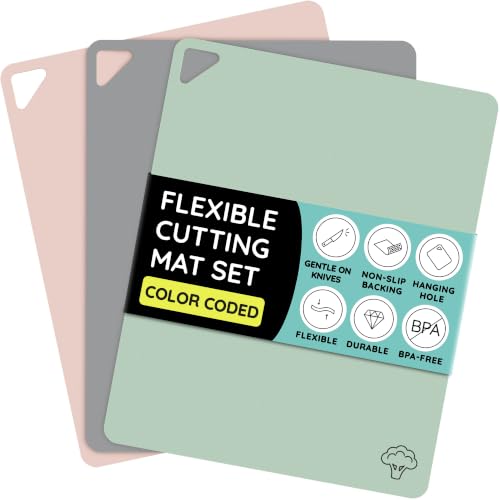
4. Flexible Plastic Cutting Board Set of 3: Best for Color-Coding
Color-Coded Safety
This set consists of three flexible mats that use color coding to help users keep raw meat separate from other ingredients. By dedicating one color to chicken and others to produce, you reduce the risk of transferring bacteria across your kitchen. Each mat measures 15 by 12 inches, which is a standard size for most home cooking tasks. The system is simple to implement for anyone who is new to safe food handling practices. Having three distinct mats means you do not have to wash a board between chopping different ingredients. You can prepare your vegetables on one mat and move immediately to your protein on another without delay. Keeping raw fish, poultry, and ready-to-eat foods on separate surfaces is a fundamental rule for maintaining a sanitary workspace.
Stability and Handling
The waffle grip backing is a key feature, as it helps the mat stay anchored to the counter even when you are chopping vigorously. This prevents the mat from slipping or sliding during delicate tasks. It provides a safer experience for those who are still developing their knife skills. A stable base ensures that your blade stays where you intend it to be, which is vital for precision work. The boards are lightweight and bendable, allowing you to move cut chicken into a pan or bowl without making a mess. You can simply roll or fold the mat slightly to create a funnel for your chopped food. This is particularly helpful for beginners who might struggle with transferring meat from a heavy board to a high-sided pot. The flexibility also makes these mats easy to store in narrow spaces where a bulky wooden board would not fit.
Cleaning and Care
These boards are designed for hand washing with mild soap and warm water. Because they are non-porous, they resist staining and odors effectively. You should avoid using harsh scrubbers that might degrade the surface texture over time. Using a soft sponge or cloth will preserve the integrity of the plastic surface for a longer period. It is important to note that these boards are not heat resistant and should not be placed near hot stove surfaces. Exposure to high heat will cause the plastic to warp or melt permanently. Keep them on cool, flat surfaces to ensure they maintain their shape and effectiveness for your daily cooking needs. Always check that the counter is clear of debris before laying the mat down to ensure it sits perfectly flat.
Pros
- Color-coded system minimizes cross-contamination risks.
- Waffle grip backing prevents sliding during use.
- Flexible material allows for easy food transfer.
- Non-porous surface resists odors and stains.
- Slim profile allows for easy storage in tight drawers.
Cons
- Hand wash only, which may be less convenient for some.
- Not heat resistant and must avoid hot surfaces.
- Plastic may eventually show deep knife cuts.
- Material is thinner than traditional rigid cutting boards.
5. WEBEEDY Chicken Shaped Bamboo Wood Cutting Board: Best for Presentation
Aesthetic Design
This bamboo board features a distinct chicken-shaped design. It functions as both a decorative kitchen accent and a practical workspace. The surface dimensions are 13.4 by 12.8 inches. This size provides enough room to prep poultry, slice vegetables, or arrange appetizers. The board has a thickness of 0.59 inches. This profile ensures the wood remains flat and stable on a countertop during use. The rounded edges and sanded surface give it a polished appearance. It serves well as a centerpiece for a farm-themed kitchen or a rustic dining room setting. The shape is recognizable, making it a conversation starter during social events.
Bamboo Material
Bamboo is a popular material for cutting boards because it is a fast-growing grass that behaves like wood. It provides a firm surface that does not dull kitchen knives as quickly as glass or stone surfaces. The board is polished to a smooth finish to prevent splinters and ensure food does not stick to the grain. You can use both sides of this board. This design allows you to prep raw ingredients on one side and serve cooked items on the other. Flipping the board mid-meal is a helpful way to keep your workspace organized. Regular care, such as applying food-safe mineral oil, helps maintain the surface integrity and prevents the wood from drying out. This maintenance routine keeps the bamboo fibers hydrated and looking fresh over time.
Storage and Use
The board includes a hanging hole integrated into the handle area. This feature allows you to store the board vertically on a wall hook or a rack. Vertical storage saves valuable counter space and allows the board to air dry completely after washing. This helps prevent moisture buildup that can occur if the board lies flat on a damp surface. Beyond its cutting utility, the chicken shape makes it an interesting serving tray. You can use it to display cheese, crackers, fruit, or charcuterie for guests. It works well for casual gatherings where a standard rectangular board might look too plain. This board is a solid option for those who value kitchen tools that serve a dual purpose in both prep and presentation. It is light enough to carry from the kitchen to the dining table with one hand.
Pros
- Decorative chicken shape adds personality to the kitchen.
- Bamboo surface is generally gentle on knife blades.
- Dual-sided use offers flexibility for different ingredients.
- Hanging hole allows for efficient, vertical storage.
- Lightweight material makes it easy to move around the kitchen.
Cons
- Wood requires more maintenance, like oiling, than metal or plastic.
- Porosity of wood means it can absorb odors if not cleaned well.
- Not dishwasher safe and must be washed by hand.
- Natural bamboo can warp if left soaking in water.
Comparison Insights
When you look for the best cutting board for chicken, consider the specific trade-offs between materials. Stainless steel boards provide the highest level of hygiene. They are non-porous and dishwasher safe, which is ideal for sanitizing after handling raw poultry. These boards are the most durable option available, though they can be harder on your knife blades during heavy use.
Plastic mats, such as those from Gorilla Grip or other brands, offer high convenience for transferring food. Their thin, flexible nature is a major advantage when you need to slide chopped meat directly into a hot pan. However, these mats are prone to showing deep knife marks over time.
They often need to be replaced more frequently than a sturdy metal or high-quality wood board. Bamboo boards offer a middle ground for cooks who prefer the natural feel of wood. They are gentler on knife edges than steel or glass. They do require consistent care to prevent moisture buildup and the absorption of strong odors. The final decision often depends on your priorities.
You might prefer the low-maintenance, hygienic nature of steel or the knife-friendly, aesthetic appeal of bamboo. Each material serves a distinct purpose in a functional kitchen.
Buying Guide for Beginners
Material Details
The material of your cutting board dictates how you clean it and how long it lasts. Stainless steel is non-porous and resists bacteria, making it ideal for raw meat. It does not absorb juices or odors from proteins, which helps maintain a clean workspace. Plastic is lightweight and flexible, which is great for small kitchens. It is affordable and easy to replace, but it can develop deep grooves over time from knife marks.
These crevices can trap food particles, so frequent inspection is necessary to ensure the board remains sanitary. Bamboo is a sustainable wood that is generally gentle on blades. It is harder than many traditional woods but remains softer than steel or glass. It needs proper drying after every wash to prevent warping, cracking, or mold growth.
Size Matters
Consider your counter space and the volume of food you usually prepare. A 15-inch board is generally sufficient for a whole chicken or large quantities of vegetables. This size provides a stable foundation for heavy-duty tasks like breaking down a whole bird or chopping a large batch of onions. Smaller boards, like the 11.5-inch models, are better for quick tasks.
They work well for dicing a single chicken breast or slicing a few vegetables for a salad. Their compact size makes them easy to store in tight drawers or hang on a hook. Larger boards offer more room to spread out ingredients. This prevents food from falling off the edge while you chop. If you have limited counter space, a smaller board helps you keep the area organized and clutter-free.
Maintenance and Safety
Hygiene is the most important factor when handling raw chicken. Look for boards that are easy to sanitize, such as those that are dishwasher safe. High heat cycles help kill bacteria that might linger on the surface after use. If you use a wood or bamboo board, ensure you clean it thoroughly and allow it to dry completely. Standing water causes wood fibers to expand and weaken.
Store these boards upright to encourage airflow on both sides, which prevents moisture from accumulating underneath. Avoid using the same board for raw meat and fresh produce. If you do not have multiple boards, wash and sanitize the surface thoroughly between tasks. This practice prevents the transfer of pathogens from raw proteins to foods you plan to eat without further cooking.
Knife Preservation
Consider how often you want to sharpen your knives. Harder surfaces, like stainless steel, will dull your blades faster than softer materials like plastic or bamboo. Metal surfaces do not give under the pressure of a blade, which can lead to edge rolling. If you use a metal board, be prepared to hone your knives more often to ensure they stay sharp and effective. This is a small trade-off for the hygienic benefits that metal provides during raw meat preparation.
Keep a honing steel or a sharpener nearby to maintain the edge of your chef knife. Plastic and bamboo boards are more forgiving on delicate knife edges. They allow the blade to sink slightly into the surface during a cut. This minimizes the impact on the metal, allowing your knives to stay sharp for longer periods between professional sharpening sessions.
Who Should Buy These Products
If you prioritize maximum hygiene and want a board that can go straight into the dishwasher after handling raw chicken, the Stron-Dura stainless steel options are a strong match. These are ideal for cooks who want to avoid the deep grooves that harbor bacteria in plastic or wood. The smaller 11.5-inch board is best for those living in apartments or those who travel, while the 13.4-inch model offers a bit more room for daily meal prep.
Because stainless steel is non-porous, it does not retain odors from onions, garlic, or raw poultry juices. For those who value convenience and easy cleanup, the flexible plastic mats from Gorilla Grip or similar brands are excellent choices. These are perfect for beginners who want to prevent cross-contamination by using color-coded boards for different food types. Their ability to fold into a funnel makes them a practical tool for moving chopped ingredients into a hot pan without spills.
These mats take up very little vertical space in your kitchen cabinets. They are lightweight, which makes them easy to maneuver when you need to rinse them off in the sink. If you prefer the feel of wood and want a board that doubles as a serving piece, the WEBEEDY bamboo board is the right pick. This is best for home cooks who enjoy the aesthetic appeal of a decorative kitchen tool.
It is well-suited for light prep work and serving, provided you are willing to wash it by hand and keep it properly maintained. Regular oiling helps keep the bamboo surface sealed and looking like new. A bamboo board offers a warmer look for your kitchen counter compared to cold metal or plastic.
Final Verdict
The best cutting board for chicken depends on your specific needs regarding hygiene, storage, and knife care. For the strictest sanitation, the Stron-Dura stainless steel boards are the top performers. They eliminate the risk of porous materials absorbing juices and are the easiest to sanitize in a dishwasher. These boards offer a sterile surface that resists stains and deep scratches that often occur during heavy daily use. If you find that your biggest challenge is transferring food safely or managing limited storage, the flexible plastic sets provide the most utility.
They are lightweight, effective for organization, and simple to use. Their low profile allows you to stack them in tight spaces where thicker boards might not fit. Finally, if you value a pleasant cooking experience and a tool that looks good on your counter, the bamboo board is a reliable, albeit more traditional, choice. It provides a stable base for cutting and is gentle on the sharp edges of your kitchen knives.
Frequently Asked Questions
Is stainless steel better than plastic for cutting chicken?
Stainless steel is often considered more hygienic because it is non-porous and does not develop deep knife grooves where bacteria can hide. However, plastic is often preferred for its flexibility and ability to protect knife edges. You must balance the need for extreme sanitation against the wear and tear on your knife blades when deciding between these two materials.
How do I prevent cross-contamination when cutting raw chicken?
The most effective way is to use a dedicated cutting board only for raw meat. Color-coded systems, like those found in plastic mat sets, make it easy to remember which board is for poultry and which is for produce. Wash your board thoroughly with hot, soapy water immediately after use to remove any remaining proteins or juices.
Do I need to oil a bamboo cutting board?
Yes, bamboo is a wood product and generally benefits from regular oiling with food-grade mineral oil. This helps prevent the wood from drying out, cracking, or absorbing excess moisture and odors. Applying a thin layer of oil once or twice a month keeps the fibers supple and extends the life of the board.
Can I put all cutting boards in the dishwasher?
Not all boards are dishwasher safe. Stainless steel and some high-quality plastic mats are designed to handle high heat, but wooden and bamboo boards should always be washed by hand to prevent warping and damage. High temperatures in a dishwasher can cause wood to dry out, split, or lose its structural integrity over time.
Why do my knives dull faster on some boards?
Knives dull faster on harder surfaces like metal or glass because the edge has nowhere to sink when you finish a cut. Softer materials like wood, bamboo, or certain plastics allow the blade to penetrate slightly, which helps preserve the sharpness of the edge for longer. A surface that is too hard causes the metal edge to strike against the board with every movement, leading to faster degradation of the blade.

Mary is a home cooking enthusiast and kitchen gear reviewer with a passion for practical cookware and food preparation tools. She enjoys testing cutting boards, knives, kitchen gadgets, and other cooking essentials to help home chefs make smarter buying decisions. Through KitchenCutting.com, Mary shares honest product reviews, buying guides, and helpful kitchen tips to make cooking easier, safer, and more enjoyable.