Mandoline Slicer vs Vegetable Chopper
If you love cooking at home, you already know how much time goes into prepping veggies. Cutting onions, slicing potatoes, dicing carrots, and chopping cabbage can eat up half your cooking time. That’s why so many home cooks turn to kitchen tools that speed things up. Two of the most popular tools for this job are the mandoline slicer and the vegetable chopper.
In this article
Both tools promise fast, easy prep work. But they don’t do the same job, and they don’t work the same way. If you’re trying to decide which one fits your kitchen, this guide breaks it all down in plain, simple language. By the end, you’ll know exactly which tool suits your cooking style, your budget, and your storage space.
What Is a Mandoline Slicer?
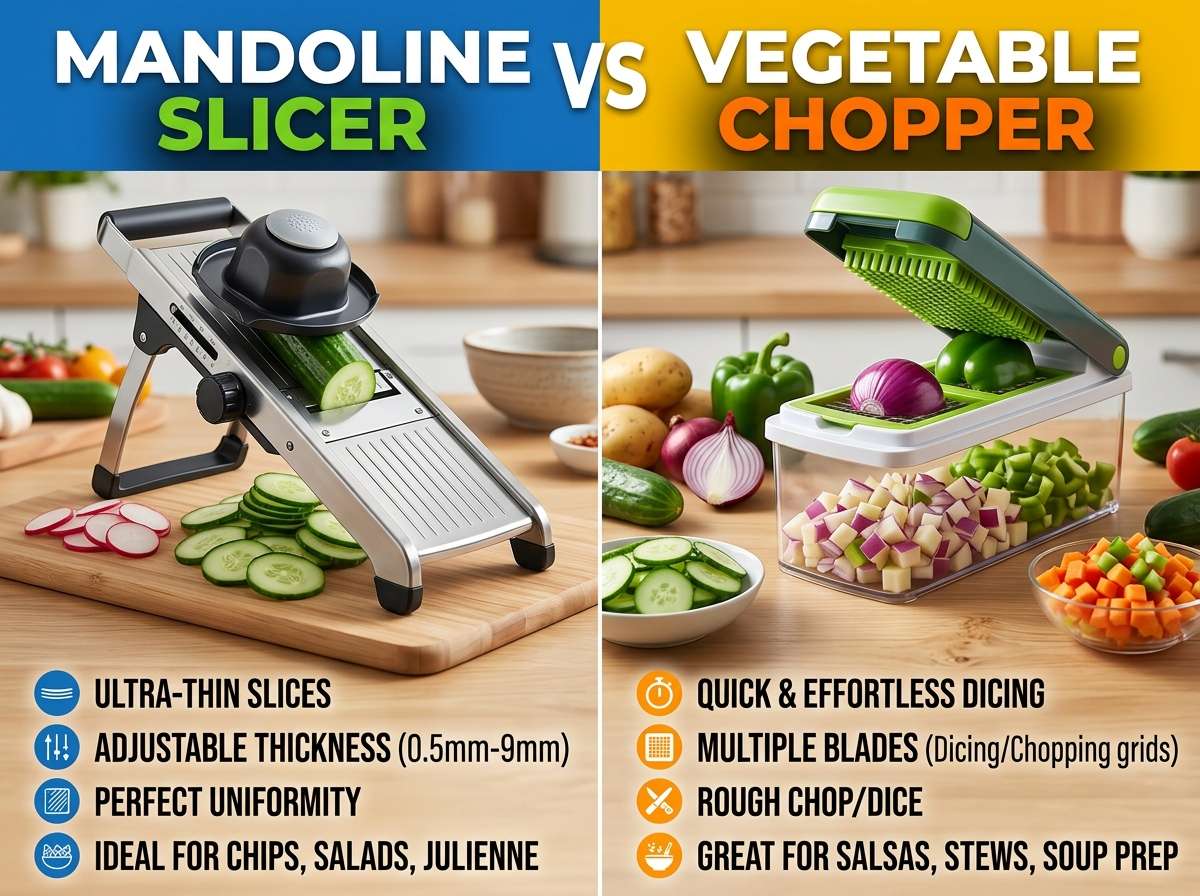
A mandoline slicer is a flat tool with a sharp blade fixed in the middle. You slide vegetables or fruits across the blade by hand, using a guard or holder to keep your fingers safe. Most mandoline slicers let you adjust the blade to control how thick or thin your slices come out.
This tool shines when you need clean, even slices. Think of thin potato rounds for chips, paper-thin cucumber slices for a salad, or uniform zucchini strips for lasagna. Many mandolines also come with extra blades for julienne cuts, waffle cuts, or ridged slices.
Chefs and food bloggers often praise the mandoline slicer because it gives restaurant-quality results at home. The slices are consistent, which matters a lot when you’re cooking something like scalloped potatoes, where even thickness means even cooking.
Key Features of a Mandoline Slicer
- Adjustable thickness settings for custom slices
- Sharp, fixed blade for smooth, clean cuts
- Handheld or stand-based designs
- Extra attachments like julienne blades or crinkle-cut blades
- Works best on firm produce like potatoes, carrots, cucumbers, and apples
What Is a Vegetable Chopper?
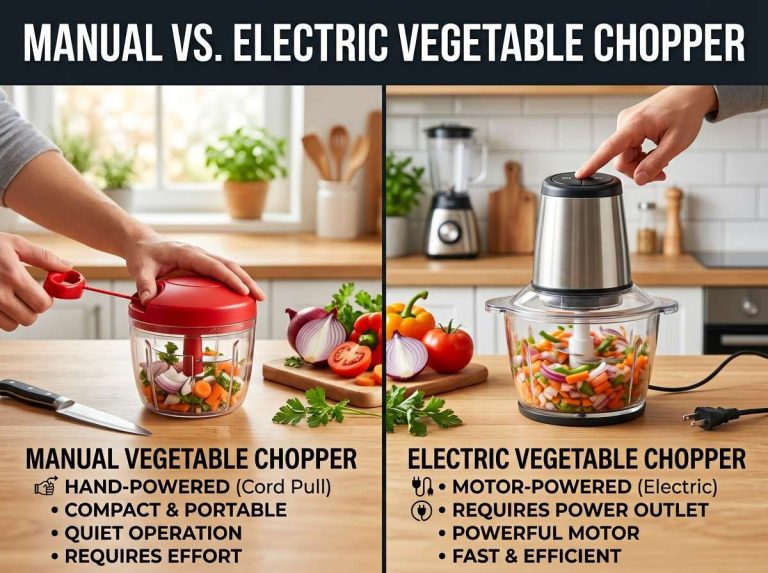
A vegetable chopper works in a completely different way. Instead of sliding food across a blade, you place vegetables inside a container and press down on a handle or lid. Inside, a grid of small blades cuts the food into cubes, dice, or small pieces in one quick motion.
This tool is built for speed and convenience. If you need diced onions for a curry, chopped tomatoes for salsa, or small cubes of bell pepper for a stir fry, a vegetable chopper gets the job done in seconds. Most choppers also come with a container attached, so the chopped pieces land straight into a bowl instead of scattering across your cutting board.
Many vegetable choppers include interchangeable blades too. Some let you switch between coarse and fine dicing, or even switch to a slicing blade for softer fruits and veggies.
Key Features of a Vegetable Chopper
- One-press or pull-cord chopping action
- Built-in container to catch chopped food
- Great for dicing onions, garlic, peppers, and tomatoes
- Easy to clean, since most parts are dishwasher safe
- Works fast for small to medium batches
Mandoline Slicer vs Vegetable Chopper: The Main Differences
Now that you know what each tool does, let’s compare them side by side. This will help you see where each one wins and where each one falls short.
1. Type of Cut
A mandoline slicer gives you flat, even slices. It’s the tool to reach for when a recipe calls for thin rounds, ribbons, or long strips. A vegetable chopper, on the other hand, gives you diced or cubed pieces. It doesn’t slice thin sheets of food; it chops food into small, even chunks.
So if your recipe needs sliced cucumbers for a sandwich, go with the mandoline. If it needs diced onions for soup, the chopper is your friend.
2. Speed and Effort
A vegetable chopper usually wins on raw speed. You place the food inside, press down once or twice, and you’re done. There’s very little hand movement needed, which makes it a great pick for people with wrist pain or limited hand strength.
A mandoline slicer takes a bit more effort and focus. You need to slide the food across the blade with steady pressure, and you have to watch your fingers the whole time. It’s not slow, but it does require more attention than a chopper.
3. Safety
This is where a lot of people hesitate. Mandoline slicers have a reputation for causing kitchen cuts because the blade sits exposed and stays very sharp. Most mandolines come with a hand guard or food holder, and using it every single time is non-negotiable if you want to avoid an accident.
A vegetable chopper is generally safer because the blades stay hidden inside the chopping chamber. Your hands never touch the blade directly, which makes it a solid choice for beginner cooks or for kitchens with kids around.
4. Cleaning and Storage
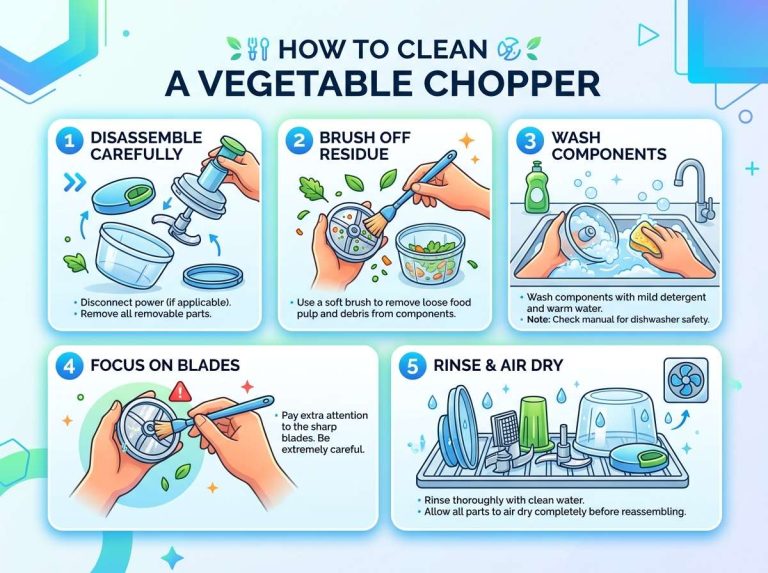
Vegetable choppers tend to have more parts, like a lid, a blade unit, and a container. This means more pieces to wash after each use, though most parts are dishwasher friendly. Storage is also simple since everything nests together in one unit.
Mandoline slicers are usually flatter and easier to store in a drawer. Cleaning them just takes a quick rinse and a light scrub, but you have to be careful when washing them by hand because of the sharp blade.
5. Versatility
A mandoline slicer offers more variety when it comes to types of cuts, especially if it comes with swappable blades. You can slice, julienne, waffle-cut, and ribbon-cut with the same tool.
A vegetable chopper is more limited in cut style but excels at repetitive dicing tasks. If your cooking style leans toward soups, stir fries, salsas, and stews that need diced veggies, a chopper saves you tons of time.
When Should You Use a Mandoline Slicer?
Here are situations where a mandoline slicer becomes your best kitchen partner:
- Making homemade potato chips or veggie chips
- Prepping thin cucumber or zucchini slices for salads
- Creating even layers for a gratin or lasagna
- Slicing apples or pears for pies and tarts
- Making crinkle-cut fries at home
- Building a fancy veggie platter with uniform slices
If presentation matters to you, or if a recipe depends on even cooking through uniform slices, the mandoline slicer is hard to beat.
When Should You Use a Vegetable Chopper?
Here are situations where a vegetable chopper makes more sense:
- Dicing onions quickly without tears (many choppers reduce onion fumes hitting your eyes)
- Making salsa, pico de gallo, or chunky sauces
- Prepping veggies for soups, stews, and curries
- Chopping garlic, peppers, or herbs in bulk
- Getting kids or beginner cooks involved safely
- Speeding up meal prep for the week
If your cooking routine involves lots of dicing and chopping rather than slicing, a vegetable chopper will likely become your go-to tool.
Can You Use Both Tools Together?
Many home cooks end up owning both tools, and that’s not overkill at all. They serve different jobs, so having both means you’re covered no matter what a recipe asks for. Use the mandoline slicer when you need thin, uniform slices, and grab the vegetable chopper when a recipe calls for chopped or diced pieces.
Think about your own cooking habits. If you cook a lot of soups, stews, and sauces, lean toward a chopper. If you bake gratins, make chips, or love crisp salads with thin veggie layers, lean toward a mandoline. And if your kitchen sees a bit of everything, owning both tools rounds out your prep game nicely.
Buying Tips for a Mandoline Slicer
If you decide a mandoline slicer fits your needs, keep these tips in mind while shopping:
- Look for a stainless steel blade since it stays sharp longer and resists rust
- Pick one with a solid hand guard or food holder for safety
- Check if it comes with multiple blade options for different cut styles
- A non-slip base keeps the tool steady while you slice
- Adjustable thickness settings give you more control over your results
Buying Tips for a Vegetable Chopper
If a vegetable chopper sounds like the better fit, here’s what to check before buying:
- A large enough container size for your typical batch size
- Interchangeable blades for different chop sizes
- Dishwasher-safe parts for easy cleanup
- A comfortable handle or pull cord that doesn’t strain your hand
- A stable base so it doesn’t slide around your counter while in use
Common Mistakes to Avoid With Each Tool
With a mandoline slicer, one common mistake is skipping the hand guard because it feels slow or clunky. This is exactly how most kitchen injuries happen. Always use the guard, even on the last small piece of food. Another mistake is applying uneven pressure, which leads to slices that are thick on one side and thin on the other.
With a vegetable chopper, a common mistake is overfilling the container. Cramming too much food inside means the blades can’t move freely, and you end up with uneven chopping or jammed parts. Cutting your veggies into smaller chunks before adding them to the chopper usually solves this problem.
Final Thoughts
There’s no single winner between a mandoline slicer and a vegetable chopper because they’re built for different tasks. A mandoline slicer gives you thin, even, restaurant-style slices, perfect for salads, chips, and layered dishes. A vegetable chopper gives you fast, safe dicing, ideal for soups, salsas, and everyday meal prep.
Think about what you cook most often. If your meals depend on precise, thin slices, go with a mandoline slicer. If your meals depend on quick dicing and chopping, a vegetable chopper will save you far more time and effort. And if your kitchen handles a mix of both, there’s nothing wrong with keeping both tools within arm’s reach.
Either way, both tools cut down prep time, reduce knife work, and make everyday cooking a lot less tiring. Once you add the right one to your kitchen, you’ll wonder how you ever prepped vegetables without it.

Mary is a home cooking enthusiast and kitchen gear reviewer with a passion for practical cookware and food preparation tools. She enjoys testing cutting boards, knives, kitchen gadgets, and other cooking essentials to help home chefs make smarter buying decisions. Through KitchenCutting.com, Mary shares honest product reviews, buying guides, and helpful kitchen tips to make cooking easier, safer, and more enjoyable.