Full Tang vs Partial Tang Knives
If you have ever held two knives that look almost the same but feel totally different in your hand, the tang is often the reason why. The tang is the hidden part of a knife blade that runs into the handle. It does not get much attention, but it decides how strong, how balanced, and how long-lasting your knife will be.
In this article
In this guide, we will break down full tang and partial tang knives in plain and simple words. No confusing jargon, no fluff. Just clear facts so you can pick the right blade for cooking, camping, hunting, or everyday carry.
What Does “Tang” Actually Mean?
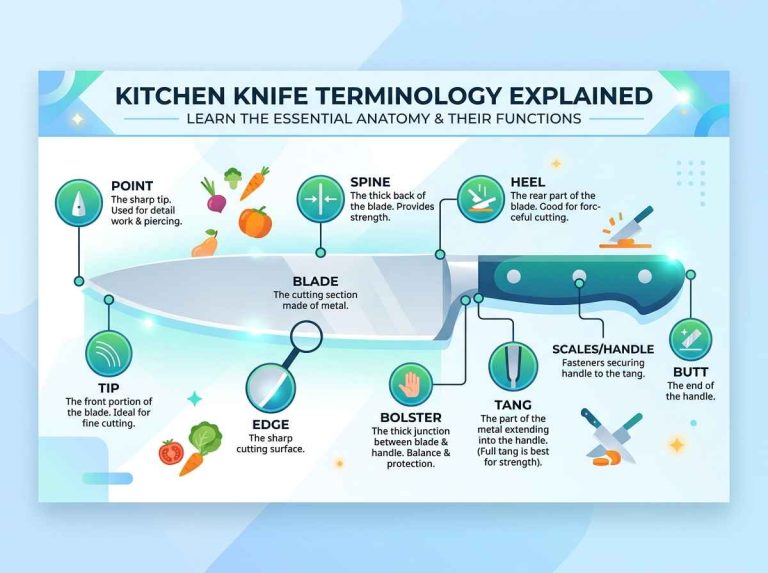
The tang is the metal part of the blade that extends into the handle. You cannot see most of it because the handle covers it up, but it is the backbone of the knife. Think of it like the skeleton of the knife. A strong skeleton means a strong knife. A weak or short skeleton means the knife can bend, wobble, or break under pressure.
Knife makers design tangs in different lengths and shapes. Some tangs run the full length of the handle. Others stop halfway or taper off into a thin rod. This single design choice affects the price, the weight, the durability, and even the feel of the knife in your palm.
What Is a Full Tang Knife?
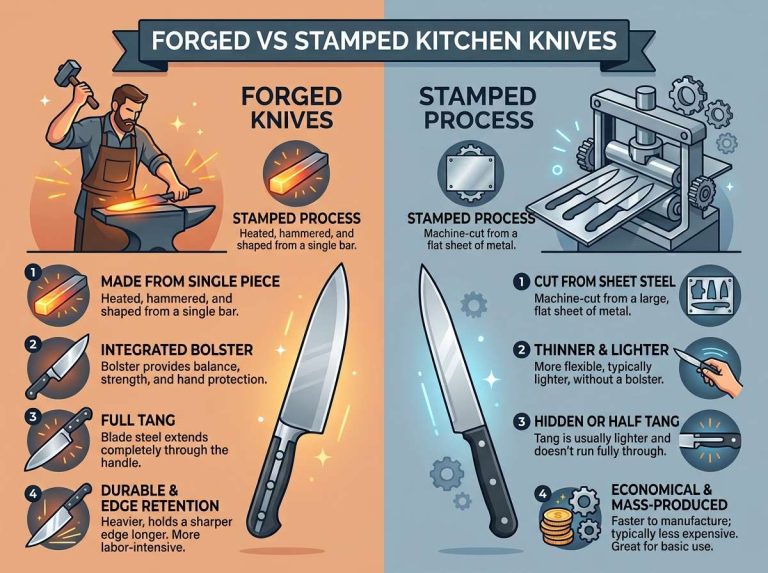
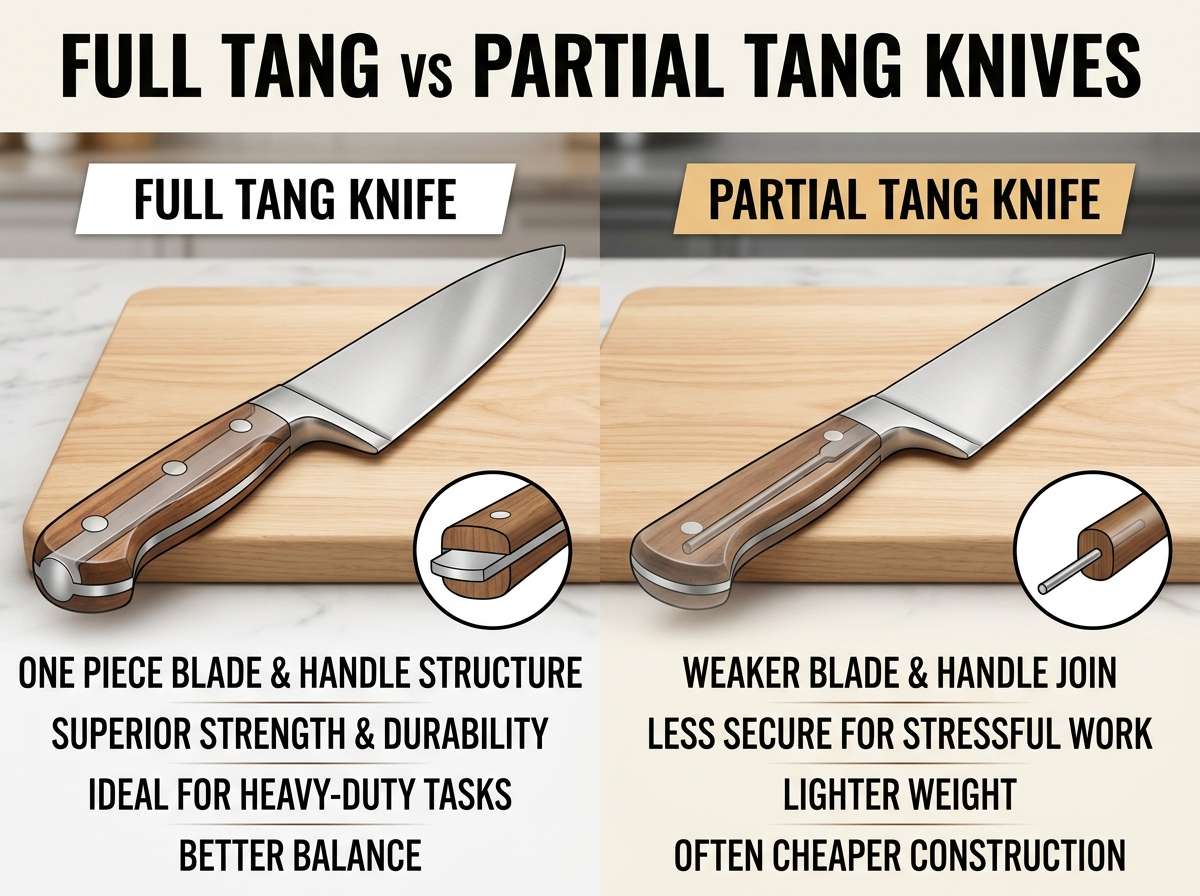
A full tang knife has a blade metal that runs the entire length of the handle, from the tip of the blade all the way to the back end (called the butt) of the handle. The handle material, usually wood, plastic, or composite, is attached on both sides of this metal strip using rivets, pins, or strong adhesive.
If you look at the top and bottom edges of a full tang knife handle, you can often see a thin line of metal peeking through. That line is the tang, and it tells you the blade and handle are basically one solid piece of steel with scales bolted onto the sides.
How a Full Tang Is Made
Knife makers cut the tang and blade from a single sheet of steel. This means there is no weak joint or weld connecting the blade to the handle metal. The handle scales, which are the two side panels you actually grip, get attached afterward using screws, pins, or epoxy glue. Because the steel goes all the way through, the knife feels solid from tip to tail.
Why People Love Full Tang Knives
Strength and durability Since the metal runs the whole way through, full tang knives can handle heavy tasks like chopping, batoning wood, or cutting through tough material without snapping. There is no thin, fragile connection point that can break under stress.
Better balance The extra steel weight inside the handle helps balance out the blade weight. This makes chopping and slicing motions feel smoother and more controlled, especially for larger knives like chef knives or bushcraft blades.
Long lifespan A full tang knife rarely fails at the handle-blade connection because there simply is no separate connection to fail. With proper care, these knives can last for many decades, sometimes even getting passed down as family heirlooms.
Trustworthy for hard use Survival experts, hunters, and professional chefs often lean toward full tang designs because they can trust the knife not to snap when pushed hard, like prying, twisting, or hammering through thick material.
The Downsides of Full Tang Knives
Nothing is perfect, and full tang knives come with a few trade-offs.
- They tend to weigh more since there is extra steel running through the handle.
- Manufacturing costs are usually higher, so full tang knives often cost more money.
- The added weight can cause hand fatigue during long tasks like extended food prep or long camping trips.
What Is a Partial Tang Knife?
A partial tang knife has a blade metal that stops somewhere before it reaches the very end of the handle. Instead of running the full length, the tang might extend only halfway, a third of the way, or taper into a thin rod that gets buried inside the handle material.
Partial tang designs come in a few different styles, and it helps to know them so you are not fooled by marketing terms.
Types of Partial Tang
Push Tang This is a short tang that gets pushed or glued into a hole drilled in the handle. It offers very little strength and is common in cheap kitchen knives or decorative blades.
Rat Tail Tang (Hidden Tang) The steel tapers down into a thin rod shape and gets buried inside the handle, often secured with a pommel or cap at the end. This style is common in some hunting knives and traditional swords. It looks clean because no metal shows on the outside, but the thin rod can bend or snap under heavy stress.
Stick Tang Similar to a rat tail, but the metal stays a bit thicker and does not taper down as sharply. Some stick tangs run almost the full length but stay narrow instead of matching the width of the blade.
Encapsulated Tang The partial tang gets fully covered in plastic, rubber, or another handle material with no visible metal line. This is popular in many modern kitchen knives because it creates a smooth, comfortable grip, but strength depends heavily on how well the tang was designed.
Why People Still Buy Partial Tang Knives
Lighter weight Less metal in the handle means the knife feels lighter overall. This makes them comfortable for tasks that need speed and finesse rather than brute force, like peeling, slicing thin cuts, or detailed carving work.
Lower price Partial tang knives generally cost less to manufacture, so you often see them at budget-friendly price points. Great for beginners who do not want to spend a lot on their first knife.
Comfortable grip Many partial tang knives use molded plastic or rubber handles that feel soft and ergonomic. This is common in kitchen paring knives and utility knives.
Good enough for light tasks For everyday jobs like slicing vegetables, opening boxes, or trimming small items, a partial tang works just fine. Not every task needs a heavy-duty blade.
The Downsides of Partial Tang Knives
- Less strength overall, especially for tasks that involve twisting, prying, or heavy chopping.
- Higher chance of the handle loosening or the blade snapping off over time.
- Balance can feel off since most of the weight sits in the blade rather than spread through the handle.
- Not ideal for survival, bushcraft, or hard outdoor use where the knife might get abused.
Full Tang vs Partial Tang: Side-by-Side Comparison
| Feature | Full Tang | Partial Tang |
|---|---|---|
| Strength | Very high | Low to moderate |
| Weight | Heavier | Lighter |
| Price | Usually higher | Usually lower |
| Balance | Better for large blades | Blade-heavy feel |
| Best for | Chopping, camping, survival, chef work | Light kitchen tasks, budget knives |
| Lifespan | Long, durable | Shorter, prone to loosening |
| Visible metal line | Often yes | Rarely, usually hidden |
This table gives you a quick snapshot, but the right pick still depends on how you plan to use the knife day to day.
Which One Should You Actually Buy?
The answer depends entirely on your intended use. Let’s go through the most common situations so you can match the tang type to your needs.
For Kitchen Cooking
If you cook at home and need a chef knife, santoku, or cleaver for daily chopping and slicing, go with full tang. Kitchen knives get used constantly and often face tough tasks like cutting through bone-in meat or dense vegetables. A full tang chef knife gives you the strength and balance needed for smooth, controlled cuts.
For lighter kitchen tools like paring knives, small utility knives, or bread knives, a good partial tang design can work well. These tasks do not put heavy stress on the blade, so the lighter weight actually helps with precision.
For Camping and Bushcraft
Full tang is almost always the smarter pick here. Outdoor tasks like batoning firewood, digging, prying, or cutting through thick branches put a ton of stress on the blade. A partial tang knife can snap right at the handle under this kind of pressure, leaving you without a working tool in the middle of nowhere.
For Hunting
Many hunting knives use a rat tail or stick tang, and that is usually fine since hunting tasks like skinning and field dressing do not require heavy prying force. Still, if you want extra peace of mind or plan to use the knife for rougher camp tasks too, a full tang hunting knife adds an extra layer of reliability.
For Everyday Carry (EDC)
For a knife you carry in your pocket for small daily tasks like opening packages or cutting rope, a partial tang folding knife often works great. Folding knives use a different tang design anyway since the blade needs to pivot, so this comparison applies more to fixed-blade knives.
For Survival Situations
Survival knives need to handle unpredictable, demanding tasks. Full tang is the clear winner here. You want a knife you can trust completely when your safety depends on it.
How to Spot the Tang Type Before You Buy
Not every product listing tells you clearly, so here are a few tricks to check before making a purchase.
Look at the Handle Edges
On many full tang knives, you can see a thin metal line running along the top and bottom edge of the handle, sandwiched between the handle scales. If the handle looks completely smooth with no metal showing anywhere, it is likely partial tang or an encapsulated design.
Check the Weight and Balance
Hold the knife and see where it feels balanced. If the weight feels evenly spread between the blade and handle, it probably has a full tang. If the knife feels front-heavy, with most weight sitting in the blade, it likely has a partial tang.
Ask for Specs or Read Reviews
Trusted brands usually mention the tang type directly in the product description. If it is not listed, search customer reviews or ask the seller directly. A quick search using the exact product name plus the word “tang” often turns up clear answers from other buyers.
Try the Flex Test (Carefully)
Gently apply light pressure near the base of the blade close to the handle. A full tang knife will feel rock solid with almost no give. A partial tang knife might show a tiny bit of flex right where the blade meets the handle. Do this gently, since forcing too much pressure could damage the knife.
Common Myths About Tang Types
Myth 1: Partial Tang Knives Are Always Bad
This is not true at all. Plenty of well-made partial tang knives serve their purpose perfectly, especially for lighter tasks. The key is matching the tang type to the job, not assuming one type is universally better.
Myth 2: You Can Always See the Tang From Outside
Many modern kitchen knives hide the tang completely under molded handles, even when they use a full tang design. Visual inspection alone is not always reliable, so checking specs matters more than just looking at the handle.
Myth 3: Heavier Always Means Stronger
While full tang knives do tend to be heavier, weight alone does not guarantee strength. Steel quality, heat treatment, and overall build quality matter just as much as tang length.
Myth 4: All Hidden Tangs Are Weak
A well-designed rat tail tang, properly forged and secured with a strong pommel, can still hold up to moderate use. It will not match a full tang in raw strength, but it is not automatically fragile either.
Tips for Making the Right Choice
- Match the knife to the actual job it will do most often.
- Do not overspend on a heavy-duty full tang blade if you only need something for light kitchen prep.
- Do not underspend on a flimsy partial tang knife if you plan to use it outdoors for demanding tasks.
- Check reviews from people who have used the exact knife for a similar purpose as yours.
- Inspect the steel quality too, since even a full tang knife made from poor steel will not perform well.
- Handle the knife in person if possible before buying, since balance and comfort are personal preferences.
Caring for Your Knife Based on Tang Type
The way you clean, store, and maintain a knife should change slightly depending on its tang type. Good care habits stretch the life of any blade, but partial tang knives need a bit more attention since they have a weaker connection point.
Cleaning Full Tang Knives
Full tang knives are generally easy to clean since there is no gap or seam where food particles or moisture can hide. Wash the blade with warm water and mild soap, dry it right away with a soft cloth, and store it in a dry place. Avoid soaking the knife for long periods, even though the solid construction handles moisture better than partial tang designs.
Cleaning Partial Tang Knives
Partial tang knives, especially ones with a visible gap between the blade and handle, need extra care. Moisture can seep into that small gap and cause rust to form on the hidden metal, or it can weaken the glue or pins holding the handle together over time. Dry these knives immediately after washing, and never leave them soaking in a sink.
Storage Tips for Both Types
- Store knives in a dry drawer, block, or sheath away from humidity.
- Avoid tossing knives into a pile with other metal tools, since this can chip the edge or loosen handle attachments.
- Oil the blade lightly with food-safe mineral oil if it is carbon steel, since this prevents rust from forming.
- Check screws or pins on partial tang knives every few months to make sure the handle has not loosened.
Sharpening Considerations
Sharpening technique does not really change based on tang type, but the way you hold the knife during sharpening matters more with partial tang blades. Applying too much side pressure near the handle junction on a partial tang knife can stress that weaker connection point. Full tang knives can handle firmer pressure during sharpening without much worry.
Steel Quality Matters Just as Much as Tang Length
While this guide focuses on tang length, it is worth remembering that steel type plays an equally large role in overall knife performance. High-carbon steel holds a sharp edge longer but needs more care to avoid rust. Stainless steel resists corrosion better but might need sharpening more often. Even the best full tang design will disappoint you if the steel itself is low quality, and a well-made partial tang knife with excellent steel can outperform a poorly made full tang blade.
When shopping, look at both factors together: tang length for structural strength, and steel type for edge retention and corrosion resistance. A knife that scores well on both fronts will almost always give you the best value for your money.
Frequently Asked Questions
Is full tang always better than partial tang? Not always. Full tang wins for strength and heavy-duty tasks, but partial tang can be lighter, cheaper, and perfectly suitable for lighter jobs like slicing or peeling.
Can a partial tang knife still last a long time? Yes, with proper care and light use, a partial tang knife can last for years. Avoiding prying or twisting motions helps extend its life significantly.
Do all expensive knives use full tang? No. Some premium kitchen knives use encapsulated partial tangs with excellent steel and craftsmanship, offering great performance despite the shorter tang.
How do I know if my current knife is full tang or partial tang? Check the handle edges for a visible metal line, test the balance, or search the product name online along with the word tang for detailed specs.
Are folding knives full tang or partial tang? Folding knives use a completely different mechanism since the blade pivots into the handle, so this full tang versus partial tang comparison mainly applies to fixed-blade knives.
Final Thoughts
The tang of a knife might be hidden from view, but it plays a massive role in how the blade performs, how long it lasts, and how safe it feels in your hand. Full tang knives bring unmatched strength, better balance, and long-term durability, making them the top pick for heavy-duty tasks like camping, survival, and serious kitchen work. Partial tang knives bring lighter weight and a lower price tag, making them a smart option for everyday light tasks where raw strength is not the top priority.
There is no single “correct” answer for every person. The smartest approach is looking at how you plan to use the knife, matching that need to the right tang type, and picking quality steel and craftsmanship along the way. With this knowledge in hand, you can walk into any knife shop or scroll through any online listing with total confidence, knowing exactly what you are looking at and why it matters.

Mary is a home cooking enthusiast and kitchen gear reviewer with a passion for practical cookware and food preparation tools. She enjoys testing cutting boards, knives, kitchen gadgets, and other cooking essentials to help home chefs make smarter buying decisions. Through KitchenCutting.com, Mary shares honest product reviews, buying guides, and helpful kitchen tips to make cooking easier, safer, and more enjoyable.