Manual vs Electric Vegetable Chopper
Chopping onions, garlic, and other veggies can feel like a chore, especially when dinner is running late and your eyes are already stinging. This is where a good vegetable chopper steps in to save your time and your patience. But once you start shopping, you’ll notice two main types on the market: manual choppers and electric choppers. Both promise fast, even cuts, yet they work in very different ways.
In this article
In this guide, we’ll break down everything about manual and electric vegetable choppers in plain, simple language. By the end, you’ll know exactly which type suits your cooking style, budget, and kitchen space.
What Is a Manual Vegetable Chopper?
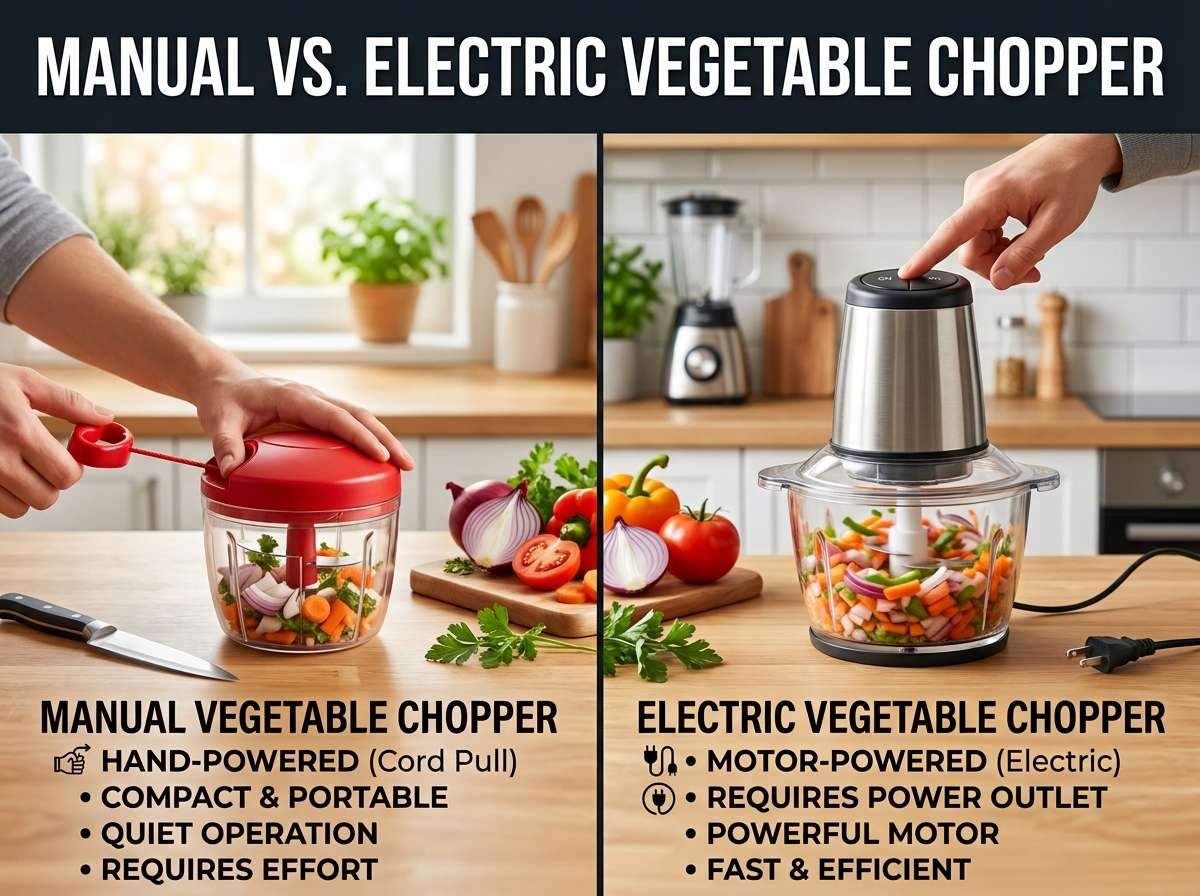
A manual vegetable chopper is a hand-powered kitchen tool. It usually comes with a plastic or steel body, a set of sharp blades, and a lid or handle you press down to chop food. No batteries, no cords, no plugs needed. You just place your vegetables inside the container, press the handle a few times, and your onions, tomatoes, or peppers come out diced or minced.
Some popular styles include:
- Pull-string choppers – you pull a string repeatedly to spin the blades
- Press-and-pump choppers – you push down on a lid to activate the blade
- Rotary choppers – you turn a handle in a circular motion to chop food
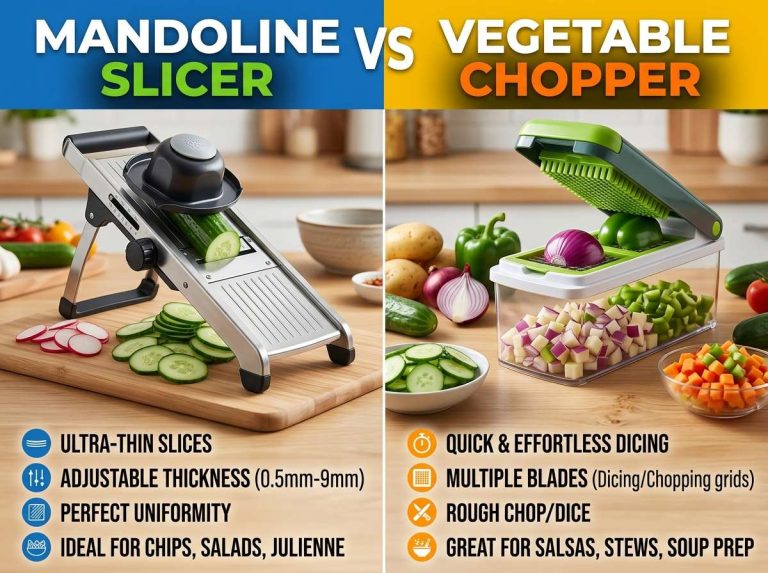
- Mandoline-style slicers – you slide vegetables across a flat blade for thin slices
These tools are simple, budget-friendly, and don’t need electricity, which makes them great for small kitchens, camping trips, or anyone who wants a no-fuss chopping tool.
What Is an Electric Vegetable Chopper?
An electric vegetable chopper, on the other hand, runs on power, either through a plug or a rechargeable battery. It comes with a motor that spins the blades automatically once you press a button. Some models also work as mini food processors, letting you mince garlic, chop nuts, blend salsa, or even whip cream.
Electric choppers usually include:
- A motor base
- A bowl or container to hold food
- Sharp stainless steel blades
- A pulse button or speed settings
- A lid that locks in place for safety
Since the motor does all the work, you don’t need to use any arm strength. Just add your vegetables, close the lid, press the button, and let the machine handle the rest.
Manual vs Electric Vegetable Chopper: Quick Comparison Table
| Feature | Manual Chopper | Electric Chopper |
|---|---|---|
| Power source | Hand strength | Electricity or battery |
| Speed | Slower, needs effort | Very fast, minimal effort |
| Noise | Silent | Some noise from the motor |
| Price | Usually cheaper | Usually pricier |
| Portability | Easy to carry anywhere | Needs power source or charge |
| Cleaning | Simple, dishwasher safe in most cases | Motor base can’t get wet |
| Best for | Small batches, occasional use | Daily cooking, larger batches |
| Learning curve | Very easy | Slightly more setup |
Now let’s go deeper into each point so you can see the full picture.
Speed and Effort
This is the biggest difference between the two tools. A manual chopper needs you to pull a string, press a lid, or turn a handle multiple times to get the vegetables chopped finely. It works fine for small jobs like dicing one onion or mincing a clove of garlic, but if you’re prepping a big batch of veggies for a soup or a curry, your hand and wrist might get tired.
An electric chopper removes that effort completely. You press a button, and the blades spin at high speed, turning whole vegetables into fine pieces within seconds. If you cook often or prepare meals for a large family, the electric option saves a good chunk of your prep time.
Noise Level
Manual choppers are silent. There’s no motor, so the only sound you’ll hear is the blade cutting through food. This makes them ideal for early morning cooking or late-night snack prep without waking up the household.
Electric choppers, since they run on a motor, do make some buzzing noise while chopping. It’s not extremely loud, but it’s noticeable, especially in a quiet kitchen. If noise bothers you or you cook at odd hours, this is worth keeping in mind.
Price and Budget
If you’re watching your budget, a manual vegetable chopper is usually the more affordable pick. These tools are simple in design, with fewer parts and no motor, so they cost less to manufacture and buy. You can often find a decent one at a low price point.
Electric choppers cost more because of the motor, wiring, and extra features like speed settings or a rechargeable battery. Higher-end models with multiple blades and larger capacity can be even pricier. That said, many mid-range electric choppers are still quite affordable and worth the extra cost if you cook daily.
Portability and Power Needs
A manual chopper doesn’t need a wall socket or battery, so you can toss it in a bag and carry it anywhere. It’s great for road trips, camping, hostels, or small apartments where outlets might be limited.
An electric chopper needs either a power outlet nearby or a charged battery. Cordless models are more flexible, but they still need regular charging, and if the battery runs out mid-cooking, you’re stuck waiting or switching back to manual chopping.
Cleaning and Maintenance
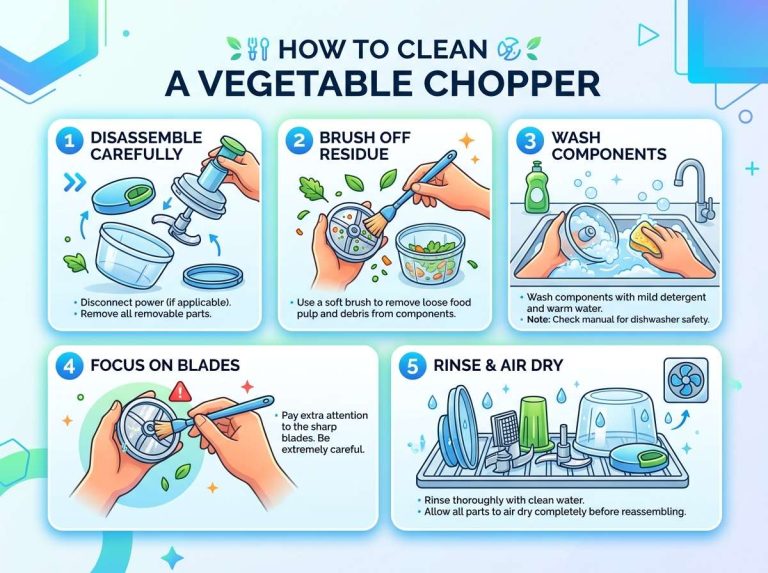
Cleaning is another area where these two tools differ quite a bit. A manual chopper usually comes apart into a few pieces, the container, the blade, and the lid, and most parts are dishwasher safe. Since there’s no motor, you can rinse everything under running water without worry.
An electric chopper has a motor base that must stay dry at all times. You can typically wash the bowl, lid, and blades, but the base needs a simple wipe with a damp cloth instead of a full rinse. This means a bit more care during cleanup, though it’s still manageable once you get used to the routine.
Durability and Blade Sharpness
Both types can last for years if you treat them well. Manual choppers, since they have fewer moving parts, tend to have less that can go wrong mechanically. The blades might dull over time with frequent use, but replacement parts are usually cheap and easy to find.
Electric choppers have a motor that could eventually wear out, especially with rough handling or overuse without breaks. The blades on electric models are often made of thicker stainless steel, so they may stay sharp longer under everyday use, but repairing a broken motor is trickier than replacing a manual blade.
Versatility
Manual choppers usually stick to one job, chopping or slicing vegetables. Some rotary and mandoline-style versions offer extra functions like grating or julienning, but overall, they’re built for a narrow purpose.
Electric choppers often do more than just chop. Many double as mini food processors that can grind spices, blend dips, mix batter, or crush ice, depending on the attachments included. If you want one gadget that handles several kitchen tasks, the electric version gives you more value for your countertop space.
Safety Considerations
Manual choppers are generally safe since the blades stay enclosed inside the container during use. Your fingers rarely come near the sharp edges, though you should still be careful while washing or storing the blade separately.
Electric choppers include safety locks that stop the motor from running unless the lid is properly closed. This adds a layer of protection, especially useful if you have kids around the kitchen. However, because the blades spin fast and the motor is powerful, you need to keep fingers and utensils away from the bowl while it’s running.
Storage Space
If your kitchen counter or cabinet space is limited, this factor matters a lot. Manual choppers are usually compact and stack easily inside a drawer since there’s no motor or cord bulk.
Electric choppers take up more room because of the motor base, and you’ll also need to store the power cord or charging dock somewhere. Small kitchens or apartments with tight storage might find the manual option easier to tuck away.
Which One Should You Buy?
The right pick really depends on how you cook and how much you cook. Here’s a simple way to decide:
Go with a manual chopper if:
- You cook small portions most days
- You want a budget-friendly kitchen tool
- You like a quiet kitchen without motor noise
- You travel often or have limited storage
- You don’t mind a little hand effort
Go with an electric chopper if:
- You cook large batches or meals for a big family
- You want to save time and reduce hand strain
- You like extra features like blending or grinding
- Noise isn’t a big concern for you
- You have space and access to power outlets
Some home cooks even keep both. A manual chopper for quick, small jobs like chopping one tomato, and an electric one for bigger meal prep sessions, like making a large batch of salsa or chopped veggies for meal prepping the whole week.
Common Questions About Vegetable Choppers
Do electric choppers cut vegetables more evenly than manual ones?
In most cases, yes. The fast, consistent motor speed in electric models tends to produce more uniform pieces, especially for softer vegetables like tomatoes or cucumbers. Manual choppers can also give even results, but it depends on how consistently you press or pull the handle.
Are manual choppers good enough for daily cooking?
They can be, especially if you’re cooking for one or two people. Many home cooks use manual choppers every single day without any trouble. The only downside shows up when you’re prepping large quantities, since it takes more time and effort compared to an electric model.
Can electric choppers handle hard vegetables like carrots or potatoes?
Most electric choppers handle hard vegetables just fine, though it helps to cut them into smaller chunks first so the blades don’t strain. Manual choppers can also cut hard vegetables, but you might need to apply a bit more pressure.
Is it safe to put chopper blades in the dishwasher?
For manual choppers, most blades are dishwasher safe, though it’s smart to check the manufacturer’s instructions first. For electric choppers, the bowl and lid are usually dishwasher safe, but the blade attachment and motor base often need hand washing to avoid damage.
How long do electric vegetable choppers usually last?
With proper care and regular cleaning, a good electric chopper can last several years. Avoiding overloading the bowl and giving the motor short breaks during heavy use both help extend its lifespan.
Do manual choppers work well for garlic and ginger?
Yes, manual choppers are actually a favorite for garlic and ginger since these ingredients are usually chopped in small amounts. A few presses or pulls, and you get finely minced garlic without the smell sticking to your fingers.
Final Thoughts
Both manual and electric vegetable choppers have their own strengths. A manual chopper gives you a simple, affordable, and quiet way to chop small batches without needing power. An electric chopper offers speed, convenience, and extra versatility for bigger cooking sessions and busier kitchens.
There’s no single winner here since it all comes down to your daily habits, budget, and how much cooking you do. Think about your kitchen routine, how many people you cook for, and how much counter space you have. That should guide you toward the chopper that makes your cooking life easier, faster, and a lot less stressful.
Whatever you go with, a good vegetable chopper, manual or electric, is a small investment that pays off every time you step into the kitchen to cook a meal.
Take a moment to think about the meals you cook most often. If your weekly menu leans on quick stir-fries, salads, or small side dishes, a manual chopper will likely cover all your needs without adding clutter to your counter. If your cooking routine involves soups, stews, big batches of chopped onions, or weekend meal prep for the whole week, an electric chopper will pay for itself in saved time and effort.
It also helps to try both types if you get the chance, maybe by borrowing one from a friend or checking reviews from other home cooks who share similar cooking habits. Reading real feedback about blade sharpness, motor strength, and ease of cleaning can point you toward a brand that fits your needs better than specs alone. A chopper that feels awkward in someone else’s hand might feel just right in yours, so personal comfort matters as much as features on paper.
At the end of the day, the goal is the same no matter which tool you pick: less time spent chopping, fewer tears from onions, and more time enjoying the meal you made. A reliable vegetable chopper, paired with a sharp knife for the tasks it can’t handle, rounds out a kitchen setup that makes cooking feel simple rather than stressful.

Mary is a home cooking enthusiast and kitchen gear reviewer with a passion for practical cookware and food preparation tools. She enjoys testing cutting boards, knives, kitchen gadgets, and other cooking essentials to help home chefs make smarter buying decisions. Through KitchenCutting.com, Mary shares honest product reviews, buying guides, and helpful kitchen tips to make cooking easier, safer, and more enjoyable.