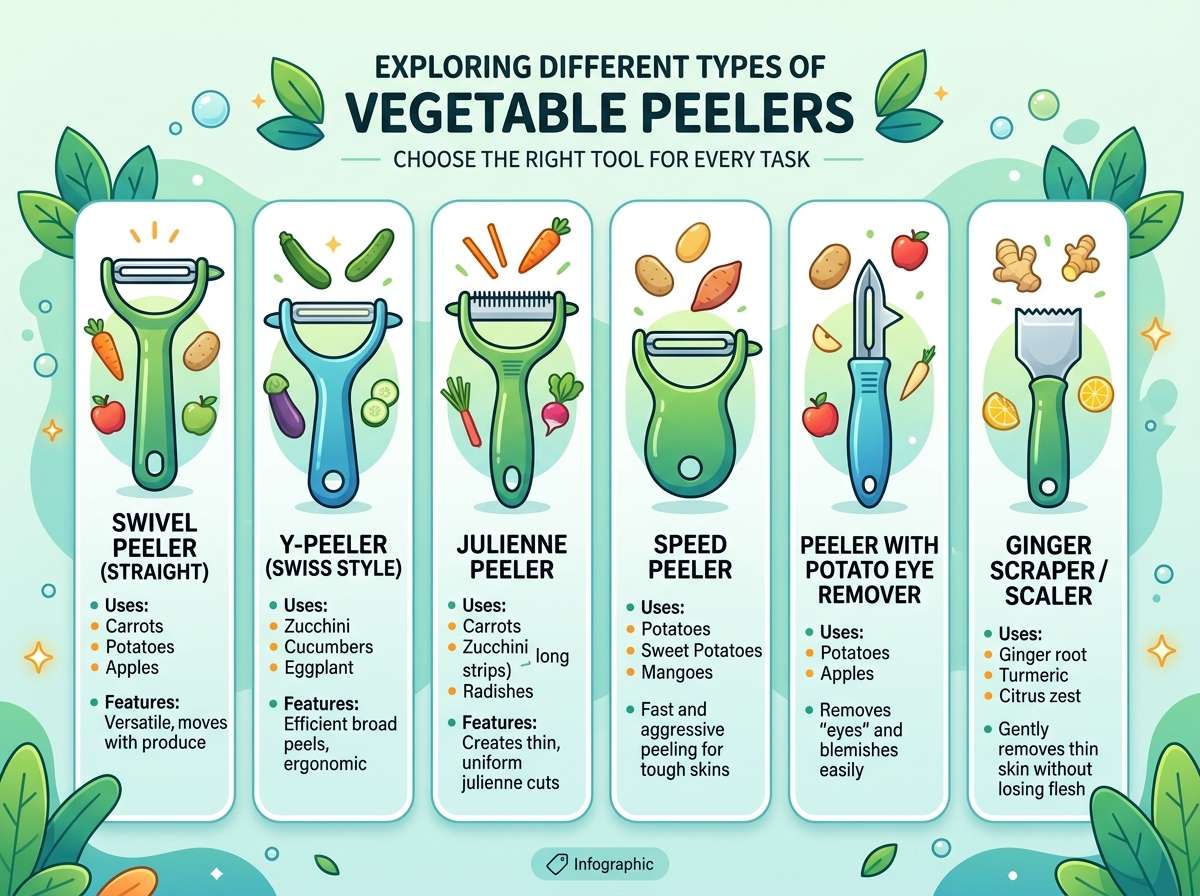
Different Types of Vegetable Peelers
If you cook even a little, you already know that a good vegetable peeler can save your hands, your time, and your sanity. But walk down any kitchen aisle and you’ll see peelers in every shape, size, and price range. Some have straight blades, some swivel, some look like tiny harps, and a few even run on batteries. So how do you know which one belongs in your kitchen drawer?
In this article
This guide breaks down every common type of vegetable peeler out there, explains what each one does best, and helps you match the right tool to your cooking style. By the end, you’ll know exactly what to look for the next time you shop for one, and you’ll never grab a random peeler off the shelf again.
Why the Type of Peeler Actually Matters
It might seem like a peeler is just a peeler, but the design changes everything about how it feels in your hand and how well it works on different foods. A blade angle that glides through a potato might struggle with a soft tomato. A handle built for a big palm might feel clunky for someone with smaller hands. And a peeler made for carrots may not do a great job on a mango or a block of hard cheese.
So the shape of the blade, the way it’s mounted, the handle material, and even the weight all play a part. Once you know the differences, picking the right one becomes easy, and your prep time drops fast.
Swivel Peelers (The Classic Kitchen Staple)
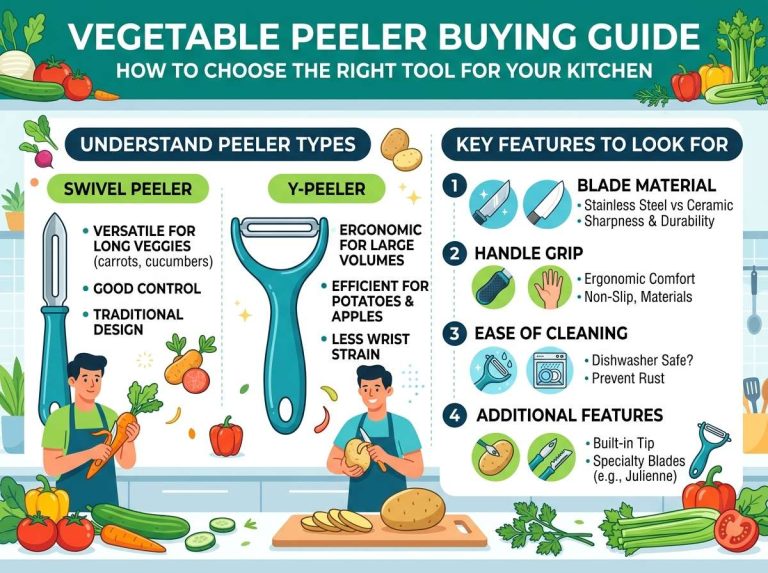
The swivel peeler is the one most people grew up using. Its blade sits on a small pivot, so it rocks back and forth as it follows the curve of whatever you’re peeling. This makes it a natural fit for round or oddly shaped produce like potatoes, apples, and cucumbers.
Because the blade moves with the food instead of staying rigid, you get thinner peels and less waste. It also cuts down on the risk of gouging too deep into the flesh, which happens a lot with stiffer blades.
Best for: potatoes, apples, carrots, cucumbers, zucchini Handle tip: look for a rubber or silicone grip so it doesn’t slip when your hands are wet
Y-Peelers (Also Called Harp Peelers)
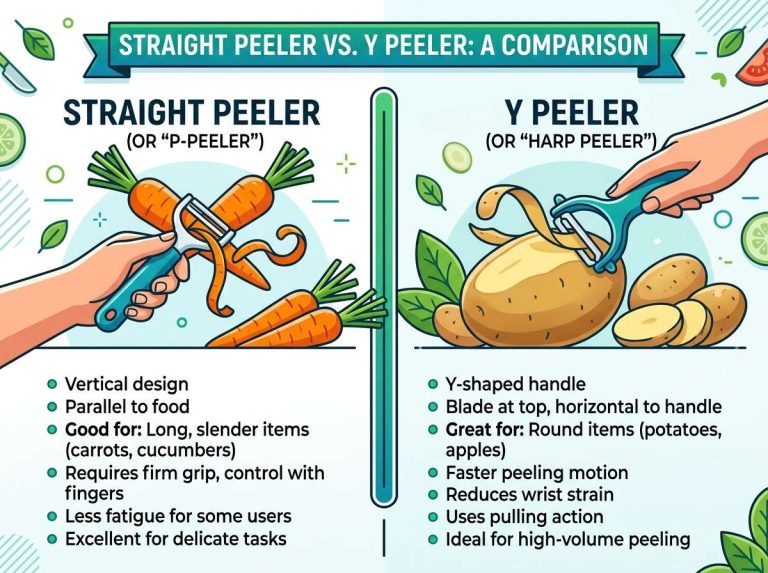
The Y-peeler gets its name from its shape, which looks like the letter Y or a tiny harp. Instead of a swiveling blade, the blade sits fixed across the top of the Y, and you push it away from your body in a downward motion.
This style gives you more control and speed, especially on long vegetables like carrots and asparagus. A lot of professional cooks reach for this style first because it lets them peel with quick, confident strokes rather than slow back-and-forth motions.
Best for: carrots, asparagus, sweet potatoes, squash Handle tip: a wider grip spreads pressure across your palm, which helps if you’re peeling a large batch
Straight Peelers
A straight peeler, sometimes called a fixed-blade peeler, has the blade lined up in the same direction as the handle, kind of like a small knife. You use it by dragging it away from you rather than pulling toward yourself the way you would with a swivel model.
This type gives you a firmer, more controlled cut, which makes it a solid choice for firmer produce like turnips or hard squash. It takes a bit more wrist strength than a swivel peeler, so it’s not always the easiest for beginners, but once you get used to the motion, it works fast.
Best for: turnips, beets, winter squash, tougher root vegetables Handle tip: wooden or thick plastic handles tend to hold up better under the extra pressure this style requires
Serrated Peelers
If you’ve ever tried to peel a ripe tomato, a peach, or a kiwi with a regular peeler, you know the frustration. The blade slides right over the skin instead of catching it. That’s exactly the problem a serrated peeler solves.
Its blade has tiny teeth, almost like a mini saw, which grip soft or slippery skins without crushing the fruit underneath. It’s gentle enough for delicate produce but still sharp enough to remove skin cleanly.
Best for: tomatoes, peaches, kiwis, mangoes, soft-skinned fruit Handle tip: pair this one with a light touch; you don’t need much pressure since the teeth do the work
Julienne Peelers
A julienne peeler looks a lot like a regular swivel peeler at first glance, but the blade has small teeth or ridges that cut the produce into thin strips instead of flat ribbons. Instead of a peel, you get long, uniform matchsticks, perfect for salads, garnishes, and quick pickles.
This tool saves a ton of time compared to using a knife to cut julienne strips by hand, and it gives you consistent results even if your knife skills are still a work in progress.
Best for: carrots, zucchini, cucumbers, daikon radish Bonus use: great for making raw veggie noodles without buying a separate spiralizer
Dual-Blade or Double-Edge Peelers
Some peelers come with two blades built into one tool, usually a straight edge on one side and a serrated or julienne edge on the other. This design saves drawer space and gives you flexibility without needing to own three separate peelers.
They tend to work well for people who cook a wide variety of produce and don’t want to keep switching tools mid-recipe.
Best for: home cooks who prep a mix of vegetables and fruits regularly Handle tip: check that both blades are easy to reach and clearly marked, since some designs make it hard to tell which edge is which at a glance
Ceramic Peelers
Ceramic peelers use a blade made from zirconium oxide instead of steel. They’re lightweight, resistant to rust, and hold their edge for a long time without sharpening. Since ceramic doesn’t react with acidic produce, it also helps prevent that faint metallic taste you sometimes get after peeling citrus or tomatoes with a steel blade.
The trade-off is that ceramic blades are more brittle than steel. Drop one on a tile floor and there’s a real chance it chips or cracks, so this style needs a bit more careful handling.
Best for: citrus fruit, apples, and cooks who want a rust-free, low-maintenance option Care tip: hand wash only, and store it in a sheath or block to protect the blade
Electric Peelers
For anyone peeling large batches of vegetables regularly, whether for meal prep, a big family dinner, or a small food business, an electric peeler is a game changer. You place the vegetable in a rotating chamber, and a small motor spins it against a stationary blade, stripping the skin in seconds.
It takes almost no hand strength, which makes it a great option for people with arthritis or limited grip strength. The main downsides are the higher price tag and the extra cleanup, since you’re now dealing with a small appliance instead of a simple hand tool.
Best for: potatoes, carrots, apples, and anyone prepping large quantities at once Care tip: most models have a removable bowl or chamber that goes straight into the sink or dishwasher
Mandoline-Style Peelers
These are a bit of a hybrid between a peeler and a mandoline slicer. Instead of holding the tool and dragging it across the food, you hold the vegetable and pull it across a mounted blade. Some versions attach to the edge of a bowl or cutting board for extra stability.
They tend to peel faster than handheld versions since you can use a longer, smoother stroke, but they also come with a sharper learning curve and a higher risk of nicked fingers if you’re not paying attention.
Best for: experienced cooks who peel large amounts of produce and want speed Safety tip: always use the hand guard that comes with it, no matter how confident you feel
Citrus Peelers
Citrus peelers are built specifically for oranges, lemons, and limes. Instead of removing thin ribbons like a standard peeler, they’re designed to score the rind so it comes off in larger sections without digging into the bitter white pith underneath.
Bartenders use these constantly for garnishes, and home bakers reach for them when a recipe calls for citrus zest strips instead of grated zest.
Best for: oranges, lemons, limes, grapefruit Bonus use: the curved tip on many models doubles as a small tool for removing citrus segments cleanly
Asparagus Peelers
Asparagus has a tough, fibrous outer layer near the base of the stalk, and a regular peeler can struggle to get a clean, even strip without wasting a lot of the vegetable. Asparagus peelers have a wider, often curved blade designed to hug the stalk’s shape and remove just the tough outer layer.
They’re a niche tool, so most home cooks skip this one unless asparagus shows up in the kitchen often.
Best for: thick asparagus stalks Handle tip: a longer handle gives better leverage on the thicker, woodier stalks
Corner and Eye Peelers
You’ll often see a small V-shaped notch built into the top of many peelers, near the handle. That little notch is technically its own tool, sometimes called an eye peeler or potato eye remover. It’s meant for digging out the small dark spots or eyes on potatoes without wasting flesh around them.
Some peelers separate this into its own tool, especially in vegetable prep kits, but most people just use the built-in notch on their main peeler.
Best for: removing potato eyes, small blemishes, or sprout spots
Comparing the Main Types at a Glance
| Peeler Type | Best For | Skill Level | Blade Style |
|---|---|---|---|
| Swivel | Potatoes, apples, cucumbers | Beginner | Pivoting |
| Y-peeler | Carrots, asparagus, squash | Beginner to intermediate | Fixed |
| Straight | Turnips, beets, hard squash | Intermediate | Fixed |
| Serrated | Tomatoes, peaches, kiwis | Beginner | Toothed |
| Julienne | Carrots, zucchini, radish | Beginner | Toothed strips |
| Ceramic | Citrus, apples | Beginner | Pivoting |
| Electric | Bulk prep, potatoes | Beginner | Rotating blade |
| Mandoline-style | Large batches, fast prep | Advanced | Mounted |
| Citrus | Oranges, lemons, limes | Beginner | Scoring blade |
| Asparagus | Asparagus stalks | Beginner | Wide curved |
How to Match a Peeler to Your Cooking Style
If you mostly cook everyday meals with potatoes, carrots, and apples, a good swivel peeler covers almost everything you need. It’s affordable, easy to use, and forgiving for beginners.
If you cook a lot of stir-fries, salads, or Asian-inspired dishes, a julienne peeler earns its spot in the drawer fast, since it turns prep work into something almost effortless.
For anyone who bakes often or makes cocktails, a citrus peeler pulls its weight more than you’d expect. And if soft fruit like tomatoes and peaches shows up in your kitchen regularly, a serrated peeler saves you from squashed, uneven peeling.
Big families or anyone who meal preps in bulk should look at an electric peeler. It costs more upfront, but the time saved on a Sunday prep session adds up fast.
Blade Material: Stainless Steel vs Ceramic
Most peelers on the market use stainless steel blades, and for good reason. Steel holds a sharp edge, handles a wide range of produce, and costs less than ceramic. It also survives an accidental drop far better.
Ceramic, on the other hand, wins on rust resistance and long-term sharpness. It also won’t leave that faint metallic taste on acidic fruit. Just remember that ceramic blades chip easily, so they’re not the best fit for a busy household with kids or a chaotic kitchen drawer.
Neither option is objectively better; it really comes down to how careful you are with kitchen tools and what you tend to peel most often.
Handle Design Matters More Than You’d Think
A sharp blade means little if the handle is uncomfortable. Look for these features when you shop:
- Non-slip grip: rubber or silicone coating helps a lot when your hands are wet or slippery from produce juice
- Ergonomic curve: a handle shaped to fit your palm reduces strain during long prep sessions
- Weight balance: a peeler that’s too light can feel flimsy, while one that’s too heavy tires your wrist faster
- Hanging hole: small detail, but handy if you like to hang tools instead of digging through a drawer
Common Mistakes People Make With Peelers
Even with the right tool, technique still matters. Here are a few habits worth breaking:
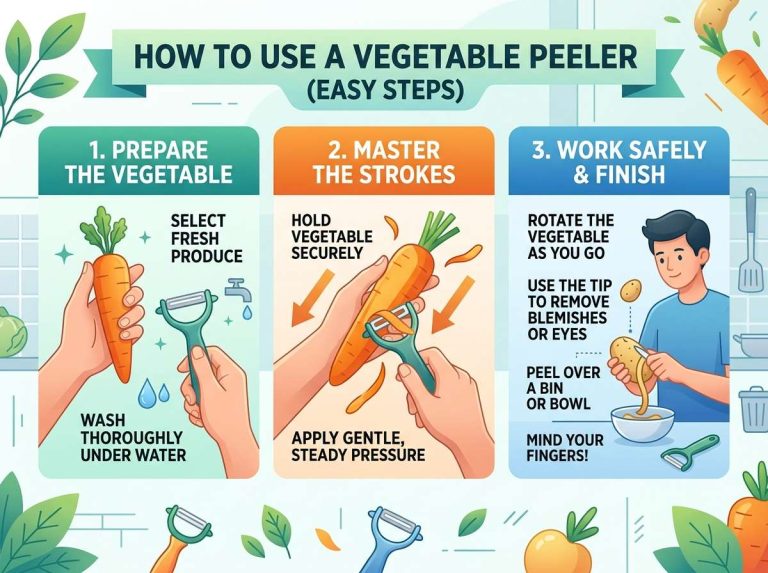
- Pulling toward your body instead of away: this raises the risk of a slip and a cut
- Using a dull blade for too long: a dull peeler forces you to press harder, which increases waste and risk
- Peeling too deep: many nutrients sit just under the skin, so a light touch preserves more of them
- Skipping the notch: digging out potato eyes with the tip of a knife instead of the built-in notch wastes time and flesh
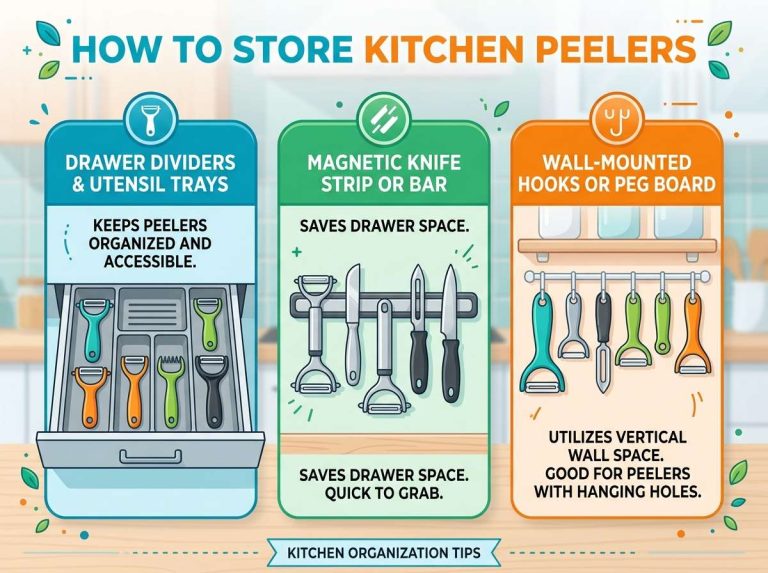
- Storing peelers loose in a drawer: blades knock against other tools and dull faster than they should
Caring for Your Peeler So It Lasts Longer
A peeler isn’t a tool you replace often, so a little care goes a long way. Hand washing is usually gentler than a dishwasher, especially for ceramic blades or wooden handles. Dry it right after washing to avoid rust on steel blades, and store it in a way that keeps the edge from rubbing against metal utensils.
If the blade starts feeling dull or drags instead of gliding, it’s usually cheaper and easier to replace the whole peeler than to sharpen it, since most peeler blades aren’t designed for at-home sharpening.
Frequently Asked Questions
Do I really need more than one peeler? Not necessarily, but having two, like a swivel peeler for everyday veggies and a serrated one for soft fruit, covers almost every situation without cluttering your drawer.
Is a more expensive peeler always better? Not always. Price often reflects blade material, handle comfort, and brand reputation more than actual peeling performance. A mid-range steel peeler with a good grip can outperform an expensive one that feels awkward in your hand.
Can I use a vegetable peeler on cheese? Yes, a straight or Y-peeler works well for shaving thin strips of hard cheese like parmesan for garnishes.
How often should I replace a peeler? Most last a year or more with regular use before the blade dulls enough to notice a difference. Signs it’s time for a new one include dragging instead of slicing cleanly and visible rust spots that won’t scrub off.
Are electric peelers worth the cost for a small household? For just one or two people, a hand peeler is usually enough. The electric version really shines once you’re peeling in bulk on a regular basis.
Final Thoughts
There isn’t one single “best” peeler out there, only the best one for the vegetables you cook most and the way your hands like to work. A swivel peeler handles daily basics, a Y-peeler speeds through long vegetables, a serrated blade tackles soft fruit, and a julienne peeler turns salad prep into something quick and simple.
Once you match the tool to the task, peeling stops feeling like a chore and starts feeling like just another quick step in getting dinner on the table. Try a couple of styles, see what fits your hand and your cooking habits best, and you’ll likely end up with a small collection that covers everything from a Sunday roast to a fresh fruit salad.

Mary is a home cooking enthusiast and kitchen gear reviewer with a passion for practical cookware and food preparation tools. She enjoys testing cutting boards, knives, kitchen gadgets, and other cooking essentials to help home chefs make smarter buying decisions. Through KitchenCutting.com, Mary shares honest product reviews, buying guides, and helpful kitchen tips to make cooking easier, safer, and more enjoyable.