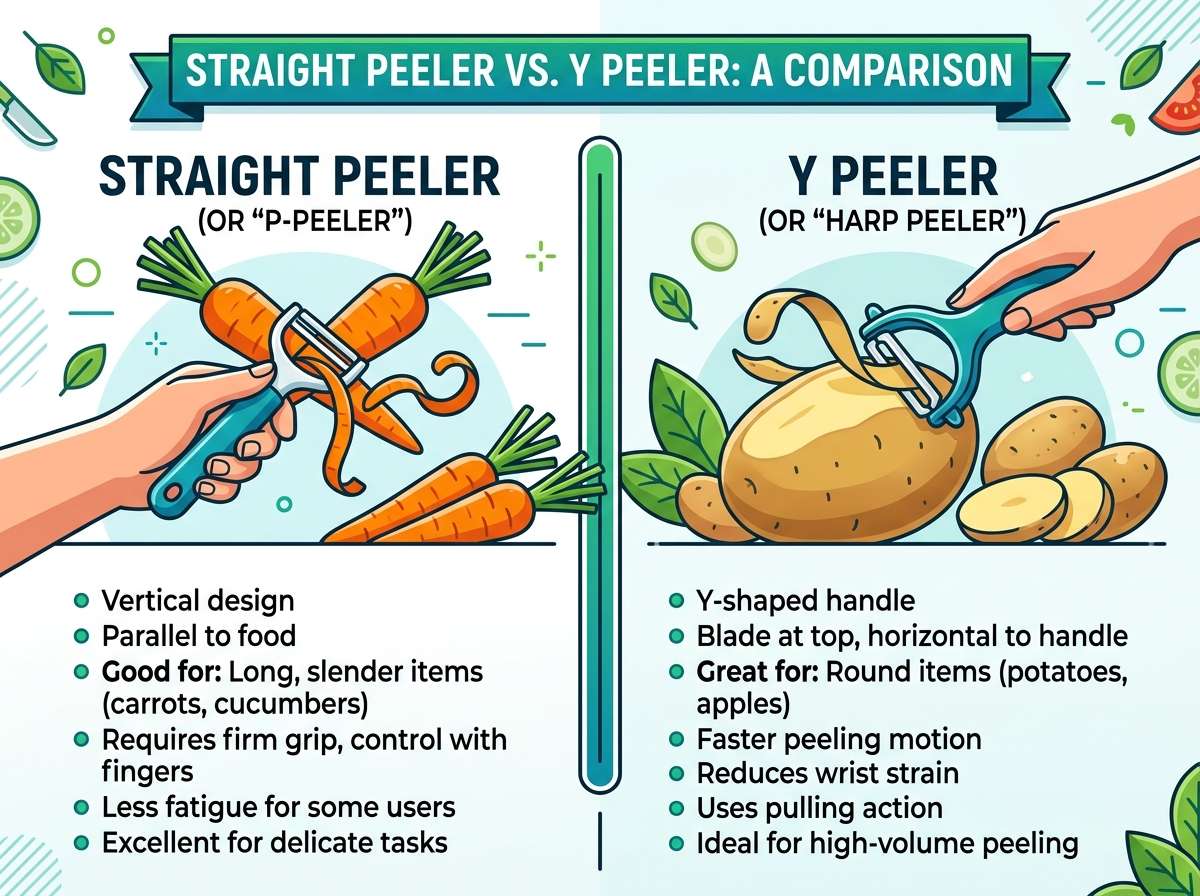
Straight Peeler vs Y Peeler
If you have ever stood in the kitchen aisle staring at a wall of peelers, you know the struggle is real. There are so many shapes, handles, and blades that picking one feels harder than it should be. Two names come up again and again: the straight peeler and the Y peeler. They look different, they feel different in your hand, and they work in slightly different ways too.
In this article
This guide breaks down everything you need to know about both tools. We will cover how each one works, who they are best suited for, their pros and cons, and how to pick the right one for your own kitchen habits. By the end, you will know exactly which peeler deserves a spot in your drawer, or if you should just grab both.
What Is A Straight Peeler?
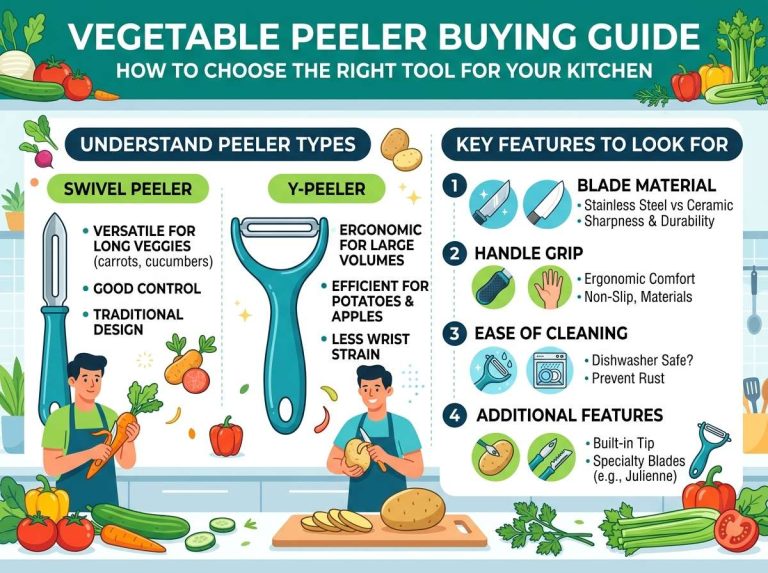
A straight peeler is the classic tool most people grew up using. It has a long handle with a blade attached at the end, running in the same direction as the handle itself. The blade sits parallel to the handle, so you peel by pushing the tool away from your body or pulling it toward you, depending on your grip and habit.
This design has been around for a long time, and it is still one of the most common peelers found in home kitchens. The straight shape makes it easy to use for long, smooth strokes, especially on things like carrots, potatoes, and cucumbers.
Most straight peelers come with a swivel blade. That means the blade rocks back and forth slightly as you move it across the surface of the vegetable, so it can follow curves without you having to change your wrist angle too much. Some cheaper models have a fixed blade instead, which means you have more control but less flexibility when working around bumps and dips.
What Is A Y Peeler?
A Y peeler gets its name from its shape. Instead of a straight handle with the blade at the tip, the handle splits into a Y shape, and the blade sits across the open end, perpendicular to the handle. This gives it a completely different feel in your hand.
With a Y peeler, you hold it like you are gripping a small paintbrush or a pencil, and you peel by dragging the blade toward you or away from you in short, quick strokes. Because the blade sits across the top rather than at the end, your wrist stays in a more natural, relaxed position while you work.
This style became popular thanks to professional kitchens, where cooks needed a tool that let them work fast without straining their hands over long prep sessions. Since then, it has made its way into plenty of home kitchens too, especially among people who cook often and want a tool that feels light and quick.
Straight Peeler vs Y Peeler: Key Differences
Let’s break down the main things that set these two tools apart, so you can see exactly where they differ.
Handle Grip and Comfort
The straight peeler is held more like a knife, with your fingers wrapped around a handle that runs in line with the blade. This grip feels familiar to most people, since it mimics how you hold other kitchen tools.
The Y peeler, on the other hand, is held more like a pencil or a small paring knife, with your thumb resting on top and your fingers curling underneath. This grip lets your wrist stay looser and can reduce strain during long peeling sessions, which is a big reason chefs tend to favor it.
If you have wrist pain or arthritis, the Y peeler often feels gentler because it relies more on finger movement than wrist rotation. That said, comfort really comes down to personal habit, and some people find the straight peeler easier simply because it is what they learned on first.
Peeling Motion
With a straight peeler, you usually peel in long strokes, moving the blade away from you or pulling it toward you depending on preference. This motion works great for long vegetables like carrots, parsnips, and zucchini, since you can run the blade the full length in one smooth pass.
The Y peeler works best with short, controlled strokes, almost like scraping. This makes it a strong choice for rounder produce like apples, potatoes, and mangoes, where you need to rotate the fruit or vegetable often and adjust your angle quickly.
Blade Angle and Control
The blade on a straight peeler sits in line with the handle, so the angle stays fairly fixed unless the blade swivels. This gives a steady, predictable feel, which beginners often appreciate since there is less guesswork involved.
A Y peeler blade sits at a wider angle to the handle, which means it can hug curves and dips more easily. This is especially handy when peeling something with an uneven surface, like a knobby ginger root or a bumpy potato.
Speed
Once you get used to a Y peeler, many people find it faster for everyday tasks. The short scraping motion lets you cover more surface area with less arm movement, and rotating the food in your other hand keeps the whole process moving quickly.
The straight peeler is not slow by any means, but the longer strokes required for full coverage can take a bit more time on rounder produce, since you need to change your grip angle more often to follow the curve.
Skin Removal Thickness
A straight peeler tends to remove a thin, even layer of skin thanks to its swivel blade rocking gently over bumps. This is great if you want to save as much of the flesh as possible and reduce food waste.
A Y peeler can sometimes take off a slightly thicker strip, especially in the hands of a beginner, since the scraping motion can dig a bit deeper if you press too hard. With practice, though, most people learn to control the pressure and get thin, even peels just like with a straight peeler.
Best For Which Foods
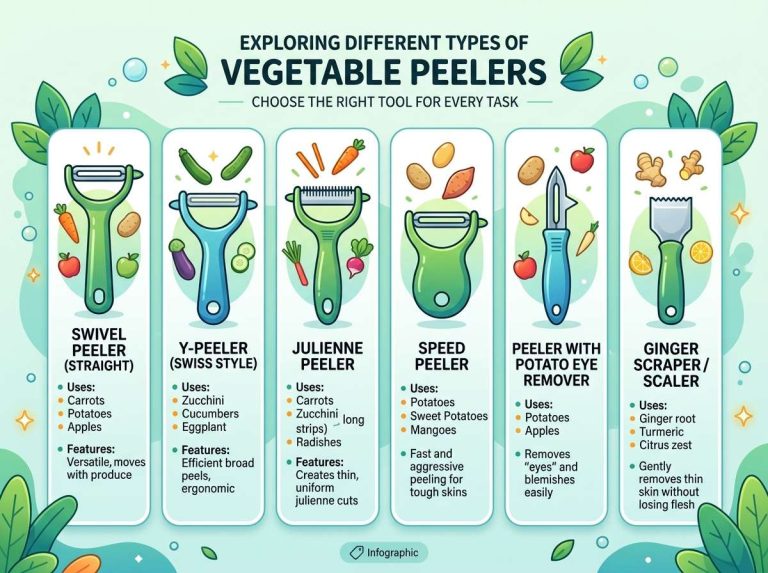
The straight peeler shines with long, narrow vegetables such as carrots, cucumbers, zucchini, and parsnips. Its long strokes match the shape of these foods perfectly.
The Y peeler shines with round or oddly shaped produce such as apples, potatoes, mangoes, kiwis, and butternut squash. Its short strokes and wide blade angle make it easier to work around curves and dips.
Learning Curve
Most people find the straight peeler easier to pick up right away, since the grip and motion feel similar to using a knife. There is very little adjustment needed.
The Y peeler takes a bit of getting used to, especially if you have only ever used a straight peeler before. The pencil-style grip and scraping motion feel unfamiliar at first, but once your hand adjusts, many cooks say they never want to go back.
Straight Peeler Pros and Cons
Pros
- Familiar grip that most people already know how to use
- Smooth, even peels thanks to the swivel blade design
- Great for long vegetables and fruits
- Usually affordable and widely available
- Easy to sharpen or replace blades on some models
Cons
- Can feel slower on round produce
- Requires more wrist movement, which may tire your hand over long sessions
- Less effective on bumpy or uneven surfaces compared to a Y peeler
Y Peeler Pros and Cons
Pros
- Comfortable grip that reduces wrist strain
- Fast, efficient peeling once you get the hang of it
- Handles curves and bumps with ease
- Great for people who cook often and peel in bulk
- Lightweight and easy to store
Cons
- Takes practice to master the scraping motion
- Can remove thicker strips of skin if not used carefully
- Some people find the grip awkward at first, especially kids or those new to cooking
How To Choose Between A Straight Peeler And A Y Peeler
There is no single right answer here, since it really depends on what you cook most often and how your hand feels holding each tool. Here are a few simple questions to help guide your decision.
Do you cook a lot of round produce like apples and potatoes? If so, a Y peeler will likely save you time and effort.
Do you mostly peel long vegetables like carrots and cucumbers? A straight peeler will probably feel more natural and efficient for that kind of prep.
Do you have wrist pain or hand fatigue issues? Many people with these concerns find the Y peeler easier on their joints, thanks to the lighter grip.
Are you new to cooking and want something simple? The straight peeler has a shorter learning curve, so it might be the better starting point.
Do you peel in large batches, like for meal prepping? The speed of a Y peeler can make a real difference when you are working through a big pile of produce.
Honestly, plenty of home cooks end up owning both. They reach for the straight peeler on carrot and cucumber days, and grab the Y peeler when apples or potatoes are on the menu. Since both tools are usually inexpensive, having one of each in your drawer is not a big investment, and it covers all your bases.
Tips For Getting The Most Out Of Either Peeler
No matter which style you pick, a few small habits can make peeling easier and safer.
Keep your blade sharp. A dull peeler forces you to press harder, which increases the chance of slipping and also tends to remove more flesh along with the skin. Replace or sharpen your blade regularly to keep things smooth.
Peel over a bowl or cutting board. This keeps your counter clean and makes cleanup faster, especially if you are working through a big batch of vegetables.
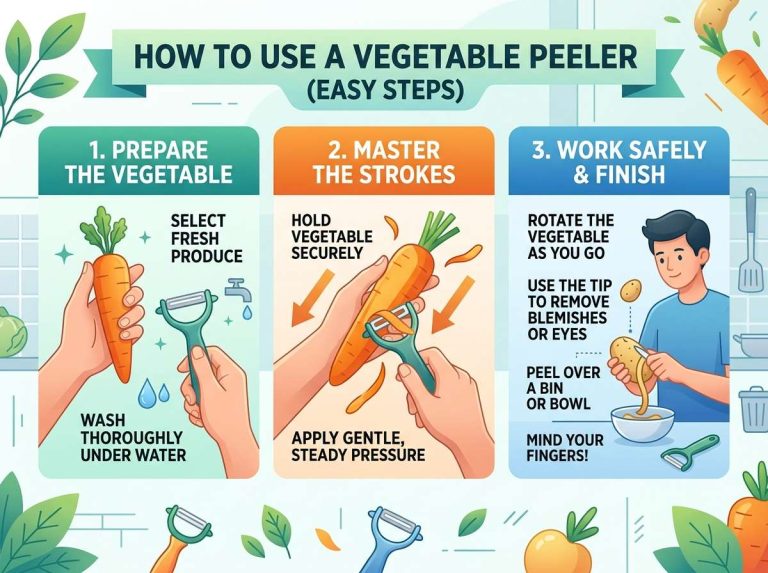
Use a claw grip on the food you are holding. Curl your fingers slightly and tuck your thumb back so the blade has less chance of nicking your skin.
Rotate the food as you go. Small, steady rotations let the blade follow the natural curve of the produce, giving you a more even peel with less wasted flesh.
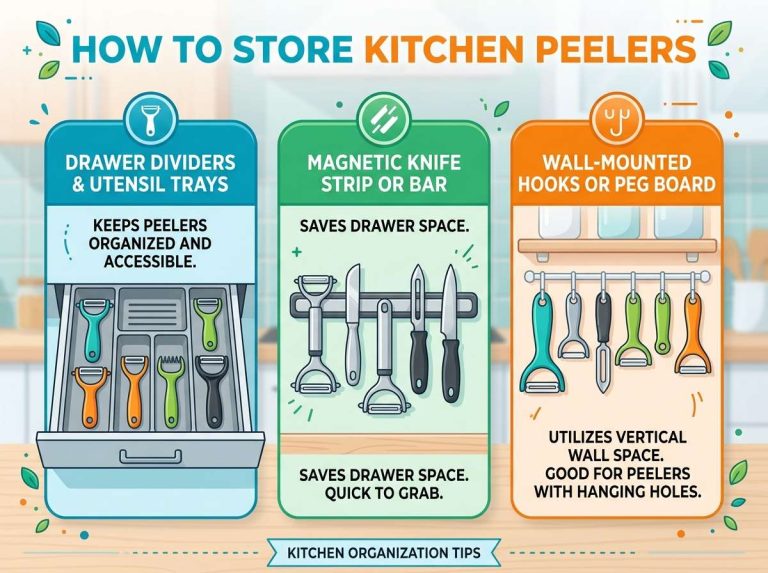
Store your peeler properly. A drawer organizer or a hanging hook keeps the blade protected and easy to find, rather than tossing it loose in a drawer where it can dull faster or become a hazard.
Common Mistakes People Make With Peelers
A lot of frustration with peelers comes down to small habits rather than the tool itself. Here are a few things to watch out for.
Pressing too hard is one of the biggest issues. Both straight and Y peelers are designed to glide with light pressure. Pushing down hard usually means you are fighting a dull blade, and it can also lead to thicker peels or slips.
Using the wrong peeler for the wrong food can slow you down too. Trying to peel a round apple with long straight strokes, or trying to peel a long carrot with short scraping motions, makes the job harder than it needs to be.
Ignoring blade direction is another common slip. Straight peelers usually work best pulled toward you, while some people prefer pushing away. Y peelers work with a scraping motion toward the body. Going against the natural direction of the blade can make peeling feel clunky.
Skipping maintenance shortens the life of any peeler. Rinsing it right after use and drying it fully prevents rust and keeps the blade sharp for longer.
Final Verdict
Both the straight peeler and the Y peeler do the same basic job, but they get there in different ways. The straight peeler offers a familiar grip and smooth, even peels, making it a solid pick for beginners and for long vegetables like carrots and cucumbers. The Y peeler offers speed and comfort for round produce like apples and potatoes, along with a gentler grip that many people find easier on their wrists over time.
If you only want one peeler in your kitchen, think about what you cook most often. Cooks who lean toward soups, stews, and root vegetables will likely get more use out of a straight peeler. Cooks who bake often, snack on fruit, or prep large batches of round produce will probably enjoy the Y peeler more.
And if you cannot decide, there is nothing wrong with owning both. They are small, affordable, and each one fills a gap the other might miss. Having both tools on hand means you are always ready, no matter what is on your cutting board.

Mary is a home cooking enthusiast and kitchen gear reviewer with a passion for practical cookware and food preparation tools. She enjoys testing cutting boards, knives, kitchen gadgets, and other cooking essentials to help home chefs make smarter buying decisions. Through KitchenCutting.com, Mary shares honest product reviews, buying guides, and helpful kitchen tips to make cooking easier, safer, and more enjoyable.