How to Clean a Wooden Cutting Board After Raw Meat?
Your wooden cutting board is one of your kitchen’s best friends. It looks beautiful, feels nice under your knife, and lasts for years with proper care. But after you’ve sliced raw chicken, beef, or pork on it, you need to know exactly how to clean it. Raw meat leaves behind bacteria that can make your family sick if you don’t handle cleanup the right way.
In this article
The good news? Cleaning a wooden cutting board after raw meat isn’t hard. You just need the right steps and the right tools. This guide will walk you through everything you need to know.
Why Cleaning Matters So Much
Raw meat sits on your cutting board and leaves behind all kinds of germs. These aren’t just gross—they can cause real food poisoning. Bacteria like salmonella and E. coli hide in the grooves and cracks of your cutting surface. If you don’t wash your board properly, these germs can spread to other foods you prepare later.
The scary part is that you can’t see these germs. Your board might look clean when it’s not. That’s why following a solid cleaning routine is so important.
The Difference Between Wood and Plastic
Before we jump into the cleaning steps, let’s talk about why wooden boards are different from plastic ones. A lot of people think plastic cutting boards are more sanitary. This actually isn’t true.
Wood has natural properties that kill bacteria. Yes, really. Studies show that wood is actually better at fighting off germs than plastic. The wood absorbs moisture from bacteria, which stops them from growing. Plastic boards don’t have this power. Over time, plastic gets scratched and cut up, giving bacteria places to hide.
So your wooden cutting board is already working to protect you. Your job is to help it do that job even better by cleaning it right.
What You’ll Need Before You Start
Let’s gather your supplies first. You don’t need fancy or expensive stuff. Most of what you need is already in your kitchen.
Basic supplies:
- Hot water (the hotter the better)
- Dish soap (regular kind works fine)
- Sponge or cloth
- Paper towels or a clean dish towel
For deeper cleaning:
- Baking soda
- White vinegar
- Lemon (fresh is best, but bottled works)
- Salt
- Olive oil (optional, for conditioning)
That’s it. You probably have most of these right now. You don’t need special wood cleaners or expensive products.
The Quick Clean: Right After You Use It
This is the step you do immediately after you finish cutting raw meat. Don’t wait. Don’t let your board sit. Do this right away.
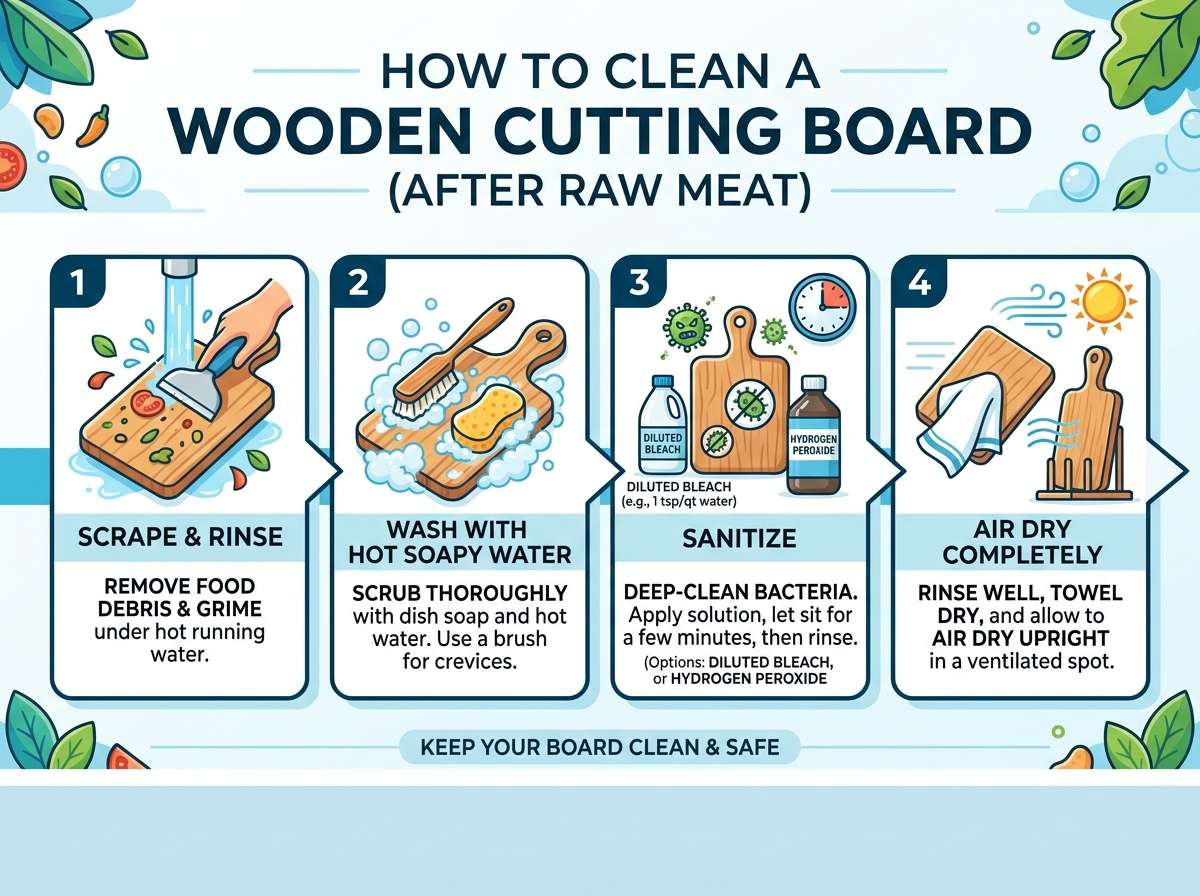
Step 1: Rinse it off
Hold your cutting board under hot running water. Let the water run over both sides. This washes away any meat bits or blood. Use your fingers or a soft brush to help rinse it clean. Spend about thirty seconds on this. Make sure you get into all the corners and edges.
Step 2: Wash with soap and water
Grab your sponge and some dish soap. Add soap to the sponge and wash your board like you would wash a plate. Use circular motions and scrub both sides well. Pay extra attention to any grooves or edges where germs like to hide.
Scrub for at least one minute. This might seem long, but it matters. The friction from scrubbing is what kills germs. Don’t just wipe it down lightly.
Step 3: Rinse really well
Run your board under hot water again. Make sure all the soap is gone. Any soapy residue left behind can get into your food later. Rinse both sides and all the edges.
Step 4: Dry it completely
This step is huge. Wet wood is a breeding ground for bacteria and mold. Grab a clean dish towel or paper towels and dry your board thoroughly. Don’t just wipe it once. Really dry it. Get into all the grooves. Make sure there’s no moisture left.
After drying, stand your board on edge or lean it against something so air can flow around it. This helps any remaining moisture evaporate. Never store a wet cutting board flat. That traps moisture underneath.
The Deep Clean: Once or Twice a Week
The quick clean works for everyday use, but you should do a deeper clean regularly. This kills any bacteria that might have survived the first wash and refreshes your board.
The Baking Soda Method
Baking soda is a cleaning powerhouse. It’s cheap, safe, and really works.
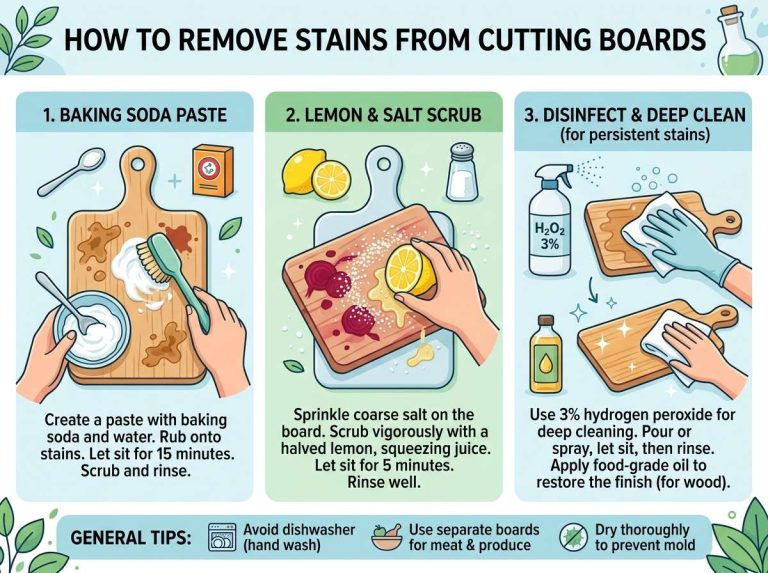
- Sprinkle a generous amount of baking soda all over your cutting board. Cover both sides.
- Cut a lemon in half. Use the lemon to rub the baking soda into your board. The lemon juice mixes with the baking soda to make a paste. This combo is amazing for killing germs and removing stains.
- Keep rubbing for about two minutes. Work the paste into all the grooves and cracks.
- Rinse everything off with hot water. Scrub with your sponge as you rinse to help remove the paste.
- Dry completely with a towel.
Your board will smell fresh and clean after this. The lemon takes care of any bad smells from raw meat.
The Vinegar Method
Vinegar is another great option. It kills bacteria and sanitizes your board.
- Mix equal parts white vinegar and water in a spray bottle. You can also just pour some vinegar straight onto your board.
- Spray or pour it all over the surface. Let it sit for a few minutes.
- Use a sponge or brush to scrub the board. The vinegar will help lift away any stuck-on bits.
- Rinse with hot water until you don’t smell the vinegar anymore.
- Dry it completely.
Some people combine vinegar and baking soda. They spray vinegar first, then sprinkle baking soda on top. The reaction between them creates fizzing action that helps clean. Then you scrub and rinse.
The Salt and Lemon Method
This is old-school and works like a charm.
- Sprinkle salt all over your board. Use enough to cover the surface.
- Cut a lemon in half and use it to rub the salt into your board. The salt acts as a scrub while the lemon kills bacteria.
- Let it sit for five minutes. This gives the lemon juice time to work on bacteria.
- Scrub with a sponge or cloth. The salt grains help remove buildup and stains.
- Rinse well with hot water.
- Dry completely.
This method is great for removing stains and odors. If your board smells like raw meat, this will fix it.
Dealing With Stains and Odors
Raw meat sometimes leaves stains or smells on your board. These can be stubborn. Here’s how to fight back.
For Stains
Bleach can work on wood, but use it very carefully. Many experts say you should skip bleach on wooden boards because it can damage the wood over time and soak in too deep.
Instead, try this:
- Make a paste with baking soda and hydrogen peroxide (the regular kind from your bathroom).
- Apply it to the stain and let it sit for five to ten minutes.
- Scrub with an old toothbrush or soft brush.
- Rinse very well.
The hydrogen peroxide lifts stains without hurting your wood.
For Bad Smells
Raw meat smell can stick around even after washing. Here’s what works:
- Rub the board with lemon halves. Just rub it around like you’re cleaning. The acid in the lemon eats the smell molecules.
- Or sprinkle baking soda and let it sit overnight. Baking soda absorbs odors. In the morning, just brush it off and wash.
- You can also soak the board in a vinegar and water mix for thirty minutes, then wash as normal.
If the smell is really bad, it might mean you need to condition your board (we’ll talk about this below).
When to Use Sanitizing Spray
Food-safe sanitizing sprays have their place. They kill bacteria fast. But be smart about using them on wooden boards.
Use sanitizing spray after your hot water and soap wash if you want extra protection. Spray it on, let it sit for a minute or two, then rinse very well. Don’t leave sanitizer on wood because it can soak in and cause damage.
Many food safety experts say that hot water and soap are enough for wooden boards. The combination of heat and scrubbing does the job. Sanitizers are optional, not required.
Conditioning Your Board Keeps It Healthy
Wood needs moisture to stay healthy. Over time, washing and drying can dry out your board. A dry board can crack and split. That’s when you’ll get real problems.
Conditioning your board once a month (or more often if you use it a lot) keeps it in great shape.
How to Condition
- Make sure your board is completely dry and clean.
- Pour a small amount of food-grade mineral oil or coconut oil onto your board.
- Use a soft cloth or your hands to rub the oil into the wood. Cover both sides and all edges.
- Keep rubbing until the wood stops looking shiny. The oil should soak in.
- Let it sit for a few hours or overnight. Wipe off any oil that didn’t soak in.
That’s it. Your board will look better and last much longer.
Should You Use Olive Oil?
Regular olive oil can work, but it’s not the best choice. Over time, olive oil can go rancid on your board. It can also create a sticky feeling. Food-grade mineral oil or coconut oil are better options. They don’t go bad and they stay neutral.
Storage Matters Too
How you store your board affects how long it lasts and how safe it is.
Best storage practices:
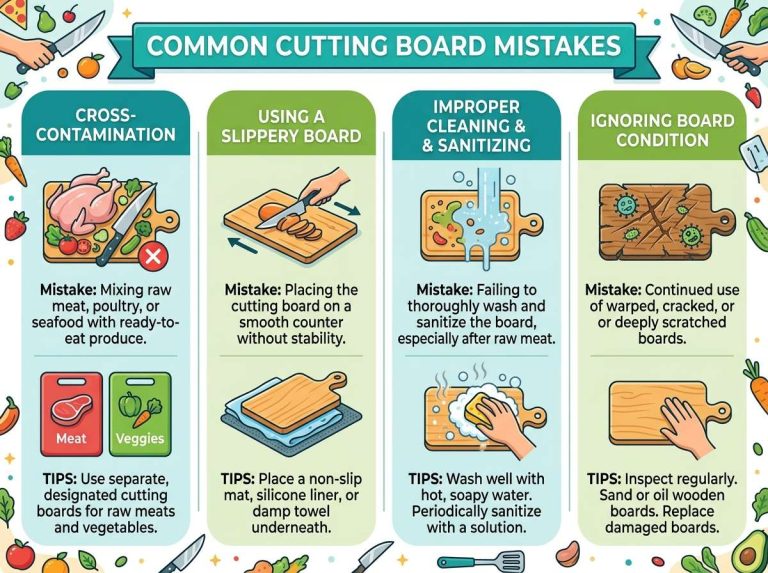
- Store your board standing up on edge, not flat. This lets air flow around it and prevents moisture from gathering.
- Keep it away from direct heat and sunlight. These can warp and crack wood.
- Store it in a cool, dry place. A kitchen cabinet works great.
- Don’t store it right next to other boards without letting them touch lightly. You want air to flow between them.
- Never store a damp board. Always make sure it’s completely dry first.
Special Situations and Questions
Can you use a wooden board for chicken?
Yes, absolutely. Chicken is raw meat just like beef or pork. Follow all the same cleaning steps. Hot water, soap, and thorough scrubbing are your friends.
What if you cut raw meat and then vegetables on the same board?
Don’t do this. Ever. Use one board for raw meat and a different one for vegetables and other foods. Cross-contamination is a real risk. If you only have one board, cut your vegetables first, then wash before using it for raw meat.
How often should you replace your wooden board?
With proper care, a wooden cutting board lasts for years. Some last decades. Replace it only when it cracks deeply, warps badly, or develops grooves so deep you can’t clean them properly.
Can you put it in the dishwasher?
No. The dishwasher is too harsh for wood. The heat and moisture will warp and damage your board. Always wash by hand.
What about wooden salad bowls or spoons?
Use the same cleaning methods. Hot water and soap for everyday cleaning. Baking soda and lemon for deeper cleaning. Condition them monthly with food-grade oil.
Food Safety Rules to Remember
Cleaning your cutting board is just part of keeping your kitchen safe. Here are other important rules:
Separate boards for raw meat
Have one board just for raw meat. Use different boards for vegetables, bread, and cooked foods. This stops bacteria from spreading.
Wash your hands
Clean your hands after touching raw meat. Use hot water and soap for at least twenty seconds.
Don’t rinse raw meat
A lot of people rinse chicken before cooking it. Don’t. Rinsing spreads bacteria around your sink. Just cook it as is.
Clean everything else too
Your hands, your sink, your countertop, and any utensils that touched raw meat all need washing. Your cutting board is just one part of food safety.
Use a meat thermometer
Cook meat to the right temperature. This kills bacteria. Don’t rely on color to tell if meat is done.
The Bottom Line
Cleaning a wooden cutting board after raw meat is simple. Use hot water and soap. Scrub well. Dry completely. Do deeper cleaning once or twice a week with baking soda and lemon or vinegar. Condition it monthly.
This routine keeps your board clean and safe. It also keeps your board looking beautiful and lasting for years.
Raw meat brings bacteria into your kitchen. But with these cleaning steps, you’re protecting your family. You’re also protecting your investment in a good wooden board. These boards are worth the extra care. They serve you well when you serve them well.
Start with the quick clean method today. Make it a habit. Do it right after every time you cut raw meat. Then add the deep cleaning once a week. Your board will stay clean, fresh, and beautiful. Your family will stay healthy. That’s worth a few extra minutes of cleaning.
Now you know exactly what to do. Go clean that board. Your kitchen will be better for it.
Quick Reference Checklist
Right after using your board:
- Rinse with hot water
- Wash with soap and sponge (at least one minute)
- Rinse again until soap is gone
- Dry completely with a towel
- Stand on edge to air dry
Once or twice a week deep clean:
- Sprinkle baking soda and rub with lemon, OR
- Spray with vinegar and water mix, OR
- Use salt and lemon rubbing method
- Scrub and rinse well
- Dry completely
Monthly conditioning:
- Use food-grade mineral oil or coconut oil
- Rub into both sides
- Let soak in
- Wipe off excess
Storage:
- Always dry completely first
- Stand on edge
- Keep in cool, dry place
- Allow air to flow around it
Follow these steps and your wooden cutting board will stay clean, safe, and beautiful for years to come.

Mary is a home cooking enthusiast and kitchen gear reviewer with a passion for practical cookware and food preparation tools. She enjoys testing cutting boards, knives, kitchen gadgets, and other cooking essentials to help home chefs make smarter buying decisions. Through KitchenCutting.com, Mary shares honest product reviews, buying guides, and helpful kitchen tips to make cooking easier, safer, and more enjoyable.