How to Care for Bamboo Cutting Boards?
Bamboo cutting boards are amazing. They look great in your kitchen. They’re strong and durable. Best of all, they’re easy to take care of if you know what to do. But here’s the thing – many people don’t know how to properly maintain their bamboo boards. That’s why stains happen. That’s why they crack or warp. That’s why they lose their beautiful shine.
In this article
The good news? Taking care of a bamboo cutting board is simple. You don’t need fancy products or complicated steps. You just need to know the basics. This guide will show you everything you need to know to keep your bamboo cutting board in perfect shape for years to come.
Why Bamboo Cutting Boards Need Special Care
Bamboo is not like plastic or glass. It’s a natural material. This means it needs a bit more attention. Think of it like wood furniture in your home. You wouldn’t just throw water on your wooden table, right? The same applies to bamboo boards.
When you don’t care for bamboo properly, bad things happen. Water can seep into the grain and cause swelling. Bacteria can grow in cracks and crevices. Knife marks can become deep grooves where food particles hide. Heat can cause warping and splitting.
But when you treat your bamboo board with the right care routine, it will last for years. Some people have bamboo cutting boards that are over a decade old. These boards still look great and work perfectly. They just follow the right steps.
Daily Cleaning: The Foundation of Board Care
Daily cleaning is the most important part of keeping your bamboo board healthy. This is where most of the work happens. The good news is that daily cleaning takes just a few minutes.
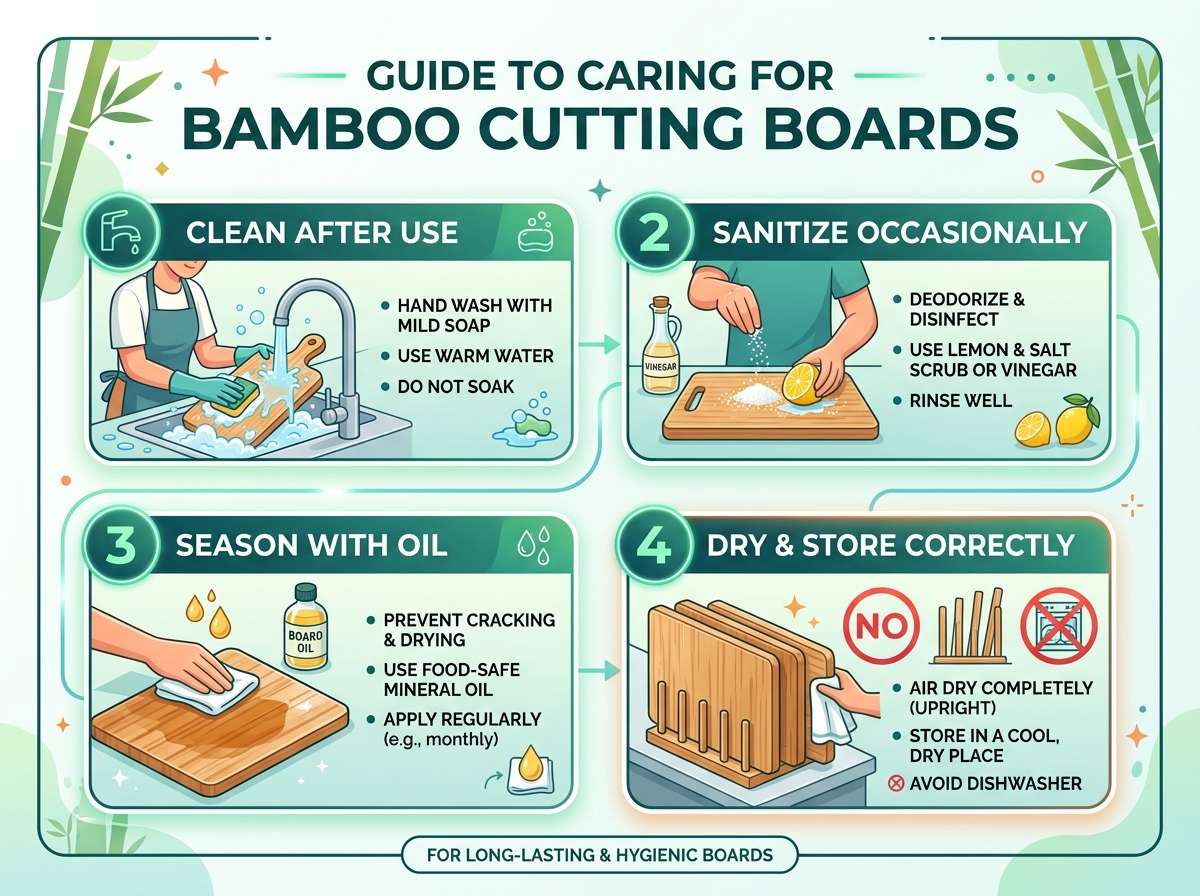
Right after you use your bamboo cutting board, rinse it with warm water. Use your hand or a soft sponge to wipe away food particles. Don’t let food dry on the board. Fresh food is much easier to clean than hardened food.
For most tasks, warm water and your hands are enough. You can use a soft sponge or cloth too. Just be gentle. Don’t scrub hard. You’re not trying to strip away the wood. You’re just cleaning off food.
If your board has strong odors or stains, add a little dish soap. Use a mild soap, not anything too harsh. Scrub gently with a soft sponge. Then rinse thoroughly under warm running water. Make sure you remove all the soap.
After washing, dry the board right away. Don’t let it sit wet. Use a clean towel or cloth to dry both sides. This is crucial. Sitting water is the enemy of bamboo boards. It can cause swelling, warping, and mold growth.
Dealing With Stains and Discoloration
Even with good care, stains happen. You cut beets. You use turmeric. You spill red wine. These things stain bamboo. Don’t worry. Stains are usually just cosmetic. They don’t hurt the board or make it less safe to use.
For light stains, you can use a natural cleaning solution. Mix equal parts white vinegar and water. Apply this solution to the stained area. Let it sit for a few minutes. Then scrub gently with a soft brush or cloth. Rinse well with water and dry immediately.
Baking soda is another great natural cleaner for bamboo boards. Make a paste using baking soda and water. Apply it to the stained area. Let it sit for 10 to 15 minutes. Scrub gently and rinse well. This method works well for tough stains.
For really stubborn stains, you can try lemon juice and salt. Sprinkle salt on the stained area. Cut a lemon in half and rub it directly on the stain. The acid in the lemon works with the salt to lift the stain. Let it sit for a few minutes. Then scrub and rinse well.
Always remember to dry the board completely after using any cleaning method. Moisture is always the concern with bamboo. Even a little leftover moisture can cause problems.
Removing Odors the Right Way
Bamboo boards can hold onto smells. Onions, garlic, and fish are the worst offenders. Your board might smell strong after preparing these foods. The smell can transfer to other foods. This is annoying but fixable.
Baking soda is your friend for odor removal. Sprinkle it all over the board. Let it sit for a few minutes. Then scrub gently and rinse well. The baking soda will absorb and neutralize bad smells.
Another method is using lemon or lime. Rub a cut lemon all over the board surface. Let it sit for a few minutes. The acid naturally kills odors. Then rinse and dry.
Coffee grounds also work well. Sprinkle used coffee grounds on the board and rub them around. This is a bit messier but very effective. Rinse well when done.
Salt can help too. Use coarse salt or sea salt. Sprinkle it on the board and scrub gently with a damp cloth. This works especially well for fish and onion odors.
The Deep Cleaning Process
Once a week or every two weeks, give your board a deep clean. This goes beyond the daily rinse. A deep clean removes bacteria and refreshes the board.
Start with hot water and a stiff brush or cloth. Scrub the entire surface, especially any grooves or knife marks. Pay extra attention to any areas that look dark or dirty. Scrub both sides of the board.
After scrubbing, apply one of your natural cleaning solutions. Use the vinegar and water mix or the baking soda paste. Let it sit for 10 to 15 minutes. This gives the cleaning solution time to work on bacteria and stains.
Scrub again with your brush or cloth. Use more pressure this time since you’re doing a deep clean. Get into the grooves and marks. This is where bacteria like to hide.
Rinse very well under hot running water. You want to make sure you remove all the cleaning solution. Any leftover baking soda or vinegar can be sticky.
Finally, dry the board completely. Use a clean, dry towel. Pat it dry rather than just wiping. Make sure both sides are completely dry before you put it away.
Oiling Your Bamboo Board: The Secret to Longevity
Oiling is maybe the most important part of bamboo board care. This is what keeps your board looking beautiful and functioning well. Oil protects the bamboo from water damage and keeps it from drying out.
You should oil your bamboo board regularly. For heavy use, oil it every week. For light use, oil it every two to four weeks. Just follow your board’s condition. If it starts looking dry or dull, it needs oil.
Use food-safe mineral oil or bamboo board oil. Some people use coconut oil, but this can go rancid. Olive oil is not a good choice because it spoils. Stick to mineral oil or special bamboo oils made for this purpose.
The oiling process is simple. Make sure your board is clean and dry. Apply a generous amount of oil to the board. Use a clean cloth to rub the oil into the wood. Rub in the direction of the grain. Cover the entire surface, including the edges.
Let the oil soak in for a few minutes. Then wipe away any excess oil with a clean, dry cloth. You want the board to look moist and shiny, not greasy or slick.
Let the board dry completely before you use it again. This usually takes a few hours. Some people oil their boards before bed and use them the next day.
Dealing With Warping and Swelling
Warping happens when bamboo boards absorb water and then dry unevenly. The board curves or twists. This makes it sit funny on your counter. It’s annoying and makes the board less safe to use.
Swelling is similar. Water causes the wood to expand. If one part of the board swells more than another, it becomes uneven.
The best way to handle warping and swelling is to prevent it. Keep your board as dry as possible. Don’t let it soak in water. Dry it immediately after washing. Store it in a dry place.
If your board does warp slightly, you might be able to fix it. Try placing the board flat on your counter with weight on top. A heavy cutting board or cast iron skillet works well. Leave weight on it for a few hours or overnight. Sometimes this helps the board flatten back out.
For serious warping, there’s not much you can do. The best option is to replace the board. Prevention is much better than trying to fix a badly warped board.
Knife Care to Protect Your Board
The knives you use matter a lot. Dull knives are harder on your board than sharp knives. When a dull knife hits the board, it requires more force and can create rough cuts and gouges.
Keep your knives sharp. A sharp knife glides through food and barely marks the board. Dull knives smash and create deeper gouges.
Also think about the types of knives you use. Large chef knives are better than small paring knives for a cutting board. Small knives put pressure on a tiny area. Large knives spread the pressure across more surface.
Avoid using your bamboo board for heavy chopping tasks. Don’t smash garlic with the side of a knife. Don’t hack through bones or frozen food. Use a wooden or plastic board for these rough tasks. Save your bamboo board for softer foods.
Avoid dropping knives or your board. Impact can create cracks or chips. Handle your board with care when cleaning and storing.
Proper Storage Matters
Where you store your bamboo cutting board matters. Store it flat, not upright. When a board stands on its edge, water can pool on top of the board. This causes warping and swelling.
Store it in a cool, dry place. Avoid damp areas like under the sink. Avoid hot areas like above the stove or next to an oven. Temperature changes and moisture cause warping.
If your board gets wet during storage, pull it out and dry it immediately. Don’t leave it in a closed cabinet while damp.
Some people hang their boards on a wall or on a magnetic rack. This keeps them visible and easy to access. It also keeps them dry. Just make sure the mounting hardware is strong. You don’t want your board crashing down.
If you store it in a cabinet or drawer, make sure the space is clean and dry. Consider placing a thin cloth underneath to absorb any moisture.
Handling Mold and Mildew
Sometimes mold or mildew grows on bamboo boards. This usually happens if the board stays damp for too long. Mold looks like green or black spots. Mildew looks like white fuzz.
If you see mold or mildew, don’t panic. It’s fixable. Clean it immediately with white vinegar. Apply vinegar directly to the affected area. Let it sit for a few minutes. Scrub with a brush and rinse well.
You can also use a solution of one part bleach to ten parts water. Apply this to mold spots. Let it sit for a few minutes. Scrub and rinse very well. Make sure you remove all bleach before using the board again.
After cleaning mold or mildew, dry the board completely. Then oil it to restore protection.
To prevent mold, keep your board dry. Clean and dry it immediately after use. Store it in a dry place. Make sure air can circulate around it. Never seal a wet board in a closed cabinet.
Extending the Life of Your Board
A well-cared-for bamboo cutting board can last for years. Some last more than a decade. Here are some final tips to extend the life of your board.
Avoid extreme temperatures. Don’t put a cold board directly on a hot stovetop. Don’t put a hot board in a cold freezer. Temperature shock can cause warping and cracking.
Don’t put your bamboo board in the dishwasher. The heat and moisture will damage it. Always hand wash and dry.
Rotate the side you use. Use one side for a few weeks, then switch to the other side. This helps the board wear evenly. It also gives each side time to dry and rest.
Be gentle with your board. Don’t use it as a cutting surface for tasks that don’t need a cutting board. Don’t use it as a trivet or hot plate. Don’t use it as a serving platter for hot foods.
Replace or repair damaged areas when possible. A small chip or crack can be sanded down. Deep cracks might require professional repair. Small problems are easy to fix. Don’t ignore them.
Common Mistakes to Avoid
Many people damage their bamboo boards without meaning to. Avoid these common mistakes.
Don’t let your board soak in water. A quick rinse is fine. Soaking damages the wood.
Don’t use harsh chemicals or bleach regularly. These can strip the wood and cause discoloration.
Don’t store your board upright or leaning. Store it flat.
Don’t skip the oiling step. Oiling is not optional. It’s essential for board protection.
Don’t use your board for very hot foods or pots. Heat damages bamboo.
Don’t ignore small problems. A small crack can become a big one if you ignore it.
Don’t use your board as a serving platter. Food safety experts recommend using a separate board for raw foods and another for cooked foods.
When to Replace Your Board
Even with great care, bamboo boards don’t last forever. At some point, replacement is the right choice.
Replace your board if it has deep cracks that go through to the other side. These cracks can trap bacteria and food particles.
Replace your board if it’s warped so badly that it doesn’t sit flat. A warped board is unsafe to use.
Replace your board if you can’t remove stains or odors. This usually means bacteria have gotten into the wood.
Replace your board if it has mold that keeps coming back. This means moisture is trapped inside.
Replace your board if the surface is so scarred and gouged that it’s hard to clean. New boards are better than heavily damaged old ones.
But with proper care, replacement might not be necessary for many years.
Conclusion: Your Bamboo Board Can Last for Years
Bamboo cutting boards are beautiful and practical. They’re also easy to care for if you follow the right steps. Daily cleaning, regular oiling, and proper storage are the foundation of good board care.
The steps in this guide are simple. None of them require special tools or expensive products. Most of what you need you already have at home. Water, vinegar, baking soda, and mineral oil. That’s really all you need.
Remember the key points: clean daily, dry immediately, oil regularly, and store properly. Follow these steps and your bamboo cutting board will serve you well for years. It will stay beautiful. It will stay functional. It will be a joy to use in your kitchen.
Your board is an investment in better cooking. Take care of it, and it will take care of you. You’ve got this.

Mary is a home cooking enthusiast and kitchen gear reviewer with a passion for practical cookware and food preparation tools. She enjoys testing cutting boards, knives, kitchen gadgets, and other cooking essentials to help home chefs make smarter buying decisions. Through KitchenCutting.com, Mary shares honest product reviews, buying guides, and helpful kitchen tips to make cooking easier, safer, and more enjoyable.