How Many Knives Do You Need in a Kitchen?
Let’s be honest—standing in front of a knife block with twenty different blades sticking out feels overwhelming. You might wonder if you really need all of them or if there’s some magic number that works for everyone. The truth is simpler than you think. Most home cooks get by just fine with three to five essential kitchen knives, and you can accomplish almost any cutting task with that basic collection.
In this article
This guide walks you through exactly which kitchen knives matter, why you need them, and how to figure out what works best for your cooking style. Whether you’re setting up your first kitchen or upgrading what you already have, you’ll find practical advice that actually makes sense.
The Bare Minimum: Your Essential Kitchen Knives
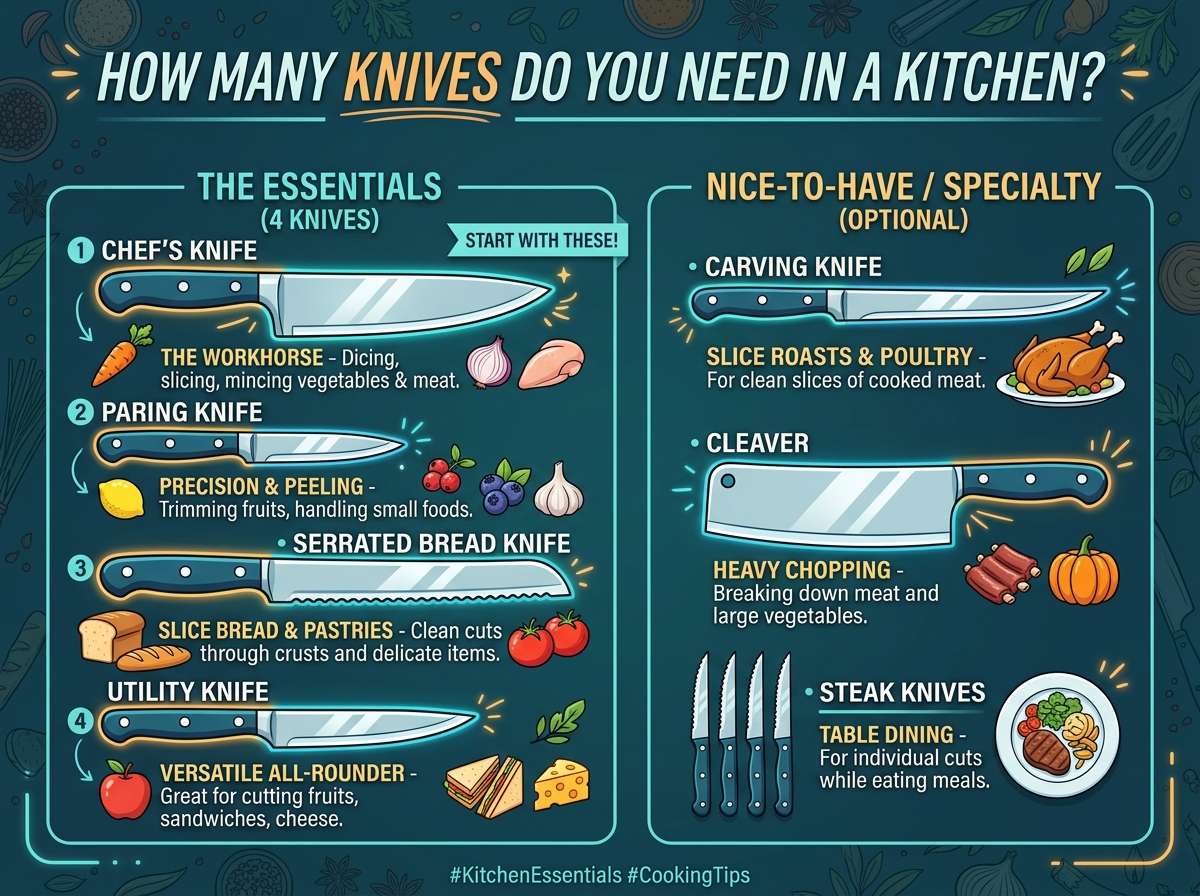
If you only have room for one or two knives, pick the chef’s knife first. A good chef’s knife handles roughly eighty percent of your kitchen work. It slices vegetables, cuts meat, minces herbs, and tackles almost anything you throw at it. Most chef’s knives come in eight-inch sizes, which gives you enough blade length without feeling unwieldy if you’re still building your skills.
The paring knife comes next as your second essential tool. This smaller blade, usually around three to four inches long, handles detail work that a chef’s knife can’t do well. You’ll use it to peel vegetables, devein shrimp, cut around seeds, and work with small fruits and herbs. Together, the chef’s knife and paring knife make a functional duo that covers most home cooking needs.
Some people jump straight to buying a knife set with ten to fifteen pieces. Here’s what you need to know: most of those knives sit unused in your drawer. Investing in two or three quality knives beats owning a dozen cheap ones that don’t hold an edge or feel good in your hand.
The Chef’s Knife: Your Kitchen’s Workhorse
A chef’s knife is the foundation of your knife collection. This broad-bladed knife usually measures between six and ten inches, with eight inches being the standard for home cooks. The design of a chef’s knife makes it perfect for a rocking motion—you keep the tip on the cutting board and rock the blade up and down to slice, dice, and mince.
The chef’s knife excels at breaking down vegetables. Onions, peppers, carrots, and potatoes all get processed quickly with this blade. It works beautifully for cutting meat from the bone, slicing chicken breasts, and trimming fat from steaks. Herbs get minced into fine pieces with minimal effort. Some people even use their chef’s knife to crush garlic cloves by laying the blade flat and pressing down with the heel of their hand.
The blade shape matters here. A curved edge, known as a belly, helps with that rocking motion. The blade comes to a point, which helps with precision when you need it. The spine of the knife stays thick enough to handle impact when you’re working with heavy vegetables or bone-in cuts of meat.
When you’re starting out, an eight-inch chef’s knife feels easier to control than a ten-inch blade. As your skills improve, you might prefer the extra reach that comes with a larger knife. Some home cooks stick with six inches if they have smaller hands or less counter space.
The steel quality affects how long your chef’s knife stays sharp. German-style knives tend to be more forgiving and harder to chip, but they need more frequent sharpening. Japanese-style chef’s knives hold an edge longer but can chip more easily if you bang them around. Both work great—it comes down to your personal preference.
The Paring Knife: Your Detail Worker
The paring knife serves a completely different purpose than your chef’s knife. With a blade between three and four inches long, this knife feels light in your hand and gives you precision control for small tasks.
Use your paring knife to peel vegetables with the skin attached—apples, potatoes, carrots, and cucumbers all get a fresh peel with smooth strokes. It handles deveining shrimp and removing the tails from larger prawns. When you need to cut around seeds or remove cores from vegetables, the paring knife’s short blade keeps you accurate.
The paring knife also handles fruit work beautifully. You can hull strawberries by inserting the tip under the green top and twisting out the center. Citrus fruits get peeled or segmented with precision. Herbs like rosemary and thyme get stripped from their stems with quick, controlled cuts.
Some cooks use a paring knife for everything that doesn’t need the chef’s knife. That’s a valid approach, especially if you have limited space or cooking volume. The paring knife won’t tire your hand out as quickly as holding a chef’s knife for extended work.
Get a paring knife that feels balanced in your hand. Your fingers shouldn’t cramp when you hold it for detail work. A good paring knife costs less than a chef’s knife, so this is a place where you can afford to experiment and find what feels right.
The Serrated Bread Knife: For Slicing Without Crushing
A bread knife has a long blade with a serrated edge—those little teeth running along the blade. This design lets you slice through crusty bread without crushing the soft interior. The teeth grip the crust and cut through it while the blade glides down through the crumb.
The bread knife works on way more than just bread. Tomatoes with thin skin and soft insides get sliced cleanly without squishing. Citrus fruits slice through easily. Cakes and pastries cut without crumbling. Some people use their bread knife to cut bagels in half because the serrated edge grips without requiring pressure.
A bread knife usually measures around ten inches long. That extra length helps you make even strokes across a full loaf. The blade stays relatively thin but holds up well to the sawing motion required for slicing.
The serrated edge needs different maintenance than a straight blade. You can’t sharpen a serrated knife with a regular sharpening steel. Some people send their bread knife to a professional sharpener when it dulls. Others simply replace it because a bread knife stays sharp for longer than other blades due to the design.
If you bake regularly or keep a lot of bread around, a bread knife is a must-have. If you eat bread only occasionally, you can get by skipping it and using your chef’s knife with a gentle sawing motion.
Beyond the Basics: Optional Knives Worth Having
Once you have your essential three—the chef’s knife, paring knife, and ideally a bread knife—you might consider adding more blades to your collection. These aren’t necessary, but they make specific tasks easier.
A utility knife sits between your paring knife and chef’s knife in size. Usually measuring five to seven inches, the utility knife handles tasks that don’t quite fit either of your other knives. Medium-sized vegetables, smaller cuts of meat, and sandwich making all work well with a utility knife. Some people find they reach for it more than their paring knife once they have it.
A boning knife has a thin, sharp blade that curves slightly. This specialized knife slips between meat and bone with minimal waste. If you work with bone-in chicken pieces, whole fish, or cuts of meat on the bone regularly, a boning knife saves time and reduces frustration. Home cooks who buy mostly boneless cuts won’t miss this knife.
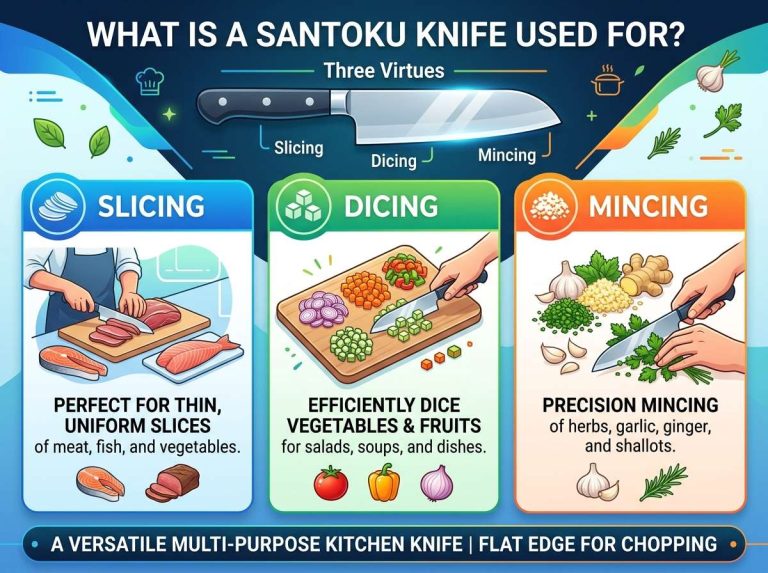
A santoku knife comes from Japanese kitchens and offers a different cutting feel than a Western chef’s knife. The blade is straighter with a flatter belly, and it works better with a chopping motion than a rocking motion. If you like Japanese cuisine or find the santoku’s balance works better for you, it can replace your chef’s knife. Many home cooks end up with both a chef’s knife and a santoku because they prefer different knives for different tasks.
A slicing knife works well if you carve roasts regularly or need to slice cooked meat cleanly. The long, thin blade glides through meat without tearing it. If you only carve meat on holidays, your chef’s knife handles this fine.
Knife Maintenance Beats Buying More Knives
Here’s something that shocks most people: a dull knife causes more kitchen accidents than a sharp one. A sharp blade cuts where you expect it to, while a dull blade slips and jumps around. This means keeping your knives sharp beats buying new ones.
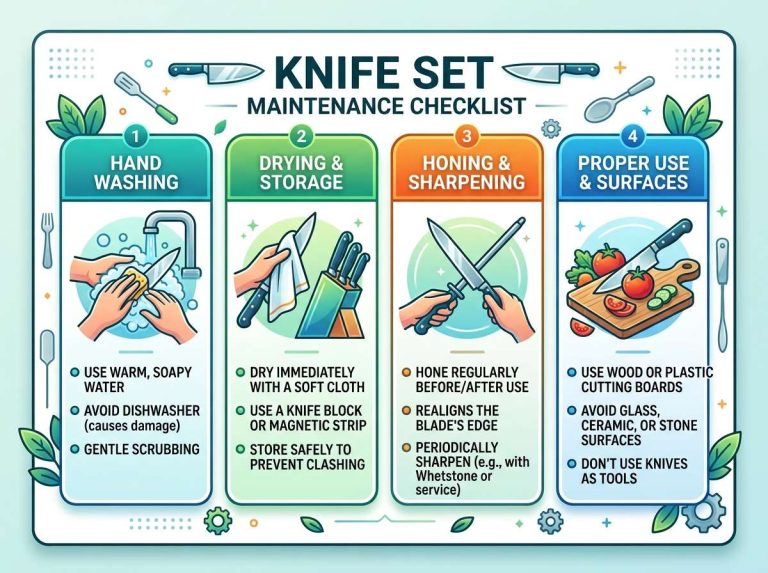
Hand wash your knives immediately after use. The dishwasher damages blades and handles. Dry them right away to prevent rust, especially if you have stainless steel knives. Store them properly—either in a knife block, on a magnetic strip, or with blade guards. Tossing them in a drawer where they bang against other utensils dulls them quickly and damages the edge.
Hone your knives before each use. Honing realigns the microscopic teeth on your blade and keeps it sharp between sharpening sessions. A honing steel is inexpensive and takes thirty seconds of work. You’re not actually sharpening with a honing steel—you’re maintaining the edge you already have.
Sharpen your knives a few times a year, depending on how much you cook. A dull knife needs sharpening more often than a rarely-used blade. Professional sharpening services exist in most areas and cost between five and fifteen dollars per knife. Many people find it worth the money rather than investing in sharpening equipment.
If you want to sharpen at home, a whetstone is the traditional tool. It takes practice to get the angle right, but once you learn, it’s economical. Electric sharpeners exist but can remove too much metal if you’re not careful. Pull-through sharpeners sit somewhere between easy and effective.
The Right Knife for Your Cooking Style
Your actual knife needs depend on how you cook. Someone who eats takeout five days a week and cooks simple meals needs fewer knives than someone who spends every weekend preparing multiple dishes.
If you make a lot of Asian food, a santoku or Chinese cleaver might become your main knife instead of a Western chef’s knife. Both handle the quick-chop, high-volume cutting style that Asian cooking favors. A Chinese cleaver even works for tasks like crushing garlic or breaking down roasted chickens.
Home bakers need different knives than people who rarely bake. A bread knife becomes essential, and a utility knife helps with pastry work. A paring knife sees heavy use for filling work and decorating.
People who butcher whole birds or whole cuts of meat regularly benefit from a boning knife and maybe a fillet knife. Home cooks who buy boneless, skinless cuts can skip these entirely.
Vegetable gardeners who preserve food through canning need knives that handle large volumes of vegetables quickly. A chef’s knife stays sharp longer with vegetables than meat, so they might invest more there than in a butcher’s knife.
Knife Materials: Stainless Steel vs. High Carbon
The material your knife is made from affects how it performs and how much maintenance it needs. High carbon steel holds an extremely sharp edge and is easy to sharpen, but it rusts if you don’t dry it immediately and requires more care. Stainless steel resists rust and corrosion, making it more forgiving, but it doesn’t hold an edge quite as long and can be harder to sharpen.
Most home cooks do better with stainless steel because it forgives neglect. You can wash it and toss it in the rack without immediate drying, and it won’t develop rust spots. High carbon steel rewards careful handling with superior edge retention and sharpening ease, so it’s popular with people who cook frequently and maintain their tools.
Combination materials exist too. Some knives use a high carbon steel core surrounded by stainless steel, giving you the benefits of both. This approach costs more but offers great performance for people willing to invest.
Finding Your Perfect Knife
The only way to know if a knife works for you is to hold it. Weight, balance, and handle shape matter way more than brand names or price tags. A knife that feels great in your hand will get used more than an expensive one that feels wrong.
Visit a kitchen store or restaurant supply shop where you can hold actual knives. Make some practice cutting motions. Does the weight feel manageable? Does the handle fit your hand size? Do your fingers feel cramped or comfortable?
Price matters, but it’s not everything. A one-hundred-dollar chef’s knife that feels perfect beats a four-hundred-dollar knife that doesn’t suit you. Similarly, a thirty-dollar knife might work fine until you can afford something better.
If you’re just starting out, buy one good chef’s knife and a paring knife. Use them for months and really learn how they work. Then add more knives only if you genuinely miss having them. Most people find they never add beyond three or four blades.
Building Your Knife Collection Over Time
The best approach for most home cooks involves starting small and growing slowly. Buy a quality chef’s knife first—this is your most important investment. Use it for everything while you learn proper knife skills. Add a paring knife when you get frustrated with detail work.
If you bake or eat bread regularly, add a bread knife next. These three cover everything in a typical home kitchen.
After that, only add knives for tasks you do repeatedly and struggle with your current collection. A utility knife helps if you find yourself wishing for something between your paring and chef’s knife. A santoku might replace your chef’s knife if you prefer the feel and cutting style. A boning knife only makes sense if you work with bone-in meat regularly.
This gradual approach means you invest money slowly and only buy what you actually use. Your knife skills improve with practice on fewer knives rather than bouncing between many different blades. You learn the personality of each knife and use it to its strengths.
Common Knife Mistakes to Avoid
New knife owners often make simple mistakes that damage their blades or keep them dull.
Never put your knives in the dishwasher. The heat and harsh detergent damage the steel and loosen handles. Hand washing takes thirty seconds and protects your investment.
Don’t store your knives loose in a drawer. The blades bang together and against other utensils, dulling the edge and creating chips. A knife block, magnetic strip, or blade guards all solve this problem.
Avoid cutting on glass, marble, or tile surfaces. These hard materials destroy your edge immediately. Wooden cutting boards or plastic cutting boards protect your blade and your kitchen.
Don’t use your good knives as tools. They’re not for opening paint cans, scraping dried food off counters, or prying things open. Get a utility knife or scraper for those tasks.
Never leave your knives wet in a sink or soaking for hours. Water causes rust and can loosen handles. Wash and dry them immediately after use.
The Bottom Line on Kitchen Knives
Most home cooks thrive with three essential knives: a chef’s knife, a paring knife, and a bread knife. A quality chef’s knife does most of the work, the paring knife handles details, and the bread knife makes slicing so much easier.
Beyond those three, only add knives for specific tasks you perform regularly. A utility knife, santoku, boning knife, or slicing knife might become part of your collection, but they’re not necessary for basic home cooking.
Your skills and the way you care for your knives matter way more than how many you own. A dull knife in a drawer of ten is less useful than a sharp knife you actually use. A well-maintained two-knife collection beats a neglected set of twenty.
Start with one good chef’s knife and add others only when you need them. Visit a store and hold different knives to find ones that feel right in your hand. Invest in proper maintenance rather than constantly buying new blades. Before you know it, you’ll have the perfect knife collection for your cooking style—one that’s probably smaller and more useful than you ever expected.
Your kitchen doesn’t need to look like a professional knife shop to function beautifully. A few sharp, well-maintained knives used with care beat an overflowing knife block every single time.

Mary is a home cooking enthusiast and kitchen gear reviewer with a passion for practical cookware and food preparation tools. She enjoys testing cutting boards, knives, kitchen gadgets, and other cooking essentials to help home chefs make smarter buying decisions. Through KitchenCutting.com, Mary shares honest product reviews, buying guides, and helpful kitchen tips to make cooking easier, safer, and more enjoyable.