What Is A Santoku Knife Used For?
If you’ve ever looked at a knife set and wondered what that short, flat-bladed knife is doing there, you’re looking at a santoku knife. This Japanese kitchen tool has become incredibly popular in home kitchens around the world, and for good reason. It’s versatile, efficient, and honestly pretty cool-looking too. Let me break down everything you need to know about santoku knives and why they might just become your favorite kitchen blade.
In this article
The Basics: What Exactly Is A Santoku Knife?
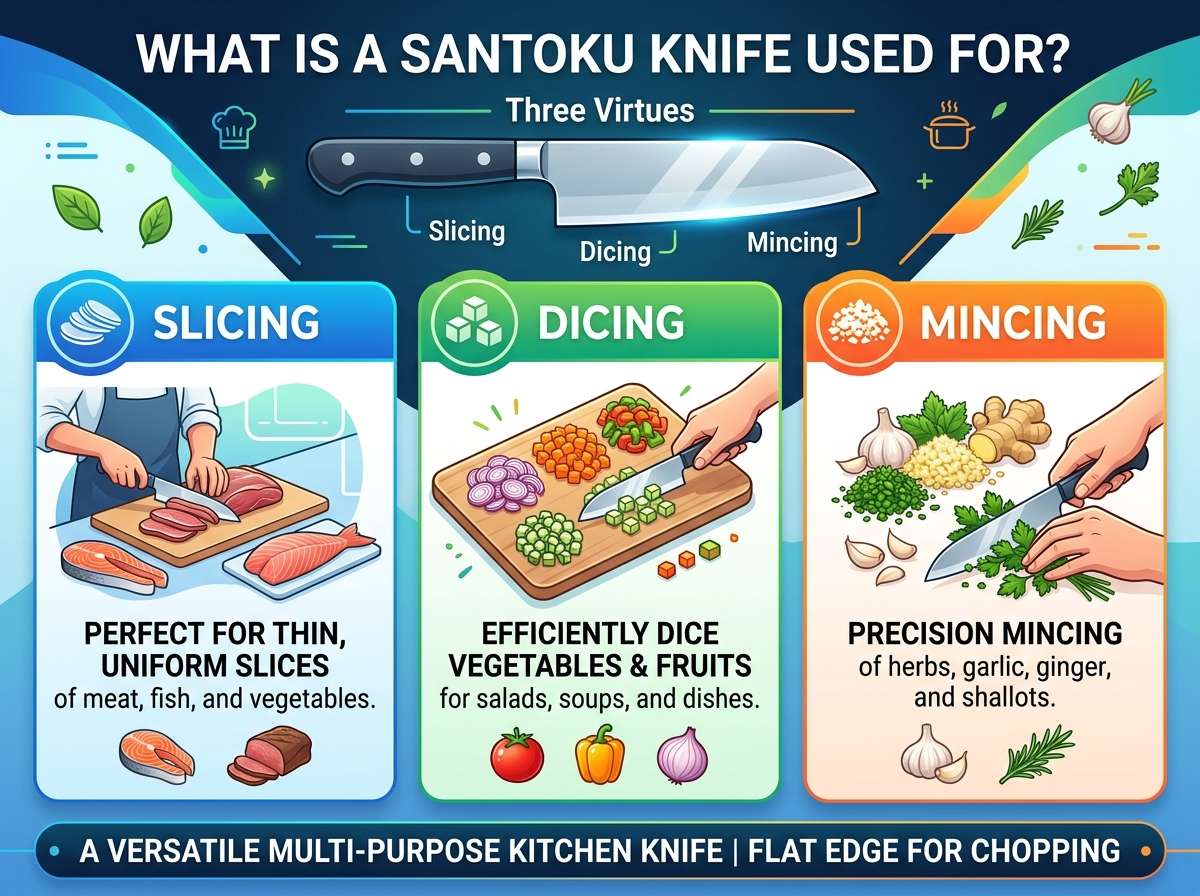
A santoku knife is a Japanese kitchen knife that brings together cutting power and precision in a single blade. The name “santoku” literally means “three virtues” in Japanese, and these three virtues refer to the three types of cutting tasks the knife handles best: slicing, dicing, and mincing.
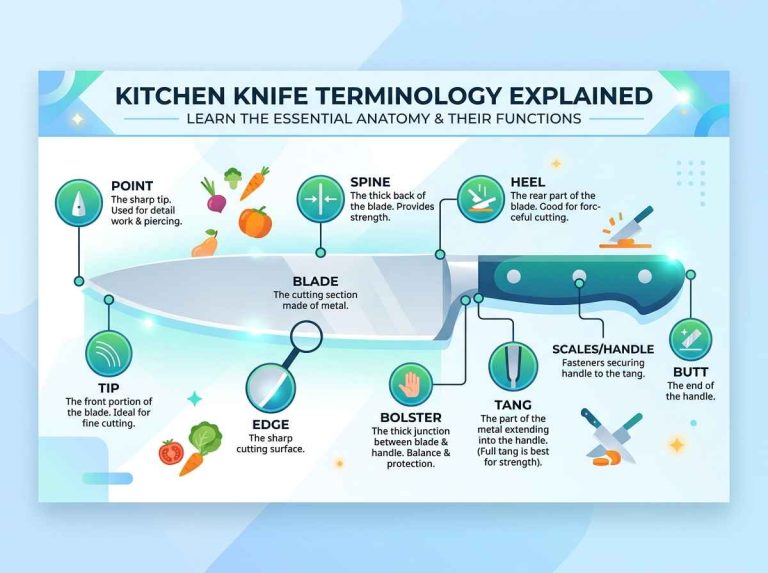
The blade is relatively short compared to Western kitchen knives, usually measuring between 5 to 7 inches long. It has a flat edge that runs almost the entire length of the knife, with a rounded tip at the end. The blade itself is rectangular, almost like a small cleaver but much thinner and more delicate. This design makes it look different from your typical chef’s knife, but that difference is exactly what makes it so special.
The Three Main Uses Of A Santoku Knife
Slicing Vegetables
The santoku knife absolutely shines when you’re slicing vegetables. The flat blade glides through onions, peppers, carrots, and cucumbers with ease. You get clean, thin slices without the vegetable tearing or falling apart. The blade is sharp enough to create paper-thin slices, but it’s also sturdy enough to handle tougher vegetables like squash or root vegetables.
When you slice with a santoku, you use a pushing motion rather than the rocking motion you’d use with a Western chef’s knife. You push the blade forward and down through the vegetable in one smooth motion. This motion works beautifully with the blade’s design and gives you consistent, even slices every time.
Many home cooks find that slicing vegetables becomes less of a chore and more of a pleasure once they switch to a santoku knife. Your hands don’t get as tired, and the blade glides through vegetables so smoothly that the cutting process feels almost effortless.
Dicing And Mincing
Once you’ve sliced your vegetables with the santoku, dicing them into smaller pieces is simple. You can rock the knife slightly at the tip, or continue with the pushing motion to break your slices into cubes or strips. The flat blade gives you excellent control, and the knife’s balance makes it feel like it’s doing the work for you rather than the other way around.
Mincing garlic, ginger, herbs, and other aromatic ingredients is where the santoku really shows off. The flat blade covers a large surface area, and the sharp edge means you can make quick work of garlic cloves without crushing them or leaving large chunks. Your minced garlic stays intact and flavorful instead of becoming a wet paste.
Slicing And Dicing Proteins
Here’s where the santoku knife surprises people. While it’s primarily a vegetable knife, it handles raw proteins beautifully. Slicing raw fish for sushi or sashimi is one of the santoku’s original uses in Japanese cuisine. The smooth, sharp blade creates clean cuts through the fish without shredding the delicate flesh.
You can also use a santoku knife to slice chicken breast, turkey, or other poultry into thin, even slices. Some people even use it for slicing partially frozen beef or pork, though a dedicated meat knife might be more ideal for that task. The key is that the blade is sharp and the angle is perfect for creating clean cuts through protein.
Why The Santoku Knife Is Different From Other Kitchen Knives
Compared To Western Chef’s Knives
A Western chef’s knife usually runs 8 to 10 inches long and has a curved blade that rocks back and forth when you cut. The santoku is shorter and has that distinctive flat blade. This means the cutting techniques are different too. With a chef’s knife, you use the rocking motion. With a santoku, you use a forward pushing motion, kind of like using a guillotine but much more controlled and safer.
The santoku’s blade is also thinner than a typical chef’s knife blade, which means less force is needed to cut through food. Your hand and wrist don’t get as tired during long cooking sessions. The flat blade also gives you more surface area to scoop up your diced vegetables once you’re done cutting them.
Compared To Japanese Deba Knives
A deba knife is a thick, hefty Japanese knife designed primarily for fish. It has a sturdy blade meant to break through bones and handle the toughest parts of filleting. The santoku is delicate by comparison. It’s for clean slicing and dicing, not for heavy-duty butchering work. While a deba knife would be overkill and inappropriate for cutting vegetables, the santoku handles vegetables perfectly while also managing delicate fish work.
Compared To Boning Knives
Boning knives are small and thin with a sharp point designed for getting into tight spaces around bones. A santoku is wider and has a rounded tip instead of a sharp point. The two knives do different jobs. If you need to remove bones from meat or poultry, a boning knife is the right tool. For general food prep and slicing, the santoku wins.
The Santoku Knife Blade Design Explained
The Flat Edge
The defining characteristic of any santoku knife is that straight, flat edge that runs nearly the entire length of the blade. This flat edge means the knife makes contact with the cutting board along its entire length, giving you stable, controlled cutting. Unlike a chef’s knife with its curve, every inch of the santoku blade can make contact with your cutting surface.
This flat design also makes sharpening easier. You can sharpen the blade using straightforward techniques without needing to account for curves or angles that change along the blade’s length.
The Blade Thickness
Santoku blades are typically thinner than comparable Western chef’s knives. This thinness means you need less pressure to cut through food. The blade glides through vegetables and proteins without requiring you to push down hard. Many people with wrist pain, arthritis, or hand fatigue find that santoku knives are much more comfortable to use than heavier, thicker blades.
The thin blade also creates less drag as it moves through food. This means fewer broken plant cells and less water loss from your vegetables. Your vegetables stay fresher-looking and taste better because their structure stays intact.
The Blade Length
At 5 to 7 inches long, the santoku is considered a medium-sized knife. It’s not as long as a chef’s knife, so it’s better for more delicate work. The shorter blade also makes the knife feel more maneuverable and gives you better control, especially if you have smaller hands. Shorter blades feel more responsive to your hand movements, making precise cuts easier to achieve.
For most home cooking tasks, this length is perfect. It’s long enough to handle most vegetables without multiple strokes, but short enough to give you excellent control.
How To Hold And Use A Santoku Knife
The Grip
Hold the santoku like you would hold any kitchen knife. Your thumb and index finger pinch the blade just above the handle, while your remaining three fingers grip the handle itself. Your grip should be firm but not tense. You want to be in control without squeezing so hard that your hand gets tired.
With a santoku, many people find they can use a lighter grip than with other knives because the blade does more of the work for you. The sharp edge and thin blade mean you’re not muscling your way through food.
The Cutting Motion
This is where the santoku technique differs from Western knife technique. Instead of using a rocking motion, you use a forward pushing motion. Position your knife at a slight angle to the cutting board, maybe around 15 degrees. Then, push the blade forward and down through your vegetable in one smooth, continuous motion.
Bring the knife back to your starting position without dragging it backward through the food. Then repeat the motion. This forward-and-back motion is like using a guillotine, but with much more control and safety.
The Claw Grip For Your Other Hand
While you’re cutting with your santoku, your other hand should hold the food using what’s called a claw grip. Curl your fingertips inward and use your knuckles as a guide for the knife blade. This way, if the blade slips, it hits your knuckles, which are much less vulnerable than your fingertips. Keep your fingers curled in, and the knife can’t nick them.
What Makes A Good Santoku Knife
Blade Steel Quality
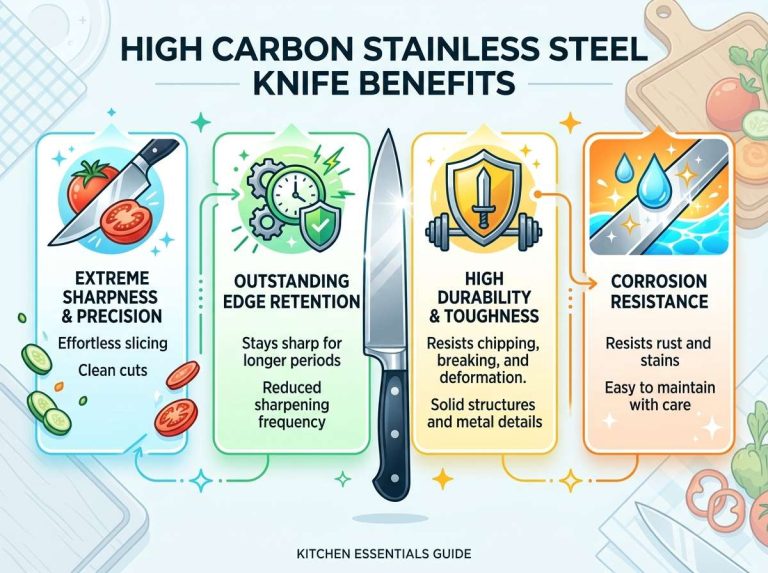
Good santoku knives use high-carbon stainless steel or a combination of stainless steel and harder steel. The carbon content makes the blade hold an edge longer and makes it easier to sharpen. Stainless steel resists rust and corrosion. You want a knife that combines both qualities: one that holds an edge and stays rust-free.
Japanese santoku knives often use a three-layer blade construction. The outer layers are stainless steel for corrosion resistance, while the inner layer is harder, higher-carbon steel for edge retention. This combination gives you the best of both worlds.
Weight And Balance
A good santoku knife feels balanced in your hand. When you hold it with your index finger and thumb just above the handle, the blade shouldn’t feel like it’s pulling down or tipping backward. The weight should feel evenly distributed, or maybe even slightly toward the tip.
Many people prefer santoku knives because they feel lighter and more responsive than heavy Western chef’s knives. However, too light and the knife feels cheap and flimsy. Too heavy and it becomes tiring to use. The sweet spot is a knife that weighs enough to feel substantial but light enough that your hand doesn’t get tired.
Handle Comfort
Your handle should feel good in your hand. It should have a slight curve that matches your palm’s shape, and the material should feel comfortable whether your hands are wet or dry. Some handles are smooth, while others have texturing or grips. There’s no universal “best” handle; it’s whatever feels comfortable to you.
Common handle materials include wood, plastic, or combinations of the two. Wood handles feel nice but require more maintenance. Plastic handles are easier to clean and maintain but some people find them less comfortable to hold for long periods.
Edge Sharpness
A good santoku knife comes sharp out of the box and stays sharp for a reasonable amount of time. You should be able to slice through a tomato skin without pressing down hard. If you have to press or saw, the knife isn’t sharp enough. Sharpness is critical to the santoku’s appeal because much of its advantage comes from having a properly sharp blade.
Common Santoku Knife Tasks In The Kitchen
Prepping For Asian Cuisine
Santoku knives were designed for Asian cooking, so it makes sense that they excel at preparing ingredients for Asian dishes. Slicing vegetables for stir-fries, dicing ingredients for fried rice, and slicing proteins for asian recipes all feel natural with a santoku knife. Many Asian cooks prefer santoku knives for these tasks and won’t use anything else.
Preparing Sushi And Sashimi
One of the santoku’s original purposes was preparing raw fish for sushi and sashimi. The smooth blade creates clean cuts that don’t shred the delicate fish. If you make sushi or sashimi at home, a santoku knife is an excellent choice.
Making Uniform Vegetable Pieces
Cooking looks and tastes better when all your ingredients are cut to the same size. Santoku knives are excellent for making uniform slices and cubes. The flat blade and precise cutting control mean you can create consistent pieces that cook evenly.
Quick Herb Chopping
Need to mince fresh basil, parsley, cilantro, or other fresh herbs? The santoku handles herbs beautifully. The flat blade covers the herbs, and the pushing motion is quick and efficient. You get finely minced herbs without bruising them or turning them into a mushy paste.
Slicing Cheese And Soft Foods
Some santoku knives work beautifully for slicing cheese, bread, and other soft foods. The smooth blade glides through without crushing or tearing. Just make sure you’re not using a knife you use for raw fish if you’re using it for cheese, since fish oils can contaminate dairy products.
Santoku Knife Maintenance And Care
Sharpening Your Santoku
Keeping your santoku sharp is essential because much of its appeal comes from how easily the sharp blade cuts through food. You can sharpen a santoku knife using whetstones, honing steels, or electric sharpeners. Many people prefer whetstones because they give you more control over the sharpening process.
When sharpening, maintain a consistent angle. Most santoku knives have a 15 to 20-degree edge angle. If you’re not sure about your angle, many whetstones come with angle guides to help you maintain consistency.
Honing Your Knife
Honing and sharpening are different. Honing realigns the edge of your blade between sharpenings. You can hone your santoku regularly, maybe once a week or once a month depending on use. This keeps your blade performing well between sharpenings.
Hand Washing Only
Never put your santoku knife in the dishwasher. Hand wash it immediately after use with warm soapy water and a soft sponge. Dry it right away. Dishwashers are too harsh for quality knives, and the tumbling can damage the blade or handle.
Storage
Store your santoku knife in a knife block, on a magnetic strip, or in a knife sheath. Never throw it loose into a drawer where it can bang against other utensils. The blade can chip or crack, and you might accidentally cut yourself reaching for something else.
Regular Inspection
Every time you use your knife, do a quick visual inspection. Look for chips in the blade or cracks in the handle. Catching problems early means you can fix them before they get worse.
Santoku Vs. Chef’s Knife: Which Should You Buy?
This is the question many home cooks ask. The honest answer is that both knives have a place in the kitchen. A chef’s knife is great for rocking motions, crushing garlic, and heavier tasks. A santoku is great for pushing-motion cutting, precise slicing, and vegetables.
If you can only buy one knife, consider which tasks you do most often. If you spend most of your time slicing vegetables and want a lighter, more precise knife, go with a santoku. If you want versatility and enjoy the rocking motion, get a chef’s knife. Many cooks end up owning both and using each for the tasks where it excels.
Some people find that once they try a santoku, they prefer it for almost all their cutting tasks. Others never warm up to it and prefer their chef’s knife. There’s no wrong answer. It’s about what feels right in your hand and what works for your cooking style.
Is A Santoku Knife Worth The Investment?
For most home cooks, yes. A quality santoku knife isn’t expensive. You can find excellent options for reasonable prices. Even a mid-range santoku is sharper and more efficient than cheap knives or dull knives you’ve had for years.
The payoff comes from how much easier food prep becomes. Your hand gets less tired. Your cuts are more precise. Your vegetables look better and taste better. These benefits add up over time. If you cook regularly, a santoku knife will pay for itself in saved time and reduced hand fatigue.
Common Mistakes People Make With Santoku Knives
Using It Like A Chef’s Knife
Some people buy a santoku and try to use it with the same rocking motion they use with a chef’s knife. This doesn’t work well. The santoku’s flat blade isn’t designed for that motion. Take time to learn the proper pushing motion, and you’ll get much better results.
Letting It Get Dull
A dull santoku is worse than useless because you’ll be tempted to press down hard to make cuts, which defeats the purpose of having a lightweight knife. Keep your santoku sharp. It only takes a few minutes to hone it regularly.
Using It For Tasks It’s Not Designed For
Your santoku knife isn’t a cleaver. Don’t use it to chop through bones or cut through tough cartilage. Don’t use it to hack herbs on a cutting board. Use it for what it’s designed for: slicing, dicing, and mincing. For other tasks, use the right tool.
Not Maintaining The Blade
Some people think knives are low-maintenance. They’re not. Regular sharpening, honing, hand washing, and proper storage keep your santoku working beautifully for years. Neglecting maintenance means the blade gets dull fast and the knife becomes frustrating to use.
The Final Word On Santoku Knives
A santoku knife is a Japanese kitchen blade designed for slicing, dicing, and mincing. It has a short, flat blade that makes clean cuts with minimal pressure. The knife is lighter than Western chef’s knives and uses a different cutting technique.
For home cooks who spend a lot of time slicing vegetables or preparing Asian cuisine, a santoku knife is fantastic. It makes food prep easier, faster, and more enjoyable. It’s gentle on your hands and wrists, and it creates beautiful, precise cuts. The flat blade and sharp edge mean you do less work and get better results.
If you’ve been curious about santoku knives or wondering if you should try one, go for it. Buy a quality knife from a reputable brand, learn the proper cutting technique, keep it sharp, and maintain it properly. You’ll likely find that your santoku knife becomes one of your favorite tools in the kitchen. It’s a simple tool that makes a real difference in how you cook and how much you enjoy the cooking process. Once you experience how smoothly a santoku knife glides through vegetables, you might just find yourself reaching for it before any other knife in your knife set.

Mary is a home cooking enthusiast and kitchen gear reviewer with a passion for practical cookware and food preparation tools. She enjoys testing cutting boards, knives, kitchen gadgets, and other cooking essentials to help home chefs make smarter buying decisions. Through KitchenCutting.com, Mary shares honest product reviews, buying guides, and helpful kitchen tips to make cooking easier, safer, and more enjoyable.