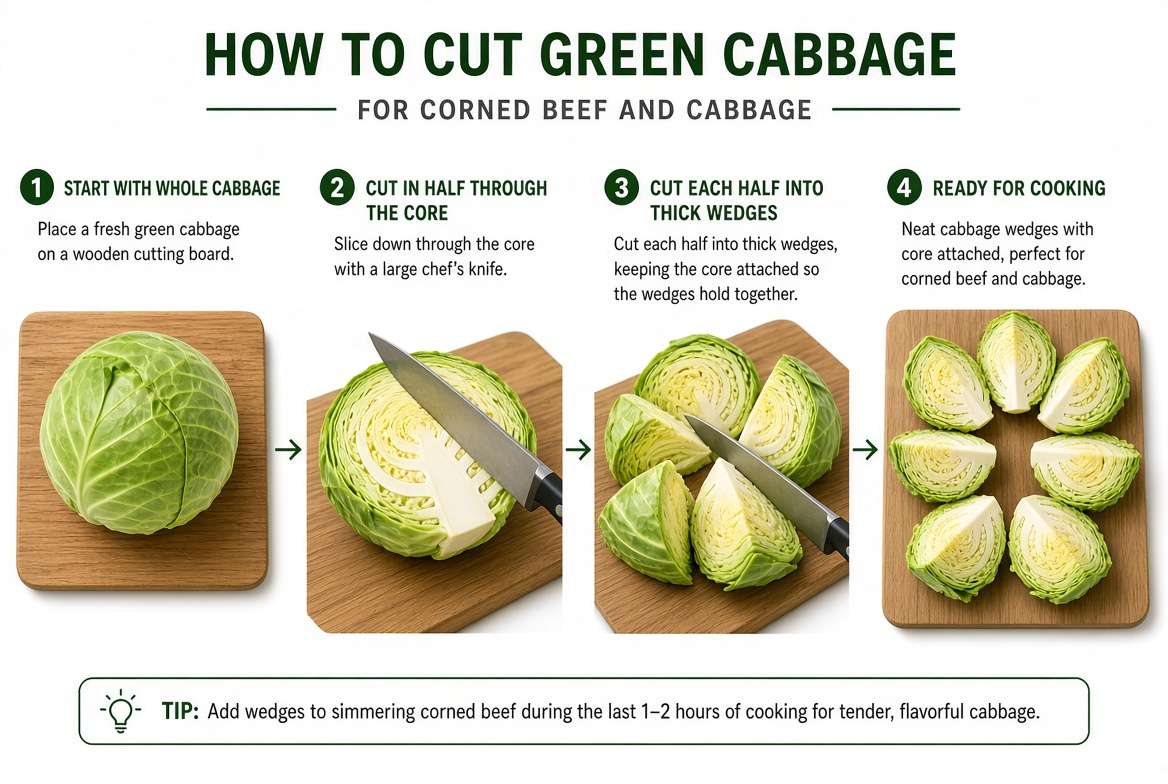
How to Cut Cabbage for Corned Beef?
If you’re making corned beef and cabbage, the way you cut your cabbage can make or break the dish. Cut it wrong, and you end up with mushy, stringy pieces that fall apart in the pot. Cut it right, and you get tender wedges that hold their shape, soak up all that beefy, salty broth, and look great on the plate.
In this article
The good news? Cutting cabbage the right way is simple. You don’t need fancy tools or years of kitchen experience. You just need a sharp knife, a sturdy cutting board, and a few minutes of your time. This guide walks you through everything, step by step, so even if you’ve never cut a head of cabbage in your life, you’ll get it right on the first try.
Let’s get into it.
Why Cabbage Cutting Matters for Corned Beef
Before we jump into the steps, it helps to know why this small task actually matters so much.
Corned beef is usually simmered low and slow for hours. That long cook time is great for the meat, but it’s tough on delicate vegetables. If you cut your cabbage too small or too thin, it turns into a soft, watery mess by the time the beef is done. On the other hand, if your pieces are too big or you don’t remove the core properly, the cabbage cooks unevenly. Some parts stay tough and crunchy while others turn to mush.
The goal is to cut the cabbage into wedges that are thick enough to survive the long simmer but still cook through evenly. This is exactly why most classic corned beef recipes call for cabbage wedges instead of shredded or chopped cabbage. Wedges hold their structure, cook at a steady pace, and give you that classic, hearty texture people expect from this comfort food dish.
Now let’s break down exactly how to do it.
What You’ll Need
Before you start cutting, gather a few basic tools. You probably already have all of these in your kitchen.
- A head of green cabbage (about 2 to 3 pounds works well for most recipes)
- A large, sharp chef’s knife
- A sturdy cutting board
- A large bowl or colander for rinsing
- Paper towels or a clean kitchen towel
That’s it. No special gadgets needed. A sharp knife is honestly the most important item on this list, since a dull blade will crush the cabbage leaves instead of cutting through them cleanly.
Step 1: Pick a Good Head of Cabbage
Good cabbage cutting starts before you even touch a knife. At the store, look for a head that feels heavy for its size and has tightly packed leaves. The outer leaves should look crisp and fresh, not wilted or dry at the edges. Green cabbage is the classic pick for corned beef because it holds up well during long cooking, but savoy cabbage also works nicely if you want a slightly softer texture.
Avoid heads with soft spots, dark bruises, or leaves that feel loose and papery. Those are signs the cabbage is past its best days and won’t hold together well once it hits the pot.
Step 2: Remove the Outer Leaves
Once you’re ready to prep, peel off the outer one or two layers of leaves. These outer leaves often get a little beat up during shipping and handling, and they can carry dirt or small blemishes. Pull them off gently and toss them into your compost bin or trash.
Underneath, you’ll find clean, bright green leaves that are perfect for cooking. This step only takes a few seconds, but it makes a noticeable difference in both the look and taste of your finished dish.
Step 3: Rinse the Cabbage
Give the whole head a good rinse under cold running water. Cabbage grows close to the soil, so it can trap small bits of dirt or grit between its layers, especially near the base.
Hold the cabbage under the tap and let the water run over the outside for a minute or two. If you notice dirt hiding between the leaf layers, gently spread them apart with your fingers and rinse again. Pat the outside dry with a towel before you start cutting. A dry cabbage is much easier to cut than a wet, slippery one.
Step 4: Cut the Cabbage in Half
Set the cabbage on your cutting board with the stem end facing down. This gives you a flat, stable base so the cabbage won’t roll around while you cut.
Take your chef’s knife and slice straight down through the center of the head, cutting from the top through the stem end. You should end up with two even halves, each showing the core running through the middle like a small white triangle.
Go slow here. Cabbage heads are dense, so you’ll need to apply steady, even pressure rather than trying to force the knife through in one quick motion. Let the sharp edge of the blade do the work.
Step 5: Cut Each Half Into Quarters
Lay each cabbage half flat side down on the board. Slice straight down through the middle of each half again, right through the core, to create four quarters total.
At this point, each quarter piece should have a wedge shape, with the pointed core section at one end and the loose, leafy layers fanning out at the other end. This shape is exactly what you want for corned beef, since it will hold together beautifully during cooking.
Step 6: Trim the Core (But Don’t Remove It Completely)
This step trips a lot of beginners up, so pay close attention here.
You do want to trim away the tough, woody part of the core, but you don’t want to cut it out entirely. The core is actually what holds each wedge together during the long simmer. If you remove it completely, your cabbage wedges will fall apart into individual leaves once they hit the hot broth.
To trim it properly, look at the pointed end of each wedge. You’ll see a small triangular section of firm, pale core. Use your knife to angle in and shave off just the very tip, maybe a quarter inch or so. This softens the toughest part of the core without cutting it out entirely, so the wedge stays intact while cooking.
Think of it like giving the core a small haircut instead of pulling it out by the root.
Step 7: Cut Larger Quarters Into Smaller Wedges (Optional)
If your cabbage head is on the larger side, or if you’re feeding a smaller group, you might want to cut each quarter in half again. This gives you eighths instead of quarters, resulting in smaller wedges that are easier to serve and eat.
To do this, simply slice each quarter piece in half lengthwise, cutting from the leafy end down through a small part of the core. Just remember the same rule from Step 6 applies here too: trim the core a little, but leave enough intact to hold the leaves together.
Smaller wedges also cook a bit faster, so keep that in mind when timing your corned beef recipe.
Step 8: Give the Wedges a Final Rinse
After cutting, do one more quick rinse of your wedges under cold water. Cutting the cabbage can expose new surfaces where dirt was hiding, so this final rinse helps make sure everything is clean before it goes into the pot.
Shake off the excess water or pat the wedges dry with a towel, and they’re ready to cook.
Common Mistakes to Avoid
Even with clear steps, a few common slip-ups can affect your results. Here’s what to watch out for.
Cutting the cabbage too thin. Thin slices break down fast in a simmering pot and turn mushy long before the corned beef is done. Stick with thick wedges for the best texture.
Removing the core entirely. As mentioned above, this causes the leaves to separate and fall apart during cooking. Trim it lightly instead of cutting it all the way out.
Using a dull knife. A dull blade crushes and bruises the cabbage rather than slicing cleanly through it. This can lead to uneven cooking and a less appealing texture. Sharpen your knife beforehand if it’s been a while.
Adding the cabbage too early. Cabbage cooks much faster than tough cuts of beef like brisket. If you toss it into the pot at the same time as the meat, it will overcook and turn to mush. Most recipes call for adding cabbage wedges during the last 15 to 20 minutes of cooking, once the beef is nearly done.
Skipping the rinse steps. Dirt hiding in the layers can leave a gritty texture in your finished dish. A quick rinse before and after cutting solves this easily.
Tips for Even Better Results
Once you’ve got the basic cutting technique down, a few extra tips can help take your corned beef and cabbage to the next level.
Try cooking the cabbage wedges directly in the corned beef broth instead of in a separate pot of water. The broth is packed with flavor from the beef, spices, and seasoning, and letting the cabbage soak in it while it cooks adds so much more taste than plain water ever could.
Keep an eye on cook time. Cabbage wedges usually only need 15 to 20 minutes to become tender once added to a simmering pot. Test them with a fork around the 15-minute mark. You want them soft enough to easily pierce with a fork, but not falling apart.
If you like a little extra flavor, add a pat of butter and a light sprinkle of black pepper over the finished wedges right before serving. This simple touch brings out even more richness without covering up the natural cabbage flavor.
For folks who prefer a slightly firmer bite, pull the cabbage from the pot a few minutes earlier than the recipe suggests. Everyone has a different preference for texture, so feel free to adjust based on what you and your family enjoy most.
Can You Cut Cabbage Ahead of Time?
Life gets busy, so you might be wondering if you can prep your cabbage wedges in advance. The answer is yes, with a small caveat.
You can cut your cabbage into wedges up to a day ahead of time. Store the wedges in an airtight container or a sealed plastic bag in the refrigerator. Cabbage holds up fairly well once cut, especially compared to more delicate vegetables like lettuce.
Just keep in mind that pre-cut cabbage may lose a small amount of crispness the longer it sits, so for the very best texture and flavor, cutting it the same day you plan to cook is still the ideal approach. If same-day prep isn’t realistic for your schedule, don’t worry. A day-old cut cabbage wedge will still taste great in your finished dish.
Frequently Asked Questions
Do I need to remove the core completely before cooking? No. Leave a small amount of the core in place. It acts like glue that holds each wedge together as it simmers. Just trim off the very toughest tip.
What size wedges work best? Quarter wedges work well for a standard-sized cabbage head. If your cabbage is very large, cutting it into eighths gives you a more manageable serving size without sacrificing texture.
Can I use red cabbage instead of green? Green cabbage is the traditional choice for corned beef because of its mild flavor and how well it holds up during long cooking. Red cabbage has a slightly different flavor and can turn the broth a purple-ish color, so most people stick with green for this particular dish.
How long should cabbage cook with corned beef? Add your cabbage wedges during the final 15 to 20 minutes of cooking. This gives them enough time to become tender without turning to mush.
Why did my cabbage fall apart while cooking? This usually happens when too much of the core gets cut away. Go back and check Step 6 above for the right way to trim the core so your wedges hold their shape.
Final Thoughts
Cutting cabbage for corned beef really comes down to a few simple habits: pick a fresh head, cut it into sturdy wedges, and trim the core without removing it entirely. Follow these steps, and your cabbage will turn out tender, flavorful, and perfectly shaped every single time.
This small bit of prep work makes a big difference in how your finished corned beef and cabbage turns out. Once you’ve done it a couple of times, the whole process becomes second nature, and you’ll be able to whip up a comforting pot of corned beef and cabbage without a second thought.
So grab a fresh head of cabbage, sharpen that knife, and give this method a try the next time you’re planning a hearty, home-cooked meal. Your family and guests will notice the difference on the plate.

Mary is a home cooking enthusiast and kitchen gear reviewer with a passion for practical cookware and food preparation tools. She enjoys testing cutting boards, knives, kitchen gadgets, and other cooking essentials to help home chefs make smarter buying decisions. Through KitchenCutting.com, Mary shares honest product reviews, buying guides, and helpful kitchen tips to make cooking easier, safer, and more enjoyable.