How to Remove Bacteria from Your Cutting Board
Your cutting board sees a lot of action. You chop raw chicken, slice fresh tomatoes, dice onions, and then pile everything into the pan. Each cut leaves tiny bits of food behind, and those bits can hold bacteria. If you do not clean the board well, those germs can spread to the next meal. The good news is that you do not need fancy products to fix this. A little soap, hot water, and a few kitchen staples will get the job done.
In this article
In this guide, you will learn how to remove bacteria from a cutting board step by step. You will also learn how to clean wood and plastic boards, how to handle stains and smells, and how to keep your board safe over time. Let’s get started.
Why Cutting Boards Hold Bacteria
Cutting boards have tiny grooves and scratches. These small cracks trap food particles, moisture, and juices. Bacteria love this kind of hiding spot. When the board stays wet or dirty, the bacteria multiply quickly.
Raw meat, poultry, and seafood carry the biggest risk. Their juices can carry germs like Salmonella and E. coli. If you cut raw chicken and then slice a salad on the same board without cleaning it, those germs can move straight to your food. This is called cross-contamination, and it is one of the most common reasons people get sick at home.
Even a board that looks clean can hold germs. You cannot always see bacteria, so you need a clear cleaning routine. Clean the board after every use, and deep clean it on a regular schedule.
What You Need to Clean Your Board
You probably already have most of these items in your kitchen:
- Hot water
- Dish soap
- A stiff brush or a scrub sponge
- White vinegar
- Baking soda
- Lemon or lime
- Coarse salt
- Unscented bleach (for sanitizing plastic boards)
- Hydrogen peroxide (optional)
- A clean towel
Use a separate sponge or brush for your cutting board if you can. Kitchen sponges hold a lot of germs themselves, so swap yours out often.
Step-by-Step: How to Clean a Cutting Board After Each Use
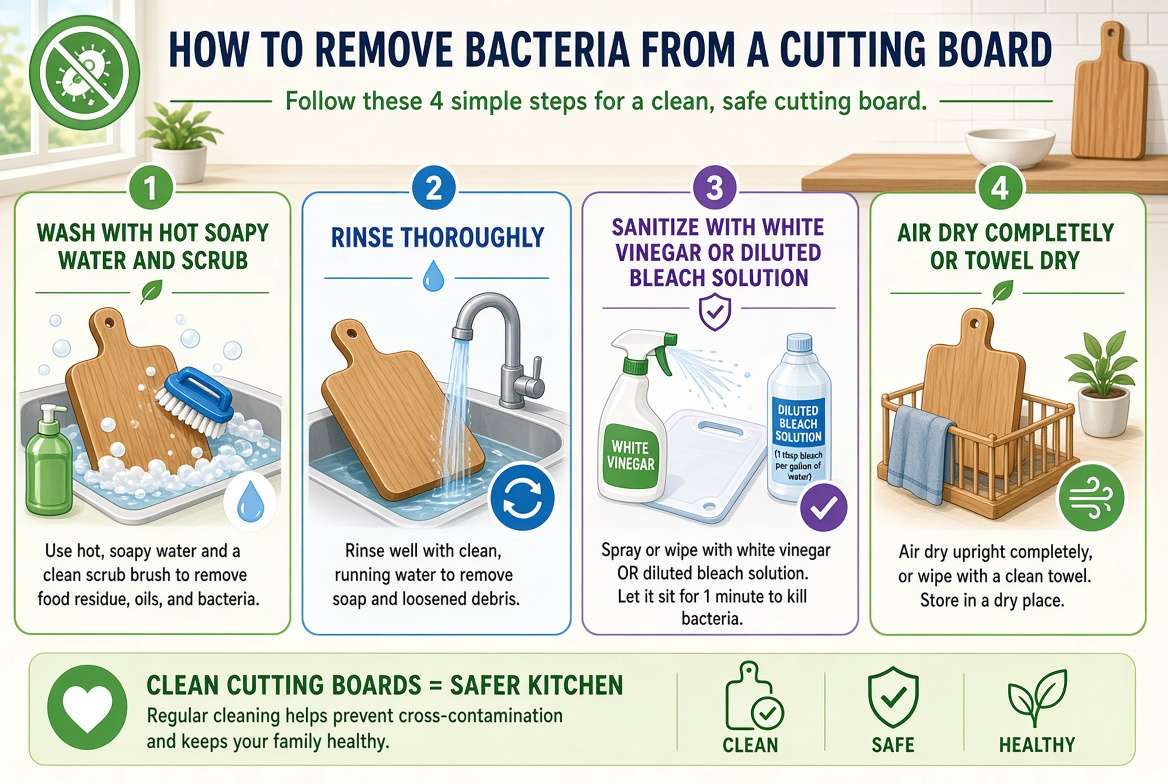
Cleaning right after you use the board is the easiest way to keep bacteria under control. Follow these steps every time.
Step 1: Scrape off the food. Use a bench scraper or the back of a knife to lift away leftover bits. Toss them in the trash or compost, not the sink. This keeps your drain clear and cuts down on the work ahead.
Step 2: Rinse with hot water. Run the board under hot water to wash away loose debris and juices. Warm water works better than cold water for pulling grease and fat off the surface.
Step 3: Scrub with soap. Squirt a little dish soap onto the board. Scrub the entire surface, including the edges and the grooves. Use your brush or sponge and work in small circles. Pay extra attention to the spots where you cut meat.
Step 4: Rinse well. Rinse off all the soap. Leftover soap can leave a film and change the taste of your food.
Step 5: Sanitize. Soap cleans, but it does not always kill every germ. For a full kill, sanitize the board too. Use one of the methods covered in the next section.
Step 6: Dry completely. Stand the board on its edge so air can reach both sides. You can also pat it dry with a clean towel. Never store a damp board flat in a cabinet, because trapped moisture helps bacteria grow.
How to Sanitize a Cutting Board
Sanitizing takes your cleaning to the next level. Here are the most popular options, along with how to use each one.
Using Bleach (Best for Plastic Boards)
Bleach is one of the strongest options for killing bacteria. Mix one tablespoon of unscented bleach with one gallon of cool water. Pour or spray the solution over the clean board and let it sit for about one minute. Then rinse thoroughly with clean water and let the board air dry.
Be careful with bleach. Never mix it with vinegar or ammonia, because that combination creates harmful fumes. Also, avoid using bleach on wooden boards. Bleach can dry out the wood and cause cracks.
Using White Vinegar
Vinegar is a gentle, natural option. Its acid can knock down many types of bacteria. Pour some white vinegar onto the board, or spray it on, and let it sit for five to ten minutes. Wipe it off with a clean cloth, rinse with water, and dry the board.
Vinegar is safe for wood and plastic, so it makes a good everyday choice. It may not kill every germ as well as bleach, but it works well for regular cleaning.
Using Hydrogen Peroxide
Hydrogen peroxide fizzes when it touches bacteria, and that fizzing helps lift germs from the surface. Pour a small amount onto the board and let it sit for a few minutes. Then rinse and dry. Peroxide works on both plastic and wood, so it is a handy option.
Using Lemon and Salt
Lemon adds a fresh scent and a bit of acid. Cut a lemon in half, sprinkle coarse salt over the board, and rub the lemon half across the surface. The salt acts as a gentle scrub, and the lemon juice helps fight germs. Let it sit for a few minutes, then rinse and dry. This method also helps remove mild odors.
How to Deep Clean a Wooden Cutting Board
Wooden boards need a little extra care. Water soaks into the wood fibers and can cause warping, cracking, or a fuzzy surface. Wood is also naturally good at trapping and slowly reducing bacteria, but it still needs regular cleaning.
For a deep clean, try the baking soda and salt method:
- Sprinkle baking soda over the entire board. Then sprinkle coarse salt on top.
- Cut a lemon in half and squeeze the juice over the mix.
- Scrub the board with the lemon half, using the paste as a gentle scrub.
- Let the paste sit for about five minutes.
- Rinse with warm water and dry the board right away.
After cleaning, rub a thin layer of food-safe mineral oil into the wood. Let it soak in for several hours, then wipe off the extra. Oil keeps the wood from drying out and helps it resist moisture. Do not use vegetable oils like olive oil, because they can turn rancid and smell bad over time.
Never soak a wooden board in water, and never put it in the dishwasher. Both will damage the wood.
How to Deep Clean a Plastic Cutting Board
Plastic boards are easier to sanitize than wood, and many of them can handle the dishwasher. Check the label first. If the board is dishwasher safe, run it on a hot cycle with a heated drying option.
If the board is not dishwasher safe, sanitize it with bleach or vinegar as described above. Give it a deep scrub with baking soda paste to lift stains, and then sanitize. Plastic boards can develop deep knife marks over time. Those grooves hide bacteria, so replace the board when the cuts become deep and hard to clean.
How to Remove Stains and Odors
Cutting boards pick up stains from foods like beets, turmeric, and berries. They also soak up smells from garlic, onions, and fish. Here is how to handle both problems.
For stains, make a paste with baking soda and a little water. Spread it over the stain, let it sit for a few minutes, and scrub gently. Rinse and dry. For stubborn stains on a plastic board, try a sprinkle of lemon juice and salt before scrubbing.
For odors, rub the board with a cut lemon or sprinkle it with baking soda and let it rest for a while. Then rinse. Garlic and onion smells usually fade after a good scrub with salt and lemon.
Common Mistakes to Avoid
Many people clean their cutting boards the wrong way without realizing it. Watch out for these common errors:
- Using the same board for raw meat and ready-to-eat food. Keep separate boards for each. Use one color for meat and another for vegetables if you can.
- Leaving the board wet. Moisture is a bacteria magnet. Always dry the board fully.
- Skipping the sanitizing step. Soap alone does not kill every germ.
- Putting wood in the dishwasher. Heat and water cause cracks and warping.
- Using a dirty sponge. A sponge full of germs can spread them right back onto the board.
- Forgetting the edges and grooves. Bacteria love these spots, so scrub them well.
- Ignoring worn boards. A board with deep grooves will never feel fully clean. Replace it.
How Often Should You Deep Clean Your Board?
Clean your board after every use, and sanitize it after cutting raw meat, poultry, or fish. Deep clean it at least once a week if you cook often. If you use a wooden board, oil it every few weeks so the wood stays strong and moisture resistant. Check the board regularly for deep cuts, cracks, or warping. A damaged board can hold bacteria no matter how well you clean it.
When to Replace Your Cutting Board
No cleaning method can fix a board that is falling apart. Replace your board when you notice any of these signs:
- Deep grooves that trap food and do not come clean
- Cracks, splits, or warping in wood
- Fuzzy or rough patches that do not smooth out
- Stubborn smells that stay after deep cleaning
- Melting or discoloration from heat
Many people choose to keep one board for raw meat and replace it more often, since it sees the most germs. This simple habit can protect your whole family.
Frequently Asked Questions
Is it safe to use vinegar on a wooden cutting board?
Yes, vinegar is safe for wood when used in small amounts. Rinse and dry the board right after you use it. Do not let vinegar soak in for a long time.
Can I use bleach on a wooden board?
It is best to avoid bleach on wood. It can dry out the fibers and cause cracks. Stick to vinegar, hydrogen peroxide, or lemon and salt for wooden boards.
Is a plastic board more hygienic than wood?
Both can be clean and safe when you care for them properly. Plastic boards are easier to sanitize in the dishwasher, but they scratch more easily. Wood can trap bacteria in its grooves, but it also has natural properties that help reduce them. The key is good cleaning habits.
Do I need to sanitize my board after every use?
You should always wash your board after use. Sanitize it after cutting raw meat, poultry, or seafood, or when you have cut foods that can spoil easily.
Can I use a dishwasher to clean my cutting board?
Only if the label says it is dishwasher safe. Most wooden boards should never go in the dishwasher.
Final Thoughts
Keeping your cutting board free of bacteria does not have to be hard. Clean it after every use with hot water and soap. Sanitize it with bleach, vinegar, peroxide, or lemon and salt. Deep clean it once a week, dry it fully, and oil wooden boards to protect them. Replace the board when it gets too worn to clean well.
These small habits make a big difference. They keep your food safer, your kitchen cleaner, and your family healthier. Start with one step today, like washing your board right after your next meal, and build from there. Your food will taste better, and you will feel good knowing your kitchen is clean.

Mary is a home cooking enthusiast and kitchen gear reviewer with a passion for practical cookware and food preparation tools. She enjoys testing cutting boards, knives, kitchen gadgets, and other cooking essentials to help home chefs make smarter buying decisions. Through KitchenCutting.com, Mary shares honest product reviews, buying guides, and helpful kitchen tips to make cooking easier, safer, and more enjoyable.