How to Clean a Bamboo Cutting Board?
Bamboo cutting boards are awesome. They look great in your kitchen. They’re gentle on your knives. They feel nice to hold. But here’s the thing—they need proper care to stay in great shape. If you want your bamboo board to last for years, you need to know how to clean it the right way.
In this article
In this guide, I’ll walk you through everything you need to know about keeping your bamboo cutting board clean and in top condition.
Why Bamboo Cutting Boards Need Special Care
Let’s talk about why bamboo is special first. Bamboo is a natural material. It’s not plastic. It’s not metal. This means it needs a little extra love and attention.
Bamboo is porous. This means it has tiny holes and gaps throughout the surface. Water can soak into these spaces. If you don’t dry your board properly, it can start to warp or crack. The wood can also develop mold or mildew in these damp spots.
That’s why learning the right cleaning technique matters so much. You want to clean the board well, but you also want to protect it from water damage. It’s a balance.
Bamboo is also a natural antibacterial material. That’s really cool! Bamboo fibers have natural properties that fight bacteria. This means your bamboo board is actually pretty good at protecting your food from harmful germs. But this doesn’t mean you can skip cleaning it. You still need to wash it well after cutting raw meat or fish.
Basic Daily Cleaning Steps
The best way to keep your bamboo board clean is to wash it right after you use it. Don’t let food sit on it for hours. Don’t leave it in the sink overnight. The longer food stays on the board, the harder it is to clean.
Step One: Rinse Off Food Bits
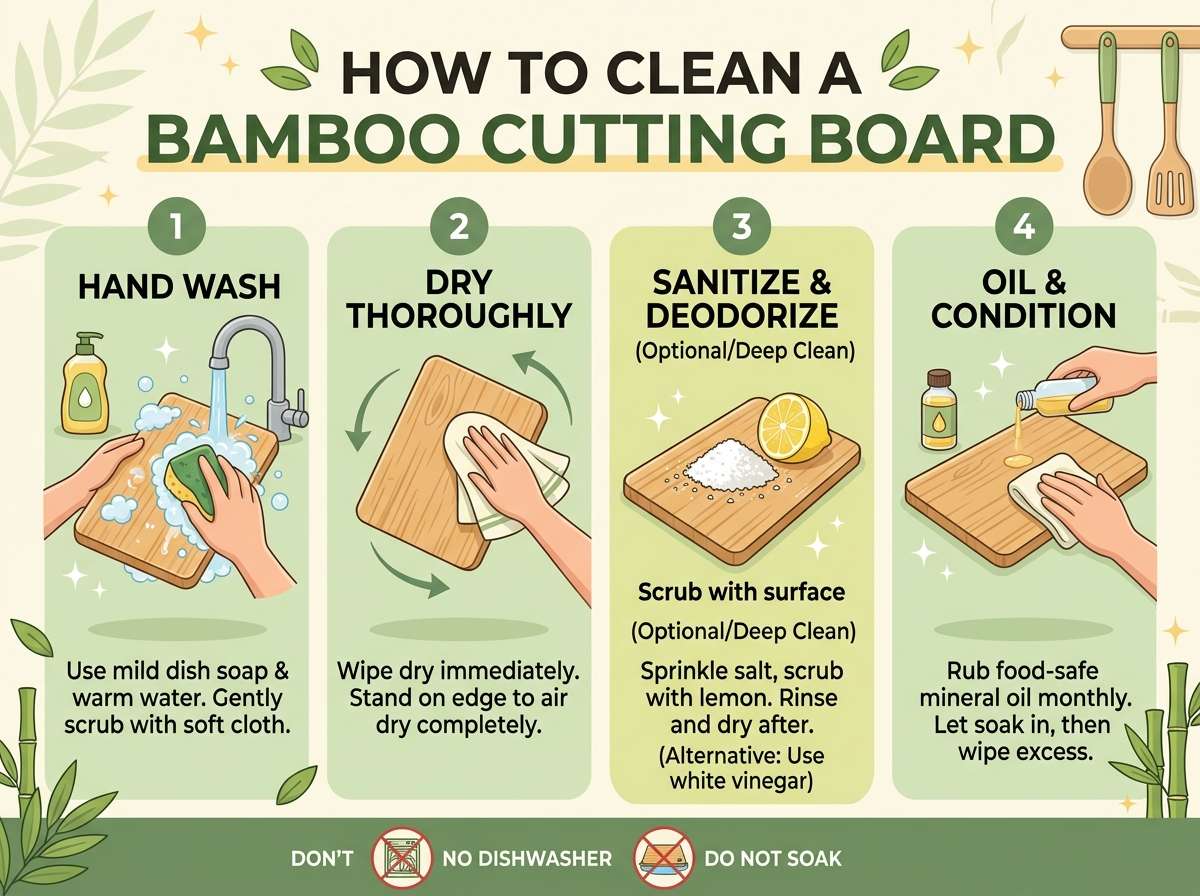
Start with warm water. Hold your board under the tap. Use your hand or a soft brush to rinse away any food pieces. You’re just getting the loose stuff off at this point. Don’t use cold water—warm water helps remove oils from foods better.
If you used your board to cut onions or garlic, the warm water will help rinse away these strong smells. It also helps break down oils from things like meat or cheese.
Step Two: Wash with Soap
Now grab a sponge or soft cloth. Add a little dish soap. Regular dish soap works great. You don’t need anything fancy. Scrub the entire surface of your board. Pay special attention to areas where you were cutting. These spots might have more food particles stuck in the grain.
Use gentle pressure. You’re not trying to scrub away the surface of the board. You’re just cleaning off germs and food bits. Bamboo can scratch if you use rough tools, so stick with soft sponges or cloths.
Work in circles. This helps you clean every part of the board. Don’t forget the edges. Food particles like to hide in those corners.
Step Three: Rinse with Clean Water
Rinse your board again under warm running water. Make sure all the soap is gone. Any soap left on the board can leave a film. It might also affect the taste of your food next time you use the board.
You can hold the board under the water and rub it with your hand to make sure all the soap washes away.
Step Four: Dry Right Away
This step is super important. Grab a clean towel and dry your board completely. Don’t just pat it dry. Really rub it with the towel to get all the moisture off.
Why is this so important? Remember how bamboo is porous? If you leave water sitting on the board, it will soak in. This can lead to warping, cracking, or mold. Taking 30 seconds to dry your board can add years to its life.
Stand the board up to air dry for a bit after you dry it with a towel. This helps any remaining moisture escape. Never lay the board flat while it’s still wet.
Dealing with Tough Stains and Smells
Sometimes your cutting board gets stains or holds onto smells. Don’t worry. There are easy ways to fix this.
Using Salt and Lemon
Salt and lemon work amazing together. This combo is natural, safe, and really effective.
Cut a lemon in half. Pour some salt on the surface of your cutting board. Take the lemon half and rub it all over the board. The salt acts like tiny scrubbing beads. The lemon acid helps break down stains and kill germs. The scent of the lemon also helps neutralize bad smells.
Rub for about one minute. Focus on areas with stains or smell. You’ll see the salt dissolve a bit as you rub. Then rinse with warm water and dry right away.
This method is gentle. It won’t hurt your bamboo. It’s also cheap. You probably already have salt and lemon at home.
Using Baking Soda
Baking soda is another fantastic option. It’s a natural deodorizer and mild abrasive. This means it can clean without being too rough.
Sprinkle baking soda all over your board. Add just enough water to make a paste. You want it to be thick, not runny. Spread this paste across the entire board. Let it sit for five to ten minutes.
Use a soft sponge to scrub the paste in circles. The baking soda will help lift stains. It will also pull out odors. Baking soda is amazing at getting rid of smells because it actually absorbs them instead of just masking them.
Rinse the board with warm water until all the baking soda is gone. Dry it completely with a towel.
Using Vinegar
White vinegar is another cleaner you can use. It’s acidic, so it kills germs and helps remove stains. Plus, it’s really cheap.
Mix one part vinegar with three parts water. Spray this mixture on your cutting board. Let it sit for a few minutes. Then scrub with a soft sponge.
The smell of vinegar is strong, but don’t worry. When it dries, the smell goes away. If you’re really bothered by the smell, you can follow up with the lemon and salt method. The lemon will cover the vinegar scent.
One thing to remember: don’t use vinegar too often. Bamboo is a natural material, and too much acid can start to wear it down over time. Save the vinegar method for occasional deep cleaning.
Deep Cleaning Your Bamboo Board
Sometimes you want to do a more thorough cleaning. Maybe your board is looking dull. Maybe it’s been a while since you gave it real attention. Here’s how to do a deep clean.
Make a Cleaning Paste
Mix baking soda with a little water to make a paste. You want it thick enough to spread but still easy to work with. Add a few drops of dish soap if you want extra cleaning power.
Spread this paste all over your board. Use a soft brush or sponge to work it in. Pay extra attention to any stains or discolored areas. Bamboo will naturally change color over time, but heavy stains should come off.
Scrub for about five minutes. Don’t rush this step. The longer you scrub gently, the better your results will be.
Rinse and Dry
Rinse your board well under warm water. Make sure every bit of the paste is gone. Use a clean sponge to wipe down the surface one more time to check for remaining paste.
Dry your board completely. Use a towel to get it as dry as possible. Then stand it up and let it air dry for a while.
Let It Sit in the Sun
If you can, leave your board in direct sunlight for a few hours. Sunlight is a natural bleach. It will help lighten stains and also kill any germs or bacteria on the surface. The sun is free and it works great.
If you don’t have access to sunlight, that’s okay. The cleaning steps above will still get your board looking good.
Removing Stuck-On Food
Sometimes food gets really stuck on your board. Maybe you left something on there and it dried. Maybe you were cutting something sticky. Here’s what to do.
First, soak that area with warm water. Don’t soak the whole board. Just dampen the area with stuck food. Let it sit for five to ten minutes. The water will soften the food.
Use a soft sponge or cloth to rub away the softened food. If it’s really stuck, you can use a plastic scraper. Never use a metal scraper or knife. Metal can damage your bamboo.
Once the stuck food is gone, wash that area with soap and water. Then dry the whole board right away.
Dealing with Odors
Bamboo cutting boards can hold onto smells. Onions, garlic, fish, and raw meat can leave strong odors. Here are several ways to get rid of bad smells.
Salt and Lemon Again
I mentioned this before because it really works. The salt and lemon combo is your best friend for odors. The lemon is acidic and natural. The salt is abrasive. Together, they fight smells like nothing else.
Baking Soda Method
Sprinkle baking soda all over your board. Add a little water to make a paste. Let it sit for ten minutes. Baking soda absorbs odors. It doesn’t just cover them up. It actually gets rid of them.
Vinegar Soak
Mix vinegar and water. Spray it on your board. Let it sit for five minutes. Vinegar kills odor-causing bacteria. When it dries, the vinegar smell goes away too.
Coffee Grounds
This one sounds weird, but it works. Rub used coffee grounds on your board. Coffee has strong compounds that override other smells. It’s like a natural air freshener for your cutting board.
Sunshine
Don’t forget about sunlight. Leave your board in the sun for a few hours. The UV rays kill bacteria that cause smells. This is one of the best natural methods.
What NOT to Do
Let me tell you what not to do. These mistakes can ruin your bamboo board.
Don’t Soak Your Board
Never soak your bamboo cutting board in water. Don’t put it in the dishwasher either. Long exposure to water will cause the wood to swell and warp. This can crack your board or cause it to split.
Your bamboo board should never sit in water. Clean it under running water, but don’t let it sit in a sink full of water.
Don’t Use Harsh Chemicals
Stick to natural cleaners like vinegar, baking soda, salt, and lemon. Avoid strong bleach or harsh commercial cleaners. These can damage the bamboo and leave chemical residue that might get on your food.
Don’t Scrub with Rough Tools
Metal scrubbers will damage bamboo. Steel wool will scratch it. Even some rough brushes can cause damage. Use soft sponges, cloths, or soft brushes. Be gentle. Bamboo is tough but not indestructible.
Don’t Leave It Wet
Never leave your bamboo board sitting wet on the counter. Never stand it up wet in a rack. The continuous exposure to moisture will ruin it. Always dry it right away.
Don’t Cut on One Side Only
Try to use both sides of your cutting board. If you only cut on one side, that side will develop grooves and wear faster. Rotating between sides helps your board wear evenly.
Don’t Store It Flat
Store your board standing up, not laying flat. This allows air to circulate around all sides. It helps prevent moisture from building up underneath.
How to Store Your Bamboo Board
Storage matters just as much as cleaning. Where you keep your board affects how long it lasts.
Store your board in a cool, dry place. Avoid spots next to your stove or oven. Heat can warp bamboo. Avoid areas near windows where sunlight hits all day. Too much direct sun can fade and dry out the wood.
A kitchen cabinet or pantry shelf works great. You could also hang it on a wall if you have a rack. The important thing is keeping it away from direct heat and moisture.
Make sure your board is completely dry before you store it. Putting a damp board away can lead to mold growth inside your cabinet.
Conditioning Your Bamboo Board
Your cutting board can benefit from conditioning. This is optional but helpful.
Food-grade mineral oil works well. You can find it online or at health food stores. Rub a little bit of this oil all over your board. Work it in with a soft cloth. This nourishes the wood and helps protect it from moisture.
Let the oil sit for a few minutes. Then wipe away any excess with a clean cloth. Don’t leave a thick layer of oil on the surface. Just a light coating is perfect.
Some people use coconut oil or beeswax, but mineral oil is safest for food contact.
Do this conditioning maybe once every few months. It’s not required, but it helps your board last longer and look nicer.
Signs Your Board Needs Replacing
Even with great care, cutting boards eventually wear out. Here are signs it’s time for a new one.
If your board has deep cracks, it’s time to replace it. Bacteria can hide in cracks. You can’t clean it well anymore. A cracked board is a safety risk.
If your board is warped, it won’t sit flat. This makes it hard to cut safely. You could also have mold growing inside the warped areas. Replace it.
If your board has permanent stains that you can’t clean, it might be time. This is more of a cosmetic thing. You don’t have to replace it just for stains. But if they’re really bad and won’t come out, a new board might be nice.
If the surface is splintering, replace it. Splinters can get in your food. They’re also a sign the wood is breaking down.
Bamboo vs Other Materials
You might be curious how bamboo compares to other cutting boards.
Bamboo is better than plastic. Plastic boards can develop bacteria. They also don’t age well. Bamboo is harder and more durable than plastic. It also looks better.
Bamboo is different from wood. Regular wood like maple can split and warp more easily than bamboo. Bamboo is actually harder than many hardwoods. It’s more stable too.
Bamboo is different from rubber or silicone. Those materials are easier to clean in the dishwasher. But bamboo looks nicer. Bamboo is also more durable if you take care of it.
Cleaning After Cutting Different Foods
Different foods require slightly different attention.
After Cutting Raw Meat
Raw meat can leave bacteria on your board. After cutting meat, wash your board right away with hot soapy water. Rinse well. Dry it completely. If you want extra cleaning power, use your salt and lemon method. This adds extra antibacterial action.
After Cutting Vegetables
Vegetables usually don’t need special treatment. A normal wash with soap and water is fine. If you’re cutting beets or other foods that stain, use the baking soda paste method. This lifts stains better.
After Cutting Fish
Fish leaves strong smells. Wash right away. Use your favorite odor-fighting method. Salt and lemon works great. You could also use baking soda paste.
After Cutting Onions or Garlic
These leave powerful smells. Wash with warm water and soap first. Then rub the board with lemon juice and salt. Let it sit in the sun if you can.
Quick Tips for Busy People
I know life is hectic. You might not have time for all these deep cleaning methods every day. That’s okay. Here are quick tips.
Always wash your board right after using it. This 30-second rinse and dry prevents most problems. You can do a deeper clean once a week or once a month.
Keep your salt and lemon combo ready. These are simple tools. They work fast. You can do this in two minutes.
Set your board in the sun whenever you can. While you’re doing other things, sunlight is cleaning and deodorizing your board for free.
Don’t overthink it. Your bamboo board is tougher than you think. Just avoid soaking it, dry it quickly, and give it attention when it looks like it needs it.
Common Mistakes People Make
Let me share some mistakes I’ve seen people make.
People often put their boards in the dishwasher. This is a big mistake. The heat and water cycle will destroy your board over time. Hand wash only.
People sometimes use bleach. This is unnecessary and harsh. Your board doesn’t need bleach. Simple soap and water, plus natural cleaners, do the job.
People leave their boards wet. They wash them and then stick them in a cabinet still damp. This leads to mold. Always dry first.
People use wooden cutting boards in the microwave. Bamboo shouldn’t go in the microwave. The heat can damage it. Keep it out of the microwave and oven.
Final Thoughts
Bamboo cutting boards are wonderful. They’re beautiful. They’re durable. They’re great for your kitchen. With the right care, your board will last for years.
Remember the basics. Wash it right after you use it. Dry it completely. Store it in a cool, dry place. Use natural cleaners when you need them. Keep it away from prolonged water exposure.
Your bamboo cutting board will reward you with years of reliable service. It will look great in your kitchen. It will make you happy to use it every day.
Take care of your board, and it will take care of your food. That’s the bamboo cutting board promise.
Quick Reference Cleaning Chart
Need a quick reminder? Here’s what to do for different situations:
Daily Use After Cutting Vegetables
- Rinse under warm water
- Wash with soft sponge and dish soap
- Rinse with clean water
- Dry with towel
- Store standing up
After Cutting Raw Meat or Fish
- Rinse under warm water
- Wash with soap and soft sponge
- Use salt and lemon or baking soda paste for extra clean
- Rinse thoroughly
- Dry completely
- Store standing up
Heavy Stains
- Sprinkle baking soda
- Add water to make paste
- Scrub for five minutes
- Rinse completely
- Dry with towel
- Leave in sun if possible
Bad Odors
- Rub salt and lemon all over board
- Rinse with warm water
- Dry completely
- Place in direct sunlight for several hours
Weekly Deep Clean
- Make baking soda paste with dish soap
- Spread over entire board
- Scrub for five minutes
- Rinse thoroughly
- Dry completely
- Leave in sun for a few hours if possible
You’ve Got This
Keeping your bamboo cutting board clean and happy is easier than you think. You don’t need fancy products. You don’t need complicated methods. You need basic care and attention.
Your bamboo cutting board is ready to serve you well. Give it a little love, and it will be your favorite kitchen tool for a long time to come.
Happy cutting and cleaning!

Mary is a home cooking enthusiast and kitchen gear reviewer with a passion for practical cookware and food preparation tools. She enjoys testing cutting boards, knives, kitchen gadgets, and other cooking essentials to help home chefs make smarter buying decisions. Through KitchenCutting.com, Mary shares honest product reviews, buying guides, and helpful kitchen tips to make cooking easier, safer, and more enjoyable.