What is an End Grain Cutting Board?
If you’ve ever walked through a kitchen store or scrolled through cooking websites, you’ve probably seen the term “end grain cutting board” tossed around. You might have wondered what makes these boards so special. Are they just regular cutting boards that cost way more? Do they actually work better than the cheap plastic ones sitting in your kitchen drawer? Let me break this down for you in a way that actually makes sense.
In this article
The Basics: What Exactly is an End Grain Cutting Board?
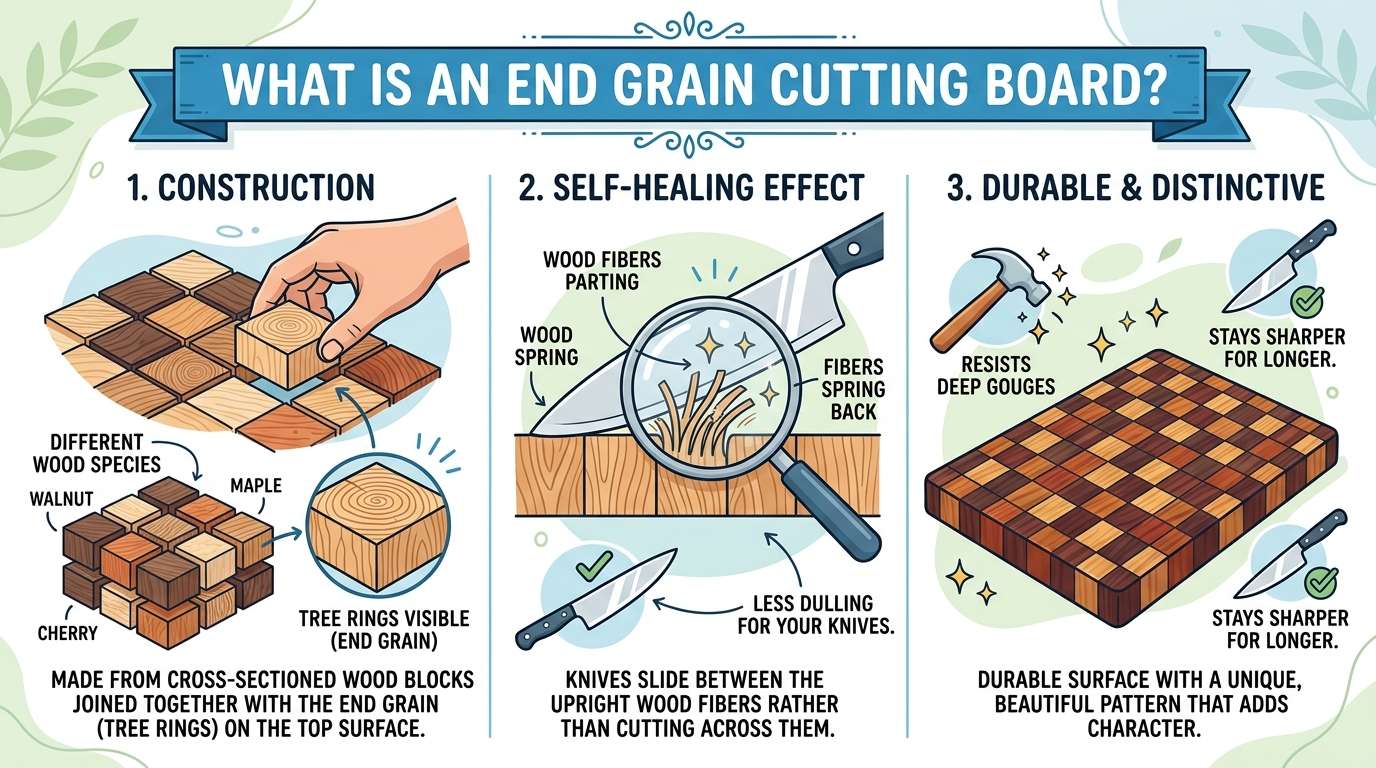
An end grain cutting board is a wooden board made by stacking wood pieces on their sides, then gluing them together. Think about it like this: when you look at a tree stump, you see the rings. That’s the end grain of the tree. An end grain cutting board exposes those rings on its surface. This is different from regular wooden boards that are made with the grain running lengthwise, which is called face grain.
The real magic happens because of how the wood fibers are oriented. When wood pieces are positioned with their ends facing up, the fibers stand vertically. This vertical arrangement creates something that seems almost magical in the kitchen. The fibers can compress and then bounce back without getting damaged. In contrast, face grain boards have horizontal fibers that get cut and separated more easily.
Why Wood Fibers Matter More Than You Think
Let me explain the science without boring you to tears. Wood is made up of tiny tubes called vessels. These tubes run through the entire length of the tree. In a face grain board, a knife blade cuts across these tubes sideways, damaging them. In an end grain board, the tubes run vertically, so the blade slides between them instead of cutting through them.
When you cut on an end grain board, your knife glides down between the fibers rather than slicing them up. The fibers have space to compress down, then they spring back up when you lift your knife. It’s like pushing your finger into a sponge. The sponge deforms but bounces back. A face grain board is more like cutting into a bundle of straws that you’re destroying with every cut.
This fiber-friendly cutting style has real benefits. Your knives stay sharper longer because they’re not battling wood fibers constantly. Your cutting board lasts longer because the surface doesn’t get all torn up and splintered. It’s a win-win for both your blades and your board.
How End Grain Boards Are Made
Making an end grain cutting board is more involved than slapping some boards together. Here’s what actually goes into the process.
First, a woodworker selects wood types. The best options are hardwoods like maple, walnut, or cherry. Softwoods like pine are too squishy and will destroy quickly under a knife. The wood gets cut into strips, usually about half an inch to an inch thick. These strips get arranged carefully, often in alternating patterns or colors to create visual appeal.
The strips get glued together using food-safe adhesive. This is crucial because you’re going to be eating food cut on this board. The glue bonds the pieces into one solid block. Then everything gets clamped down tight and left to cure. This bonding process takes time, and rushing it means the board will fall apart once you start using it.
After the glue dries, the woodworker planes the surface smooth. This removes any bumps or rough spots and exposes that beautiful end grain pattern. The final step involves sanding with increasingly fine grits to get that smooth, kitchen-ready finish. Many boards then get a food-safe oil or wax coating to protect the wood and make it water resistant.
The whole process takes skill and time. That’s why end grain boards cost more than regular boards. You’re paying for craftsmanship and quality materials.
The Durability Factor: Long-Term Value
Here’s something that really matters when you think about cutting boards. An end grain board lasts way longer than other types. A cheap plastic board might last a year or two before it gets all gouged up and gross. A face grain wooden board might last five to ten years with care. An end grain board can last decades, sometimes a lifetime.
This durability comes from that fiber-friendly design we talked about. The fibers can handle thousands of knife cuts without getting damaged. The board develops a patina over time, which is just a fancy word for “it gets that cool aged look.” But underneath, the surface stays intact and usable.
The longer lifespan means you actually spend less money over time. Yes, you drop more cash upfront. But you’re not replacing the board every few years. That’s real savings.
End Grain vs. Face Grain vs. Edge Grain
I should clarify something because people get confused by all these terms. There are actually three main types of wooden cutting boards.
End Grain Boards: These have the tree rings exposed on the surface. The wood strips are arranged with their ends facing up. This is the gold standard for knife-friendly surfaces and durability.
Face Grain Boards: These are made from larger pieces of wood with the grain running along the length. The flat side of the grain shows on the surface. These are cheaper and faster to make, but they’re not as knife-friendly and they don’t last as long.
Edge Grain Boards: These are kind of a middle ground. The wood strips are arranged with their long sides facing up. This creates a striped appearance instead of the ring pattern of end grain. Edge grain boards are more durable than face grain but not quite as good as end grain for knife protection.
When you see a board with visible stripes running one direction, that’s edge grain. When you see rings or circular patterns, that’s end grain. Face grain boards usually look pretty smooth and uniform.
Taking Care of Your Investment
An end grain board needs some maintenance to keep it beautiful and functional. The good news? It’s super easy.
Cleaning: Wash by hand with warm soapy water right after use. Use a soft sponge or cloth. Avoid the dishwasher because the heat and moisture can make the wood warp and split. Dry it immediately with a towel. Don’t let it sit soaking wet.
Oiling: Every month or so, rub the board down with food-safe mineral oil. This keeps the wood hydrated and prevents cracks. Just pour a little oil on, rub it in with a cloth, and let it soak in for a bit. Wipe off the excess. It takes five minutes.
Storing: Keep the board flat, not standing up on its edge. Store it in a dry place away from direct heat or sunlight. Don’t stack heavy stuff on top of it. These simple habits prevent warping and splitting.
Removing Stains and Odors: If your board gets stained or smelly, you can sand it lightly with fine-grit sandpaper. This removes the top layer and usually solves the problem. After sanding, re-oil it. For tough odors, rub the surface with lemon juice and salt, then oil it.
This maintenance keeps your board looking great and working perfectly for years and years.
Who Should Actually Buy an End Grain Board?
End grain boards make sense for certain people. If you cook a lot, you’re using your cutting board constantly. An end grain board is worth the investment because it protects your expensive knives and lasts forever. Professional chefs and serious home cooks almost always use end grain.
If you have nice kitchen knives that you care about, an end grain board is a no-brainer. Your expensive knives deserve a surface that won’t destroy them. The board might seem like a big expense, but it’s actually protecting something that costs even more.
If you’re the minimalist type who wants one good board instead of three mediocre ones, end grain is perfect. You get one beautiful, durable board that you’ll use daily for twenty years.
But if you barely cook, you’re using discount knives, or you just need something cheap and replaceable, a plastic or regular wooden board might be fine. Not everyone needs an end grain board. That’s okay.
The Aesthetic Appeal
Let’s be honest, end grain boards are gorgeous. The patterns created by different wood colors and the exposed grain rings make each board unique. They look like functional art on your counter. Interior designers love using them as styling elements in kitchens because they’re beautiful and practical at the same time.
Many people hang their boards on the wall or keep them visible because they’re nice to look at. This adds to the kitchen’s overall design. A beat-up plastic board you want to hide away. A beautiful end grain board you want to show off. That’s a real difference in your daily kitchen experience.
The Science of Knife Protection
Let me get more technical about why end grain is so special for your knives. A knife blade works best when it stays sharp. A dull knife is dangerous because you have to apply more pressure to cut, and it’s more likely to slip.
When you use a knife on an end grain board, the wood fibers compress and move out of the way. The blade doesn’t have to fight the wood structure. The blade stays in better contact with the cutting surface. Your knife edges don’t get little nicks and chips from constant friction.
Compare this to a plastic cutting board. Plastic doesn’t compress. Every cut creates friction and tiny impacts that dull and damage the blade. Over time, your knife gets noticeably duller on plastic. On an end grain board, your knife stays sharp much longer.
This matters for your cooking quality too. A sharp knife cuts cleaner, faster, and safer. You get better-looking pieces of food. You cook faster because you’re not struggling with a dull blade. It all connects back to that smart design of the end grain board.
Different Wood Types and Their Characteristics
Not all end grain boards are the same. The wood type matters.
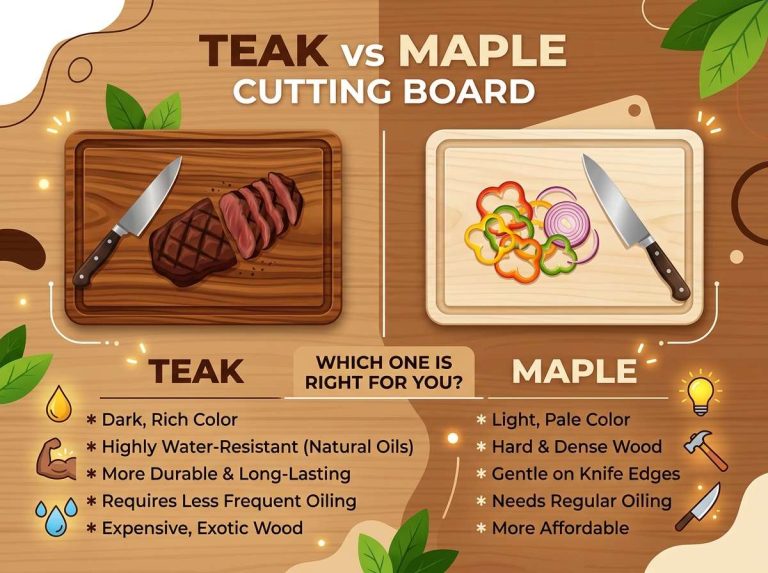
Maple: This is the most popular choice for cutting boards. It’s hard, dense, and naturally antimicrobial. Maple is light-colored, which shows stains but looks clean. It’s durable and affordable compared to other options.
Walnut: This wood is dark and beautiful. It’s slightly less hard than maple but still excellent for cutting boards. Walnut creates gorgeous visual contrast in end grain patterns. It costs more than maple.
Cherry: Cherry is a medium hardness with a reddish tone. It’s pretty but slightly softer than maple. It’s a good choice if you like the look and don’t mind being gentle with it.
Teak: This is a premium option. Teak has natural oils that make it extremely water resistant. It’s expensive but incredibly durable. Teak boards are often used in professional kitchens.
Bamboo: Some people make end grain boards from bamboo even though it’s technically a grass. Bamboo end grain boards are eco-friendly and reasonably priced. They’re not quite as durable as hardwood but they’re still good quality.
Each wood type has its own look and feel. Your choice comes down to budget, aesthetics, and how much you care about premium durability.
Common Mistakes People Make
When people first use an end grain board, they sometimes mess up the care. Here are the biggest mistakes to avoid.
Soaking the board: Leaving a board sitting in water causes swelling and eventual cracking. Clean it, dry it, move on.
Using harsh cleaners: Bleach and aggressive scrubbing can strip the finish and damage the wood. Mild soap and water work perfectly.
Cutting on it when wet: A wet board is slippery and the wood is soft. Dry it first or wait until it’s completely dry.
Storing it vertically: Standing the board on its edge or leaning it against something causes warping over time. Lay it flat.
Forgetting to oil it: The wood needs that oil treatment to stay healthy. Skip this and cracks will develop.
Using it for hot pans: Placing hot cookware directly on the board causes damage and heat marks. Use the board for cutting, not as a trivet.
These mistakes are easy to avoid once you know about them. Just use some common sense and your board will stay beautiful.
The Price Question: Is It Worth It?
An end grain cutting board costs more than other options. A quality one can run you fifty to three hundred dollars depending on size and wood type. That stings when you first see the price tag.
But think about what you’re getting. You’re getting a cutting surface that lasts decades. You’re protecting your knives. You’re getting something beautiful that you’ll use multiple times daily. You’re getting a board that you might even pass down to someone.
Compare it to buying three or four cheap boards over twenty years. The total cost might actually be similar or cheaper. When you look at it that way, the investment makes sense.
If budget is tight, start with one good end grain board instead of buying multiple cheap boards. Use it as your main board for regular cooking. Save money by making it last instead of replacing things constantly.
Real Talk About Maintenance
I want to be honest about the maintenance. It’s really minimal, but it does require attention. You can’t just throw it in the dishwasher and forget about it. Some people don’t want to deal with that.
If you’re willing to spend five minutes a month caring for your board, end grain is fantastic. If you resent having to do anything beyond tossing it in the machine, maybe a plastic board is better for your personality. There’s no shame in that. You have to actually want to care for something to keep it properly.
That said, the maintenance isn’t hard. It’s just consistent. Wash, dry, oil occasionally. That’s it. Most people find it relaxing rather than burdensome once they get into the routine.
The Hygiene Angle
Some people worry that wood isn’t as clean as plastic. This is actually backwards. Studies show that wood is naturally antimicrobial, especially hardwoods like maple. Bacteria don’t survive as well on wood. The wood actively kills bacteria and prevents growth.
Plastic, on the other hand, holds bacteria in those little knife marks. Plastic doesn’t have any natural antimicrobial properties. Over time, plastic boards become increasingly unhygienic.
So not only is wood better for your knives and your board’s lifespan, it’s also actually cleaner and more hygienic. That’s a triple win.
Sounds Like a Lot? Let Me Simplify
Here’s the bottom line on end grain cutting boards. They’re made by stacking wooden blocks end-up and gluing them together. This creates a surface where your knife slides between fibers instead of cutting through them. That means your knives stay sharper and your board lasts longer. You get something beautiful that functions brilliantly for decades.
The trade-off is upfront cost and basic maintenance. You have to wash it by hand, dry it, and oil it occasionally. If you’re willing to do that, you get an amazing kitchen tool. If you’re not, that’s fine. Get a plastic board.
For people who cook regularly and care about their knives, an end grain board is one of the best kitchen investments you can make. It’s not flashy or complicated. It’s just smart. It works with the way wood naturally is, and it makes your kitchen life better every single day.
Making Your Decision
Think about your cooking habits. Think about your knives. Think about how much space you have and how much you want to spend. An end grain board makes sense for most people who cook regularly. If that’s you, go ahead and get one. You’ll love it.
Take time to find one that fits your style and budget. There are options at every price point. Whether you buy from a big box store, a specialty kitchen shop, or an artisan woodworker, you can find something great.
Once you bring it home, treat it well. Wash it, dry it, oil it. Use it daily. Watch it age and develop character. In a few years, you’ll look back and realize it was one of the best things you ever bought for your kitchen. That’s the real story with end grain cutting boards. They’re not fancy or complicated. They’re just better in every way that matters.

Mary is a home cooking enthusiast and kitchen gear reviewer with a passion for practical cookware and food preparation tools. She enjoys testing cutting boards, knives, kitchen gadgets, and other cooking essentials to help home chefs make smarter buying decisions. Through KitchenCutting.com, Mary shares honest product reviews, buying guides, and helpful kitchen tips to make cooking easier, safer, and more enjoyable.