5 Best Cutting Board With Juice Groove In 2026
As an Amazon Associate we earn from qualifying purchases.
Many home cooks want a cutting board that keeps messy juices off the countertop. A board with a juice groove, sometimes called a drip groove or juice channel, is designed for exactly that job. This guide helps beginners who are shopping for the best cutting board with juice groove and who want a clear view of their options.
The five products covered here share a few common traits. Each one has a channel around the edge to catch liquids from meat, fruit, and vegetables. Each one is marketed for everyday food prep, and each has its own material, size, and set of features. The comparison below rests on the listed features and typical use, not on personal testing.
It helps to know what a juice groove does before comparing boards. The channel sits along the edge of the board and collects liquid that would otherwise run across the counter. A groove that is deep enough to hold a little juice is more useful than one that is only decorative, so check the depth of the channel in the listing or product photos.


1. Extra Large Cutting Boards: best for families who want a set of three sizes
The Extra Large Cutting Boards from Empune come as a set of three plastic boards in different sizes. The largest measures about 17 by 11.8 inches, with a large and a medium board below it. This product suits buyers who want separate boards for meat, produce, and bread without buying each one on its own.
Separate boards also make it easier to avoid cross-contamination in the kitchen. Many cooks use one board for raw meat and another for fruit or bread. A set gives you that option without extra purchases, which is a practical benefit for a busy household.
What the set includes
Each board in the set is made of high-density plastic. The listing describes the surface as tough enough for heavy chopping, cutting, and dicing. It is also described as resistant to staining, which is a common concern with plastic boards.
Plastic boards are generally lighter than wood, so they are easier to move between the counter, the sink, and the fridge. The three sizes let you match the board to the task. A small board works well for a single lemon or an onion, while the largest board suits a whole chicken or a tray of vegetables.
How the juice groove works
Every side of each board has a juice groove, so the channel catches liquid no matter which side faces up. This is useful when a cook flips a board during prep. The groove is a shallow channel, so it will hold juice from a roast or a cut tomato without spilling over the edge.
Because the grooves run on both sides, you do not need to check which face is up before you start. This saves a small but real amount of attention during a busy prep session. Keep in mind that a shallow groove holds a modest amount of liquid, so very juicy foods may still need a quick wipe.
Handles and storage
The boards use a TPR edge handle. TPR is a soft, rubbery material that helps the board stay in place on the counter. The handle shape is also described as easy to store, which can matter in a small kitchen where boards need to fit into a drawer or cabinet.
A handle gives you a secure grip when you lift the board to slide food into a pan. Stacking the three boards also saves space, since the sizes nest in a way that uses less shelf room than three unrelated boards would.
Daily use and cleaning
In practice, a set like this lets a cook keep raw meat on one board and vegetables on another. Because the boards are plastic, they can be rinsed under warm water or placed in the dishwasher. This makes cleanup fast after a busy meal.
Washing the boards soon after use helps prevent juices and odors from soaking in. Dry them fully before storing, which reduces the chance of staining and keeps the surface in better condition over time.
Value for money
At about 25 dollars for three boards, the cost per board is modest. The set also suits buyers who want a gift for a friend or relative, since the listing mentions it works for holidays and birthdays. For a beginner who wants several boards at once, the price is easy to justify.
Before you buy, compare the price with the number of boards you will really use. If you already own one large board, a set may add more value than a single new board at a similar price.
Pros
- Three sizes in one set cover most prep tasks.
- Juice grooves on all sides catch liquid whichever side is up.
- Dishwasher safe and easy to rinse.
- Handles help keep the board steady on the counter.
Cons
- Plastic can show knife marks over time, which may affect appearance.
- The set is only three boards, so it will not suit a large cook who needs many surfaces.
- The dark grey color may show light stains less clearly than a white board would.
2. GORILLA GRIP Cutting Mats Board: best for a slip-resistant plastic option
The GORILLA GRIP cutting mat board is a set of three black plastic boards. Its main selling point is grip. A rubber border and slip-resistant handle are designed to keep the board from sliding on a countertop during chopping.
Durability and surface
The surface is described as nonporous, which means it does not soak up liquid the way wood can. The listing says it will not splinter or peel. It also says the material resists wear and tear and does not absorb liquid or odors easily. For a home cook who handles juicy produce, raw meat and strong-smelling foods like onion or garlic, that matters because odors and stains tend to stay on porous boards.
Grip and stability
The rubber border is the main feature for stability. A board that does not slide is easy to use and safer to handle, especially when a cook is working quickly. Sliding boards can shift under a knife, which is a common cause of nicks and uneven cuts. The boards are also described as lightweight, so they are simple to lift and move between the counter and the sink.
Juice channel and mess control
A deep groove runs around the board to catch messy juices. This keeps liquid from running off the edge and onto the counter. For meat or ripe fruit, this feature does much of the work of keeping the area clean. Many cooks find it especially useful when slicing tomatoes or citrus, where juice would otherwise spread across the work surface.
Cleaning and care
The boards are dishwasher safe, and no oiling or special care is needed. This is a clear contrast with wood, which usually needs regular oiling and hand washing. For a beginner who wants low maintenance, this matters. A quick rinse and a run through the dishwasher can replace the routine upkeep that wooden boards require.
Versatility in the kitchen
The set includes three sizes, the largest about 16 by 11.2 inches. The listing says the boards can also serve as a charcuterie board when guests arrive.
In practice, the small board works well for herbs and garlic, while the larger one handles bigger jobs such as dicing onions, slicing bread or preparing vegetables for a stir-fry. Having several sizes means a cook can keep one board for raw meat and another for produce, which helps reduce cross-contamination.
Value for money
At about 22 dollars for three boards, the price sits in the same range as the other sets on this list. The grip and cleaning features are the main reasons to pay for this product rather than a cheaper plain board. Buyers who value stability may see that as good value. Prices can change over time, so it is worth checking the current cost before buying.
Pros
- Rubber border helps keep the board from sliding.
- Nonporous surface resists liquid and odor absorption.
- Dishwasher safe with no oiling needed.
- Three sizes make it useful for many tasks.
Cons
- Plastic boards can develop knife marks over time.
- The black color can make it harder to spot food residue.
- Plastic may feel less warm and natural than wood to some cooks.
3. Empune Extra Large Cutting Board: best for a single bamboo board that doubles as a serving tray
The Empune Extra Large Cutting Board is a single bamboo board of about 17.6 inches. It has a juice groove around the edge and built-in side handles. This product suits buyers who want one large board that can also be carried to the table.
Bamboo material
Bamboo is a grass that is often used for kitchen boards because it is hard and fairly durable. The listing says bamboo is firm enough for long service but still soft enough to protect knife edges. It also says bamboo does not absorb stains from food as easily as some other boards.
For everyday chopping, this means the surface can handle vegetables, herbs and bread without showing deep marks as quickly as a softer wood might. Results still depend on how the board is cleaned and dried.
Serving tray use
The built-in side handles make the board easy to carry. A cook can chop vegetables on it, then move it to the table for cheese or bread. This is a practical feature for casual gatherings.
The board works best for simple spreads, such as a cheese and cracker platter or a plate of sliced fruit. For a heavy dinner dish or a hot pan, a separate trivet or plate is a safer choice.
Juice groove in use
The groove around the edge catches liquid during prep. This helps keep the counter clean when cutting meat or juicy produce. The board is a single surface, so the groove is the main way it handles mess.
Juicy items like tomatoes, melon or thawing meat release liquid that can otherwise spread across the counter. Keeping the groove facing away from the front edge of the counter can help direct drips into a sink or bowl.
Care and maintenance
The listing recommends a simple wash and a monthly oil treatment to keep the bamboo in good shape. This is more work than a plastic board requires. Bamboo should not be soaked or left in the dishwasher, since water can damage wood over time.
After washing, dry the board with a towel and stand it on its edge so air can reach both sides. Food-safe mineral oil is a common choice for wood boards, and the listing’s advice to oil it regularly helps prevent cracking.
Value for money
At about 14 dollars, this is the least expensive product in the list. It offers one large board with handles, rather than a set. For a buyer who wants one good board and does not need several sizes, the price is reasonable.
Buyers who cook for several people or prepare many different foods may prefer a set of boards, since separate boards can keep raw meat apart from produce. This single board suits a smaller kitchen or a cook who mostly needs one main surface.
Pros
- Bamboo is firm and gentle on knives.
- Built-in side handles make it easy to carry and serve.
- Juice groove catches liquid during prep.
- Low price for a single large board.
Cons
- Bamboo needs hand washing and periodic oiling.
- It is a single board, so it offers fewer surfaces than a set.
- Wood can warp if left wet or soaked for long periods.
4. Astercook Bamboo Cutting Boards: best for a reversible bambo 4. Astercook Bamboo Cutting Boards: best for a reversible bamboo set with a storage stand
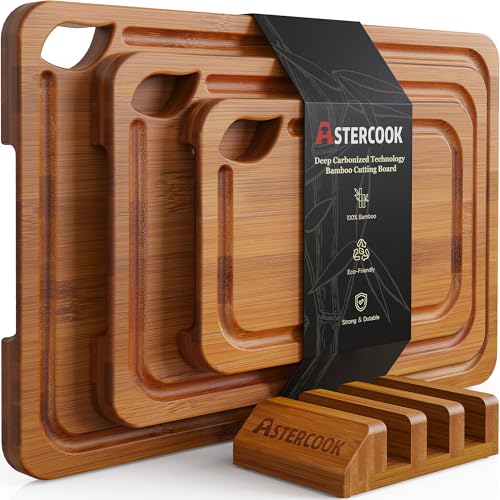
The Astercook Bamboo Cutting Boards come as a set of three reversible bamboo boards with a wood storage stand. Each board has a juice groove on one side and a smooth surface on the other. This product suits buyers who want a set that can be used for prep and for serving.
Bamboo construction
The listing says the boards are made from bamboo that has been treated with high-heat carbonization. This process is used to darken the wood and reduce its tendency to absorb water. The listing says the boards resist warping, cracking, and water absorption.
Reversible design
Each board has a deep groove on one side to catch juices. The other side is smooth, which suits serving cheese, bread, or fruit. Flipping a board between prep and presentation is a simple way to get more use from it.
Sizes and storage
The set includes boards measuring 15 by 10 inches, 12 by 8 inches, and 9 by 6 inches. The wood stand keeps the boards upright on the counter, which can help in a crowded kitchen. The stand also adds a finished look for gifts or entertaining.
Daily use and care
Bamboo is generally a hand-wash material, so cleaning takes a little more time than with plastic. The listing describes the boards as easy to maintain, but buyers should avoid soaking them. In practice, a quick rinse and dry after each use helps the wood last longer.
Value for money
At about 25 dollars, this set costs about the same as the Empune plastic set. The main difference is the material, the reversible design, and the storage stand. For a buyer who values appearance and wants boards that double as serving pieces, the price fits the features on offer.
Pros
- Reversible boards offer a juice groove on one side and a smooth serving side.
- Three sizes cover small and large tasks.
- Wood stand keeps boards organized and adds a neat look.
- Bamboo is gentle on knife edges.
Cons
- Bamboo needs hand washing and should not be soaked.
- The wood stand takes up counter space.
- Bamboo can show wear or darkening over time, which some buyers may not like.
5. Farberware 15 x 20 Inch Extra Large: best for carving large roasts and turkeys
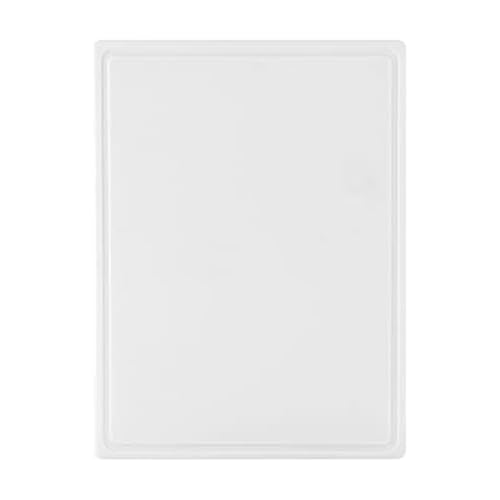
The Farberware 15 x 20 Inch Extra Large plastic cutting board is a single white board with a deep juice groove. It is reversible and made from BPA-free polypropylene. This product suits buyers who need a big surface for carving roasts, turkeys, or large batches of vegetables.
Size and surface
The board measures 15 by 20 inches and is about 0.39 inches thick. That is a generous prep area for a large cut of meat or a family-sized batch of produce. The white color makes it easier to see stains and residue than a dark board.
Material and knife care
Polypropylene is a plastic that is non-absorbent and non-porous. The listing says it is gentle on knives, which helps blades stay sharp for longer. It also says the material does not hold onto stains easily.
Deep juice groove
The groove is designed to catch drippings and juices. This is especially useful when carving a roast, since the juices from the meat collect in the channel rather than spreading across the counter.
Reversible use
Because the board is reversible, a cook gets two cutting surfaces. One side can be used for meat and the other for vegetables, or the board can be flipped when one side becomes worn. This is a simple way to extend the life of the board.
Cleaning and value
The board is dishwasher safe, which makes cleanup easy after a large meal. At about 26 dollars, it costs a bit more than the sets on this list, but it is a single large board. For a buyer sections, the buyer guide, the who-should-buy section, the verdict, and the FAQ.
Size and thickness
At 15 by 20 inches, this board is larger than most kitchen boards. The thickness of about 0.39 inches adds stability and weight. A cook who handles large cuts will likely find the size useful, though the board takes up a lot of counter or storage space.
Pros
- Large surface suits carving roasts and turkeys.
- Reversible design gives two cutting sides.
- Deep juice groove keeps juices contained.
- Dishwasher safe and easy to clean.
Cons
- The large size may be awkward to store in a small kitchen.
- It is a single board, so it offers fewer surfaces than a set.
- White plastic can show knife marks and discoloration over time.
Comparison insights: how these boards differ in performance, ease of use and value
All five boards handle liquid with a groove, but they differ in material and format. Plastic boards are easy to clean and do not need oil. Bamboo boards need hand washing and some care, but many cooks like how they look and feel in the hand.
The material also changes how a board behaves during use. Plastic tends to be lighter and more uniform, which makes it simple to move between tasks. Bamboo is firm and has a natural grain, so it feels solid under a knife and suits everyday chopping well.
In terms of performance, the boards with rubber borders or handles are easier to keep still. A board that slides on the counter can be unsafe, so this feature matters most when you cut firm produce or carve meat.
The large single boards suit carving, while the sets offer several sizes for different tasks, such as bread on one board and vegetables on another. The reversible bamboo set adds a serving side that the plastic sets do not offer, which can save a step when you present food at the table.
On value, the Empune bamboo board is the lowest priced, while the Farberware board costs the most for a single large surface. The sets sit in the middle range, and their value depends on if a buyer needs several boards or one large one.
If you cook for a small household, a single well-sized board may cover most needs. If you prepare different foods often and want to keep them apart, a set can be the more practical choice over time.
Buying guide: the key factors in plain words
Before buying a cutting board with a juice groove, it helps to think about a few basic points. The right choice depends on how the board will be used, how it will be cleaned, and how much space is available. The points below explain what to look for.
Material
Plastic boards are non-porous, easy to rinse, and often dishwasher safe. Bamboo and other wood boards are firm and gentle on knife edges, but they need hand washing and periodic oiling. Choose plastic for low maintenance and wood for a warmer look and a serving option.
Size
Smaller boards suit herbs, garlic, and quick tasks. Larger boards are better for carving roasts or preparing food for a group. A board should be big enough to hold your food with room to spare, so you do not have to push items off the edge. Many cooks find a set of two or three sizes the most practical.
Juice groove design
A juice groove is a channel around the edge that catches liquid. A deeper groove holds more juice, which helps when cutting meat. Some boards have a groove on all sides, while others have it on one side only. A groove on all sides gives you more flexibility in how you position the board and the food.
Grip and handles
A rubber border or non-slip feet help keep the board steady. Side handles make a board easier to carry and can allow it to double as a serving tray. Both features matter most when a cook works fast or handles heavy boards. Test how a board sits on your counter before you rely on it for demanding tasks.
Cleaning and care
Dishwasher-safe boards save time, while wood boards need careful hand washing. Oiling is needed for bamboo to keep it from drying out. Dry the board fully after washing, and never leave it soaking in water. Consider how much time you want to spend on care before picking a material.
Storage
Large boards can be hard to fit into a drawer or cabinet. Boards with handles or a storage stand can help keep the counter tidy. Measure the space before buying a large board or set. Check the depth of your cabinet as well as its width, since a board that fits flat may not stand upright.
Who should buy these products: matching buyers to the right board
The right board depends on the cook. A family that wants separate boards for different foods may prefer a set. A cook who values low maintenance may choose a plastic option. A buyer who wants a serving piece may want a bamboo board.
Think about how often you cook and what you usually prepare. A person who chops vegetables most nights needs a board that stays stable and holds up to daily use. Someone who cooks a few times a week may care more about looks and storage than about heavy-duty performance.
For a beginner who wants several boards at a low price, the Empune Extra Large Cutting Boards set is a practical choice. Having more than one board lets you keep raw meat separate from vegetables and bread without washing a single board between tasks. For a cook who wants stability during chopping, the GORILLA GRIP set is worth considering. Non-slip feet and a firm base help the board stay put while you work.
For someone who wants one board that also serves guests, the Empune bamboo board with handles fits well. Handles make it easy to carry from the counter to the table, and the surface looks presentable for cheese, bread, or appetizers.
For a buyer who wants a warm look and reversible boards with a storage stand, the Astercook Bamboo Cutting Boards set offers both prep and serving use. Reversible boards give you two usable surfaces, and a stand keeps them off the counter when they are not in use.
For a cook who carves large roasts or turkeys, the Farberware board provides the most room to work. A large surface also gives space for the juices and the carving tools without crowding.
Each choice fits a different kind of kitchen and a different kind of cook. Start with your habits, then pick the product that matches them.
Final verdict: which cutting board with juice groove to choose
There is no single best cutting board with juice groove for every kitchen. Each of the five products has clear strengths and clear trade-offs. The right pick depends on material preference, budget, and how the board will be used.
For low maintenance and a set of sizes, the Empune Extra Large Cutting Boards are a sensible starting point. A set gives you options for both small and large tasks. For grip and easy cleaning, the GORILLA GRIP set stands out. For a serving-friendly bamboo option, the Astercook set or the single Empune bamboo board may suit better, especially if you entertain often.
In short, match the board to the job. Think about if you need several sizes or one large surface, and if you are comfortable hand washing wood. A board that fits your habits will serve you better than one with the most features. Check the size against your counter and storage space before you order, so the board fits both your work area and your cabinets.
Frequently Asked Questions about cutting boards with juice grooves
What is a juice groove on a cutting board?
A juice groove is a shallow channel around the edge of a board. It catches liquid from meat, fruit, and vegetables so it does not run onto the counter. Some boards have grooves on all sides, while others have one. A groove on all sides is useful when you carve or slice juicy foods from several directions.
Is a plastic or bamboo cutting board better?
Neither is better for everyone. Plastic boards are easy to clean and often dishwasher safe. Bamboo is firm and gentle on knives but needs hand washing and occasional oiling. Your cleaning habits and the knives you own should guide the choice.
Do bamboo cutting boards need oil?
Yes, bamboo generally benefits from periodic oiling to keep it from drying out. The Empune listing recommends a monthly oil treatment. Avoid soaking bamboo or leaving it in the dishwasher, since water exposure can warp the wood and shorten its life.
Can you put a juice groove board in the dishwasher?
Some plastic boards in this list are described as dishwasher safe. Wood and bamboo boards should be hand washed. Always check the care guidance that comes with the product, because the rules can differ from one board to another.
How do I choose the right size cutting board?
Smaller boards suit quick tasks like herbs or garlic, while larger boards suit carving roasts or preparing food for a group. Many cooks find a set of two or three sizes practical, since each size handles a different job. Measure your counter and storage space before buying a large board, so it fits both your work area and your cabinets.

Mary is a home cooking enthusiast and kitchen gear reviewer with a passion for practical cookware and food preparation tools. She enjoys testing cutting boards, knives, kitchen gadgets, and other cooking essentials to help home chefs make smarter buying decisions. Through KitchenCutting.com, Mary shares honest product reviews, buying guides, and helpful kitchen tips to make cooking easier, safer, and more enjoyable.