Forged vs Stamped Kitchen Knives
If you’re standing in a kitchen supply store staring at knife displays, you’ve probably wondered what the real difference is between forged knives and stamped knives. Both sit on the same shelf. Both have sharp blades. Both cost different amounts of money. So what’s actually going on here?
In this article
The truth is that these two types of knives are made in completely different ways. They perform differently in your hand. They need different care. And yes, they cost different amounts. Once you know the difference, picking the right knife for your kitchen becomes way easier.
Let’s dig into this topic so you can make the best choice for your cooking needs.
What Are Forged Kitchen Knives and How Are They Made?
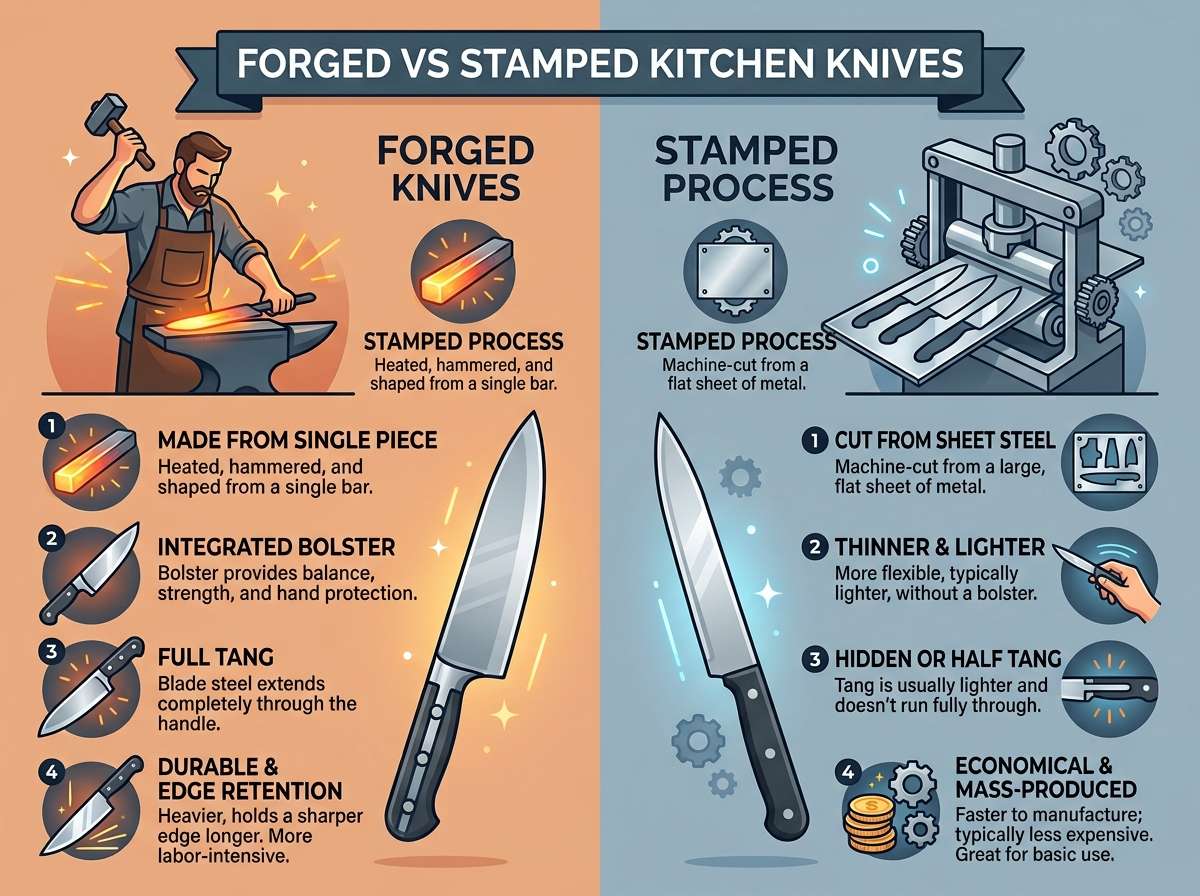
A forged knife starts as a single piece of steel. A blacksmith or machine heats this steel until it glows hot red. Then, the steel gets shaped using force. Sometimes a hammer pounds it. Sometimes a machine applies extreme pressure. The heat and force work together to reshape the metal.
This process creates something magical. The heating and shaping compresses the steel. It changes the structure at a level you can’t see. The molecules of the metal arrange themselves differently. This makes the steel stronger and more flexible.
Think of forged knives like a master chef developing their skills over many hours. The more time and pressure applied, the better the result. Traditional forged knives take much longer to make than stamped ones. A skilled craftsperson might spend considerable time on a single blade.
The blade of a forged knife is thick along the spine, which is the back part of the knife. It gets gradually thinner as it moves toward the edge. This shape happens naturally during the forging process. The spine stays thick because less metal gets hammered away there. The edge area gets thinner through the shaping process.
This thick spine and thin edge design does something important. It gives the knife excellent balance. The weight distributes evenly from the handle all the way to the tip. Many home cooks notice that forged knives feel natural in their hands. They don’t tire your wrist out during long cooking sessions.
The heel of a forged knife, which is the part closest to the handle, tends to be thicker. This area gets less work during forging. The middle and tip areas flow into an elegant curve. Some people call this the “belly” of the knife because it curves like a belly.
What Are Stamped Kitchen Knives and How Are They Made?
A stamped knife starts from a flat sheet of steel. A large machine cuts the shape from this sheet, like a giant cookie cutter pressing down. The machine stamps out the blade shape in one quick action. No heating. No pounding. No special pressure. Just one punch and the basic shape exists.
Think of stamped knives like printing designs on paper. The sheet gets cut to create the shape. Then the blade gets sharpened and the handle gets attached. The whole process moves fast.
Because stamped knives get made so quickly, they cost less money. The machine does the work that a forger would do by hand. No long labor hours means lower price tags.
The blade of a stamped knife is more uniform in thickness. From the spine all the way to the edge, the blade stays roughly the same thickness. This happens because the machine cuts through the sheet at one consistent depth. The metal doesn’t get compressed or rearranged like it does in forging.
Stamped blades tend to be thinner overall. They use less steel. They weigh less. For some people, this is actually a good thing. Lighter knives can mean less strain on your arm and wrist. They can feel more nimble when you’re doing quick cuts.
The edge of a stamped knife also tends to be thinner compared to forged knives. Thinner edges can feel sharper right out of the box. A thinner blade can slide through soft foods with less pressure needed. This appeals to many home cooks who want an easy experience.
The Cost Difference Between Forged and Stamped Knives
Let’s talk about money because this matters when you’re shopping for kitchen knives.
Forged knives cost more. A quality forged chef’s knife might run you fifty to one hundred dollars or more. High-end forged knives from trusted brands can easily cost two hundred dollars or more. The labor is expensive. The skill required is expensive. The time required is expensive.
Stamped knives cost less. You can find good stamped chef’s knives for fifteen to forty dollars. Even quality stamped knives rarely go above one hundred dollars.
This price gap makes sense once you know how they’re made. A machine can stamp out hundreds of blades in the time a forger makes one blade by hand. The overhead cost gets spread across more knives. The price per knife drops.
But here’s the thing: a lower price doesn’t mean a worse knife. It means a different knife. Some of the most popular and beloved kitchen knives in the world are stamped. They work great for most home cooks. They last for years with proper care.
Comparing Durability and Lifespan
How long does each type of knife last? This is a practical question that affects your actual money.
Forged knives last an incredibly long time. Many forged knives get passed down through families. People use forged knives for decades. Some people use the same forged knife for forty or fifty years without problems. The steel structure is so solid that it resists wear and tear. The thick blade can handle the stress and strain of everyday use.
Stamped knives also last a long time. They won’t last quite as long as forged knives on average. But a well-cared-for stamped knife can work great for many years. Ten to twenty years is very realistic for a quality stamped knife. Some last even longer.
The key difference comes down to the way the steel was prepared. Forged steel has been compressed and aligned. It becomes more resistant to stress. Stamped steel hasn’t been through this process. It can develop problems over time. The blade might chip more easily. The edge might dull faster.
But here’s the real secret: it all depends on how you treat your knife. A forged knife abused in the dishwasher will fail faster than a stamped knife treated with love and care. A stamped knife kept clean and sharp can outlast a neglected forged knife.
Edge Retention and Sharpness
Edge retention means how long the knife stays sharp before you need to sharpen it again. This is important because a dull knife is a sad knife.
Forged knives typically hold their edge longer. The dense, compressed steel resists wear. You might get six months or more of regular use before needing sharpening. Some forged knives hold their edge even longer.
Stamped knives need sharpening more often. You might notice dullness after two to four months of regular use. This depends on the steel quality and how hard you use the knife.
But wait. There’s good news here. Stamped knives are often easier and cheaper to sharpen. The thinner blade needs less work. You can sharpen them at home with a simple sharpening stone. Many home cooks find this easy and satisfying.
Forged knives need more careful sharpening. The thicker blade requires more effort. Many people take forged knives to professionals for sharpening. This costs money. But it only happens every year or so, not every month.
Weight and Balance in Your Hand
How a knife feels in your hand matters more than people realize. You hold your knife for hours during cooking. The wrong feel can tire you out.
Forged knives weigh more. They have more steel. The thick spine adds weight. This weight is usually concentrated in the blade and handle area, not spread out along the length. Many cooks love this feeling. The weight helps the knife do the work. When you slice a vegetable, the knife’s own mass helps push through. Your arm doesn’t have to work as hard.
Stamped knives weigh less. They feel lighter in your hand. Some people prefer this. Light knives feel nimble. They feel fast. They can reduce hand fatigue for people with weaker grip strength or arthritis.
The balance of a knife affects how it feels too. Balance means the weight distributes evenly. A well-balanced knife feels like it’s floating in your hand. A poorly balanced knife feels like you’re holding a club.
Forged knives usually balance better because of how they’re made. The thick spine and thin edge create natural balance. The weight distribution just works.
Stamped knives need careful design to balance well. When the blade is uniformly thin and light, the knife can feel unbalanced. Some well-designed stamped knives balance great anyway. Others feel like they want to tip backward toward your hand.
Sharpness Right Out of the Box
When you buy a new knife and open the package, how sharp is it?
Stamped knives often come sharper right out of the box. The thin blade and thin edge mean less metal between you and a sharp point. Manufacturers can grind the edge very sharp on stamped knives because they just stamp out many copies. The sharpness becomes standard.
Forged knives come sharp too, but sometimes less sharp than stamped knives. The thicker edge means the edge doesn’t cut quite as fine right away. You might need to sharpen a forged knife once before it feels perfectly sharp.
This is just a first impression though. After a week of use, this difference disappears. Both knives become dull through regular cooking. The initial sharpness difference matters very little.
Maintenance and Care Requirements
Taking care of your knife keeps it working great for years. The two knife types have slightly different needs.
Forged knives need careful maintenance. Don’t put them in the dishwasher. The heat and harsh detergent can damage them. Hand wash only. Dry immediately. Store carefully so the blade doesn’t bang against other utensils.
Forged knives also need regular honing. Honing is not sharpening. It’s realigning the edge. A honing steel straightens out the tiny bends that happen during use. Honing takes thirty seconds and keeps your knife sharp between actual sharpening sessions.
Some forged knives benefit from oil occasionally. Traditional forged knives, especially those made in Japanese style, might need a light coating of oil to prevent rust.
Stamped knives need care too, but they’re often more forgiving. Most modern stamped knives resist rust better because manufacturers treat the steel. You should still hand wash and dry them promptly.
Stamped knives might not need honing as often because the edge wears differently. You can usually go straight to sharpening when it gets dull.
The maintenance difference isn’t huge. Both knife types want the same basic care: hand wash, dry immediately, and store safely.
Performance in Daily Cooking
How does each knife actually perform when you’re cooking dinner? This is what really matters.
Forged knives excel at tasks that need power and repetition. If you’re dicing five pounds of onions for a batch of soup, a forged knife feels amazing. The weight helps. The edge stays sharp. Your hand doesn’t get tired.
Forged knives also work great for tasks that need precision. Slicing thin vegetables. Trimming fat off meat. Detailed work where you need control. The balance helps you position the knife exactly where you want it.
Stamped knives work great for most everyday cooking. Chopping vegetables. Slicing bread. Breaking down chicken. They do all of this just fine. The light weight means less arm strain. The thin blade means less resistance when cutting soft items.
Stamped knives feel slightly less stable when doing hard work. Cutting through frozen foods or tough bones requires more pressure. The thin blade flexes slightly. This isn’t dangerous, but you notice the difference compared to a forged knife.
For most home cooking, stamped knives do everything you need. Only if you’re cooking professionally or cooking for many hours every day would you really notice stamped limitations.
Steel Quality and Type Matter Too
Here’s something important: the difference between forged and stamped matters less than the steel type.
A stamped knife made from excellent steel outperforms a forged knife made from poor steel. The manufacturing process is just part of the equation.
Different steels have different properties. Stainless steel resists rust well but doesn’t hold an edge as long. Carbon steel holds an edge longer but needs more maintenance to prevent rust. Stainless steel with added elements like molybdenum and vanadium can offer the best of both worlds.
The top stamped knife brands use premium steels. The top forged knife brands also use premium steels. Both processes can work with good material or bad material.
When you’re shopping, look at the steel type. A stamped knife with VG-10 steel (a premium Japanese stainless steel) will outperform a forged knife with basic stainless steel. The steel matters as much as the process.
Brands That Do Each Type Well
If you want to buy a quality knife, certain brands are known for excellence in each category.
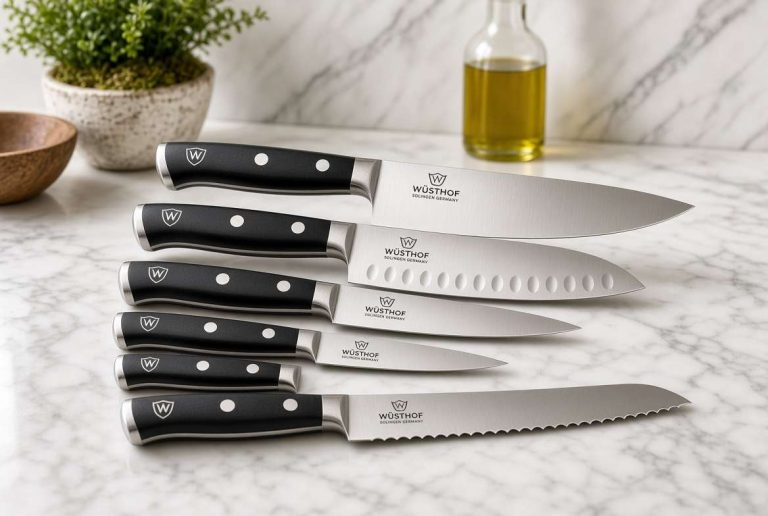
For forged knives, German brands like Wüsthof and Zwilling dominate. These companies have been forging knives for over a hundred years. Their knives are work horses. Japanese brands like Yaxell also make excellent forged knives with lighter weight and different blade geometry.
For stamped knives, brands like Victorinox lead the market. Their Fibrox handled knives are used in professional kitchens around the world. They’re affordable, sharp, and reliable. Many other brands make good stamped knives too, but Victorinox sets the standard.
The good news is that quality options exist at every price point. You can find good forged knives for reasonable money. You can find excellent stamped knives for budget prices.
Hybrid Knives Are a Thing Too
Sometimes you don’t have to choose between forged and stamped. Some knife makers create hybrid knives.
These knives use a stamped blade but add extra work to improve performance. They might forge the edge. They might add extra layers or special heat treatment. They get some benefits of forged knives while keeping the cost of stamped knives lower.
Hybrid knives often represent the sweet spot. They cost more than pure stamped knives but less than full forged knives. They perform better than basic stamped knives but almost as well as forged knives.
These options work great for home cooks who want better performance without spending forged knife money.
Frequently Asked Questions About Knife Types
Can you use a forged knife for everything a stamped knife does? Yes. A forged knife can do any task a stamped knife does. They just might feel like overkill for simple tasks.
Is it worth spending more on a forged knife? If you cook every day and take care of your knives, yes. The longer lifespan and better edge retention pay off. If you cook rarely and don’t take care of knives, stamped works fine.
Can a stamped knife chip? Yes, stamped knives can chip if you abuse them. Hitting the blade against bone or a hard cutting board can create chips. The thinner blade is more prone to this.
Do forged knives need special sharpening? Not really. Both need the same sharpening technique. Forged knives just need it less often.
Which knife is better for beginners? Stamped knives are great for beginners. They’re affordable, they work well, and you’re not afraid to experiment since they cost less.
Making Your Decision
So which knife should you actually buy?
If you’re a home cook who cooks several times a week, get a stamped knife. Spend thirty to fifty dollars on a quality brand. It will work great. It will last for years. You won’t feel bad about keeping it sharp and clean.
If you cook every single day, cook for groups, or plan to use the same knife for many years, invest in a forged knife. Spend seventy to one hundred dollars or more for a quality brand. You’ll love how it feels. You’ll appreciate the edge retention. You’ll probably pass it down to someone someday.
If you’re between these two situations, look at hybrid options. You get better performance than stamped knives at prices that won’t make you flinch.
No matter which type you choose, buy the best brand you can afford in that category. A quality stamped knife beats a cheap forged knife. A quality forged knife beats a cheap stamped knife. The brand and materials matter as much as the process.
The Real Truth About Kitchen Knives
Here’s what matters most: the knife you use is better than the knife you don’t use.
Some people overthink knife purchases. They read reviews for months. They worry about making the wrong choice. Then they never buy a knife at all.
If you need a kitchen knife, get one. Get a stamped knife from Victorinox. Get a forged knife from Wüsthof. Get a hybrid knife from a mid-range brand. All of these work great.
Start using your new knife. Learn how it feels in your hand. Figure out what tasks you do most. After using a knife for a few months, you’ll know if you made the right choice.
Keep your knife sharp. Hand wash and dry it. Store it safely. Treat it with respect. A well-cared-for knife of either type will bring you joy for years.
The best knife is the one you actually want to pick up and use. If a stamped knife makes you happy, that’s the right knife for you. If a forged knife makes you happy, that’s your answer.
Most home cooks find happiness with a quality stamped knife. Some discover that a forged knife works better for their hands and their cooking style. Both paths lead to delicious food and years of reliable performance.
Final Thoughts
Forged and stamped knives represent two different approaches to making kitchen tools. Forged knives use heat and pressure to create dense, durable blades. Stamped knives use machines to cut quick, light, affordable blades. Both work great when made by quality manufacturers.
The difference between forged and stamped matters less than the difference between a good knife and a bad knife. A well-made stamped knife beats a poorly-made forged knife every single time.
When you go shopping, don’t get stuck on the forged versus stamped question. Look at the brand. Check the steel. Feel the knife in your hand. Read reviews from actual home cooks. These factors matter more than which production method got used.
A quality kitchen knife is one of the best investments you can make. You use it every time you cook. It does essential work. It becomes part of your kitchen. Whether you go forged or stamped, choose quality. Choose a reputable brand. Choose a knife that feels right in your hand.
Then get cooking. Sharp knives and good food await.

Mary is a home cooking enthusiast and kitchen gear reviewer with a passion for practical cookware and food preparation tools. She enjoys testing cutting boards, knives, kitchen gadgets, and other cooking essentials to help home chefs make smarter buying decisions. Through KitchenCutting.com, Mary shares honest product reviews, buying guides, and helpful kitchen tips to make cooking easier, safer, and more enjoyable.