Maple vs Walnut Cutting Board
If you’re standing in the kitchen supply aisle staring at rows of wooden cutting boards, you might feel a bit lost. Two names keep popping up: maple and walnut. Both sound fancy, both look great on your counter, and both come with different price tags. So what’s the real difference? Does it actually matter which one you grab?
In this article
Let me break this down for you. I’m going to walk you through everything you need to know about maple cutting boards and walnut cutting boards so you can make a smart choice that fits your kitchen and your budget.
What Makes Wood Cutting Boards Special?
Before we dive into the maple versus walnut debate, let’s talk about why wooden cutting boards get so much love in the first place.
Wood cutting boards have been around forever, and for good reason. They feel good in your hands. They look beautiful on your counter. They won’t destroy your knife edges like those hard plastic or glass boards do. When you slice and chop on a wooden board, your blade glides across the surface smoothly and stays sharp longer.
Wooden boards also have natural antibacterial properties. That’s right—wood actually fights off bacteria on its own. The grain structure of the wood helps prevent harmful germs from hanging around on the surface. This is one of the big reasons why chefs and home cooks alike swear by wooden cutting surfaces.
The wood you choose makes a huge impact on how your board performs and how long it lasts. Different types of wood have different hardness levels, different colors, and different price points. That’s where maple and walnut come in.
Maple Cutting Boards: Light, Hard, and Dependable
Let me tell you about maple first. Maple is one of the most popular choices for cutting boards, and it’s easy to see why.
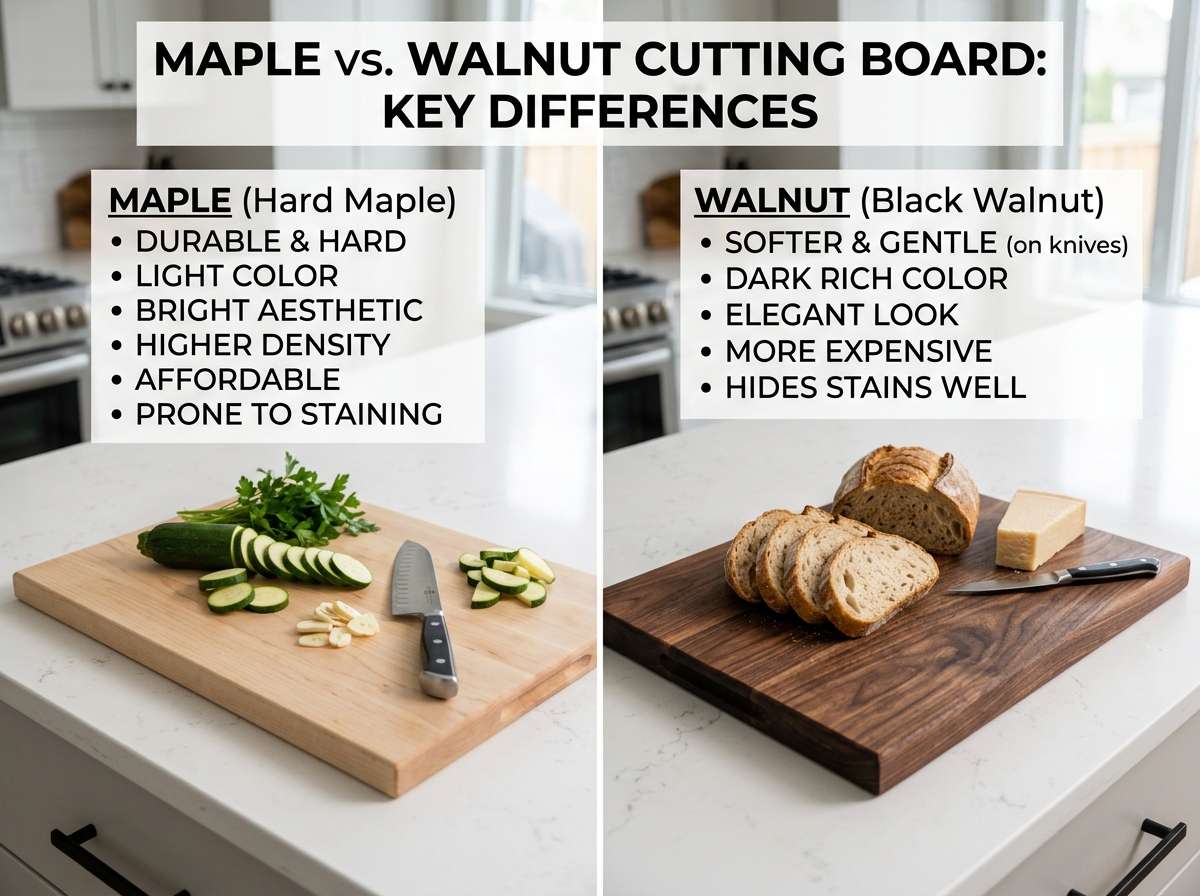
Maple wood is incredibly hard. When we talk about hardness in wood, we use something called the Janka hardness scale. This scale measures how resistant wood is to dents and scratches. Maple sits at around 1450 on the Janka scale. That’s seriously hard. This means your maple cutting board can handle a lot of abuse and still look good.
The light color of maple is gorgeous. You get a creamy white or pale yellow appearance. When you first buy a maple board, it looks almost pristine. This light tone makes it easy to spot stains or bits of food, so you know when your board needs cleaning. The aesthetic appeal is real—a maple board just looks clean and fresh on any kitchen counter.
Maple is also relatively affordable compared to some other wood options. You don’t have to break the bank to get a high-quality maple board. This makes maple an excellent choice if you want a solid wooden cutting surface without paying a fortune.
One thing to know about maple: it’s a tight-grained wood. The grain structure is dense and compact. This tight grain means that less bacteria can settle into the surface. It also means that liquid doesn’t soak in as fast as it would with other woods. For a cutting board, this is actually a good thing because you want to limit how much moisture the wood absorbs.
Maple boards need regular care, though. They’re not difficult to maintain, but you do need to stay on top of it. We’ll get into that later, but just know that feeding your maple board with food-grade mineral oil keeps it healthy and extends its life.
Walnut Cutting Boards: Dark, Elegant, and Tough
Now let’s talk about walnut. Walnut is the sophisticated option. It brings a different vibe to your kitchen.
Walnut wood displays a beautiful dark brown color that ranges from light tan to deep chocolate. This rich, dark tone gives your cutting board a more elegant, upscale appearance. Walnut is the kind of wood that makes you feel like you’re using something special. Many people prefer the aesthetic of walnut because it looks less like a basic kitchen tool and more like a piece of kitchen art.
Walnut also ranks high on the hardness scale. It comes in at around 1010 on the Janka scale. Wait—that’s lower than maple, right? That’s true. But don’t let that number fool you. Walnut is still incredibly hard and durable. It’s more than tough enough for daily cutting and chopping. The difference between 1450 and 1010 is real, but in practical kitchen use, you won’t really notice the distinction.
One advantage of walnut is that it’s slightly softer than maple, which actually means it’s a tiny bit gentler on your knives. When your blade hits the board, there’s a slight give to the wood rather than meeting complete resistance. This is a subtle benefit, but knife lovers notice it.
Walnut has a tighter grain structure than some woods, but it’s slightly more open than maple. This means it can absorb a bit more moisture. For this reason, walnut boards need the same consistent care that maple boards do. You’ll want to oil them regularly and avoid soaking them in water.
The dark color of walnut does have one small downside: it’s harder to spot stains and crumbs on the surface. That said, many people think the trade-off is worth it because the board looks so good.
Walnut is pricier than maple. You’ll pay more for a quality walnut cutting board. The cost difference can be anywhere from 20 to 50 percent more, depending on the size and brand. If you’re looking for value, this is something to consider.
Side-by-Side Comparison: Which Wood Wins?
Let’s compare these two woods across different categories so you can see exactly how they stack up.
Hardness and Durability
Maple is harder and will resist dents and dings longer. If you’re rough on your cutting boards, if you’re someone who chops aggressively or throws things on the board, maple is the safer bet. It will hold up to that kind of treatment better.
Walnut is still durable enough for normal kitchen use, but if you abuse your boards, maple will outlast it. That said, both woods last for many, many years with proper care.
Cost
Maple is the budget-friendly choice. If price matters to you, maple wins this category easily. You get excellent quality at a lower price point.
Walnut costs more upfront. This higher price reflects the wood’s beauty and overall appeal, not necessarily because it’s more durable or better at being a cutting board.
Knife Friendliness
Walnut has a slight edge here because it’s marginally softer. Your knife blade won’t hit as hard a resistance. But honestly, both woods are far superior to glass or plastic when it comes to protecting your knives.
Maple is still plenty knife-friendly. The difference is subtle enough that most home cooks won’t notice any real distinction in their daily cooking.
Appearance
This one comes down to personal taste. Maple gives you a clean, bright, minimalist look. It’s perfect if you like modern aesthetics or if you want a board that shows you what’s going on during food prep.
Walnut provides a warm, elegant, sophisticated appearance. It’s beautiful on display and adds a touch of class to your kitchen. If you value visual appeal and don’t mind the higher price, walnut is the winner.
Resistance to Stains
The light color of maple makes stains more visible. Dark stains from beets, berries, or turmeric will show on a maple board. This doesn’t mean the stains are permanent or damage the wood—they usually fade over time. But they’re noticeable.
Walnut hides stains much better because of its dark color. This practical advantage means your board will always look clean and unmarked, regardless of what you cut on it.
Maintenance Requirements
Both maple and walnut require similar care. You need to oil them regularly with food-grade mineral oil or food-safe cutting board oil. You should hand wash them, never put them in the dishwasher, and avoid letting them soak in water for long periods.
The maintenance is about the same for both woods, so neither has a real advantage here.
Hardwood Cutting Board Materials Explained
Let’s talk a bit more about what makes these hardwoods special for cutting board use.
Hardwood differs from softwood. Pine and spruce are softwoods—they’re too soft for cutting boards because they dent easily and can develop splinters. Hardwoods like maple, walnut, oak, and cherry are denser and more durable.
Within the hardwood category, you have different levels of hardness. That Janka scale I mentioned is the standard tool for measuring this. The higher the number, the harder the wood and the more resistant it is to damage.
For cutting boards, you want wood that’s hard enough to resist knife marks and stains, but not so hard that it damages your knives. Maple and walnut both hit that sweet spot perfectly.
The grain pattern also matters. Wood grain can be tight or open. Tight grain means the wood fibers are packed closely together. This makes the surface smoother and more resistant to moisture absorption. Open grain means there’s more space between the fibers, so the wood can absorb more liquid.
Maple has a tighter grain than walnut, which is one reason why maple is slightly more moisture-resistant. But again, both are fine for cutting board use when you take care of them properly.
How to Care for Your Wooden Cutting Board
Whether you go with maple or walnut, you need to treat your board right to keep it in great condition.
Washing Your Board
Hand wash your board with warm soapy water and a soft cloth. Use your hands or a sponge, not a harsh scrub brush. Rinse it well and pat it dry with a clean towel. Never leave your board wet or soak it in standing water. Water is the enemy of wooden cutting boards because it causes the wood to swell and can eventually lead to warping or splitting.
Oiling Your Board
Feed your board with food-grade mineral oil or a specialized cutting board oil. This step is crucial. Oiling keeps the wood hydrated and prevents it from drying out, cracking, or splitting.
Apply the oil generously to both the top and bottom surfaces of the board. Let it soak in for a few minutes, then wipe away any excess with a clean cloth. You should oil your board every few weeks if you use it regularly, or at least once a month during lighter use.
Some people use beeswax and mineral oil blends, which work great. Just make sure whatever you use is food-safe and designed for cutting boards.
Avoiding Damage
Don’t put your wooden cutting board in the dishwasher. The heat and moisture will destroy it. Don’t leave it to dry in a standing position for long periods—this can cause warping. Store it flat in a cabinet or lean it against a wall with proper air circulation.
Avoid extreme temperature changes. Don’t run a hot board under cold water or vice versa. These drastic temperature shifts can cause the wood to expand and contract too quickly, leading to cracks.
Dealing with Stains and Odors
If your board gets stained, you can try rubbing it with half a lemon and some salt. The acid in the lemon can help lift stains, and the salt acts as a mild abrasive. Let this sit for a few minutes, then wash and rinse thoroughly.
For odors, try the same lemon and salt trick, or soak the board in a vinegar and water solution for 10 minutes.
Which Board Fits Your Kitchen?
Okay, so which one should actually be sitting in your kitchen?
Go with maple if you’re on a budget, if you want maximum durability, or if you prefer the light, clean aesthetic. Maple is perfect if you cut aggressively or if you’re the type who doesn’t always treat kitchen tools with kid gloves. It’s also ideal if you like to see what you’re doing on your cutting surface.
Go with walnut if you love beautiful kitchen tools, if you want something that looks like it deserves to be displayed on your counter, or if you prefer the warm elegance of dark wood. Choose walnut if you’re willing to pay a bit more for aesthetics and you won’t be too upset about occasional stains being hard to see.
Honestly, you can’t go wrong with either choice. Both are excellent cutting board woods that will serve you well for years and years.
Different Sizes and Styles
Cutting boards come in various sizes. Small boards work for prepping vegetables or cheese. Medium boards are the workhorses of most kitchens—perfect for everyday cutting and chopping. Large boards are fantastic for breaking down whole chickens or handling multiple tasks at once.
You’ll find maple and walnut in all these sizes. You can get simple rectangular boards or boards with handles. Some have juice grooves around the edge to catch liquids. Some are end-grain boards, which are extra special (and extra expensive).
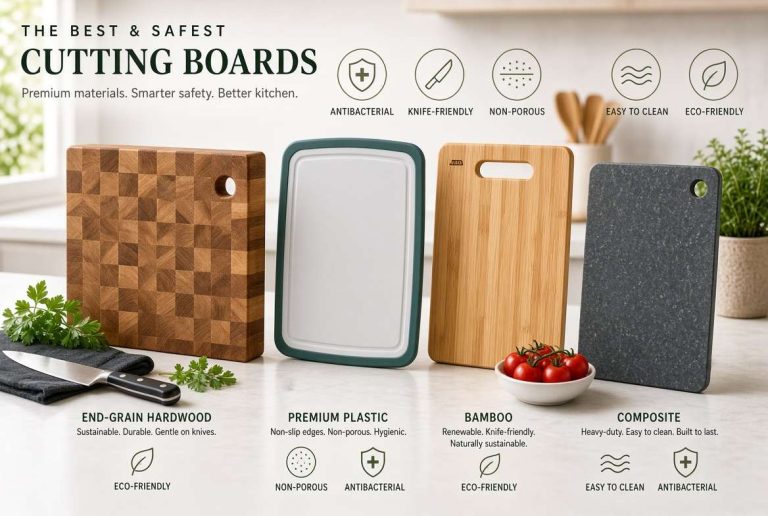
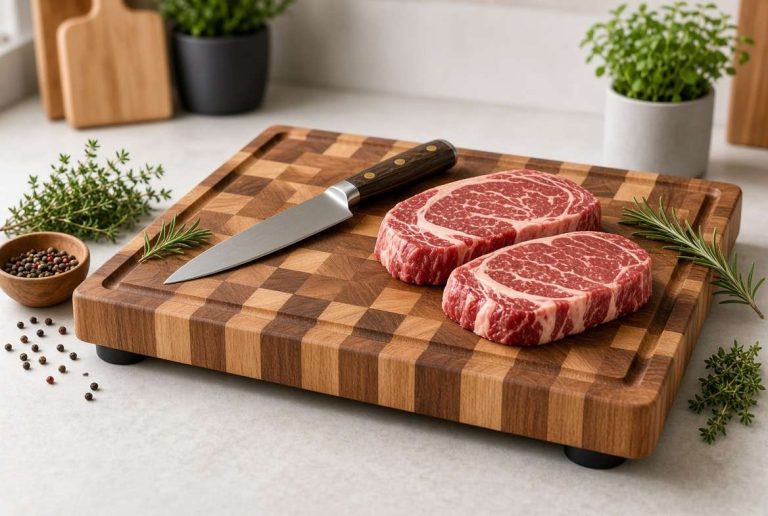
End-grain boards are made by arranging wood pieces perpendicular to the surface. This creates an incredibly durable surface that’s kind to knives and looks beautiful. Both maple and walnut come in end-grain versions if you want to splurge.
The Bottom Line
Maple and walnut are both fantastic choices for wooden cutting boards. Maple gives you durability, affordability, and a bright aesthetic. Walnut gives you beauty, elegance, and that warm, sophisticated look.
The real difference comes down to your personal priorities and your budget. If cost is the main concern, maple wins. If looks matter most and you want something special, walnut is your board.
What most people find is that they end up with both eventually. A hardworking maple board lives in the kitchen for daily use, while a walnut beauty sits on the counter or gets brought out for special occasions.
Common Questions About Wooden Cutting Boards
Are wooden boards sanitary?
Yes. Wood has natural antibacterial properties that actually help keep your food safe. Studies show that wood is as sanitary as plastic, and many experts argue it’s even better.
How long do wooden boards last?
With proper care, a quality maple or walnut board lasts 10, 15, or even 20 years. Some people have boards that last a lifetime.
Can you cut raw meat on a wooden board?
Yes, you can. Just make sure to wash it thoroughly with warm soapy water after handling raw meat. Oil it regularly and you’ll be fine.
What happens if my board cracks?
Small surface cracks can be sanded down and re-oiled. Deep cracks that go all the way through are trickier, but they don’t always mean your board is ruined. You can sometimes repair them or live with them if they don’t affect functionality.
Is there a best size?
It depends on your kitchen and your cooking habits. Most people find that having both a smaller 8×10 inch board and a larger 12×18 inch board covers all their needs.
Final Thoughts
When you stand in front of those rows of cutting boards again, you’ll know exactly what to look for. You’ll understand the difference between maple and walnut. You’ll know how to care for your board once you bring it home.
Both woods create cutting surfaces that feel amazing to use, that make your knives happy, and that look beautiful in your kitchen. The choice between them isn’t about one being better than the other—it’s about which one fits your life, your kitchen, and your budget best.
So go ahead and pick your board. Whether you choose the bright, durable maple or the elegant, sophisticated walnut, you’re making a choice that will serve you well for years to come. Your future cooking self will thank you for investing in a quality wooden cutting board.

Mary is a home cooking enthusiast and kitchen gear reviewer with a passion for practical cookware and food preparation tools. She enjoys testing cutting boards, knives, kitchen gadgets, and other cooking essentials to help home chefs make smarter buying decisions. Through KitchenCutting.com, Mary shares honest product reviews, buying guides, and helpful kitchen tips to make cooking easier, safer, and more enjoyable.