How to Cut Bok Choy?
Bok choy is one of the easiest vegetables to love and one of the most confusing to cut if you have never worked with it before. This leafy green comes from the cabbage family, but it does not look or feel like a regular cabbage at all. It has crisp white stalks and soft green leaves, and each part behaves a little differently under the knife. If you have ever stood in your kitchen holding a head of bok choy and wondered where to even start, this guide is for you.
In this article
By the end of this article, you will know exactly how to wash it, slice it, chop it, and prep it for stir-fries, soups, salads, and more. No fancy knife skills needed. Just follow along step by step.
What Exactly Is Bok Choy?
Bok choy, sometimes spelled pak choi, is a type of Chinese cabbage that grows in loose bunches rather than tight round heads like the cabbage you might picture. It has thick, crunchy white or pale green stalks at the base, and each stalk fans out into a wide, tender leaf at the top. The stalks taste mild and slightly sweet, almost like celery, while the leaves have a soft, spinach-like texture with a light peppery bite.
You will usually find two kinds at the grocery store: regular bok choy and baby bok choy. Regular bok choy is bigger, with long stalks and large leaves, and it often needs to be chopped into smaller pieces before cooking. Baby bok choy is smaller and more compact, so it can sometimes be cooked whole or just cut in half. Both types are cut using the same basic technique, just adjusted for size.
This vegetable shows up in a ton of Asian dishes, from stir-fries and noodle bowls to soups and braises. It is also a favorite in healthy cooking because it is low in calories, packed with vitamins A, C, and K, and full of fiber. Learning how to cut it properly means you get more even cooking, better texture, and a dish that actually looks like something from a restaurant.
Tools You Will Need
Before you start cutting, gather a few basic tools. You really do not need anything special here.
- A sharp chef’s knife or a santoku knife
- A sturdy cutting board
- A colander or large bowl for washing
- A clean kitchen towel or paper towels for drying
A sharp knife matters more than people think. A dull blade tends to crush the stalks instead of slicing through them cleanly, which can bruise the vegetable and make it cook unevenly. If your knife has been sitting in the drawer for a while, now is a good time to sharpen it.
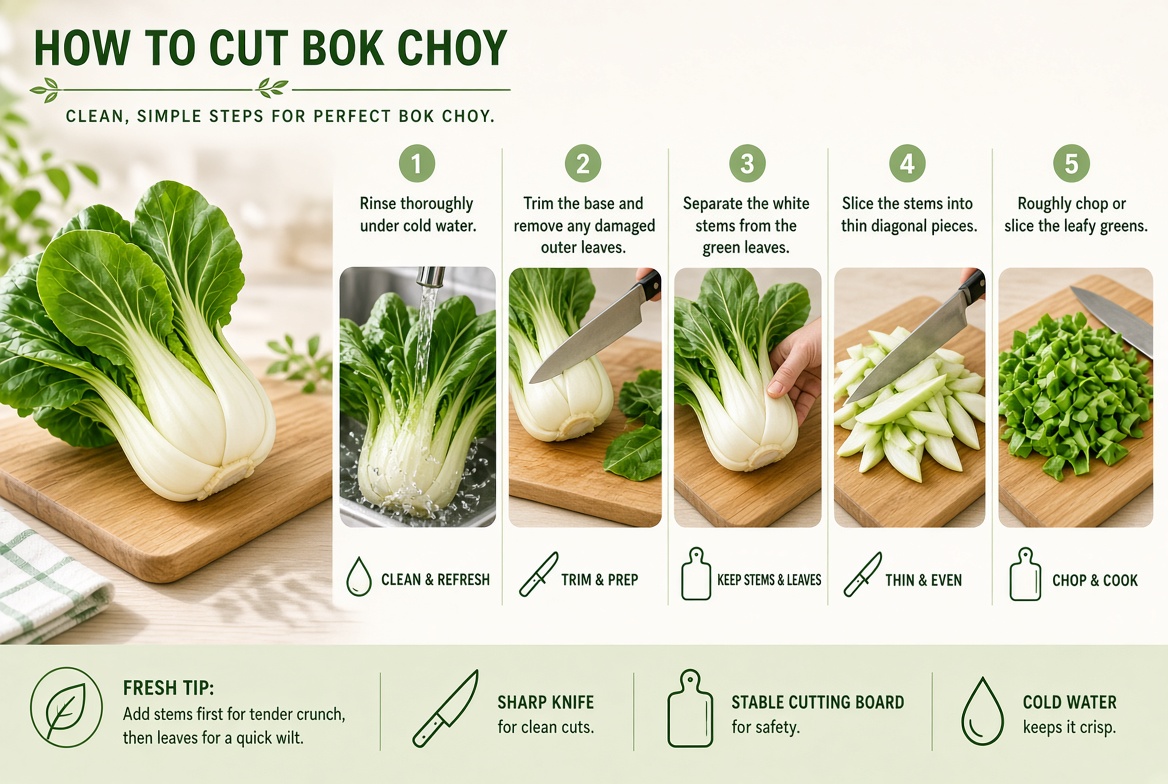
Step 1: Give It a Good Rinse First
Bok choy grows close to the ground, and dirt or sand often gets trapped between the stalks near the base. Skipping this step is one of the most common mistakes people make, and it usually ends with a gritty bite in your finished dish.
Here is the easiest way to clean it before cutting:
- Trim off the very bottom of the stem, just a thin slice, to loosen the stalks.
- Fan the stalks apart gently with your fingers, almost like opening a book.
- Run the whole head under cold running water, rubbing your fingers along the base where dirt tends to hide.
- Shake off the extra water or pat it dry with a towel.
Some cooks prefer to cut the bok choy first and then wash the pieces in a bowl of cold water, swishing them around so any grit sinks to the bottom. Either method works fine, so use whichever feels more natural to you.
Step 2: Trim the Base
Once your bok choy is clean, lay it on the cutting board with the root end facing you. Take your knife and slice off about half an inch from the very bottom, where the stalks meet at the base. This part is tough, woody, and often holds onto dirt, so it is best removed.
If you plan to cook the bok choy whole or in halves, you can leave a small bit of the root intact. This keeps the leaves and stalks connected while cooking, which some people prefer for presentation. But if you are chopping it up for a stir-fry or soup, go ahead and remove the whole base.
Step 3: Decide How You Want to Cut It
This is where things branch out a bit, because how you cut bok choy really depends on what dish you are making. Below are the most common cutting styles, broken down so you can pick the one that fits your recipe.
Cutting Bok Choy in Half (Great for Braising or Roasting)
This method works best with baby bok choy, though it can work with regular bok choy too if it is on the smaller side.
- Place the trimmed bok choy on your cutting board, stem side down.
- Line your knife up with the center of the vegetable, right through the root.
- Press down firmly and slice straight through, splitting it into two even halves.
This style keeps the leaves and stalks attached, so the whole piece cooks as one unit. It looks beautiful on a plate and works great for grilling, roasting, or braising in a savory sauce.
Cutting Bok Choy into Quarters
If your bok choy is on the larger side, quartering it gives you more manageable pieces that still hold their shape during cooking.
- Start with the vegetable cut in half, as described above.
- Take each half and slice it lengthwise again, right through the middle.
- You should end up with four long wedges, each with a bit of stalk and a bit of leaf.
Quartered bok choy is a popular choice for stir-fries where you want bigger, chunkier pieces that still cook quickly.
Slicing Bok Choy Crosswise (Perfect for Stir-Fries and Soups)
This is probably the most common way people cut bok choy, and it is super simple.
- Lay the trimmed bok choy on its side on the cutting board.
- Starting from the base, slice crosswise into strips about one to two inches wide.
- Continue slicing all the way up through the leafy top.
Because the stalks are thicker and take longer to cook than the leaves, a lot of recipes ask you to separate the stalk pieces from the leaf pieces after slicing. You can toss the stalks into the pan first since they need a little extra time, then add the leaves near the end so they wilt without turning mushy.
Shredding Bok Choy Thinly (Ideal for Salads or Quick Cooking)
If you want bok choy to cook super fast or blend smoothly into a salad, shredding it into thin ribbons is the way to go.
- Separate the stalks from the leaves first, since they shred a bit differently.
- Stack a few leaves on top of each other, roll them up like a cigar, and slice crosswise into thin ribbons. This technique is called chiffonade, and it works the same way people cut basil or spinach.
- For the stalks, slice them thinly on a diagonal, so they cook quickly and have a nice bit of crunch.
Shredded bok choy is great raw in slaws, tossed into ramen right before serving, or added to a quick sauté that only takes a minute or two.
Separating Leaves for Whole-Leaf Cooking
Sometimes recipes call for whole individual leaves instead of chopped pieces, especially for dishes where you want the bok choy to look elegant, like in a clear soup or a stir-fry with larger cuts.
- Hold the trimmed bok choy at the base.
- Gently pull each leaf away from the core, working from the outside in.
- Discard any leaves that look wilted, bruised, or yellow.
This method takes a little more time but gives you clean, whole pieces that hold their shape beautifully once cooked.
Step 4: Separate Stalks from Leaves When Needed
A lot of bok choy recipes ask you to cook the stalks and leaves separately, and there is a good reason for this. The stalks are dense and crunchy, similar to celery, so they need more heat and more time to soften. The leaves are thin and delicate, closer to spinach, so they wilt in just a minute or two.
If you toss everything into a hot pan at the same time, you will likely end up with leaves that turn to mush before the stalks even soften. To avoid that, here is a simple trick:
- After slicing, sort the pieces into two piles: one for stalks, one for leaves.
- Add the stalks to your pan or pot first, giving them a head start of a minute or two.
- Add the leaves last, cooking just until they turn bright green and slightly wilted.
This small extra step makes a noticeable difference in texture and flavor, especially in stir-fries.
Common Mistakes to Avoid
Even a simple vegetable like bok choy can go wrong if you rush through it. Here are a few things to watch out for.
Skipping the wash. Dirt hides deep in the base, and biting into a gritty piece of bok choy is not pleasant. Always rinse thoroughly, even if the vegetable looks clean on the outside.
Using a dull knife. A dull blade squashes the stalks instead of cutting cleanly, which bruises the vegetable and shortens its shelf life if you are prepping ahead.
Cutting pieces unevenly. If some pieces are tiny and others are huge, they will cook at completely different speeds. Try to keep your cuts consistent in size so everything finishes at the same time.
Cooking stalks and leaves together without staggering the timing. As mentioned above, the leaves cook much faster than the stalks. Add them at different times for the best texture.
Cutting too far ahead of time. Bok choy loses moisture and starts to wilt once it is cut, so try to prep it close to when you plan to cook it, especially the leafy parts.
Storing Bok Choy Before and After Cutting
If you buy more bok choy than you need for one meal, storing it properly keeps it fresh longer.
Whole, uncut bok choy should go in a loose plastic bag or a reusable produce bag in the crisper drawer of your fridge. It typically stays fresh for about a week this way.
Cut bok choy does not last quite as long. Store it in an airtight container lined with a paper towel to absorb extra moisture, and try to use it within two or three days for the best texture and flavor.
Avoid washing bok choy before storing it if you are not using it right away, since extra moisture speeds up spoilage. Wash it right before you are ready to cook.
Simple Ways to Use Cut Bok Choy
Once you have your bok choy cut and ready, here are a few easy ways to put it to use.
- Toss sliced bok choy into a hot wok with garlic, ginger, and a splash of soy sauce for a five-minute stir-fry.
- Add halved baby bok choy to a simmering broth for the last few minutes of cooking a noodle soup.
- Stir shredded bok choy into instant ramen right before serving for extra crunch and color.
- Sauté quartered bok choy in sesame oil and top with toasted sesame seeds as a quick side dish.
- Grill halved bok choy over medium heat until the edges char slightly, then drizzle with a light vinaigrette.
- Blanch whole leaves briefly in boiling water, then use them to wrap rice or fillings for a light, healthy bite.
Bok choy cooks fast, so it fits perfectly into busy weeknight meals when you do not have much time to spare.
A Quick Recap
Cutting bok choy really comes down to a few basic steps: trim the base, wash it thoroughly, then slice it based on what your recipe calls for. Halves and quarters work well for roasting or braising, crosswise slices are perfect for stir-fries and soups, and thin shredded ribbons are ideal for salads or quick sautés. Keeping the stalks and leaves separated during cooking, at least for a minute or two, gives you much better texture in the finished dish.
Once you get the hang of it, cutting bok choy takes less than five minutes, even for a beginner. It is a forgiving vegetable that does not require precise knife skills, just a bit of care and a sharp blade. Try a few different cutting styles and see which one fits your favorite recipes best.
Frequently Asked Questions
Can I eat the stalks and leaves raw? Yes, both parts can be eaten raw. The stalks have a crisp, celery-like crunch, and the leaves are tender with a mild peppery flavor, similar to young spinach. They work well thinly sliced in salads or slaws.
Do I need to peel the stalks? No, peeling is not necessary. The outer layer of the stalk is thin and tender, not tough like celery can sometimes be.
How do I know if bok choy has gone bad? Look for yellowing leaves, a slimy texture, or a strong sour smell. Fresh bok choy has crisp white stalks and bright green leaves with no soft spots.
Is baby bok choy just a smaller version of regular bok choy? Baby bok choy is a smaller variety, not simply a young version of the regular type. It has a slightly sweeter flavor and a more tender texture, which makes it popular for quick cooking methods like steaming or light sautéing.
Can frozen bok choy be cut the same way? Frozen bok choy is usually pre-cut before freezing, so there is no need to slice it again. Just thaw it or add it directly to a hot dish.
With these steps in mind, you are fully ready to grab a head of bok choy and start cutting with confidence. It is a small skill, but it opens the door to a huge range of quick, healthy, and flavorful meals.

Mary is a home cooking enthusiast and kitchen gear reviewer with a passion for practical cookware and food preparation tools. She enjoys testing cutting boards, knives, kitchen gadgets, and other cooking essentials to help home chefs make smarter buying decisions. Through KitchenCutting.com, Mary shares honest product reviews, buying guides, and helpful kitchen tips to make cooking easier, safer, and more enjoyable.